







- General Videos
- Music
- Economics
- Health
- Travel & Events
- History
- Psychology
- Spirituality
- Movies
- News & Politics
- Kmtyw Combat Sciences
- Ɔbenfo Ọbádélé Kambon Videos
- Ɔbenfoɔ Kamau Kambon: Black Liberation Philosophy
- Science, Tech, Engineering and Math
- Permaculture
- Self-Sustainability
- Living Off Grid
- Yoruba Language Learning
- Education
- Mmɔfra Adesua
- Nana Kamau Kambon Playlist
- Livestream
- Komplementarity Kouples and Revolutionary Singles
- Abibitumi Film Series
- Decade of Our Repatriation
- Kwento xpr
- Live
Top videos



"2AM in Venezuela" (OFFICIAL VIDEO): https://youtu.be/GtvkwgbVKF8
BLACK WINTER (Full Album): https://youtube.com/playlist?list=PLJSMFuicKjJ46p1K9TlqZPRGFSd0M5z9U&si=4WG_YXCGJinM6XEN
Join the Patreon for exclusive videos that you won't find on Youtube: https://www.patreon.com/NTD1814
S U P P O R T
Cash App - $NelsonAmadeus
PayPal- GlobalHitsWorld@gmail.com
EMAIL - KingNeferkare@gmail.com
Twitter @NTDessalines
Instagram @NelsonAmadeus
TURN ON POST NOTIFICATIONS.

"2AM in Venezuela" (OFFICIAL VIDEO): https://youtu.be/GtvkwgbVKF8
BLACK WINTER (Full Album): https://youtube.com/playlist?list=PLJSMFuicKjJ46p1K9TlqZPRGFSd0M5z9U&si=4WG_YXCGJinM6XEN
Join the Patreon for exclusive videos that you won't find on Youtube: https://www.patreon.com/NTD1814
S U P P O R T
Cash App - $NelsonAmadeus
PayPal- GlobalHitsWorld@gmail.com
EMAIL - KingNeferkare@gmail.com
Twitter @NTDessalines
Instagram @NelsonAmadeus
TURN ON POST NOTIFICATIONS.
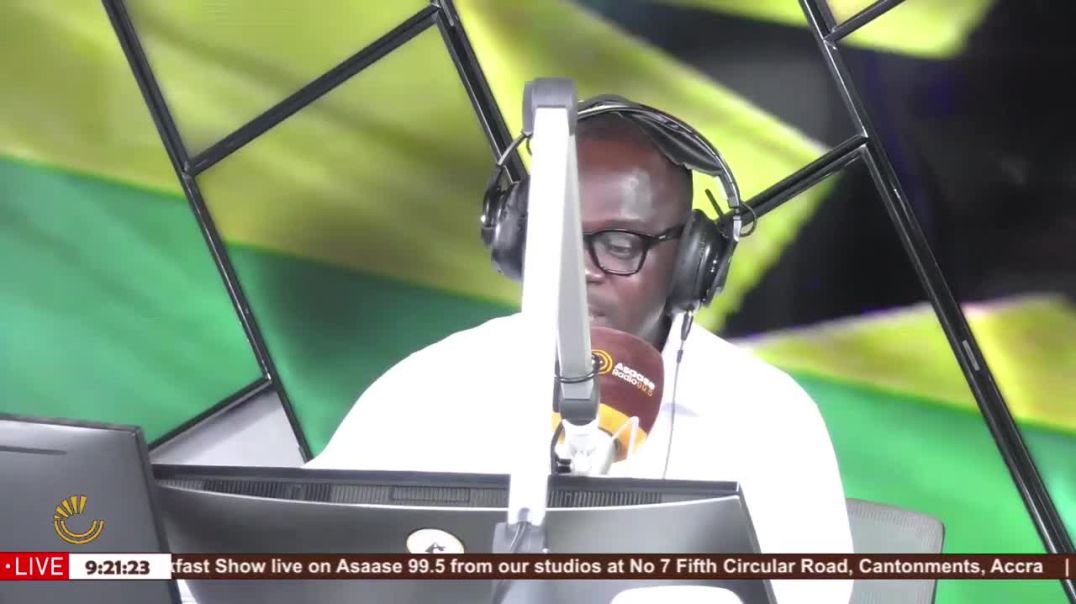

FULL INTERVIEW | Ɔbenfo Ọbádélé Kambon joins the Asaase Breakfast Show on Asaase 99.5 to discuss Open D.O.O.R. Dialogues, the Decade of Our Repatriation (2026–2036), self-reparations through repatriation, the global Black brain gain, and practical pathways for jobs, entrepreneurship and investment in Ghana.
The Open D.O.O.R. Dialogues Media Launch takes place Friday, 17 July 2026 at 10:00 AM in the Great Hall, University of Ghana. The main dialogue follows on 30 October 2026.
Learn more and RSVP:
https://www.door.events
https://www.decadeofourrepatriation.com/opendoor
Originally aired 14 July 2026 on Asaase 99.5.


Legendary reggae and dancehall artist #bujubanton joins #drinkchamps for a conversation about his incredible career and the state of Jamaican music. Buju discusses the global impact of reggae, his experiences in the music industry, and his thoughts on contemporary genres like Afrobeats. He shares powerful stories about going to jail, being banned from the United States, his spiritual journey, and the importance of staying true to one's roots. Buju also reflects on collaborations with hip hop artists, and his return to the stage, offering an amazing look into the life of one of #jamaica's most iconic performers.
-Find REVOLT on TV here: https://revolt.tv/providers
Stay connected with REVOLT here:
Download our app for more exclusive content!
https://revolt.onelink.me/7Lb8/e6zon0g1
+ Subscribe now: http://bit.ly/REVOLT_Subscribe_Now
Website: http://www.revolt.tv/?utm_source=YouT... (Surf)
Instagram: http://Instagram.com/REVOLTTV (Follow)
Twitter: http://twitter.com/REVOLTTV (Follow)
Facebook: http://www.facebook.com/REVOLT (Like)
Text us! Someone from the squad will text you back. https://my.community.com/revolt
Snapchat: Revolt.TV (Add)
TikTok: REVOLT


Okukuseku International Band of Ghana [Led by Chief Sammy Kofi] | Album: Black Beauty | Highlife | Ghana | 1983 #okukuseku #eyetunz #africa #ghana #highlife #eyetunzafrica #eyetunzghana #eyetunzhighlife #eyetunz1983
(0:00) 1. Why You De Run?
(7:48) 2. Mahunumu
(14:44) 3. Nyame Na Onim
(21:14) 4. Black Beauty
(27:55) 5. Maame A Wawuyi
(34:33) 6. Okaniba Kwantuni
Now accepting tips & donations if you are so inclined. This channel is a labor of love and takes quite a bit of time. If you dig the music show some love with a buck or two if you can. Not a single video is monetized due to copyright claims. If you'd like links to mp3 files comment on the video and I will upload them as soon as I can. Tip of your choice is required for mp3 files. Don't forget to use an ad blocker while using youtube to avoid interruptions. Enjoy the music!
https://paypal.me/EyeTunz?locale.x=en_US
Click on hashtags to find more music by genre, country, year, etc. The wide range of genres on this channel can be overwhelming. Use hashtags to zero in on what you're interested in. Don't be afraid to explore however! Enjoy!

Welcome to the Great African Leadership Series where we feature great, inspirational Speeches and quotes from African Leaders.
Rare Full Color Kwame Nkrumah Speech Shaming the United Nations over Patrice Lumumba's Assassination
#africanspeech #speech
Thank you for watching 2nacheki which means 'We Are Watching' in Swahili slang. We do videos on #Africavideos #AfricaContent #AfricaLists #AfricaNews #AfricaDance #AfricaSpeeches
To get amazing deals on all our merch starting from 10% off and free shipping visit https://teespring.com/stores/2nacheki
Membership: https://www.youtube.com/channe....l/UCG7uFJVZsxQRwDsso
Patreon: https://www.patreon.com/2nacheki
Website: http://2nacheki.tv/




Starting at Column 1
When compared to the Proto-Bantu Language, the Ancient Egyptian Language have the same words or expressions with the same meaning. This video will start reading the Hw-nfr - Huwa-Nofuli :: Answer Time of Bliss(oversimplified translation) / Our great wealth from the beautiful sound of creation ( proper translation)
Thank you for supporting this content and our channel at Kofi link https://ko-fi.com/yenzi


Music video for Games performed by Nailah Blackman.
nailahblackman.com
https://www.youtube.com/channe....l/UCsCpZSJMBYQejNLOb
https://www.facebook.com/Naila....h+Blackman-283337461
www.iTunes.com/nailahblackman
Copyright (C) 2018 Nailah Blackman.
---
Powered by http://www.vydia.com
http://vevo.ly/pZWWQz
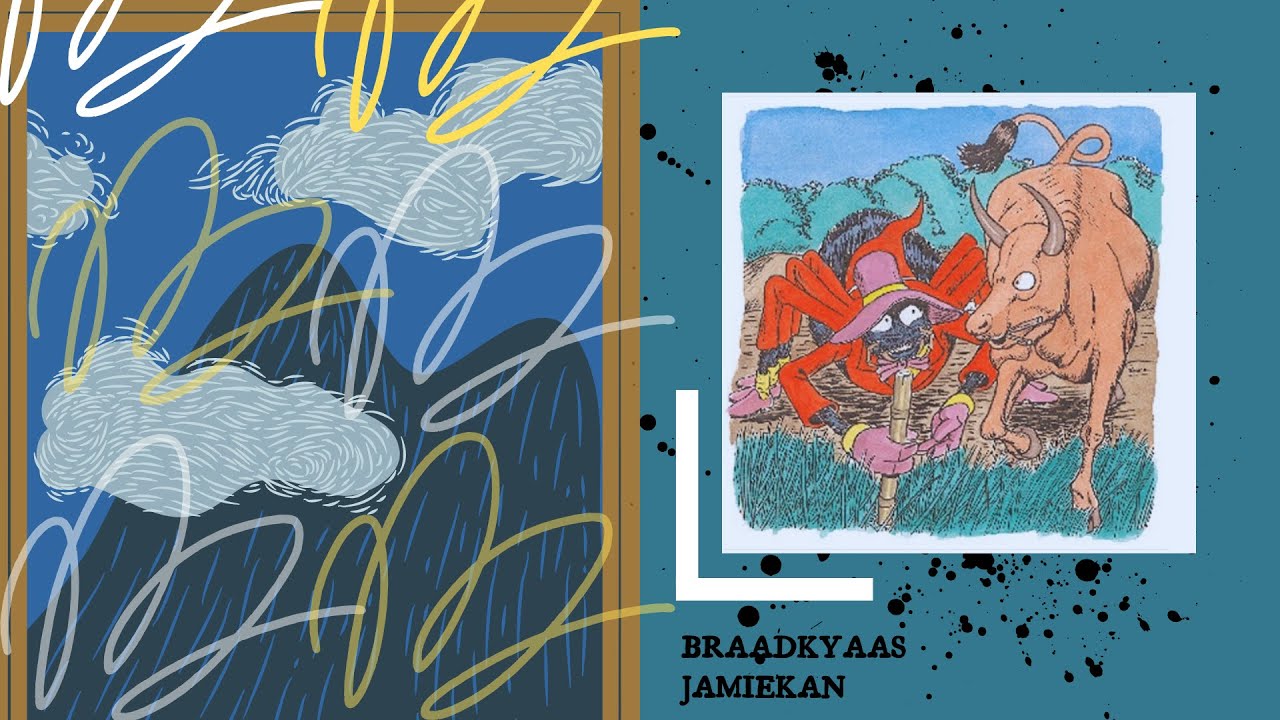
Si di tuori "Anansi An Kou" ya. Wa unu tingk?
Here's the classic tale, "Anansi and Cow" Enjoy!
For access to the PDF of this story and others, check out our Free Resources folder on Google Drive -
https://drive.google.com/drive..../folders/1B3nUMSiAZb
Follow us on social media for more:
Instagram - https://www.instagram.com/braadkyaasjamiekan
Twitter - https://twitter.com/braadkyaasjam
Facebook - https://www.facebook.com/BraadkyaasJamiekan