






- General Videos
- Music
- Economics
- Health
- Travel & Events
- History
- Psychology
- Spirituality
- Movies
- News & Politics
- Kmtyw Combat Sciences
- Ɔbenfo Ọbádélé Kambon Videos
- Ɔbenfoɔ Kamau Kambon: Black Liberation Philosophy
- Science, Tech, Engineering and Math
- Permaculture
- Self-Sustainability
- Living Off Grid
- Yoruba Language Learning
- Education
- Mmɔfra Adesua
- Nana Kamau Kambon Playlist
- Livestream
- Komplementarity Kouples and Revolutionary Singles
- Abibitumi Film Series
- Decade of Our Repatriation
- Kwento xpr
- Live
Top videos


![NIGERIAN WILDLIFE - 4k Ultra HD Immersive Documentary - Ibadan NIGERIA [2021]](https://i.ytimg.com/vi/HW4xWKLI_j8/hqdefault.jpg)

Welcome to the forest and lakes of IITA Ibadan, Nigeria for another 4 k ultra hd immersive and informative documentary. Would you like to take a walk around a beautiful Lake in Nigeria before to come deep inside the preserved tropical forest ? this video is made for you.During this immersive trip focused on Environment, fauna and flora or West Africa, you will discover the luxuriant nature and wildlife of Nigeria while walking in the tropical forest, as well as discovering and thinking about different very important facts, development of agriculture, biodiversity conservation, problem deforestation...I hope you will enjoy this work i put together to try to give you the best experience while watchingIf you are new to the channel, don' t forget to subscribe so you won' t miss any video coming.: https://www.youtube.com/channe....l/UCYSGum_OS4lPtlGAS
If you are not a subscriber of the primary Ludo Liu channel, you can find it here, (take a look at it and subscribe ): https://www.youtube.com/c/LudoLiu/videoslet's connect outside YouTube :
Instagram : https://www.instagram.com/ludo_liu_videos/
Facebook : https://www.facebook.com/LudoLiu.video.production
--------------------------------------------------------------------------------------
If you like these videos and would like to encourage me, please don't hesitate to do it! Here are two links where you can support me and give me more energy to continue working hard on these videos! Nothing is too small ....Thank you so much!https://paypal.me/ludoliu?locale.x=fr_FR
https://www.patreon.com/ludoliu


In this video we’ll explain what’s going on in the eastern DRC with regards to the M23 rebellion and why things look like they could escalate.📰 Too Long: https://toolong.news/🎞 TikTok: https://www.tiktok.com/@tldrnews💡 Got a Topic Suggestion? - https://forms.gle/mahEFmsW1yGTNEYXASupport TLDR on Patreon: http://www.patreon.com/tldrnewsDonate by PayPal: https://tldrnews.co.uk/fundingOur mission is to explain news and politics in an impartial, efficient, and accessible way, balancing import and interest while fostering independent thought.TLDR is a completely independent & privately owned media company that's not afraid to tackle the issues we think are most important. The channel is run by a small group of young people, with us hoping to pass on our enthusiasm for politics to other young people. We are primarily fan sourced with most of our funding coming from donations and ad revenue. No shady corporations, no one telling us what to say. We can't wait to grow further and help more people get informed. Help support us by subscribing, engaging and sharing. Thanks!Sources:December 2024 UN experts report establishing Rwanda-M23 ties:https://documents.un.org/doc/u....ndoc/gen/n24/373/37/ 2023 UN experts report referencing M23’s use of ceasefires:https://prod.cdn-medias.theafr....icareport.com/medias Post-Goma ceasefire:https://www.reuters.com/world/....africa/east-congo-ci https://x.com/LawrenceKanyuka/....status/1886488350393 DRC’s use of Romanian mercenaries:https://www.bbc.co.uk/news/articles/c9d591ldq46o South Africa-Rwanda feud:https://www.bbc.co.uk/news/articles/c78w1ze7v25o DRC accuses Rwanda of declaration of war and vows response:https://apnews.com/article/con....go-m23-goma-rwanda-t https://www.ft.com/content/aa4....334bc-2e3c-483c-ab3e International Crisis Group analysis:https://www.crisisgroup.org/af....rica/great-lakes/dem M23/AFC’s Nangaa wants to take power:https://apnews.com/article/con....go-m23-rebels-evolut International pressure on Rwanda:https://www.theguardian.com/wo....rld/2025/feb/02/pres https://www.reuters.com/sports..../soccer/dr-congo-ask


“A secret society of murderers with a king for a ringleader”.
In 1885 King Leopold of Belgium; an awkward, ruthless, selfish man, was recognised as the sovereign of the Congo. Long determined to carve out his very own private colonial domain, he had alighted upon the Congo - Africa’s vast and unplundered interior. With the help of the explorer Henry Morton Stanley, who had found a way to circumnavigate the Congo’s formerly insurmountable rapids, he concocted a cunning scheme to legally make it his own, while casting himself as a civilising saviour. Yet, despite his ostensibly philanthropic motivations, Leopold’s goal was always profit. More specifically, ivory, and later rubber, and before long a thriving hub of industry had been established in the Congo, bustling with soldiers, traders and missionaries. Meanwhile and most significantly, tens of thousands of Congolese people were being beaten, coerced and essentially enslaved into harvesting and carrying the riches of their land for their European oppressors. Their treatment was barbaric, the conditions in which they were made to live grotesque, and their suffering unimaginable. It was there, in King Leopold's Congo, that for years some of the worst violations of human life in all of human history were perpetrated. A terrible, secret heart of darkness, Until, at last, a young shipping clerk in Antwerp stumbled across something that would change the course of history forever...
Join Dominic and Tom as they discuss Western history’s most brutal and barbaric colonial conquest: King Leopold’s exploitation of the Congo Free
0:00 Intro
05:54 Leopold's true motivations come to the fore
18:37 The Force Publique
29:30 The Dawn of Rubber
38:51 The practice of cutting off hands
49:28 The first glimmers of criticism
Join this channel to get access to perks:
https://www.youtube.com/channe....l/UCUYK0BJZF3yNb2fw1
Twitter:
@TheRestHistory
@holland_tom
@dcsandbrook
Producer: Theo Young-Smith
Assistant Producer: Tabby Syrett
Executive Producers: Jack Davenport + Tony Pastor

Join Ldr Mbandaka, spiritual leader, for deeply insightful analysis of the poli-trics on the African continent from an Africological perspective. This lecture focuses on Kwame Nkrumah, the father of Pan-Africanism on the African continent, his vision and tremendous transformation establishing Ghana as a beacon of light on the continent. Who the real culprits were in the planning and overthrowing of Kwame Nkrumah.
Recommended book: Dark Day in Ghana
You can support the works of Sista Shanice to bring regular African centered news, reviews, educational and informational content by becoming a Patreon, just click on the link below. https://www.patreon.com/SistaShanice
One Love, One Goal, One Destiny, Africa😊💕


Learn Twi in a well-structured, interactive format here: https://learnakan.com.
Join our premium membership here: https://bit.ly/3YgOT7s
Visit LearnAkan Bookshop for our Twi study materials: https://shop.learnakan.com
Translate from English to Twi and Twi to English for free here: https://learnakandictionary.com
Please consider supporting us with a donation here: https://bit.ly/3wYY4xA
LEARNAKAN PAPER BOOKS:
LearnAkan English-Twi Dictionary: https://amzn.to/3WwGWgi
LearnAkan Asante Twi Vocabulary Level 1: https://amzn.to/3LAhX5w
LearnAkan Asante Twi Idioms Guide: https://amzn.to/3y6WaiG
LearnAkan Vocabulary Companion: https://amzn.to/3LwBIuy
LearnAkan Conversational Twi Guide: https://amzn.to/4cGHIwV
LearnAkan Twi Idioms Guide: https://amzn.to/2N2vmF5
LEARNAKAN E-BOOKS:
LearnAkan English-Twi Dictionary: https://bit.ly/3WcZ0uw
LearnAkan Asante Twi Vocabulary Level 1: https://bit.ly/3zSl7yY
LearnAkan Asante Twi Idioms Guide: https://bit.ly/4fod3Gy
LearnAkan Vocabulary Companion: https://bit.ly/3LyLA77
LearnAkan Conversational Twi Guide: https://bit.ly/3yfGNEz
LearnAkan Twi Idioms Guide: https://bit.ly/3A0zwJf
OTHER RECOMMENDED BOOKS:
Bu Me Bɛ: Proverbs of the Akans: https://amzn.to/31EpYxU
Let’s Speak Twi: https://amzn.to/2XftHCV
Asante Twi Learners’ Reference Grammar: https://amzn.to/2IJXiet
A Grammar of the Asante and Fante Language: https://amzn.to/2IkzQFD
ABOUT THIS VIDEO:
#twi #akan
learn some very useful phrases in Twi. Listen and repeat out loud each of the phrases covered in this lesson. Keep rewatching and repeating what you hear until you can remember and say all by yourself.
For the text version of this lesson, visit: https://learnakan.com
SOCIAL MEDIA:
Join and interact with other Twi learners in our Telegram chatroom: https://bit.ly/3YgOT7s
Join other Twi learners on our Facebook page: https://bit.ly/2IOanmO
Connect with me, Yaw, on Facebook: https://bit.ly/2XO951r
OTHERS:
Visit LearnAkan e-store for all Twi study materials: https://bit.ly/2XPIG3y
Join our premium membership: https://bit.ly/3YgOT7s
DISCLAIMER:
This video and description contain affiliate links, which means that if you click on one of the product links and buy any product, I’ll receive a small commission. This helps support the channel and allows me to continue making videos like this one. Thank you for the support!


paat 2 ya so
Res a dem
Paat chrii (Part 3)
https://abibitumitv.com/watch/....naijiryan-gyal-pikni
Paat fuor (Part 4)
https://abibitumitv.com/watch/....naijiryan-gyal-pikni
Paat faiv (Part 5)
https://abibitumitv.com/watch/....naijiryan-gyal-pikni



Watch Best Of Nigerian Nollywood Movies ,Watch Best of Nigerian actress,Best Of Nigerian Actors, Best Of Mercy Johnson, Best Of Ini Edo, best of tonto Dikeh, in Nollywood movies, action, Romance, Drama, epic, Only on youtube Best Of Nollywood Channel, see clips, trailer's and exclusives on Nollywood Movies. This Youtube channel brings you the best on Nigerian movies free, Hot, watch movies online here on this channel
Click Here To Subscribe To Our Channel::: https://goo.gl/rKLR82
Nollywood Movies brings you the best of entertainment on YouTube channel, FREE movies is all you get here each time you visit the Nollywood Romance Youtube Channel, for new and Latest 2016 Nigerian films, just subscribe to this channel on Youtube
Watch Nollywood movies on Nollywood Romance, FREE African movies, Nigerian FREE Movies on Youtube. Our passion for Movie making is to produce thousands of free Nollywood Movies, Nigerian movies, Ghana movies, Watch exciting youtube movies on Nollywood channels Enjoy free Nigerian movies here,
#Nollywoodmovies #Nigerianmovies #Ghanamovies #Latestmovies #2017 Movies #2018moviesmove. subscribe for our daily uploads.Neltv classic movies,
Neltv Classic movies
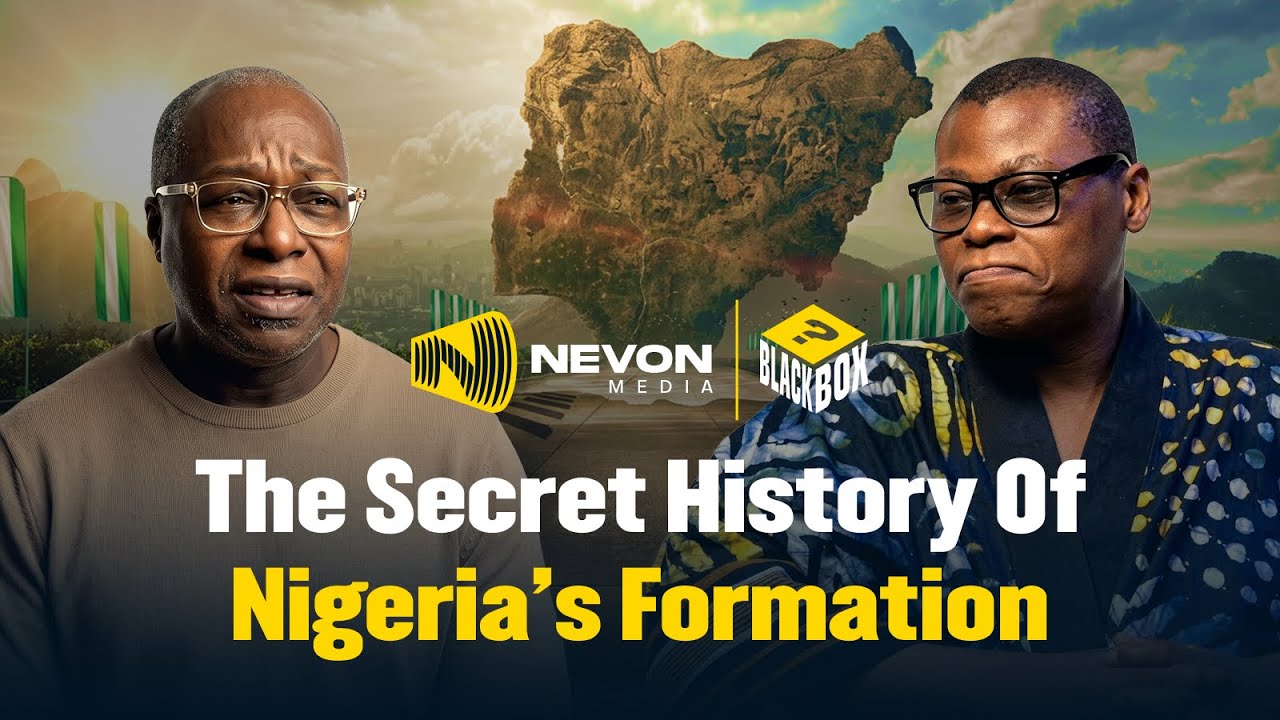

How did Nigeria become the country we know today?
In this episode of BlackBox x Nevon HQ, historian Ed Keazor joins Rufai Oseni for a deep dive into the hidden history behind Nigeria’s formation. From powerful pre-colonial kingdoms and early trade networks to the Royal Niger Company, European interests, and the Berlin Conference, this conversation explores the forces that shaped modern Nigeria.
If you’re interested in Nigerian history, colonialism, politics, business, or governance, this episode offers valuable historical context and thought-provoking insights.
Topics covered:
* Nigeria before colonial rule
* The Royal Niger Company
* The Berlin Conference
* British colonial administration
* Trade, power, and the making of Nigeria
* The influence of European companies on modern Nigeria
📺 Don’t forget to Like, Comment, Share, and Subscribe for more in-depth conversations on history, politics, business, and culture.
#blackbox #nevonhq #edkeazor #rufaioseni #nigerianhistory #colonialhistory #royalnigercompany #history #nigeria

Uganda and Tanzania have entered a partnership to build a 1,443km (896 mile) heated oil pipeline to pump oil from the Albertine basin in Uganda to Tanzania’s Indian Ocean port of Tanga.
What does the deal mean for both countries? Why were environmentalists against the project? And why was Kenya left out?
BBC Africa's Peter Mwangangi explains.
Produced and edited by Leone Ouedraogo.
Subscribe: http://bit.ly/subscribetoafrica
Website: https://www.bbc.com/africa
Facebook: https://www.facebook.com/bbcnewsafrica/
Twitter: https://www.twitter.com/bbcafrica/
Instagram: https://www.instagram.com/bbcafrica/