- General Videos
- Music
- Economics
- Health
- Travel & Events
- History
- Psychology
- Spirituality
- Movies
- News & Politics
- Kmtyw Combat Sciences
- Ɔbenfo Ọbádélé Kambon Videos
- Ɔbenfoɔ Kamau Kambon: Black Liberation Philosophy
- Science, Tech, Engineering and Math
- Permaculture
- Self-Sustainability
- Living Off Grid
- Yoruba Language Learning
- Education
- Mmɔfra Adesua
- Nana Kamau Kambon Playlist
- Livestream
- Komplementarity Kouples and Revolutionary Singles
- Abibitumi Film Series
- Decade of Our Repatriation
- Kwento xpr
- Live
Top videos


Subscribe to our Channel for high profile interviews. Follow us on Twitter at https://twitter.com/ARISEtv |
and Instagram: https://www.instagram.com/arisenewsofficial |
and Facebook: https://www.facebook.com/AriseTVNews |
Check out our website www.arise.tv


1. Cash App: $obenfoobadele
2. Zelle: akyeame.kwame@gmail.com
3. Bitcoin (bc1qtkma7kc8say5rnqtgkrafs65kthqlsan28axf5)
4. MTN Mobile Money (+233247146063)
5. Credit card/paypal using https://www.abibitumi.com/crowdfund
6. Paypal: me@obadelekambon.com
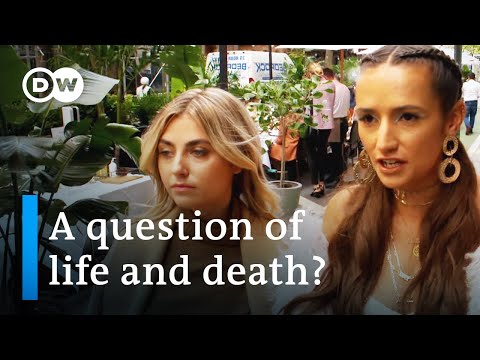

Even before COVID-19, New York was already defined by a gap between the rich and poor. Yet during the pandemic, wealth has become a determinant of survival.
The pandemic hit New York in the spring, with almost 800 people dying from COVID-19 each day in April. The city has been uneasy since then. People's lives have been shaken by months of stay-at-home orders, changing public health measures, "Black Lives Matter" protests, the presidential election, and above all the economic consequences of the pandemic, including ever-widening inequality between New Yorkers.
Stefanie Dodt and Christiane Meier are the creators of "New York City Rich and Poor - The Inequality Crisis." They spent more than eight months following the lives of three New York families who inhabit the different strata of New York society - the bottom, the top and the middle.
The documentary links this long period of observation with intensive data research and analysis and shows why, long before COVID-19, it was clear who the disease would hit hardest. The boundaries between rich and poor are often clearly defined by neighborhoods. Where a person lives determines their risk of becoming infected with the virus, and health has become more of a luxury than ever. The pandemic is spotlighting the scale and consequences of economic inequality in America. In New York, a city of extremes, the emphasis is white hot - and reflects in brash New York style the structural problems all of America is facing as COVID-19 further amplifies inequality.
-------------------------------------------------------------------
DW Documentary gives you knowledge beyond the headlines. Watch top documentaries from German broadcasters and international production companies. Meet intriguing people, travel to distant lands, get a look behind the complexities of daily life and build a deeper understanding of current affairs and global events. Subscribe and explore the world around you with DW Documentary.
Subscribe to:
DW Documentary: https://www.youtube.com/channe....l/UCW39zufHfsuGgpLvi
DW Documental (Spanish): https://www.youtube.com/dwdocumental
DW Documentary وثائقية دي دبليو: (Arabic): https://www.youtube.com/dwdocarabia
For more visit:
http://www.dw.com/en/tv/docfilm/s-3610
Instagram:
https://www.instagram.com/dwdocumentary/
Facebook:
https://www.facebook.com/dw.stories
We kindly ask viewers to read and stick to the DW netiquette policy on our channel: https://p.dw.com/p/MF1G


Jifunze zaidi juu ya jinsi mabadiliko ya hali ya hewa yanavyoathiri kilimo.
Tazama toleo la Kiingereza kwenye kiunga hapa chini:
https://www.youtube.com/watch?v=NHKugkY79FE
Salio za video: USDA, USAID, IITA, Kilimo cha Kilimo Duniani, FAO.
Ikiwa wewe ni mpya, tafadhali jiandikishe!
Tutembelee → https://iita.org/
Kama sisi → https://facebook.com/IITA.CGIAR
Tufuate → https://twitter.com/iita_cgiar
Tufuate → https://instagram.com/iita_cgiar/
Pata habari zetu zote za hivi karibuni → http://bulletin.iita.org/
#IITA #mabadilikoyatabianchi #kulima


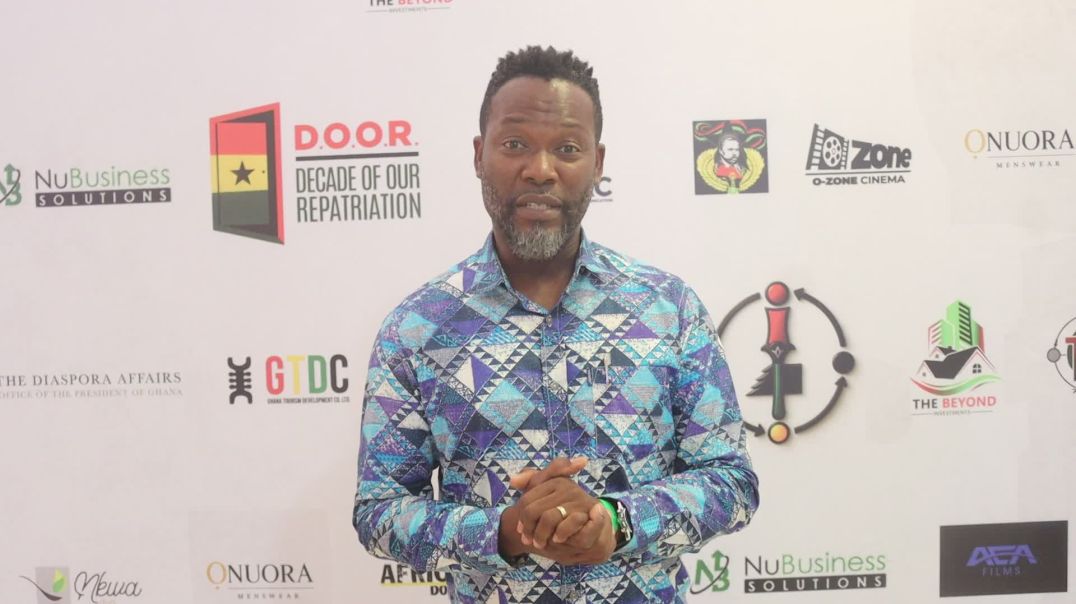
I met Samson Ogbole (who invented SOILLESS FARMING in Nigeria) at the YPard Cafe event I attended with my friend Yomi on Saturday 26th June 2018, he spoke passionately about soil-less farming and showed us video proof of farms he had and still working on. I was inspired by his presentation and the level of work he is doing in the Agric sector in Nigeria, so I decided there and then to interview him.
Samson is the CEO of PS Nutrac and has also set up quite a number of commercial farms across Africa. (All third-party videos were provided by Samson Ogbole)
Do watch, comment and share with your friends
********************************************************************
Let's get the conversation going on social media:
https://twitter.com/olamideyelo
https://facebook.com/olamideyelo
https://instagram.com/olamideyelo
You can also subscribe to this channel to more exciting videos
bit.ly/oyelo
Thank you for watching! Keep being awesome!
#SoilessFarming #Hydrophnics #Agriculture



Halfway there—but the finish line is coming fast! 🏃🏾♀️💨
Applications for Omowale Speaks close on August 31st,
and we're already at the midpoint. If you've been waiting for a sign,
THIS IS IT. Don't let the second half slip away while you're still
deciding. Your story deserves to be heard. 🗣✨
The clock is ticking. Apply today!
🔗 https://kotoko.info/malcolmx


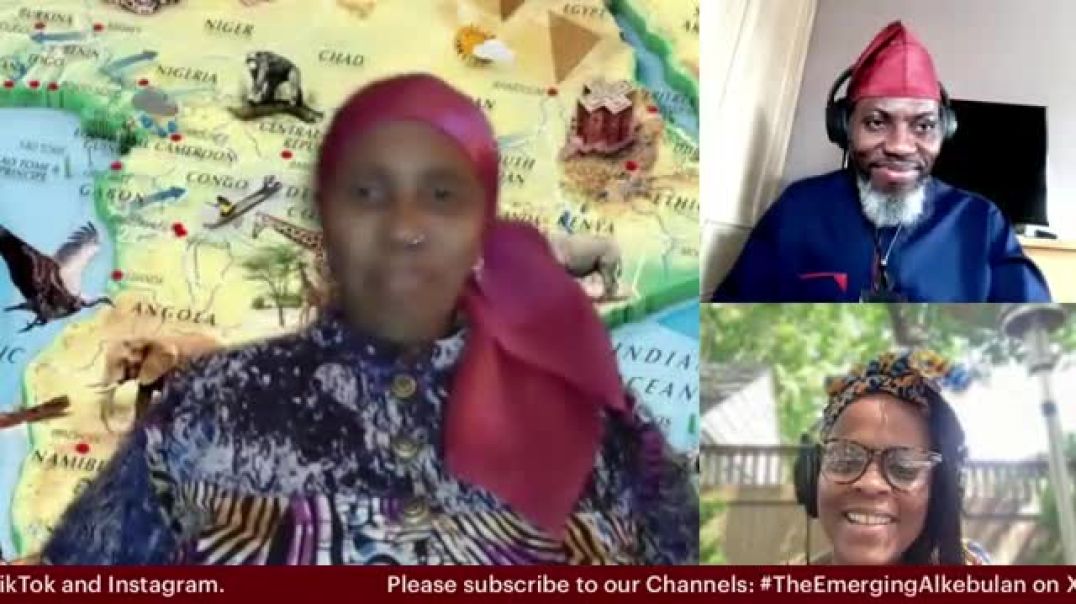
🌍 ALKEBULAN AWAKENING SERIES — EPISODE #76 🌍
🔥 INIMBA: THE SOUTH AFRICAN PRECOLONIAL METAPHYSICAL AND ANTHROPOLOGICAL REPOSITORY OF EMPATHY 🔥
Before Ubuntu became a global buzzword, there was Inimba — a deeper, older concept of empathy woven into precolonial South African metaphysics and worldview.
Join The Emerging Alkebulan Awakening Series and Kumbukeni as Oladele Dosunmu and Nduku Mulumba sit down with Dr. Khanyisile Litchfield-Tshabalala — Author, Historian, and Pan-African — to explore Inimba: what it means, where it comes from, and why reclaiming this concept matters for how we understand African identity, connection, and healing today.
💬 What is Inimba, and how does it differ from — or deepen — concepts like Ubuntu?
💬 What does precolonial South African metaphysics teach us about empathy that modern frameworks have lost?
💬 How do we bring Inimba back into how we relate to each other, our communities, and ourselves?


![CONSERVATION AGRICULTURE - The Three Principles - Ghana [2019]](https://i.ytimg.com/vi/oEeqQIKxXaU/hqdefault.jpg)
The Three Principles of Conservation Agriculture
Explained at the Example of Maize Farming in Northern Ghana
A comprehensive explanation of the concept behind Conservation Agriculture and how it is put into practice.
1st Chapter: Minimise Soil Disturbance
2nd Chapter: Keep the Soil Covered
3rd Chapter: Pratice Crop Diversity
4th Chapter: The Importance of Trees
5th Chapter: Conservation Agriculture put into Practice
A production of the Market Oriented Agriculture Programme (MOAP) co-financed by the European Union (EU) and the German Cooperation (Implemented by GIZ and MOFA)
DISCLAIMER:
“This film was produced with the financial support of the European Union. Its contents are the sole responsibility of
Deutsche Gesellschaft für Internationale Zusammenarbeit (GIZ) GmbH and do not necessarily reflect the views of the
European Union”
© jfp-film 2019
www.johannespreuss.de