








- General Videos
- Music
- Economics
- Health
- Travel & Events
- History
- Psychology
- Spirituality
- Movies
- News & Politics
- Kmtyw Combat Sciences
- Ɔbenfo Ọbádélé Kambon Videos
- Ɔbenfoɔ Kamau Kambon: Black Liberation Philosophy
- Science, Tech, Engineering and Math
- Permaculture
- Self-Sustainability
- Living Off Grid
- Yoruba Language Learning
- Education
- Mmɔfra Adesua
- Nana Kamau Kambon Playlist
- Livestream
- Komplementarity Kouples and Revolutionary Singles
- Abibitumi Film Series
- Decade of Our Repatriation
- Kwento xpr
- Live
Top videos

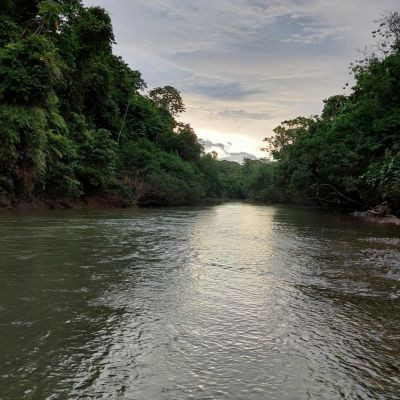
Herencia de Timbiquí - Sabrás
Descargarla y agrégala a tus favoritas, aquí:
Spotify: https://goo.gl/vLepjD
Deezer: https://goo.gl/m7sw00
iTunes: https://goo.gl/VoXrtx
Sinopsis: Un amor de la vida desde chicos hasta adultos, y por más que el mundo te separa haces lo imposible por estar con esa persona que te llena el alma, el amor a un lugar, el amor a la música, el amor a un rió, el amor a un pueblo....TIMBIQUÍ.
Dirección : Juan Fernando Uribe
Producción General : Andrés Benavides
Producción : Isabel Cristina Salazar , Francisco Vergel
Asist de Producción: Laura Bermúdez
Foto : Mario Acevedo
Cámaras: Mario Acevedo , Diego Bermeo , Mauricio Valencia, Andrés Santos, Juan Cortepegue
Maquillaje: Laura Bermúdez, Valentina Gomez, Jose Henao
Vestuario: Laura Bermúdez, Isabel Cristina Salazar
Edición y Finalización : Juan Fernando Uribe
Colorización: Stiven Ramirez
REPARTO:
Luisa Maria Viafara Herrera: Yakelina niña
Alexis Jair Viafara Angulo: William NIño
Jhon Jair Viafara Angulo: Quique Niño
Jean Carlos Segura Herrera Niño: Begner niño
Delcy Zuñiga Angulo: Mama Yakelina
Celimo Herrera Sinisterra: Papá William
Willian Angulo
Begner Vasquez
Carlos Riascos
Yakelina Sinisterra Navarrete


The second guest we have with us for 'Africanus Talks' is Sarah Agnela Nyaoke Ouma. Nyaoke is a Ja-Luo born in East Africa who is undertaking a post as a PHD researcher in the Seafarers International Research Centre, Cardiff. She gives us an insight into what it was like growing up as a Luo during the rise of the multiparty political system in Kenya, which was nurtured by her father, the late great Professor Ouma Muga. Join us each Saturday for new content from 'Africanus World'
Website - www.Africanusworld.com Pateron - https://www.patreon.com/AfricanusWorld Facebook - https://www.facebook.com/AfricanusWorld/ Twitter - https://twitter.com/AfricanusWorld Instagram - https://www.instagram.com/africanuswo... Pay Pal - https://www.paypal.com/cgi-bin/webscr...


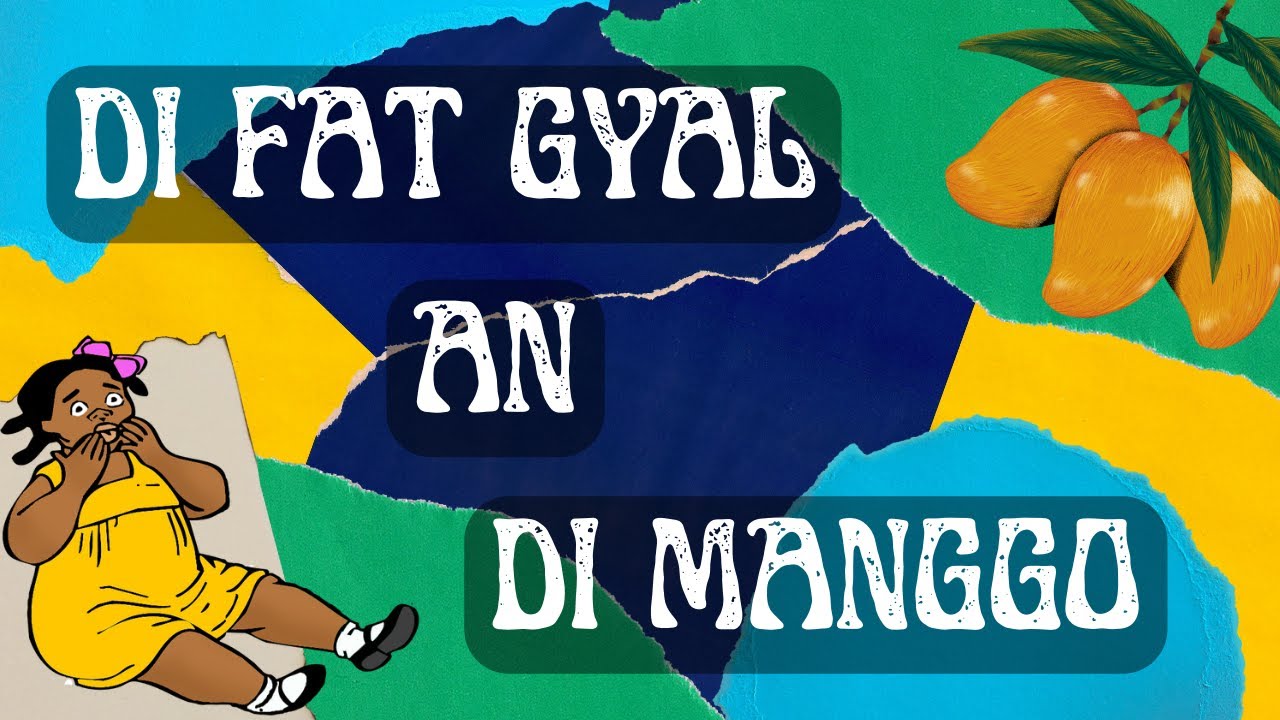

Si di tuori "Di Fat Gyal An Di Manggo" ya. Wa unu tingk?
Here's the classic tale, "The Fat Girl and the Mango" Enjoy!
For access to the PDF of this story and others, check out our Free Resources folder on Google Drive -
https://drive.google.com/drive..../folders/1B3nUMSiAZb
Follow us on social media for more:
Instagram - https://www.instagram.com/braadkyaasjamiekan
Twitter - https://twitter.com/braadkyaasjam
Facebook - https://www.facebook.com/BraadkyaasJamiekan


![Tanzania: The Quiet Revolution [1973] (2/2)](https://i.ytimg.com/vi/ipZUOAlxCnE/hqdefault.jpg)


Queen Njinga Ana de Sousa Mbande (also spelled Nzinga, Nzingha, Ginga, and probably some other ways) was a 17th century ruler of the Kingdoms of Ndongo and Matamba, in what is now Angola. Fighting on the battlefield alongside her troops, and adapting to a variety of lifestyles from Mbundu to Imbangala to Christian, she displayed constant resilience in the face of Portuguese colonialism in West Central Africa, and earned herself a reputation as an Amazonian queen and the most formidable opponent the Portuguese had ever faced in Africa. This is her story.I apologize to any Kimbundu speakers who watch this video for my inevitable butchering of your language. If you'd like to help correct my pronunciation in any future videos I make on Njinga or Ndongo, please hit me up!No generative AI was used in any part of the creation of this video.This video is part of Untold Black History II, a collaboration of YouTubers talking about uplifting Black history from around the world. Check out the full playlist here: https://www.youtube.com/playlist?list=PLivC9TMdGnL-rRKRSKSqqVlMYZKrebcip&jct=EiV3t4lJSkssBqcIETHmswUntold Black History II intro and outro made by @KenKwameWrites Untold Black History II logo made by me B)To explain the design for the 3 people reading this, the bird is an Adinkra symbol from the region of modern-day Ghana representing the concept of "Sankofa," which you can find better explanations of online but in brief it represents the idea of going back for something in a metaphorical sense, i.e. recollection; I picked it to represent looking back to history. The symbol behind it is an Nsibidi symbol from the region of what is now southeastern Nigeria, and represents wealth, or in this case a wealth of knowledge. The colors of the symbol in the background are based on the common Pan-African tricolor flag, red, black, and green, while the Sankofa symbol is yellow to represent an alternative set of Pan-Africanist colors that includes yellow instead of black, based on the Ethiopian flag. All four of these colors are commonly used in Pan-Africanist flags and designs.Happy Black History Month y'all :DFootnotes:1. Heywood 2017, 57-60; Thornton and Lee 2011, 1832. Heywood 2017, 44-453. ibid. 614. Thornton and Lee 2011, 1775. Heywood 2017, 120-122; Thornton and Lee 2011, 1816. Heywood 2017, 50-527. ibid. 51-52, 758. ibid. 55, 659. Thornton and Lee 2011, 18110. Heywood 2017, 54-5511. ibid. 64-6512. ibid. 66-7113. ibid. 66-88; 102, 11514. ibid. 114-12515. ibid. 126-127; 140-14416. ibid. 133-15617. ibid. 157-168, 170-17118. ibid. 172-17819. ibid. 188-18920. ibid. 190-205Patreon: https://www.patreon.com/somasacademyTwitter: https://twitter.com/somas_academyBlueSky: https://bsky.app/profile/somas....academy.bsky.socialA https://www.artstation.com/kalahsoma0:00 Intro0:33 Untold Black History Intro0:44 Early Life of Njinga2:15 The Portuguese in West Central Africa3:17 Diplomatic Mission4:42 Rise to Power6:08 Portuguese Advance6:30 Guerilla Campaign7:15 Imbangala Leader8:08 Anti-Portuguese Alliance8:54 Religious Pressure10:20 Diplomacy11:37 Peace Negotiations12:44 Final Years13:04 Conclusion





For the people of the Sahara, owning a horse is a mark of status, a great pride. In villages of the dry savannah, children are taught to ride horses very young. They live a free and exciting cow boy life, watching after the family’s herd. This is the case of Hisseini, 11, who is soon to participate his first Grand Fantasia, a ritual horse race in which he will represent his village. But Hisseini has no one to train him.
At the cattle market, Hisseini meets Stephanie, a French woman who manages an equestrian club. He makes friend with her right-hand man Abakar. Abakar agrees to help Hisseini and introduces him to the white man’s way of riding horses. Hisseini also meets Estelle, a 12 year old French girl, getting ready for her first jumping competition with Stephanie. In a nearby town, Moussa is working as a stable boy for Atanase, a Greek man who has trained horses and jockeys in Africa for over 20 years. Moussa dreams to become a jockey like his brother Adoum. Adoum is to run for the Ramadan competition in the town’s central square. In that race, most jockeys ride barefoot, with no saddle nor stirrups.
The big day has arrived for Estelle, Adoum and Hisseini. They have to prove to their family that they are seasoned riders of the Sahara.
Director: Eric Elléna
Producers: French Connection Films, Equidia, TV10 Angers
Year: 2004
Length: 52 minutes
Languages: English -
Follow us on social media :
Facebook : https://www.facebook.com/BestDocumentaryTV

Christoph Gröner is one of the richest people in Germany. The son of two teachers, he has worked his way to the top. He believes that many children in Germany grow up without a fair chance and wants to step in. But can this really ease inequality?
Christoph Gröner does everything he can to drum up donations and convince the wealthy auction guests to raise their bids. The more the luxury watch for sale fetches, the more money there will be to pay for a new football field, or some extra tutoring, at a children's home. Christoph Gröner is one of the richest people in Germany - his company is now worth one billion euros, he tells us. For seven months, he let our cameras follow him - into board meetings, onto construction sites, through his daily life, and in his charity work. He knows that someone like him is an absolute exception in Germany. His parents were both teachers, and he still worked his way to the top. He believes that many children in Germany grow up without a fair chance. "What we see here is total failure across the board,” he says. "It starts with parents who just don’t get it and can’t do anything right. And then there’s an education policy that has opened the gates wide to the chaos we are experiencing today." Chistoph Gröner wants to step in where state institutions have failed. But can that really ease inequality?
In Germany, getting ahead depends more on where you come from than in most other industrialized countries, and social mobility is normally quite restricted. Those on top stay on top. The same goes for those at the bottom. A new study shows that Germany’s rich and poor both increasingly stay amongst themselves, without ever intermingling with other social strata. Even the middle class is buckling under the mounting pressure of an unsecure future. "Land of Inequality" searches for answers as to why. We talk to families, an underpaid nurse, as well as leading researchers and analysts such as economic Nobel Prize laureate Joseph Stiglitz, sociologist Jutta Allmendinger or the economist Raj Chetty, who conducted a Stanford investigation into how the middle class is now arming itself to improve their children’s outlooks.
_______
Watch Part I
Inequality - how wealth becomes power
https://youtu.be/AFIxi7BiScI
Part 3 Inequality - how wealth becomes power
https://youtu.be/wEufTD39xrw
DW Documentary gives you knowledge beyond the headlines. Watch high-class documentaries from German broadcasters and international production companies. Meet intriguing people, travel to distant lands, get a look behind the complexities of daily life and build a deeper understanding of current affairs and global events. Subscribe and explore the world around you with DW Documentary. Subscribe to DW Documentary: https://www.youtube.com/channel/UCW39... For more documentaries visit: http://www.dw.com/en/tv/docfilm/s-3610 Instagram https://www.instagram.com/dwdocumentary/ Facebook: https://www.facebook.com/dw.stories DW netiquette policy: https://p.dw.com/p/MF1G
![Secret History: Mau Mau [1999]](https://i.ytimg.com/vi/SJYK78fwQ4c/hqdefault.jpg)
![[[Marimba Ani]] - To Be An Afrikan Woman](https://i.ytimg.com/vi/5wUPfGHvm0M/maxresdefault.jpg)

http://worldafropedia.com/afropedia/Marimba_Ani
http://worldafropedia.com/afro....pedia/Yurugu_%28Book
Marimba Ani is an active organizer in the Afrikan Community. She has conducted Rites of Passage programs for Afrikan youth and young adults. She travels frequently to Ghana, West Afrika, where she is continuing her study and support of Afrikan traditional healing concept and practices. She is part of a "think tank" of Afrikan-centered scholars currently spear-heading the socially and politically dynamic "To Be Afrikan" campaign. She is Director of the Afrikan Heritage Afterschool Program, a voluntary effort which has been operating in the Harlem Community for the past 14 years. Marimba Ani holds a BA degree in philosophy from the University of Chicago, and the MA and Ph.D. degrees in anthropology from the Graduate Faculty of the New School University. She is Professor of Afrikan Studies in the Department of Black and Puerto Rican Studies at Hunter College in New York City. Her daughter Dzifa graduated in May of 1999 from Howard University with a BS degree in biology.


Bomba is a traditional Black music genre made by the Abibifoɔ on the island of Boriken (aka puerto rico).
Original title: Choco Orta & Chamir Bonano - De Bandazo "Especial Banco Popular de PR (2018), Más De Un Siglo"
Tema: De BandazoVoces: Choco Orta & Chamir BonanoProducción: Más De Un Siglo (BPPR 2018)Poducción (Visual): CinetrixDirector (Visual): Ari ManielProdución Musical: Pasillo Sonoro (Luis Amed Irizarry, Antonio Caraballo, Diego Centeno)Sigueme @https:www.instagram.com/chamirbonano..../https:www.facebook.