








- General Videos
- Music
- Economics
- Health
- Travel & Events
- History
- Psychology
- Spirituality
- Movies
- News & Politics
- Kmtyw Combat Sciences
- Ɔbenfo Ọbádélé Kambon Videos
- Ɔbenfoɔ Kamau Kambon: Black Liberation Philosophy
- Science, Tech, Engineering and Math
- Permaculture
- Self-Sustainability
- Living Off Grid
- Yoruba Language Learning
- Education
- Mmɔfra Adesua
- Nana Kamau Kambon Playlist
- Livestream
- Komplementarity Kouples and Revolutionary Singles
- Abibitumi Film Series
- Decade of Our Repatriation
- Kwento xpr
- Live
Top videos


"2AM in Venezuela" (OFFICIAL VIDEO): https://youtu.be/GtvkwgbVKF8
BLACK WINTER (Full Album): https://youtube.com/playlist?list=PLJSMFuicKjJ46p1K9TlqZPRGFSd0M5z9U&si=4WG_YXCGJinM6XEN
Join the Patreon for exclusive videos that you won't find on Youtube: https://www.patreon.com/NTD1814
S U P P O R T
Cash App - $NelsonAmadeus
PayPal- GlobalHitsWorld@gmail.com
EMAIL - KingNeferkare@gmail.com
Twitter @NTDessalines
Instagram @NelsonAmadeus
TURN ON POST NOTIFICATIONS.
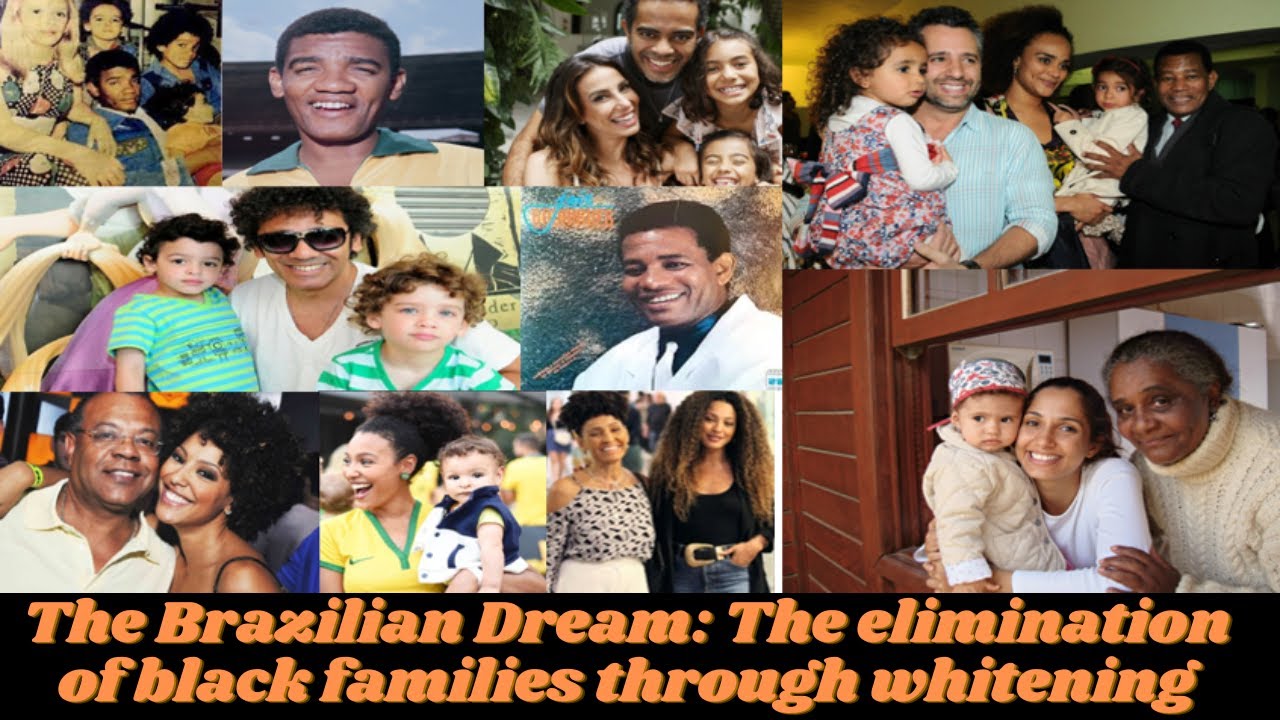
In the the late 19th and early 20th century, the dream of Brazil's elite was the elimnation of black and mixed race people through racial mixture. The country's leadership was concerned with its image around the world as well future success as a nation. This elite class saw the majority population of black and brown people as inferior and responsible for the country's backwardness. The "solution" was opening the country to millions of European immigrants and the elimination of black and mixed race people through the promotion of mixed race unions which they would believed would lead to a Brazil that would eventually be white.
Buy me a coffee and support the channel via CashApp: $MrMarques72
Please Visit our Website to get more information: https://blackbraziltoday.com/
🔔Explore the true narrative of Brazil – Subscribe to Black Brazil Today for insightful discussions on race, culture, and media.🔍
https://www.youtube.com/@black....braziltoday3316/tuto
=============================
✅ Recommended Playlists
👉News and events
https://www.youtube.com/watch?v=PTKDKcWX_vQ&list=PLSk4jWKysUw3ak0abQ3fufWRLQHybwieI&pp=iAQB
👉Black identity in Brazil
https://www.youtube.com/watch?v=N03iDxsJeZg&list=PLSk4jWKysUw0JD8iF0dgUVCJXMBIMMsmG&pp=iAQB
✅ Other Videos You Might Be Interested In Watching:
👉 "I should have 'given it up more' before I got married," says actress Taís Araújo
https://www.youtube.com/watch?v=evaGHrFTlnU
👉"They're not on the brand's level": Clothing brand rep caught dismissing black models in audio leak
https://www.youtube.com/watch?v=yFytSK8xS_U
👉Wearing blackness?: White woman 'turns into' "black woman" for Carnaval
https://www.youtube.com/watch?v=PTKDKcWX_vQ
👉“Brazil never saw black people as beautiful”: The emerging concept of black beauty
https://www.youtube.com/watch?v=O0cSw7RetBw
👉“I never saw myself as a black man”: Reality show contestant discusses how he became black
https://www.youtube.com/watch?v=N03iDxsJeZg
👉Near the end of the slavery era, 60% of enslaved Africans brought to Brazil were children
https://www.youtube.com/watch?v=BEMT0es1P6I
=============================
✅ About Black Brazil Today.
Welcome to Black Brazil Today, a channel that explores black Brazilians' vibrant and diverse experiences✊. Get into our in-depth race, culture, and media discussions, highlighting Brazilian society's significant strides and challenges.
Join us as we dissect racial dynamics, celebrate black Brazilian culture, and amplify voices often unheard. From music and movies to social movements, we bring you the real stories shaping black Brazil's narrative. Subscribe to be part of a community committed to truth, representation, and change. 🎥🌍💬
🔔 Let's Explore the untold stories – Subscribe to Black Brazil Today for the latest on black Brazilians in news, music, and entertainment. 🎵📰
https://www.youtube.com/@black....braziltoday3316/tuto
=================================
ADD HASHTAG HERE
⚠️DISCLAIMER: We do not accept any liability for any loss or damage incurred from you acting or not acting as a result of watching any of our publications. You acknowledge that you use the information we provide at your own risk. Do your research.
Copyright Notice: This video and our YouTube channel contain dialogue, music, and images that are the property of Black Brazil Today. You are authorized to share the video link and channel and embed this video in your website or others as long as a link back to our YouTube channel is provided.
© Black Brazil Today

South of the Sahara Playlist: https://www.youtube.com/playli....st?list=PLivC9TMdGnL Kingdom of Benin, also known as the Edo Empire, was a kingdom located in the Southwestern region of what is now Nigeria. Lasting for at least 600 years under the Oba Dynasty, and around 1,000 more if we count the previous Ogiso Dynasty (likely closer to 2000 years between both the Ogisos and the Obas if we go with the longest estimates), Benin was one of the longest lasting states in West Africa. Home to a capital city which awed visitors, a system of earthworks rivaling the Great Wall of China in length, and some of Africa’s most famous works of art, this kingdom is an underappreciated gem of world history. This video is part of #southofthesahara, a collaboration between history channels dedicated to building a broad collection of accessible content on the underdiscussed history of Sub-Saharan Africa. Thank you to Jabari from From Nothing for organizing the collaboration, and to both Jabari and Hidden History for helping me find some of the images.I have more videos on the Kingdom of Benin and African history more broadly planned for the future, so subscribe for that!Sources:Bradbury, R. E., and Peter Morton Williams. Benin Studies. Edited with an Introduction by Peter Morton-Williams. London, UK: Oxford University Press for the International African Institute, 1973. Douglas, Mary, Phyllis Mary Kaberry, and R. E. Bradbury. “Patrimonialism and Gerontocracy in Benin Political Culture.” Essay. In Man in Africa, 17–36. London, UK: Tavistock, 1969. Koutonin, Mawuna. “Story of Cities #5: Benin City, The Mighty Medieval Capital Now Lost without Trace.” The Guardian. Guardian News and Media, March 18, 2016. https://www.theguardian.com/ci....ties/2016/mar/18/sto “Oba Orhogbua.” Edo World. Accessed September 1, 2022. https://www.edoworld.net/Oba_Orhogbua.html. Obinyan, Thomas Uwadiale. “The Annexation of Benin.” Journal of Black Studies 19, no. 1 (1988): 29–40. https://doi.org/10.1177/002193478801900103. “Ogiso Owodo.” Edo World. Accessed September 1, 2022. https://www.edoworld.net/Ogiso_Owodo.html. 00:00 Intro00:53 The Founding of Benin04:27 The Oba Era07:14 The Golden Age of Benin09:54 Great Benin14:21 The Fall and Legacy of BeninTwitter: https://twitter.com/somas_academy
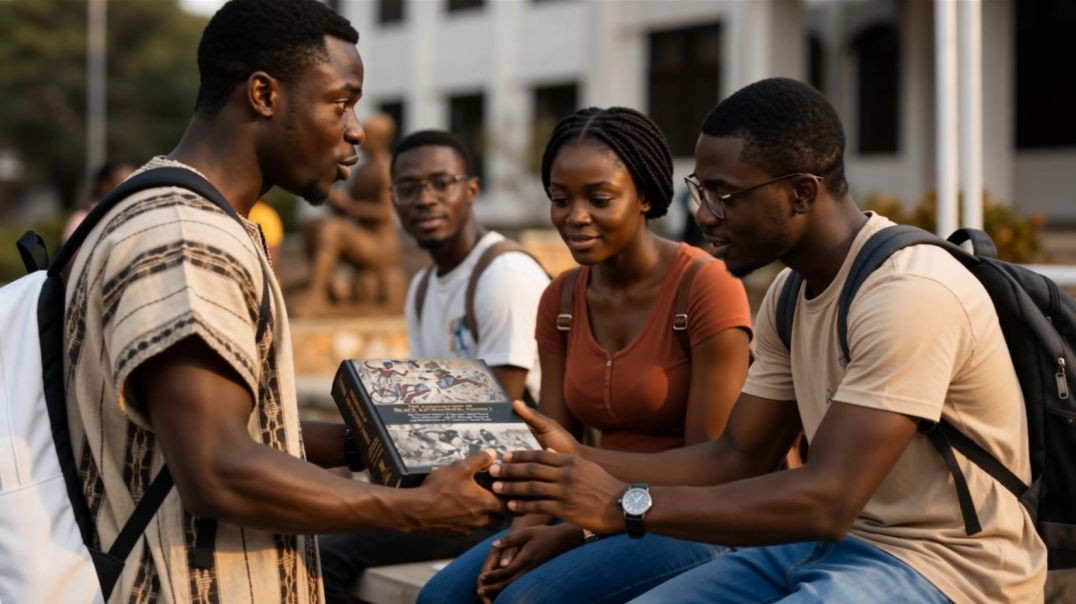
The Construction of Black Civilization, Vol. 1 (Commercial)
Order your copy of The Construction of Black Civilization, Volume I: The Classical Origins of sḫm Km
‘Black Power’ “Pan-Afrikanism” and The Dikènga Theory of Self-Identification as Kmt(.y.w) ‘Black People’
Order here: .https://www.abibitumi.com/prod....uct/construction-of-


Dr. Frances Cress Welsing believes black males can't become men under white supremacy. We decided to break down this theory to see how it applies to black men today. Her theory is, because of the system of white supremacy, white men occupy the position of the man, and because white men are the man, black men can't be the man, a woman, a girl, or, a child, so they can only be boys. Black males have to rise up and claim to gain power so we will no longer be viewed as boys by the world. Tune in!!
Cashapp: $joeward84
Follow us on Instagram @ontheshoulders1
Visit us at www.ontheshoulders1.com or www.ontheshoulders.org
Like us on Facebook: On the Shoulders of Giants
Follow on Tiktok: @thejoeward
Click the link to get your copies of On the Shoulders of Giants book series http://ontheshoulders1.com/store/


In Brazil, kinky-coarse-wooly-curly hair has always been considered ugly. In a video, an 8-year old black girl says her hair is ugly and that she wants to straighten it because "straight hair is pretty". A hair stylist attempts to convince the child that her hair is beautiful. With the work of the Rio-based hair stylist, the girl's reaction to her new look is simply priceless.
Please Visit our Website to get more information: https://blackbraziltoday.com/🔔Explore the true narrative of Brazil – Subscribe to Black Brazil Today for insightful discussions on race, culture, and media.🔍=============================✅ About Black Brazil Today. Welcome to Black Brazil Today, a channel that explores black Brazilians' vibrant and diverse experiences✊. Get into our in-depth race, culture, and media discussions, highlighting Brazilian society's significant strides and challenges. Join us as we dissect racial dynamics, celebrate black Brazilian culture, and amplify voices often unheard. From music and movies to social movements, we bring you the real stories shaping black Brazil's narrative. Subscribe to be part of a community committed to truth, representation, and change. 🎥🌍💬 🔔 Let's Explore the untold stories – Subscribe to Black Brazil Today for the latest on black Brazilians in news, music, and entertainment. 🎵📰 https://www.youtube.com/@black....braziltoday3316/tuto =================================#kinkycurlyhair #badhair #goodhair #blackgirl #blackchild #racisminbrazil #blackbrazilians #afrobrazilians #cabelocrespo #riodejaneiro #eurocentricstandard #beautystandard #hairtexture #blackhair #naturalhair #curlyhair #naturalhairjourney #blackhairstyles⚠DISCLAIMER: We do not accept any liability for any loss or damage incurred from you acting or not acting as a result of watching any of our publications. You acknowledge that you use the information we provide at your own risk. Do your research. Copyright Notice: This video and our YouTube channel contain dialogue, music, and images that are the property of Black Brazil Today. You are authorized to share the video link and channel and embed this video in your website or others as long as a link back to our YouTube channel is provided. © Black Brazil TodayMerch coming soon 🔥


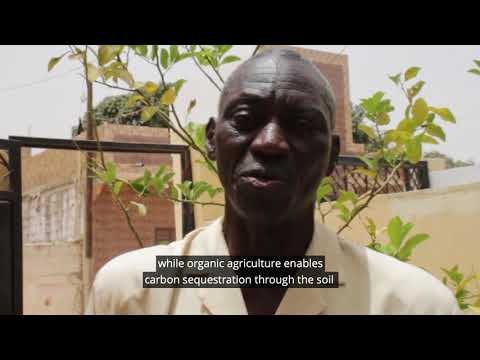

📢 “Conventional agriculture contributes to global warming while organic enables carbon sequestration in soil. It's a powerful way to become more resilient to climate change.” Meet Ibrahima working with over 157,000 people to promote organic agriculture in Senegal 🇸🇳 #IGrowYourFood #LuvOrganic
Find out more about #IGrowYourFood: https://campaigns.ifoam.bio/igrowyourfood
🤗 Support our ORGANISATION:
https://ifo.am/Donate
🤝 Become our PARTNER:
https://ifo.am/JoinIFOAM
📩 Sign up to our NEWSLETTER:
https://ifo.am/Newsletter
▶️ Subscribe to our YOUTUBE channel:
https://ifo.am/YouTube
👍 Stay connected on FACEBOOK:
https://ifo.am/Facebook
👩💻 Join the conversation on TWITTER:
https://ifo.am/Twitter
👨💻 Follow us on LINKEDIN:
https://www.linkedin.com/compa....ny/ifoamorganicsinte

Would you like to help me reach 10K subscribers? Make sure you subscribe, like, and share this video!
Learn more about Africa Global Radio
www.africaglobalradio.com
Contact me:
IG: https://www.instagram.com/mrtimswain/
W: https://www.mrtimswain.com
E: info@mrtimswain.com
#blackwomeninghana
#africanamericaninghana
#timswain
Timestamps:
00:00-Intro
01:25-Ghana is a mess
07:40-Africans outperforming Americans
10:30-No jobs
16:20-Average salaries
17:40-Sexuality in Ghana
20:45-Bad governing policies
24:00-Dream life in Ghana


Where did our unique moon come from? It turns out that lunar rocks brought back by Apollo astronauts are a clue, pointing to the origin of our closest cosmic companion, an origin even stranger than you might imagine… Find out more about our Prehistoric Elephants here: https://complexly.info/mammoths*****PBS Member Stations rely on viewers like you. To support your local station, go to http://to.pbs.org/DonateEons*****Eons is a production of Complexly for PBS Digital Studios.Super special thanks to the following Patreon patrons for helping make Eons possible:Randall George, Morgan, Kevin Lacson, Marco Narajos, Collin Dutrow, Pope John XII, Aaditya Mehta, AllPizzasArePersonal, John H. Austin, Jr., Alex Hackman, Stephen Patterson, Odditeas , Karen Farrell, Jason Rostoker, Jonathan Rust, Mary Tevington, Bart & Elke van Iersel - De Jong, Irene Wood, Derek Helling, Mark Talbott-Williams, Nomi Alchin, Duane Westhoff, Hillary Ryde-Collins, Yu Mei, Albert Folsom, Heathe Kyle Yeakley, Dan Caffee, Nick Ryhajlo, Jeff GrahamIf you'd like to support the channel, head over to http://patreon.com/eons and pledge for some cool rewards!Want to follow Eons elsewhere on the internet?Facebook - https://www.facebook.com/eonsshowTwitter - https://twitter.com/eonsshowInstagram - https://www.instagram.com/eons....show/#EonsReferences


Ugandan veterinarian and smallholder farmer Emma Naluyima practices a unique and highly effective blend of integrated farming. In this delightful talk, she explains how she does this on just one acre of land, or about four thousand square metres. In four different quarters, she cleverly manages to integrate the production of cows, pigs, chickens, fish, vegetables, fruits, and fodder, in a sustainable, circular production system that wastes nothing. To cap it all, with profits from the farm, she has managed to build, on the premises, a school that pays it forward by teaching the local children much-needed life skills. These include important lessons about what happens if we optimise every single bit of what little we might have.
Emma is known for being an innovative farmer with skills in veterinary, piggery, fishery, vegetables, training and capacity building. Her ingenuity has earned her several awards in her native Uganda, and globally. She holds a Masters of Health Services Research, and a BSc Veterinary Medicine, both from Makerere University in Uganda. She has collaborated with the University of Wisconsin, with students visiting her farm for training every year since 2014. Emma has served as Chairman of Red Cross Mbarara and has written several op-eds published in the Guardian, Mail and The East African. This talk was given at a TEDx event using the TED conference format but independently organized by a local community. Learn more at https://www.ted.com/tedx



In this illuminating talk, high school mathematics teacher and YouTube star Eddie Woo shares his passion for mathematics, declaring that "mathematics is a sense, just like sight and touch" and one we can all embrace. Using surprising examples of geometry, he encourages everyone to seek out the patterns around us, for "a whole new way to see the world". A public high school teacher for more than 10 years, Eddie Woo gained international attention when he posted videos of his classroom lessons online, to assist an ill student. His YouTube channel, WooTube, has more than 200,000 subscribers and over 13 million views.
Eddie believe that mathematics can be embraced and even enjoyed by absolutely everybody. He was named Australia's Local Hero and was a Top 10 Finalist in the Global Teacher Prize for his love of teaching mathematics. This talk was given at a TEDx event using the TED conference format but independently organized by a local community. Learn more at https://www.ted.com/tedx
00:00 - Basic Logic Versus Antonio Talks00:02:06 - Intro00:02:37 - White Guilt Over Slavery 00:05:50 - European Slavery Wasn’t Special 00:08:49 - Africans Sold Africans 00:11:31 - Verdict 00:12:21 - Outro @B@BasicLogicIQants to debate @Ant@AntonioTalksscause he made three responds videos to him. I think the debate would be pointless because Basic Logic’s agurments are all racist talking points from the 2010s and are have been debunked already. I proved this by dismantling his White Guilt video and telling the truth about the Trans Atlantic Slave Trade. 
https://www.youtube.com/@javen....bernardez?sub_confir Channel https://www.youtube.com/@Princ....eNoFaceKillah?sub_co https://www.cash.app/$JavBer252Paypal https://www.paypal.me/JavBer252Twitter/X https://www.x.com/JavBer252Instagram https://www.instagram.com/JavenBernardezFacebook https://www.facebook.com/JavenBernardezThreads https://www.threads.com/JavenBernardezTikTok https://www.tiktok.com/@javen.bulletsEmail https://www.JavBer252@gmail.comhttps://https://00:

Ghana is broken due to reckless actions by successive gov’ts - Yakubu - AM Show on JoyNews (10-5-21)
#AMShow
#AMNews
#MyJoyOnline
https://www.myjoyonline.com/ghana-news/
Subscribe for more videos just like this:
https://www.youtube.com/channe....l/UChd1DEecCRlxaa0-h
Click to this for more news:
https://www.myjoyonline.com/