




Top videos

Fear and Loathing in South Africa - BBC Africa Eye documentary
Fear and Loathing in South Africa - BBC Africa Eye documentary Kwabena Ofori Osei 65 Views • 2 years ago

BBC Africa Eye investigates the rise of xenophobia in South Africa and the violent targeting of migrants.

Click here to subscribe to our channel 👉🏽
http://bit.ly/subscribetoafrica

A network of anti-migrant groups is emerging across South Africa, spreading anti-migrant rhetoric and even attacking migrant communities. The groups blame illegal migrants for the state of the country’s economy, lack of housing and an explosion of drug abuse. But their critics accuse them of being violent vigilantes, who target some of the country’s most vulnerable people.

#bbcafricaeye reporter Ayanda Charlie gains rare access to Operation Dudula, South Africa’s most notorious anti-migrant group. Dudula say they are standing up for ordinary South Africans who have been let down by the government and deny allegations that they are a vigilante group who preach a doctrine of violence. As she takes to the street with Dudula members, Charlie not only hears xenophobic rhetoric but also witnesses small business owners from neighbouring countries being physically threatened, forced to hand over their business, and hears how Dudula intend to establish a political party to contest South Africa’s upcoming general election.

***
Africa Eye brings you original, investigative journalism revealing secrets and rooting out injustice in the world’s most complex and exciting continent. Nothing stays hidden forever.
You can check out all #bbcafricaeye investigations here: https://bit.ly/bbcafricaeye

#southafrica #operationdudula #xenophobia #migrants credits:
Reporter - Ayanda Charlie
Filmed and directed by Nick Blakemore
Africa Eye Editor - Tom Watson
Head of Longform - Liz Gibbons
Executive Producer - Peter Murimi
Film Editor - Amanda Gunn
Producer - Jane Lipman
Location Producer - Golden Mtika
Production Manager - Simon Frost
Online Editor - Chris Stott
Dubbing Mixer - Jez Spencer
Colourist - Boyd Nagle
Reversioning Producer - Anna Payton
Social Media Producer - Anusha Kumar
Impact Producer - Adelle Kalakouti
Digital Producer - Tamasin Ford
Production Coordinator - Izzy Fleming, Abigail Knight
Translator - Fezokuhle Mthonti

***
Subscribe: http://bit.ly/subscribetoafrica
Website: https://www.bbc.com/africa
Facebook: https://www.facebook.com/bbcnewsafrica/
Twitter: https://www.twitter.com/bbcafrica/
Instagram: https://www.instagram.com/bbcafrica/

Tribal Odyssey: The Wodaabe
Tribal Odyssey: The Wodaabe Ambakisye-Okang Dukuzumurenyi 115 Views • 5 years ago

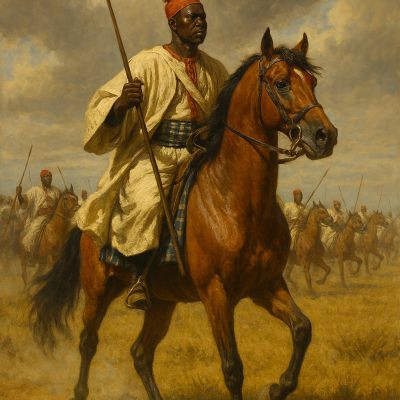
Wodaabe are nomads, migrating through much of the Sahel from northern Cameroon to Chad, Niger, and northeast Nigeria. The last nomads in the area, the Wodaabe number between 160,000 and 200,000. Other around them - the Hausa, Fulani, and Tuaeg - regard the Wodaabe as wild people. The Wodaabe refer to the Fulani with equal disdain as Wodaabe who lost their way.The seasons dictate Wodaabe migrations. From July to September, the short rainy season, sporadic storms cause floods. Most of September and October are hot and dry, November to February is cold. The hottest months, March to June, are also dry. During the short rainy season, Wodaabe lineage groups come together and hold their ceremonial dances, the Geerewol, Worso, and Yakke. The rest of the year the Wodaabe split up into small lineage groups.LivelihoodThe Wodaabe's main economic activity is cattle-herding. Cattle provide milk products that, along with cereal obtained through trading, are the basis of the diet. Beef is eaten only during ceremonies. The Wodaabe also keep goats and sheep for milk and meat and use camels and donkeys for transportation.During the dry season, milk production is lowest, and the need for cereal grains especially acute. At thee times, however, the cows are in their poorest condition and grain prices are highest. Thus, Wodaabe sell their cattle at cutrate prices. Moreover, droughts in the 1970s and early 1980s depleted the herds, so many Wodaabe have had to resort to earning wages in towns or herding cattle for their sedentary neighbors.While these activities allow Wodaabe llineage groups and individuals to survive the dry season, they don't rebuilt the herds. The depletion of the herds means the Wodaabe can't use their traditional way of aiding members of the tribe who lose their cattle - by loaning a cow for several years, with the borrower keeping the calves.Cultural SystemsThe Wodaabe divide themselves into 15 lineage groups. Membership is based on both blood-lines and traveling together in the dry season.Membership in a lineage groups determines who can marry whom. The only marriages that may occur between members of the same groups are Koobegal marriages arranged during the partners' childhood and formally recognized by the council of elders. Subsequent Teegal marriages are by choice of the partners.Lineage-group membership doesn't exclude people from Teegal marriages, but such marriages often cause friction. They usually involve "wife-stealing," often with the consent of the woman but never with that of her husband. Teegal marriage is also a source of friction between the new wife and previous ones. More wives means that fewer resources, such as milk from the husband's herd, are allocated to each. Eloping in a Teegal marriage that carries little stigma allows a Wodaabe woman considerable freedom, but she must leave her children with the ex-husband. The system guarantees the children's place in society while permitting spontaneity and flexibility to the parents.The Wodaabe believe in various bush spirits that live in trees and wells and are reputed to be saddened by how people have treated them. All spirits are intertwined in taboos pertaining largely to ecology. Some spirits are dangerous.The Wodaabe have acquired some knowledge of Islam and invoke the name of Allah in times of death or difficulty. However, what constitutes the notion of Allah for the Wodaabe is ambiguous.More central is a set of values concerning beauty, patience, and fortitude. Physical beauty - a long nose, round head, light skin, and white teeth - is one ideal quality, particularly for men but for women as well. Wodaabe sometimes wear makeup to enhance these attractions.Central cultural institutions are the dances - Geerewol, Worso, and Yakke - held during tribal gatherings in the rainy season. During tribal gatherings, flirtations occur and Teegal marriages are negotiated. In the dances, the men of a lineage engage in a beauty contest judged by three young women from an opposite lineage. These young women are picked as judges by the male tribal elders on the basis of their fortitude and patience. They appraise the men on appearance, charm, and dancing ability.SUGGESTED READINGSCarol Beckwith and Marion Offelin, Nomads of Niger, H.N. Abrams, 1983.Carol Beckwith, "Niger's Wodaabe: People of the Taboo," National Geographic, October 1983.Marguerite Dupire, "The Position of Women in a Pastoral Society" in Women of Tropical Africa, ed. by Denise Paulne, University of California Press, 1982.

How Germany Wiped Out 80% of a Black Tribe and Got Away With It
How Germany Wiped Out 80% of a Black Tribe and Got Away With It Baka Omubo 49 Views • 2 years ago

In the early 1900s, Germany carried out one of the first genocides of the 20th century, wiping out over 80% of the Herero and Nama people in Namibia. This brutal campaign, fueled by colonial ambitions, involved mass killings, forced labor, and starvation. This documentary uncovers the horrors of this forgotten atrocity and its lasting impact on Namibia’s history.

This video is for documentary and educational purposes. No images and footage shown are intended to shock the viewer. Everything is displayed in context and censored as much as possible without sacrificing the need to tell a compelling story with the actual footage.


If you love our work, consider supporting the channel via Patreon:
https://www.patreon.com/bisimedia

Become a Channel Member to get access to perks:
https://www.youtube.com/channe....l/UC9hKpjMxWev7U81xL

Naira Account No:
7810120458, Wema Bank

Buy Kema a Coffee:
www.buymeacoffee.com/kema

*****
Video Sources:
Germany’s Black H0l0c@ust 1890-1945 by Carr Firpo

The Kaiser’s H0l0c@ust by Casper Erichsen and David Olusoga

*****
Clips and Image credits:
Getty Images: https://www.youtube.com/c/gettyimages
AI Images: Midjourney AI
AP Archive: https://www.youtube.com/c/APArchive
Maps: https://www.freevectorflags.com
www.vemaps.com
https://davidrumsey.com

Free Piks: https://www.freepik.com
Adeyinka Makinde: https://www.youtube.com/channe....l/UCKARV7TfiudYewrT1

The Mic I Use: https://amzn.to/3EvGYKD

Music used: Music Used: https://share.epidemicsound.com/b3whp2


#bisi #namibia

****
All materials in this video are used for educational purposes and fall within the fair use guidelines. No copyright infringement is intended.

AFFILIATE DISCLOSURE: There may be a few links in this description that, at no cost to you, will earn me a commission if you click them and purchase. Don’t worry, we only ever promote things that have genuinely helped us.

Copyright © Bisi Media 2024

Oumou Sangaré - Moussolou (Official Audio)
Oumou Sangaré - Moussolou (Official Audio) Ambakisye-Okang Dukuzumurenyi 97 Views • 5 years ago

Subscribe to World Circuit - https://WorldCircuit.lnk.to/WCYouTubeID
‘Moussolou’ CD, LP & digital – https://worldcircuit.lnk.to/OumouMoussolouID

Acclaimed for its outstanding production, Oumou's first album established her as a major star in Mali and beyond. Its title translates as "Women" and many of the songs deal with her experiences as a woman in a male-dominated country that still embraces polygamy. Utterly modern and at the same time respectful of tradition, this is a powerful debut.

World Circuit Records have established their reputation by producing some of the finest world music albums of the past two decades, specialising in music from Cuba and West Africa. The label is best known for the GRAMMY winning Buena Vista Social Club album, which is the biggest selling world music album of all time, and led to the phenomenal rise in popularity of Cuban music. 10 years after their historic concert in New York, World Circuit release Buena Vista Social Club At Carnegie Hall.

World Circuit's African artists enjoy equal prestige, including Grammy winning albums from Ali Farka Touré and kora virtuoso Toumani Diabaté, Mali's 'star of stars' Oumou Sangare, afrobeat legend Tony Allen, and the great Orchestra Baobab.

FOLLOW WORLD CIRCUIT:
Subscribe: https://WorldCircuit.lnk.to/WCYouTubeID
Website: http://www.worldcircuit.co.uk/
Facebook: https://www.facebook.com/WorldCircuitRecords/
Twitter: https://twitter.com/WorldCircuit
Instagram: https://www.instagram.com/world_circuit_records/
Spotify: https://open.spotify.com/user/worldcircuitrecords

#OumouSangare #Moussolou

Easy Igbo sentences for beginners using Aka (Hand) #igbo #igboforbeginnners
Easy Igbo sentences for beginners using Aka (Hand) #igbo #igboforbeginnners T. Y. Adodo 86 Views • 2 years ago

In this channel together we will learn how to speak, write and communicate in #igbo language fluently through frequent practice, which is the key to learning.

For private/one on one classes please email me on Igboticgirl@gmail.com,
For Adverts and promotions email @Igboticgirl@gmail.com

Link to my previous videos
Igbo lesson 1- 12 can be watched here https://www.youtube.com/channe....l/UCvW3QSpZZ3JoPi4Wu

Language is the most direct connection to other cultures. Being able to communicate in another language exposes us to and fosters an appreciation for the traditions, religions, arts, and history of the people associated with that language.

If you have any questions, suggestions and topic of interest, please ask away in the comment section below.

#learnigbolanguage #learnigbo #igbogreetings #igbo #igbolanguage #igboforbeginnners
#proudlyigbo #IgboAmaka
#igbotic #adaigbo #nwaigbo

Showing 49 out of 462