- General Videos
- Nnwom
- Sikas?m
- Akwahosan
- Travel & Events
- Abak?s?m
- Adwene mu Nhwehw?mu
- Honhom fam nne?ma
- Fim
- News & Politics
- Kmtyw Combat Sciences
- Ɔbenfo Ọbádélé Kambon Video ahorow
- ?benfo? Kamau Kambon: Black Liberation Philosophy
- Science, Tech, Engineering and Math
- Permaculture
- Self-Sustainability
- Living Off Grid
- Yoruba Language Learning
- Nhomasua
- Mmɔfra Adesua
- Nana Kamau Kambon Playlist
- Livestream
- Komplementarity Kouples and Revolutionary Singles
- Abibitumi Film Series
- Decade of Our Repatriation
- Live
Sikas?m


India once produced the finest cloth on Earth. Dhaka muslin was so delicate it was called "woven air," and Indian textiles dominated global trade for centuries. At its peak, India accounted for nearly 25% of the world's economic output, and its weavers were the highest-paid textile workers on the planet.
So how did Britain, a country that couldn't even produce decent cotton cloth, manage to flip the entire trade on its head — turning India from the world's greatest textile exporter into a captive market for inferior British factory goods?
The answer involves protectionist trade bans, industrial espionage, military conquest, the deliberate destruction of an entire artisan class, and one of the most calculated economic reversals in modern history. From the Calico Acts to the Battle of Plassey, from the spinning jenny to Gandhi's spinning wheel — this is the full story of how Britain stole India's cloth trade and how India eventually fought back.
If you enjoyed this video, please like, subscribe, and leave the word "muslin" in the comments.
Sources:
• Angus Maddison, "The World Economy: A Millennial Perspective" (OECD, 2001)
• Prasannan Parthasarathi, "Why Europe Grew Rich and Asia Did Not" (Cambridge University Press, 2011)
• Sven Beckert, "Empire of Cotton: A Global History" (Vintage, 2015)
• K.N. Chaudhuri, "The Trading World of Asia and the English East India Company" (Cambridge University Press)
• The Cambridge Economic History of India, Volume 2
• Victoria and Albert Museum, "Indian Textiles: A Global Trade"
• John Forbes Watson, comparative assessment of Indian, British, and French muslins (1866)
• Shashi Tharoor, "Inglorious Empire: What the British Did to India" (Hurst Publishers, 2017)
• Science Museum Journal, "The Indian Challenge and the Rise of Manchester"
• UNESCO and GI designation records on Dhaka Muslin revival
#india #britishempire #colonialism #textiles #economichistory #dhakamuslin #eastindiacompany #industrialrevolution #tradewar #gandhi #swadeshi #britishraj #deindustrialization #cottontrade #calicoacts #mughalempire #bengal #manchester #economics #history #documentary
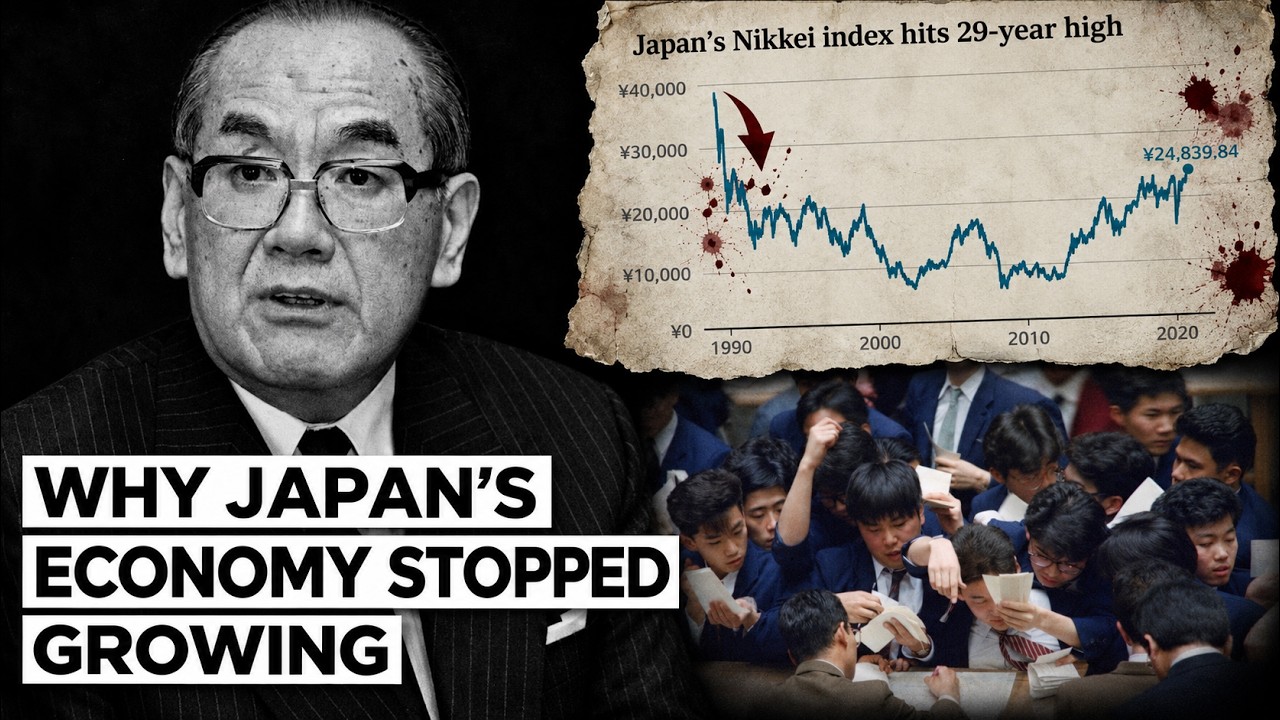
In the late 1980s, Japan was on track to overtake America as the world's dominant economic superpower. Its companies were buying up Manhattan, its cars were crushing Detroit, and its stock market represented nearly half of all global equity value. Serious economists predicted Japan would be number one by the year 2000.
Then it all stopped. For thirty years.
This is the story of how the Plaza Accord, reckless monetary policy, the largest asset bubble in modern history, zombie banks, demographic collapse, and political paralysis turned the world's most dynamic economy into a cautionary tale that still haunts policymakers today.
From the postwar miracle to the moment Tokyo land was worth more than all of California — and the devastating crash that followed — this is the full, unfiltered story of Japan's Lost Decades.
#japan #lostdecade #japaneconomy #economics #finance #bubble #stockmarket #nikkei #plazaaccord #bankofjapan #deflation #zombiebanks #assetbubble #tokyorealestate #macroeconomics #globalfinance #economiccrisis #documentary #history #japancrisis #gdp #recession #centralbank #monetarypolicy #demographics #populationdecline
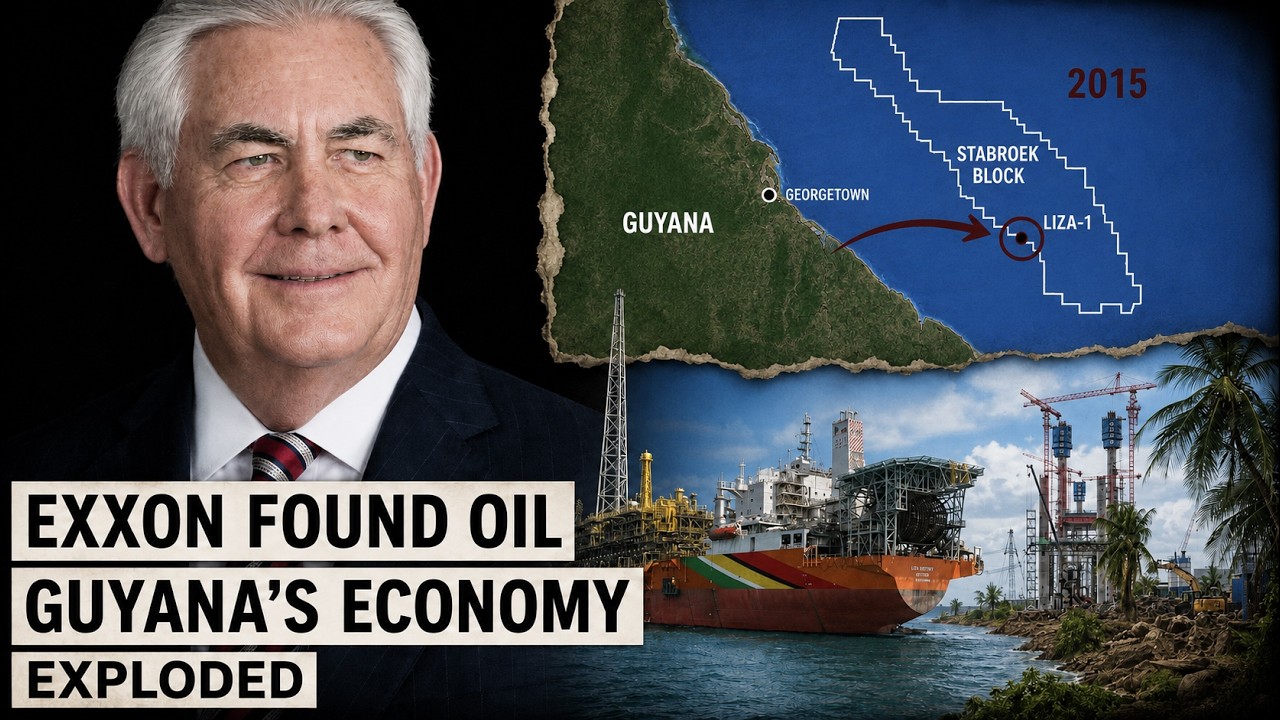
In 2015, ExxonMobil drilled a well 120 miles off the coast of Guyana — a tiny South American nation most people couldn't find on a map. What they found beneath the ocean floor would change everything. Eleven billion barrels of recoverable oil. One of the largest offshore discoveries in a generation. Within years, Guyana went from one of the Western Hemisphere's poorest countries to posting the highest GDP growth rate on the planet — 62% in a single year. But behind the staggering numbers lies a far more complex story. A production sharing agreement that critics say could deprive Guyana of $55 billion. A sovereign wealth fund being drained almost as fast as it fills. A Venezuelan dictator who held a referendum to annex two-thirds of the country. And the looming question that haunts every nation that strikes oil — does the wealth save you, or swallow you whole?
This is the full story of how Exxon's gamble turned Guyana into the world's fastest-growing economy, and the fight over who actually benefits from the boom.
#guyana #exxonmobil #oilboom #fastestgrowingeconomy #stabroekblock #oildiscovery #resourcecurse #venezuela #essequibo #gdp #economics #geopolitics #southamerica #crudeoil #sovereignwealthfund #dutchdisease #naturalresources #oilandgas #economicgrowth #globalfinance #petroleum #documentary #deepwaterdrilling #wealthinequality #macroeconomics
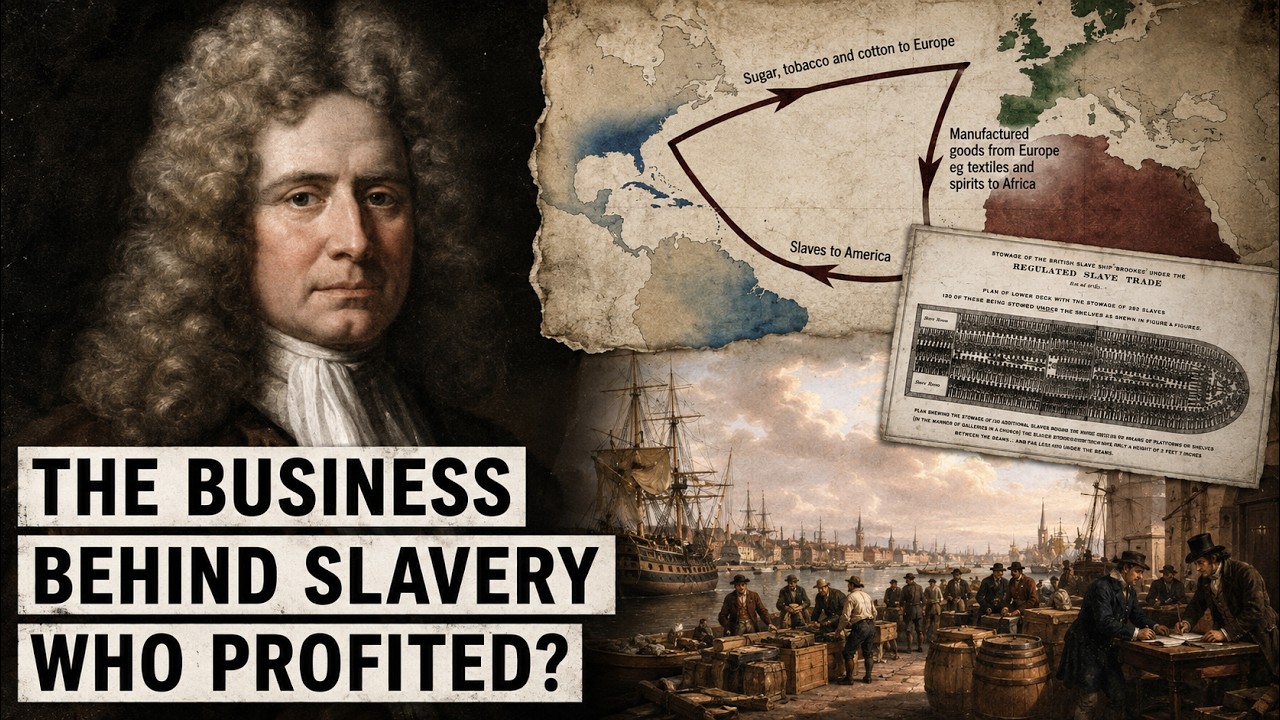
The Atlantic slave trade wasn't just a moral catastrophe — it was the most profitable business operation in human history. For over three centuries, a vast financial machine connected three continents, generating wealth that built cities, funded banks, bankrolled the Industrial Revolution, and created dynastic fortunes that are still compounding today.
In this video, we follow the money. From the Portuguese trading posts of the 1400s to the boardrooms of Lloyd's of London. From the sugar plantations of Jamaica, where enslaved workers had a life expectancy of seven years, to the grand townhouses of Liverpool, where merchant families lived in extraordinary luxury funded by human cargo. From the Royal African Company — a crown-backed corporation that branded enslaved people with its initials — to the Bank of England, whose early governors profited directly from the slave economy.
We examine the triangular trade not as a historical diagram, but as a fully integrated global financial system. We look at who invested, who insured, who extended credit, and who collected the dividends. We explore how slave trade profits became the seed capital for Britain's Industrial Revolution, how New England merchants ran closed-loop supply chains of rum, sugar, and enslaved people, and how the British government paid slave owners £20 million in compensation when slavery was abolished — a debt so large that British taxpayers were still paying it off in 2015.
This is the story of who really profited from the Atlantic slave trade, and why the financial architecture they built is still shaping the world today.
If you found this valuable, please like, subscribe, and share this video. It helps more than you know.
#atlanticslavetrade #slaveryandcapitalism #whoreallyprofited #triangulartrade #slavetradeeconomics #royalafricancompany #lloydsoflondon #britishempire #sugarplantations #industrialrevolution #ericwilliams #capitalismandslavery #liverpool #bristol #middlepassage #slavetradehistory #colonialwealth #economichistory #hiddenhistory #moneyandpower #macrofinance #globaleconomics
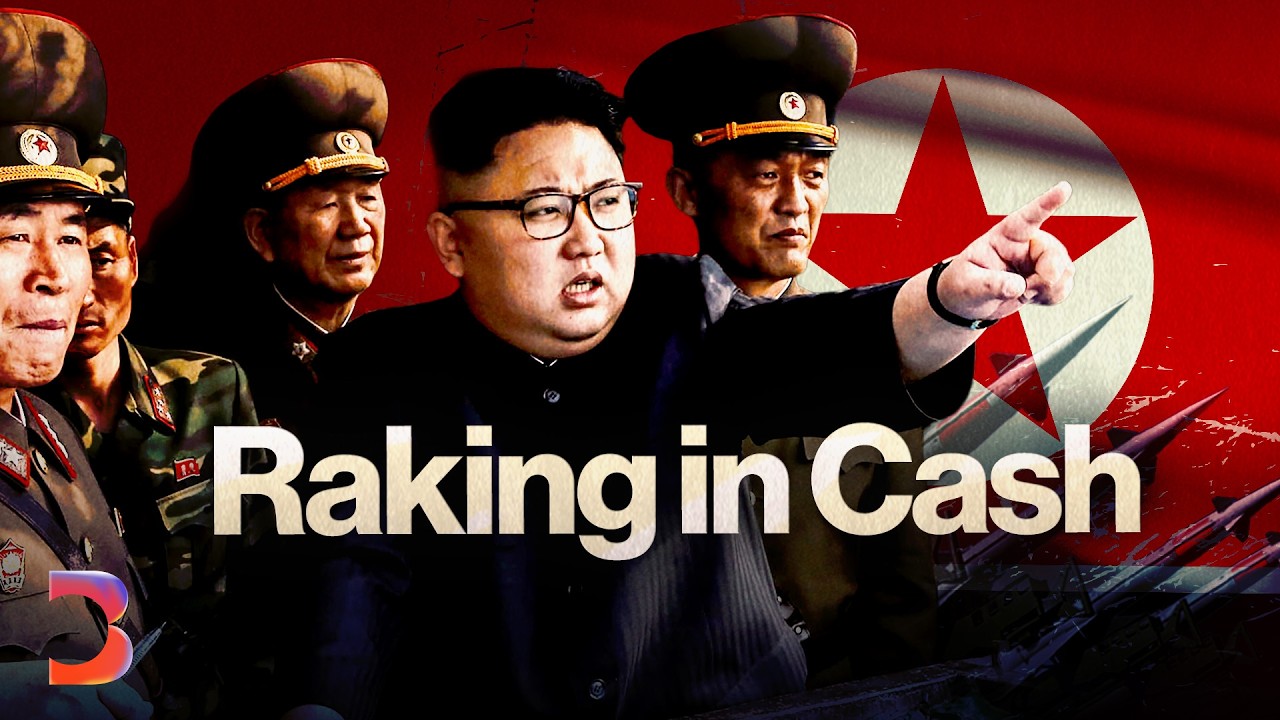
North Korean leader Kim Jong Un has raked in as much as $22 billion in foreign earnings from 2022 to 2025, according to a Bloomberg Economics analysis. That represents a 400% rise in revenues from the previous four-year period despite sweeping global sanctions.
So how did Kim do it, and why is a richer North Korea an even bigger concern for the world?
Read more:
Kim Jong Un Flouted Sanctions to Amass $22 Billion Windfall
https://www.bloomberg.com/grap....hics/2026-north-kore
00:00 Introduction
01:55 Recent economic growth
03:48 Geopolitical landscape
05:21 Crypto thefts
06:14 Trade with China
07:03 Arms sales to Russia
09:22 Regime survival
#northkorea #kimjongun
--------
Like this video? Subscribe: http://www.youtube.com/Bloombe....rg?sub_confirmation=
Get unlimited access to Bloomberg.com for just $1.99 your first month: https://www.bloomberg.com/subs....criptions?in_source=
Bloomberg Originals offers bold takes for curious minds on today’s biggest topics. Hosted by experts covering stories you haven’t seen and viewpoints you haven’t heard, you’ll discover cinematic, data-led shows that investigate the intersection of business and culture. Exploring every angle of climate change, technology, finance, sports and beyond, Bloomberg Originals is business as you’ve never seen it.
Subscribe for business news, but not as you've known it: exclusive interviews, fascinating profiles, data-driven analysis, and the latest in tech innovation from around the world.
Visit our partner channel Bloomberg News for global news and insight in an instant.


Ever heard of the petrodollar and wondered what it is? Why does the U.S. dollar dominate global trade? And why is oil almost always priced in USD? This video breaks down the petrodollar system, how it strengthens the U.S. economy through petrodollar recycling, and why BRICS countries are pushing for de-dollarization with alternatives like the petroyuan. But could the petrodollar collapse? And if it does, would the U.S. lose its status as a superpower?
Using simple language and real-life examples, we'll explore how the petrodollar shapes global finance and why it’s so controversial. Subscribe for more financial videos and tricks!
You can watch the "What is Fiat Money? Why Paper Money Has Value?" here: https://www.youtube.com/watch?v=-SdpOESEcM8
Join this channel to get access to perks:
https://www.youtube.com/channe....l/UCLdLVA4iiC6x22Rb0
Chapters:
0:00 Introduction
0:43 What is the Petrodollar?
3:20 History of the Petrodollar
8:16 How Important is the Petrodollar to the U.S.?
9:45 Why is the Petrodollar Controversial?
13:12 Future of the Petrodollar
Credits:
U.S. Military Edit: https://www.youtube.com/watch?v=c_r7mlIJ8so
Oil in the desert: https://www.youtube.com/shorts/qm-95TsG54Q
USBall thumbnail: Michael_nagik_-_Fourth_of_July.png
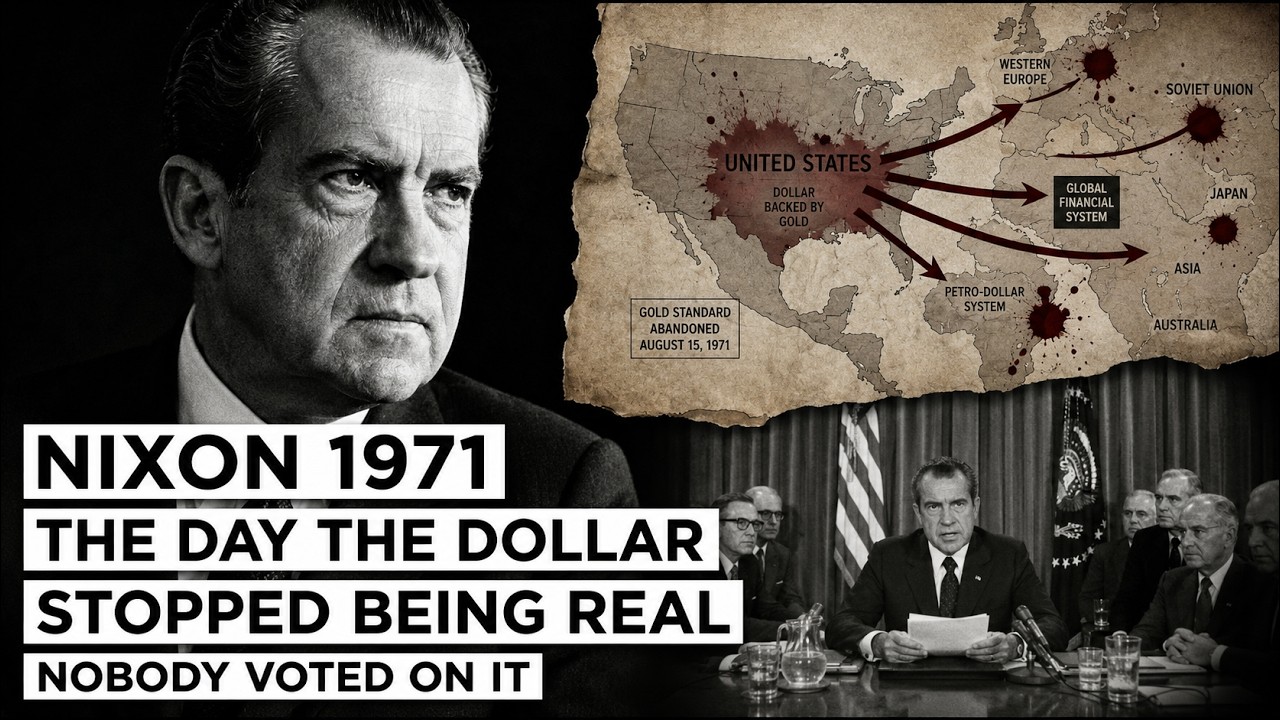
On August 15, 1971, President Richard Nixon interrupted Sunday night television to make an announcement that would quietly reshape the entire global financial system. Without a single vote in Congress, without consulting America's allies, and without any public debate, Nixon severed the last link between the U.S. dollar and gold — ending the Bretton Woods system that had governed international finance since World War II.
What followed was the birth of the fiat money era we still live in today. Inflation spiraled. Oil prices quadrupled. The petrodollar system emerged. And the rules of money changed forever — not through democratic process, but through a secret weekend meeting at Camp David attended by just fifteen men.
This is the story of how one decision, made behind closed doors, turned the dollar from a gold-backed promise into pure government decree — and why you're still paying the price for it more than fifty years later.
Sources and further reading:
Federal Reserve History — "Nixon Ends Convertibility of U.S. Dollars to Gold"
U.S. State Department — "Nixon and the End of the Bretton Woods System, 1971–1973"
Jeffrey E. Garten — "Three Days at Camp David: How a Secret Meeting in 1971 Transformed the Global Economy"
World Gold Council — "The Bretton Woods System"
Bank for International Settlements — Working Paper No. 684, "Triffin: Dilemma or Myth?"
#nixonshock #goldstandard #brettonwoods #fiatmoney #usdollar #monetaryhistory #campdavid #petrodollar #globalfinance #economichistory #nixon1971 #goldwindow #centralbanking #moneyprinting #inflation #reservecurrency #financialhistory #wtfhappenedin1971 #johnconnally #paulvolcker #degaulle #triffindilemma #documentary

In 1971, the United States cut the dollar loose from gold and gambled the entire global economy on a single question: what gives a piece of paper its value once the metal underneath is gone? The answer turned out to be oil — and the deal that made it happen was kept secret for forty-one years.
This is the story of the petrodollar: how a moment of weakness became the most durable instrument of power any nation has ever wielded. From the collapse of Bretton Woods and the Nixon Shock, to the 1973 oil embargo that quadrupled prices overnight, to the chain-smoking Wall Street bond trader who flew secretly into Saudi Arabia in 1974 to strike a deal that would anchor the dollar to the world's most essential commodity.
But this isn't just a story about American advantage. It's a story about a trap. We follow the petrodollars on their journey — from oil importers, into Gulf treasuries, through Western banks, and out as cheap dollar loans to the developing world. Then we watch Paul Volcker raise interest rates to nearly twenty percent and the bill reset overnight, triggering Latin America's "lost decade," sovereign defaults, and more than twenty million people pushed into extreme poverty.
We separate documented history from myth: the real secret Treasury bond arrangement versus the viral "single 1974 oil treaty" that never actually existed. We look honestly at the contested "petrodollar war theory" surrounding Iraq and Libya — what's proven, what's speculation, and why the truth refuses to be neat. And we examine whether the system is finally cracking, with the dollar's reserve share at a three-decade low, the rise of the petroyuan, and central banks quietly stacking gold.
How did America make the world buy oil in dollars? And who really got trapped in it?
If this pulled back the curtain on something you only half understood, hit like and subscribe for more deep dives into the hidden machinery of money and power.
#petrodollar #usdollar #oileconomy #geopolitics #financialhistory #dedollarization #brettonwoods #nixonshock #federalreserve #saudiarabia #opec #petroyuan #brics #reservecurrency #globaleconomy #macroeconomics #economichistory #paulvolcker #debtcrisis #dollarhegemony #wallstreet #powerstructures #moneyexplained #oilanddollars #economicsdocumentary