- General Videos
- Music
- Economics
- Health
- Travel & Events
- History
- Psychology
- Spirituality
- Movies
- News & Politics
- Kmtyw Combat Sciences
- Ɔbenfo Ọbádélé Kambon Videos
- Ɔbenfoɔ Kamau Kambon: Black Liberation Philosophy
- Science, Tech, Engineering and Math
- Permaculture
- Self-Sustainability
- Living Off Grid
- Yoruba Language Learning
- Education
- Mmɔfra Adesua
- Nana Kamau Kambon Playlist
- Livestream
- Komplementarity Kouples and Revolutionary Singles
- Abibitumi Film Series
- Decade of Our Repatriation
- Kwento xpr
- Live
Latest videos
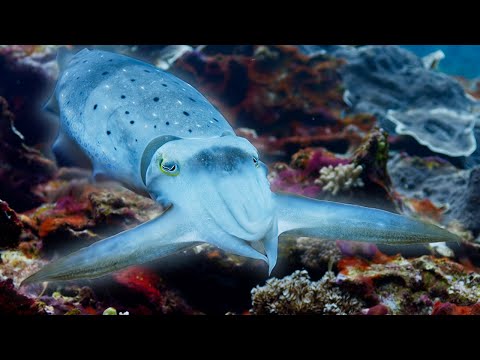

This specialist hunter knows just how dangerous their prey can be. To solve this problem, they hypnotise crabs by changing the colour of their skin.
Subscribe: http://bit.ly/BBCEarthSub
#BluePlanetII
Watch more:
Planet Earth http://bit.ly/PlanetEarthPlaylist
Blue Planet http://bit.ly/BluePlanetPlaylist
Planet Earth II http://bit.ly/PlanetEarthIIPlaylist
Planet Dinosaur https://bit.ly/PlanetDinosaurPlaylist
Taken From Blue Planet II
This bold cinematic experience takes viewers on a magical adventure across the greatest, yet least known, parts of our planet – our oceans. Since Blue Planet aired in 2001, our understanding of life beneath the waves has completely changed. Travelling from the icy polar seas to the vibrant blues of the coral atolls, this series shares these astonishing new discoveries. Meet the strange octopuses lurking in the depths of the Antarctic Ocean. Watch giant trevally fish leap to catch birds in mid-air. And ride on the back of a hammerhead shark as it attacks. Inspiring awe and wonder, Blue Planet II reveals surprising new places, charismatic new characters and extraordinary new behaviours.
Welcome to BBC EARTH! The world is an amazing place full of stories, beauty and natural wonder. Here you'll find 50 years worth of entertaining and thought-provoking natural history content. Dramatic, rare, and exclusive, nature doesn't get more exciting than this.
Want to share your views with the team? Join our BBC Studios Voice: https://www.bbcstudiosvoice.com/register
This is a commercial page from BBC Studios. Service information and feedback: http://bbcworldwide.com/vod-fe....edback--contact-deta

In every female kobudai... is a male in waiting.
Subscribe: http://bit.ly/BBCEarthSub
#BluePlanetII
Watch more:
Planet Earth http://bit.ly/PlanetEarthPlaylist
Blue Planet http://bit.ly/BluePlanetPlaylist
Planet Earth II http://bit.ly/PlanetEarthIIPlaylist
Planet Dinosaur http://bit.ly/PlanetDinoPlaylist
Taken From Blue Planet II
This bold cinematic experience takes viewers on a magical adventure across the greatest, yet least known, parts of our planet – our oceans. Since Blue Planet aired in 2001, our understanding of life beneath the waves has completely changed. Travelling from the icy polar seas to the vibrant blues of the coral atolls, this series shares these astonishing new discoveries. Meet the strange octopuses lurking in the depths of the Antarctic Ocean. Watch giant trevally fish leap to catch birds in mid-air. And ride on the back of a hammerhead shark as it attacks. Inspiring awe and wonder, Blue Planet II reveals surprising new places, charismatic new characters and extraordinary new behaviours.
Welcome to BBC EARTH! The world is an amazing place full of stories, beauty and natural wonder. Here you'll find 50 years worth of entertaining and thought-provoking natural history content. Dramatic, rare, and exclusive, nature doesn't get more exciting than this.
Want to share your views with the team? Join our BBC Studios Voice: https://www.bbcstudiosvoice.com/register
This is a commercial page from BBC Studios. Service information and feedback: http://bbcworldwide.com/vod-fe....edback--contact-deta


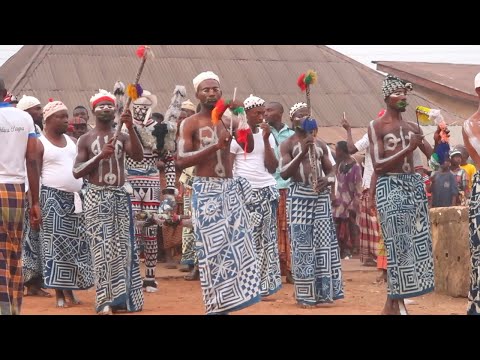

This video is about whether Nigerian cultures are dying in the diaspora. Is the Igbo culture dying inside and outside of Nigeria? Why are Igbos' no longer speaking Igbo or teaching their children the language. How to ensure the continuation of African culture especially in the diaspora where there are external forces working against it.
Udochi, founder of Ikenga Nation chat about our experiences in the diaspora.
Sendwave offers a 1% transaction fee from the U.S. and 0% transaction fees and a "great exchange rate" from Europe's sending countries: U.K., Italy, Spain, and Ireland. When you send remittances through Sendwave, you can pick the money at ANY Zenith, Fidelity, First Bank, GT, or Access Bank branch! Recipients don't need an account with either bank – just their *BVN, a form of I.D. like their passport or driver's license*, and their phone with the 2 Sendwave codes!
If you do decide to use Sendwave, use my promo code IVEOMA. It is a fantastic way to support the movement to help Diaspora invest in Nigeria.
------------------------------------------------------
Iveoma Media uncovers the investment opportunities in Nigeria.
Visit us at: https://www.iveoma.com
Email: hi@iveoma.com
IM on Clubhouse: @iveomamedia
IM Group on Facebook: https://www.facebook.com/groups/iveomamedia
IM on Instagram: https://www.instagram.com/iveomamedia/
IM on Twitter: https://twitter.com/iveomamedia
FTC: Iveoma Media does not endorse or recommend individuals, products, or services that may be discussed on this platform. Iveoma Media expressly disclaims all liability for claims or damages that may result from reliance on the content. Iveoma Media accepts no responsibility for the opinions and information posted on this platform. In no event shall Iveoma Media be liable to you or anyone else for any decision made or taken by you in reliance on information on this site.
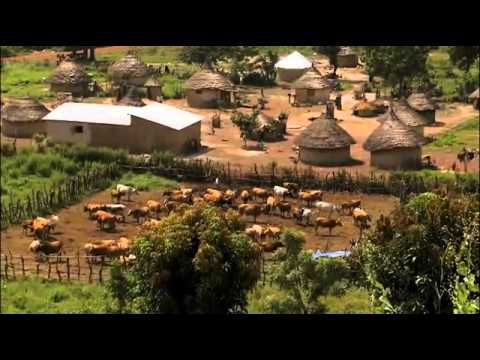

Africa is home to some of the world's most stunning landscapes. Enjoy this 4k Scenic Relaxation film across Africa's most wild destinations. From the highlands of Ethiopia, to the plains of the Serengeti, Africa is a magical continent waiting to be explored! This is one of my favorite films we've done and I'm so excited to share it with you!
Special thanks to Skypacking for filming a lot of these incredible shots. He traveled from Cape Town to Cairo and documented his entire journey - https://youtu.be/NM_hiIwNKGk
Our other Relaxation films:
South America Relaxation Film 4K - https://youtu.be/gghgYaYeG_M
Dolomites Relaxation Film 4K - https://youtu.be/-00PZ3FaHV4
Greece Relaxation Film 4K - https://youtu.be/RSRKFAmfqnI
Sardinia Relaxation Film 4K - https://youtu.be/TIBx3w3loMY
Austria Relaxation Film 4K - https://youtu.be/oHdecbMrcbI
Germany Relaxation Film 4K - https://youtu.be/li-_BLtq58w
Switzerland Relaxation Film 4K - https://youtu.be/kVxTrhojpFI
Italy Relaxation Film 4K - https://youtu.be/2b2gJu-g3qE
Alps Relaxation Film 4K - https://youtu.be/3PZ65s2qLTE
Follow us on instagram @scenicrelaxationfilms
Where we get our music - http://share.mscbd.fm/scenicrelaxation
Great Place for Stock footage - https://bit.ly/38b1EJH
Free stock footage, guides & luts - https://sellfy.com/ryanshirley
Timestamps:
0:00 - Intro
4:11 - Namibia & Egypt
5:35 - Drakensberg & Victoria Falls
6:47 - Tanzania
7:30 - Dallol, Ethiopia
8:36 - Cape Town, South Africa
9:50 - Zanzibar & Seychelles
11:54 - Kenya & Uganda
14:30 - Mauritius & Reunion
15:20 - Morocco
16:48 - Cape Town, South Africa
18:34 - Semien Mountains & Megab
19:51 - Maletsunyane Falls
20:19 - Namibia
20:46 - Victoria Falls, Zimbabwe
21:22 - Tanzania
22:14 - Morocco
26:13 - Zanzibar & Seychelles
28:44 - Uganda
30:13 - Zambia & Wildlife
31:56 - Ghana & Mali
33:26 - Namibia & Cape Town
35:40 - Arusha & Dar es Salaam
37:06 - Ethiopia & Kenya
39:26 - Maasai Mara, Kenya
40:21 - Morocco
42:36 - Tanzania & S. Africa
44:36 - Across Africa
46:53 - Maasai Mara
49:39 - Outro
Thanks for watching :)


I visited this small town in greater Accra more than 5 years ago and I had no memory other than a beautiful Catholic church building and a banana plantation.
The idea of praising this place and its warm people haunted me for more than a week and I finally decided to go back.To my surprise, the church was demolished and access to the banana fields was forbidden.
The fact remains , it was a nice visit. Enjoy the watch !
Follow me on:
•INSTAGRAM: wherethewindtakes_me
•FACEBOOK: where the wind takes me
•TIKTOK: wherethewindtakesme8
Music credit: acoustic breeze-www.bensound.com

This video is about why food is so expensive in Nigeria.
1. Inflation of Naira
2. Weakness of Naira against US dollar
3. Land border closures in 2019 (when Nigerian closed land border trading with neigboring countries)
4. Road closures during Covid-19
5. Limited Storage Facilities available to farmers
6. Covid-19 rules that prevented groups of workers from getting together to work the land
7. Herdsmen
8. Boko Haram
9. Climate change
10. Road insecurity due to Boko Haram, bandits, and herdsmen
11. Underdevelopment and underfunding of the agriculture sector for decades
Nigerian government and people are now focusing on agriculture.
-----------------------------------------------------
Iveoma Media uncovers the investment opportunities in Nigeria.
Visit us at: https://www.iveoma.com
Email: hi@iveoma.com
IM on Clubhouse: @iveomamedia
IM Group on Facebook: https://www.facebook.com/groups/iveomamedia
IM on Instagram: https://www.instagram.com/iveomamedia/
IM on Twitter: https://twitter.com/iveomamedia
FTC: Iveoma Media does not endorse or recommend individuals, products, or services that may be discussed on this platform. Iveoma Media expressly disclaims all liability for claims or damages that may result from reliance on the content. Iveoma Media accepts no responsibility for the opinions and information posted on this platform. In no event shall Iveoma Media be liable to you or anyone else for any decision made or taken by you in reliance on information on this site.

This video is about how does the massive traffic in Lagos Nigeria impact businesses. This is our transportation segment in Nigeria.
22 million people live in Lagos Nigeria. Lagos is Nigeria’s smallest state. Traffic costs the state of Lagos billions of naira. Welcome to Transportation, the segment where we break down everything in the Nigerian transportation sector.
Lagos is known for traffic. Go-slow is a way of life in Lagos.
But have you thought about the impacts of traffic on business in Lagos?
Forbes, Lagos is the 3rd worst city to drive in globally with about 60% congestion.
According to punch, Lagos residents spend 3 out of 10 years in traffic. Lagosians spend an average of seven hours 20 minutes in traffic every day.
Now what is the impact to businesses.
According to “The Socio-Economic costs of traffic congestion in Lagos” Lagosians collectively lose 3 billion hours to traffic congestions yearly, and that if that time were reduced by 20 per cent, it would save the state at least $1 billion dollars or (about N150 billion) yearly.
Traffic reduces productivity.
Think about it, Business lose because all their workers are spending time traveling to work rather than working; delaying (or missing) meetings; due to long travel time.
It is quite normal seeing road rage incidents on the road, because people are stressed. plus sitting in cars contributes negative to exposure to pollution.
There are also cases when goods get destroyed on transit due to lack of good road networks.
Security issues on the road because of traffic. Dispatcher riders (delivery men and women getting robbed).
The bad roads mess up cars. So if you are a business that errands an errand business, you are going to have an high car maintenance bill.
Why is the traffic so bad in Lagos?
-----------------------------------------------------
Iveoma Media uncovers the investment opportunities in Nigeria.
Visit us at: https://www.iveoma.com
Email: hi@iveoma.com
IM on Clubhouse: @iveomamedia
IM Group on Facebook: https://www.facebook.com/groups/iveomamedia
IM on Instagram: https://www.instagram.com/iveomamedia/
IM on Twitter: https://twitter.com/iveomamedia
FTC: Iveoma Media does not endorse or recommend individuals, products, or services that may be discussed on this platform. Iveoma Media expressly disclaims all liability for claims or damages that may result from reliance on the content. Iveoma Media accepts no responsibility for the opinions and information posted on this platform. In no event shall Iveoma Media be liable to you or anyone else for any decision made or taken by you in reliance on information on this site.