- General Videos
- Music
- Economics
- Health
- Travel & Events
- History
- Psychology
- Spirituality
- Movies
- News & Politics
- Kmtyw Combat Sciences
- Ɔbenfo Ọbádélé Kambon Videos
- Ɔbenfoɔ Kamau Kambon: Black Liberation Philosophy
- Science, Tech, Engineering and Math
- Permaculture
- Self-Sustainability
- Living Off Grid
- Yoruba Language Learning
- Education
- Mmɔfra Adesua
- Nana Kamau Kambon Playlist
- Livestream
- Komplementarity Kouples and Revolutionary Singles
- Abibitumi Film Series
- Decade of Our Repatriation
- Kwento xpr
- Live
Latest videos


The maverick engineer Nikola Tesla made his contribution in the mechanical engineering field too. Look at one of his favorite inventions — a bladeless turbine, or Tesla Turbine. The Tesla turbine had a simple, unique design, yet it was able to beat the efficiency levels of steam turbines at that time. Normal turbines are complex in design, with blades of complicated geometry and stator parts. Nikola Tesla once said the Tesla turbine is his favorite invention and he even claimed an efficiency level of 97% for this turbine. Let’s start a design journey to understand this interesting piece of technology, and towards the end we will also verify Tesla’s efficiency claim.
Be our supporter or contributor: https://www.youtube.com/channe....l/UCqZQJ4600a9wIfMPb
instagram : https://www.instagram.com/sabinzmathew/
Twitter : https://twitter.com/sabinsmathew
Telegram : https://t.me/sabinmathew
FB : https://www.facebook.com/SabinzMathew
Voice over artist : https://www.fiverr.com/voiceonthemove
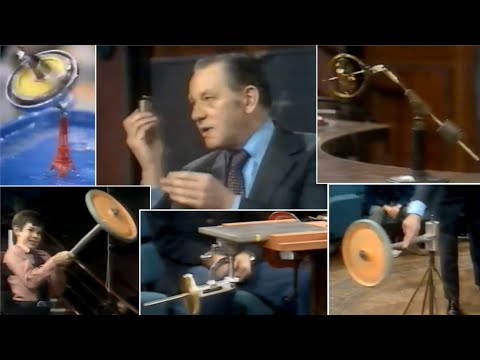
In #AntiGravity Part 3, I have uploaded THE “controversial” 1974 Lecture on the overlooked properties of Gyroscopes by Eric Laithwaite that not only defy everything we know about gravity but defy everything we pretend to know about our very reality itself! This was the 4th of 6 lectures he presented in 1974 as part of UK’s flagship and nationally televised “Christmas Lectures”. His lecture series was titled “The Engineer Through the Looking Glass” following the theme of the famous book “Alice in Wonderland”. The 4th lecture was titled “The Jabberwock”, whom was a monster with many heads that Eric considered a good resemblance of the way the sciences are broken down, the dogmatic “scientific” establishment, and the very man-made “Laws” of Physics themselves. Indeed Eric Laithwaite is very accurate in depicting the state of the “scientific community” then and now as a sort of monster; and the subsequent disgraceful treatment he received for outright shattering many long held beliefs regarding objects in rotation proves just that.
In this lecture, Eric Laithwaite performs a series of mind-boggling experiments that prove gyroscopes, or spinning objects in general, move (or “precess”) with no angular momentum, no centripetal force, and infinite acceleration! Essentially, objects in rotation have mass, velocity, but behave as if their mass is displaced “somewhere” thus resulting in no angular momentum. While this may appear as “gravity defying”, I see if more along the lines that our “understanding” of “gravity” needs a serious re-evaluation. Literally what is this sorcery?? From lifting 20+ pound spinning wheels with a finger or two, heavy gyro wheels balancing UPSIDE DOWN, balanced wheels RISING after spinning, and little children appearing to have super human strength, Eric proves behind a shadow of doubt that there is much more to reality than we would have even deemed possible. But even above the wonders of reality, a simple toy gyroscope exposes the massive multi-year (possibly even multi-centuries or even longer) “scientific” establishment coverup. If the mechanics of a gyroscope have been for so long, and seemingly so easily, covered up, what OTHER sciences and/or technologies are being kept from us?? #FreeEnergy #Telepathy #SpaceTravel
The original upload can be viewed at the Royal Institution’s official website: http://www.rigb.org/christmas-....lectures/watch/1974/
The link between electricity, magnetism, and gravity may very well be staring in our face. And one aspect of the gyroscope that Eric mentioned briefly that deserves close attention is obtaining electricity or “radiation” from a gyroscope. This is touching upon Bruce DePalma’s N-Machine territory, which involves a large magnetic gyroscope. Time to get yourselves some spinning wheels and investigate our hidden (and actively covered) reality for yourself!
Stay Tuned for #AntiGravity Part 4…
View the Full Ongoing Video Series: https://peakd.com/antigravity/@mes/series
Related Videos:
#AntiGravity Video Series: https://peakd.com/antigravity/@mes/series
#MESScience Video Series: https://peakd.com/science/@mes/tutorials
#MESExperiments Video Series: https://peakd.com/mesexperiments/@mes/list
#FreeEnergy Video Series: https://mes.fm/freeenergy-playlist .
------------------------------------------------------
SUBSCRIBE via EMAIL: https://mes.fm/subscribe
DONATE! ʕ •ᴥ•ʔ https://mes.fm/donate
Like, Subscribe, Favorite, and Comment Below!
Follow us on:
MES Truth: https://mes.fm/truth
Official Website: https://MES.fm
Hive: https://peakd.com/@mes
MORE Links: https://linktr.ee/matheasy
Email me: contact@mes.fm
Free Calculators: https://mes.fm/calculators
BMI Calculator: https://bmicalculator.mes.fm
Grade Calculator: https://gradecalculator.mes.fm
Mortgage Calculator: https://mortgagecalculator.mes.fm
Percentage Calculator: https://percentagecalculator.mes.fm
Free Online Tools: https://mes.fm/tools
iPhone and Android Apps: https://mes.fm/mobile-apps

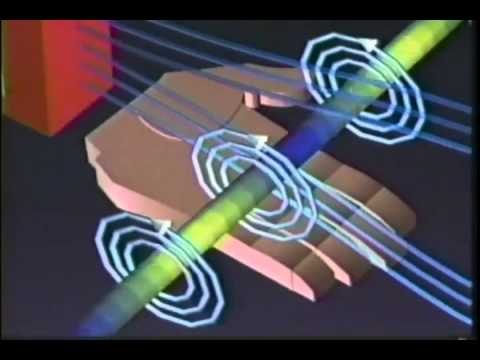
Electromagnetism is one of the fundamental forces and is the glue that holds all matter together. Find out how photons, the charged particles that allow us to see the world around us, are at the heart of electromagnetism.
Catch new episodes of HOW THE UNIVERSE WORKS Tuesdays at 10/9c on Science! | http://science.discovery.com/t....v-shows/how-the-univ
Watch full episodes:
http://bit.ly/HTUWFullEpisodes
Subscribe to Science Channel:
http://www.youtube.com/subscri....ption_center?add_use
Check out SCI2 for infinitely awesome science videos. Every day.
http://bit.ly/SCI2YT
Download the TestTube app:
http://testu.be/1ndmmMq

![Professor Eric Laithwaite: The Circle of Magnetism [1968]](https://i.ytimg.com/vi/0tJfqMYHaQw/hqdefault.jpg)
Professor Eric Laithwaite (1921-1997) of Imperial College London demonstrates some of the most difficult concepts in electricity & magnetism.
This is one of a series of 16mm colour films made for schools. They were all made in Eric Laithwaite's "Heavy Electrical Laboratory" in the Electrical Engineering Department at Imperial College London.
For more on Eric Laithwaite:
http://www2.imperial.ac.uk/blo....g/videoarchive/2009/



For more cool science visit http://www.scienceandcocktails.org
In the framework of the largest string theory conference in the world, Strings 2019, Science and Cocktails organized a special event at Flagey in Brussels. We were sipping cocktails in the art-deco building with string theorist and science superstar Robbert Dijkgraaf as he told us all about the fundamental laws of Nature. Afterwards, cellist and composer Benjamin Glorieux performed a musical piece together with invited guests especially commissioned for the occasion, while live-video artist Klaas Verpoest accompanied them with his visual magic.
What is string theory? What happens to stuff that falls inside a black hole? What are the fundamental building blocks of space and time? Did Nature have any choice in picking the fundamental laws of physics? What is the role of mathematics in physics?
This talk by professor Robbert Dijkgraaf was recorded on 13 July 2019 at Flagey in Brussels. For more science lectures with dry ice cocktails and live music, visit:
• Science & Cocktails Brussels
Web: http://www.scienceandcocktails.org/bxl
Contact: bxl@scienceandcocktails.org
Facebook: https://www.facebook.com/scienceandcocktailsbxl
Youtube: https://www.youtube.com/playli....st?list=PL2c_ujuXhAv