








- General Videos
- Music
- Economics
- Health
- Travel & Events
- History
- Psychology
- Spirituality
- Movies
- News & Politics
- Kmtyw Combat Sciences
- Ɔbenfo Ọbádélé Kambon Videos
- Ɔbenfoɔ Kamau Kambon: Black Liberation Philosophy
- Science, Tech, Engineering and Math
- Permaculture
- Self-Sustainability
- Living Off Grid
- Yoruba Language Learning
- Education
- Mmɔfra Adesua
- Nana Kamau Kambon Playlist
- Livestream
- Komplementarity Kouples and Revolutionary Singles
- Abibitumi Film Series
- Decade of Our Repatriation
- Kwento xpr
- Live
Top videos


Master KG presents the official audio to Skeleton Move featuring Zanda Zakuza.
Available to download/stream via:
iTunes: http://smarturl.it/MasterKGSkeletonMove
Apple Music: http://smarturl.it/MasterKGSkeletonMove
Google Play: http://smarturl.it/MasterKGSkeletonMove
Spotify: http://smarturl.it/MasterKGSkeletonMove
Tidal: http://smarturl.it/MasterKGSkeletonMove
Deezer: http://smarturl.it/MasterKGSkeletonMove
Amazon: http://smarturl.it/MasterKGSkeletonMove
© 2018 Open Mic Poductions
Follow Master KG
Facebook: / masterkgsa
Instagram: / masterkg_skeleton_move
Follow Africori:
/ africori
/ africori
/ africori
Subscribe here: - http://smarturl.it/YouTube_Subscribe
Digital distribution: http://www.africori.com/ #africanmusic #thebestinafricanmusic #africori #africanmusic #thebestinafricanmusic #africori #africanmusic #thebestinafricanmusic #africori LEVEL UP with Vusi Nova • Level Up with Vusi Nova
#africori #thebestinafricanmusic #bestofafrica
music1 songs
Skeleton Move (feat. Zanda Zakuza)Master KGSkeleton Move
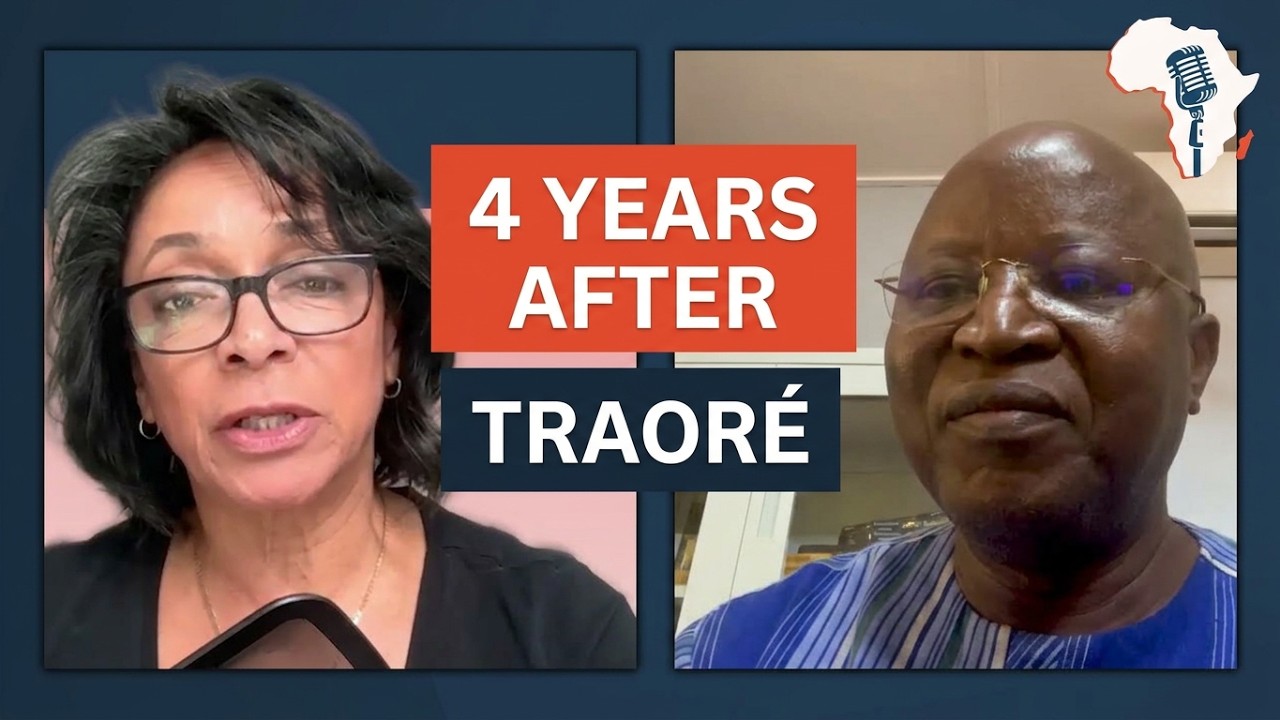

My Burkina Faso, Four Years After Traoré
We look Burkina Faso four years into Captain Ibrahim Traoré’s rule, with a conversation with Dr. Lamourdia Thombiano a soil scientist and writer from eastern Burkina Faso. He's also a member of one of Burkina Faso's royal families.
He give us his account of security in the country, sovereignty, indigenous values, and the political mood in the country, with a strong focus on how many Burkinabe people see the changes firsthand.
Dr. Thombiano argues that the country has more hope, cohesion, and national purpose than it did before Traoré took power, especially outside the cities. He also explains why, in his opinion, many citizens view the current period less through the lens of elections and individual rights, and more through development, social unity, and cultural grounding.
* Dr. Thombiano says Burkina Faso feels more vibrant and politically engaged than it did four or five years ago.
* He links today’s patriotism to the legacy of Thomas Sankara, saying Traoré’s appeal partly comes from continuing Sankara’s unfinished project.
* Security remains a major challenge, but he frames it as part of a broader package that includes peace, social cohesion, development, and public confidence.
*He says the army’s morale has improved because soldiers are better equipped and supported by civilians who share information, food, and water.
* He argues that many Burkinabe people would prefer development spending on health, agriculture, and education over the costs of elections.
*He describes a shift toward indigenous governance, including traditional leaders handling disputes that are then recognized by the Ministry of Justice.
*He says Burkina Faso is moving toward a model where democracy is not only about elections, but about good governance and communal responsibility.
*He highlights concrete agricultural changes, including subsidized fertilizer, government ploughing support, and new crops such as coffee, cacao, plantain, banana plantain, and wheat.
*He says the youth are being trained through “immersion patriotique,” with 65,000 young people reportedly trained this year in values like solidarity, hospitality, fairness, and service.
*On freedoms and repression, he argues that in Burkinabe culture the collective takes priority over the individual, so public speech is judged by whether it helps or harms the community.
Chapters
00:00 — Dr. Thombiano introduces himself and Burkina Faso’s new political reference points
00:56 — Traoré’s rise, his sovereignty message, and the promise to restore security
01:26 — Why many Burkinabe people feel renewed enthusiasm and national momentum
03:50 — Sankara’s influence and Traoré’s revolutionary legacy
04:20 — Security as part of a wider package of peace, cohesion, and development
05:19 — Why Sahel insecurity is viewed as a regional and global problem
06:20 — Improved army morale and stronger public support
07:18 — Dissolving political parties and delaying elections
07:47 — Indigenous values and traditional dispute resolution
09:16 — Democracy through a Burkinabe lens
10:41 — Why many people reportedly prefer development spending over election costs
11:09 — Mobile hospitals, rural healthcare, and agricultural support
12:07 — How Burkina Faso’s agricultural possibilities are changing
13:34 — Innovation, agricultural dynamism, and optimism
14:04 — Why optimism is stronger in rural areas
16:06 — Traoré’s hero status among young people
18:04 — French influence, Russian cooperation, and international alliances
19:59 — Burkina Faso as a country of hope and sovereignty
20:30 — “Immersion patriotique” and training a new generation
21:56 — Personal freedoms, collective responsibility, and cultural perspectives
Notable quotes
Copy
“It’s a country of hope.”
Copy
“The individual is at the service of the community, not the other way round.”
Copy
“People realize the amount of money which is being used to organize elections, they can use it for health, for agriculture, for education.”
For those of you interested in Dr Thiombiano's books:
His writer's name is Prince Lamourd Thiobiany
His website: www.worldrootsacademy.com
1.African Leadership - 25 Principles for Excellent African Leadership
2. Glory to God - The Principles of Animism
3. Let's Be Ourselves - Glory to God. The Practises of Animism
4. Before the Fires I was Black. A Blueprint for a Brighter Future.

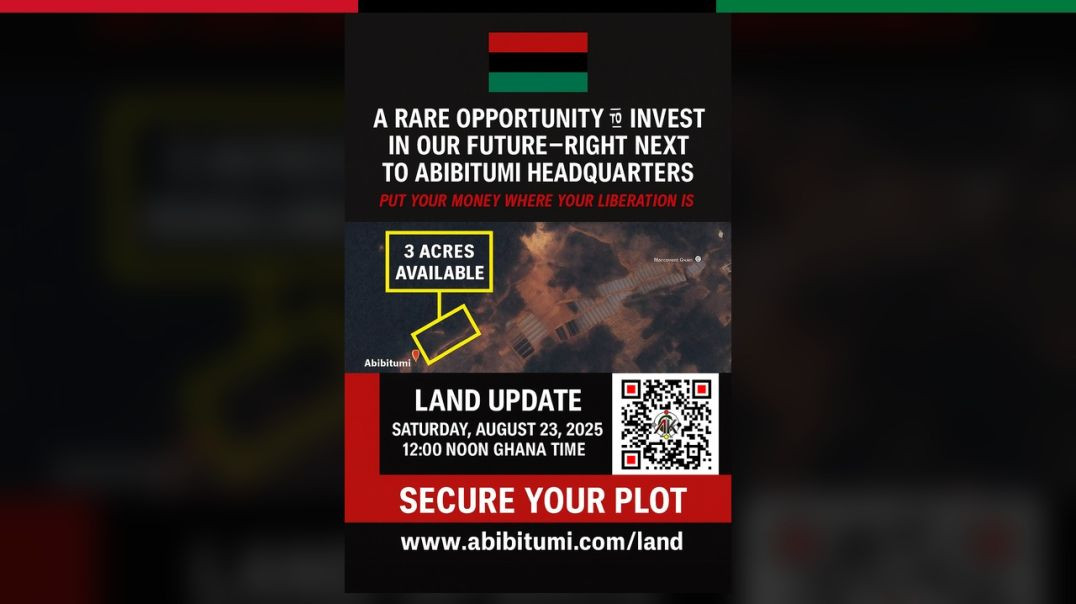

Featured 10-minute excerpt from a complete paid presentation.
Get the complete presentation for $20:
https://www.abibitumi.com/product/land-update-a-rare-opportunity-to-invest-in-our-future-right-next-to-abibitumi-headquarters/?utm_source=abibitumitv&utm_medium=video_preview&utm_campaign=obadele_paid_presentations
#abibitumi #obadelekambon #blackstudies #door
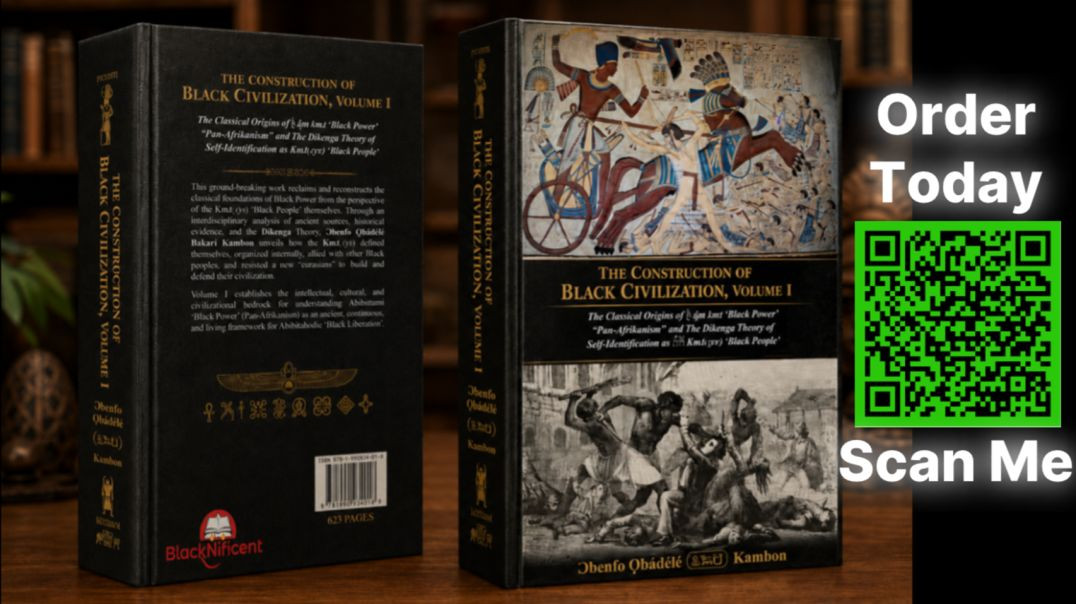
The Construction of Black Civilization, Vol. 1 (Commercial)
Order your copy of The Construction of Black Civilization, Volume I: The Classical Origins of sḫm Km
‘Black Power’ “Pan-Afrikanism” and The Dikènga Theory of Self-Identification as Kmt(.y.w) ‘Black People’
Order here: https://www.abibitumi.com/prod....uct/construction-of-


Imagine transforming barren and empty landscapes into abundant food forests, layered with mangoes, legumes, garlic, herbs and corn.
SwaYYam in South India is doing just this by using agroforestry and alley cropping to revitalise soils, produce an abundance of crops and educate local farmers.
Agroforestry and alley cropping allow multiple crops to be stacked in one space, with tree crops providing shelter for low-lying plants and holding water in the soil with their roots. Fast growing biomass plants are used as groundcover and then as a mulch to feed the soil. Nitrogen-fixers make nitrogen available in the soil for other plants and a range of crops are grown for year-round food.
Swales and ploughing on the contour work with the land's orientation to maximise water capture. Deep irrigation and pitcher irrigation take water deep to the roots of trees, especially young sapling plantings.
SwaYYAm and their educational centre, Open Shell Farm, enables local farmers to learn regenerative farming methods, helping them create their own sustainable incomes through healthy soils and bountiful harvests.
SwaYYAm is a recipient of the 2020 Permaculture Magazine Prize: https://www.permaculture.co.uk..../articles/2020-perma
Malvikaa from SwaYYam shares the story of the project and some of their techniques in PM108: https://www.permaculture.co.uk/issue/summer-2021







The School of the Ancient Alkebu-lanic Mystic, Rites, Inc.
1775 I Street NW Suite #1150
washington, D.C. 20006
(202)-266-9941
[a]www.saamr.org[/a]
"A Library of Knowledge; the Repository of Truths; A Boundless Historical Archive; & Paths to a Better You." - Heh Heru, SAAMR Founder & President
Don't forget to visit our website at [a]www.saamr.org[/a] for more great information and free research/school opportunities to further your awakening travels!
Presidents Email: charriott@saamr.org
DISCLAIMER: If you own the content that we have featured on our channel please do not report it as copyright infringement. We are a nonprofit mystery school and utilize this space to teach, unify the masses of those experiencing wakefulness, and to assist those yet to fully awaken. Contact us via email, phone call, or by paying us a visit if you would like for us to remove your specific organizations content.
This video is [FAIR USE] under © COPYRIGHT LAW it is: 1. Noncommercial, 2. trans-formative in nature, 3. not competitive with the original work, 4. not affecting its market negatively.
FAIR USE NOTICE: This video contains copyrighted material, the use of which has not always been specifically authorized by the copyright owner. We are making such material available in our efforts to advance understanding issues, etc. We believe this constitutes a 'fair use' of any such copyrighted material as provided for in section 107 of the US Copyright Law. In accordance with Title 17 U.S.C. 107, the material on this site is distributed without profit to those who have expressed a prior interest in receiving the included information for research and educational purposes.


In this interview, we break down the FBA mindset, anti-African rhetoric, and why this movement may not have the staying power some believe. A candid conversation about identity, the Black diaspora, and where these tensions could lead.
Javen Bernadez's Youtube: https://www.youtube.com/@javenbernardez/videos
#fba #blackdiaspora #diaspora #africa #blackamericans #diaspora #black #american #black #foundationalblackamerican