
- General Videos
- Nnwom
- Sikas?m
- Akwahosan
- Travel & Events
- Abak?s?m
- Adwene mu Nhwehw?mu
- Honhom fam nne?ma
- Fim
- News & Politics
- Kmtyw Combat Sciences
- Ɔbenfo Ọbádélé Kambon Video ahorow
- ?benfo? Kamau Kambon: Black Liberation Philosophy
- Science, Tech, Engineering and Math
- Permaculture
- Self-Sustainability
- Living Off Grid
- Yoruba Language Learning
- Nhomasua
- Mmɔfra Adesua
- Nana Kamau Kambon Playlist
- Livestream
- Komplementarity Kouples and Revolutionary Singles
- Abibitumi Film Series
- Decade of Our Repatriation
- Live

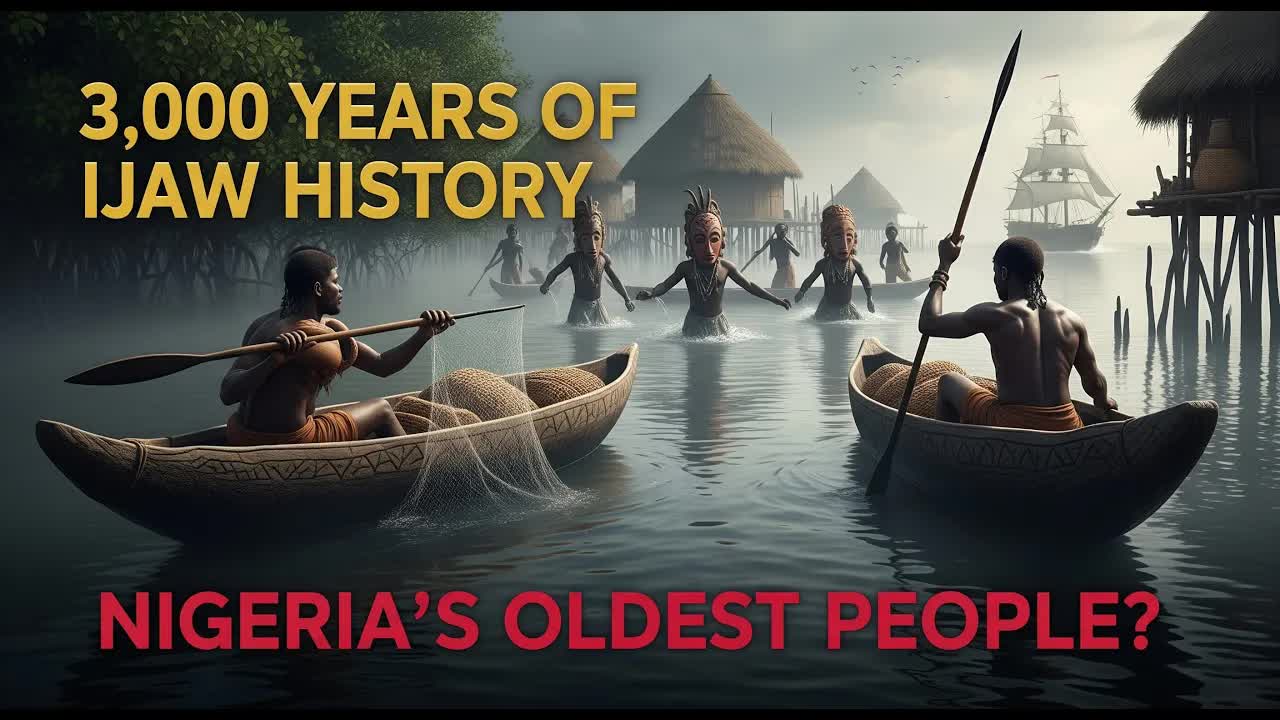

















Origin of the Izon People: The 20,000 Year Migration From Nile Valley to Niger Delta

The 20,000 year journey of the Izon people starts here.Where did the Izon come from? For centuries, this question has haunted historians of West Africa. This documentary traces the complete origin story of the Izon nation from the Last Glacial Maximum 20,000 years ago, through the Green Sahara (African Humid Period) of 5000 BCE, to the rise and fall of their first city-state Agadagba-bou in the Niger Delta.Follow IJO, the ancestral father of the Izon, as climate change forces his people on an epic migration: from Nile Valley to Lake Chad down to the Middle Niger then Ile-Ife to Benin and finally the Niger Delta. Discover the ORU/Horu, the aboriginal Izon settlers of Ife who lived among other ancient groups before political unrest pushed them south to found the first undisputed Izon homeland on Wilberforce Island, Bayelsa State.This is the untold story of how the African Humid Period created and destroyed civilizations. A story of survival, identity, and the forgotten kingdoms of ancient Nigeria.CHAPTERS:00:00 The Question: Where Did The Izon Come From? Mythology 05:04 The Question: Where Did The Izon Come From? Archaeological perspective 08:23 Last Glacial Maximum: Proto-Ijoid in the Nile Valley09:03 The Bølling Allerød: Proto-Ijoid in the Nile Valley09:20 African Humid Period: The Green Sahara Migration10:26 Lake Chad, Lake Mega Chad & Middle Niger: 5000-2000 BCE10:55 End of the African Humid period 12:50 Ile-Ife & Benin: The ORU Aboriginals13:20 Political Unrest: The Exodus South13:38 Agadagba-bou: First Izon City-State in the Niger Delta14:00 Collapse & Legacy: What Happened Next#izonhistory #nigerdelta #africanhistory #greensahara #nigerianhistory #ancientafrica #ileife #beninempire #agadagbabou #ijo #oru #lastglacialmaximum #africanhumidperiod #wilberforceisland #bayelsa

SORT BY-
Top Comments
-
Latest comments