Featured video

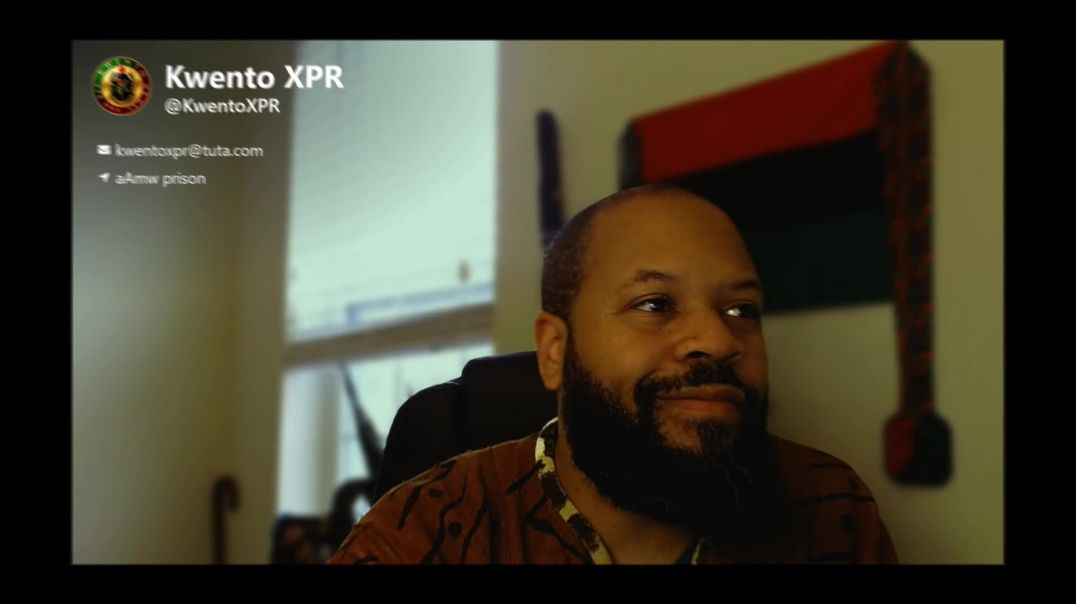
Bedroom Colonialism with Ɔbenfo Kambon

07/17/24·Ɔbenfo Ọbádélé Kambon Videos·1:05:17

Play

Bedroom Colonialism with Ɔbenfo Kambon

Hit me up on my $cashapp if you like my content: $obenfoobadele
⁣This presentation sets out to introduce the concept of bedroom colonialism and the related concept of mulattofication as intergenerational scourges of classical and contemporary Kmtyw ‘Black People’. By means of multimodal, multidisciplinary analysis and participant observation of victims of bedroom colonialism (BC) via fieldwork in their natural environment, we demonstrate multiple examples of these concepts in their socio-cultural milieu. We find that, as intended by anti-Black perpetrators of BC (eurasians), bedroom colonialism has and continues to pose a significant impediment to the acquisition, maintenance, and expansion of Abibitumi ‘Black Power’ and Abibifahodie ‘Black Liberation’. In conclusion, once the root causes of bedroom colonialism are understood, conceptual clarity may be attained and correct courses of action may be pursued.
“Bedroom colonialism” is a term used to describe a form of intimate or interpersonal colonialism that manifests within romantic and sexual relationships, often highlighting the dynamics of power, race, and exploitation. It involves the perpetuation of colonial attitudes and behaviors in private, intimate spaces, where one partner, often from a dominant or colonizing culture, exerts control or dominance over the other, typically from a marginalized or colonized background.
This concept can be understood through various lenses, such as:
1. Racial Fetishization and Exoticism: It involves viewing a partner primarily through a racialized or exoticized lens, reducing them to stereotypes or fantasies rooted in colonial histories. This reduces the partner to an object of desire based on their race, rather than valuing them as a whole person.
2. Power Dynamics: In these relationships, power imbalances reflect broader societal hierarchies, where the dominant partner may exert control, whether overtly or subtly, over the marginalized partner. This can manifest in emotional manipulation, coercion, or even subtle forms of dominance that replicate colonial power structures.
3. Cultural Appropriation and Erasure: The dominant partner might appropriate or disrespect the cultural practices and identities of the marginalized partner, further entrenching a sense of dominance and superiority. This can lead to the erasure of the marginalized partner’s cultural identity within the relationship.
4. Historical Context: This concept is rooted in historical practices where colonizers exploited and dehumanized colonized people, including sexual violence and forced relationships. These historical traumas often reverberate in contemporary relationships, reflecting unresolved issues of power, control, and racial dynamics.
In examining “bedroom colonialism,” it is crucial to consider the work of scholars and thinkers who delve into the intersections of race, sexuality, and power, such as bell hooks, Audre Lorde, and Frantz Fanon. These perspectives help shed light on how intimate relationships can perpetuate systemic inequalities and the importance of addressing these dynamics to foster more equitable and respectful partnerships.

Share

Articles Explore more

The inaugural Abibitumi Abibifahodie Film Festival launches this November

The inaugural Abibitumi Abibifahodie Film Festival launches this November

The inaugural Abibitumi Abibifahodie Film Festival launches this November

Buju vs Beenie - Contextualizing Consciousness in Dancehall

Buju vs Beenie - Contextualizing Consciousness in Dancehall

This article is a continuation of my discussions on Reggae and Dancehall that were started in my Abibitumi Seminar Presentation -- Bout "One Love": A Garveyite Assessment of Bob Ma..

ACBN Perspective: The Anti-African Personality in the 21st Century!

ACBN Perspective: The Anti-African Personality in the 21st Century!

This is an old article I wrote 10 years ago on Amos Magazine.

Implementing GPOs in the African Community: A Path Forward

Implementing GPOs in the African Community: A Path Forward

The role GPO’s can play in fostering cooperative economics and stimulating an independent marketplace in the African community.