








- General Videos
- Music
- Economics
- Health
- Travel & Events
- History
- Psychology
- Spirituality
- Movies
- News & Politics
- Kmtyw Combat Sciences
- Ɔbenfo Ọbádélé Kambon Videos
- Ɔbenfoɔ Kamau Kambon: Black Liberation Philosophy
- Science, Tech, Engineering and Math
- Permaculture
- Self-Sustainability
- Living Off Grid
- Yoruba Language Learning
- Education
- Mmɔfra Adesua
- Nana Kamau Kambon Playlist
- Livestream
- Komplementarity Kouples and Revolutionary Singles
- Abibitumi Film Series
- Decade of Our Repatriation
- Kwento xpr
- Live
News & Politics


When Moammar Gadhafi’s regime collapsed in 2011, Libya was left leaderless. In the ensuing years, rebel militias have battled one another for control of the country in a series of deadly bombings and shootouts. With fighting unavoidable and no end in sight, Libyan civilians are picking up AK-47s and rocket-propelled grenades (RPGs) to protect their families from the militias.
Of course, they don't have to look far. Libya’s parliament estimates that 15 million weapons—many left over from Gadhafi’s massive caches—are circulating within the country. That’s two and a half weapons per person. Times being what they are, many use social media to source their household arms. Since the beginning of the year, Vocativ has been monitoring Facebook and other online activity in Libya to track this phenomenon. What we discovered was a virtual arms market, complete with dealers claiming to live in Tripoli, advertised prices and hagglers in the comment section.
In a video report from on the ground in Tripoli, Vocativ producer Lindsay Snell meets with an arms dealer who refers to himself as “Batsha.” Squatting over his collection of ammunition and firearms, Batsha selects a weapon and demonstrates how to load it. “This is a Kalashkinov. It is the most popular weapon in Libya. It costs $1,200,” he says as he cocks the rifle. After rattling off a list of the other guns and missiles up for sale (their prices range from $800 to $5,000), he says, “Everyone in Libya is armed. Everyone has a weapon.”
After speaking with a handful of civilians during our visit to Tripoli, Batsha’s claim that virtually all of Libya packs heat checks out. “Everyone has to be armed. We don’t trust the militias, we don’t trust the government, we don’t trust anyone,” says university student Ahmed Klisel, AK-47 in hand. "It’s really easy to obtain weapons in Libya. An AK-47 is a necessity in every household. More households have more than one. Or they have an AK-47 and a few pistols, handguns.”
And it’s not just men who carry weapons. Fidgeting with a small handgun, single mother Hind Ahmed Benghagab says, “We never thought we would see the day where Libyan women would need guns.”
With the massive surplus of military-grade weapons and the ease of purchase, deadly armaments often wind up in the wrong hands. According to a recent U.N. report, violent militant groups from Boko Haram in Nigeria to jihadis in Syria have obtained guns and other arms from Libya. While strife and chaos is Gadhafi's endowment to the nation he ruled with an iron fist, it's the second lives of the weapons he amassed and left behind that may be his lasting and violent global legacy.
http://voc.tv/1rxGA4D
Subscribe! http://www.youtube.com/subscri....ption_center?add_use
See more on our website: http://www.vocativ.com
Follow us on Twitter: https://twitter.com/vocativ
Like us on Facebook: https://www.facebook.com/Vocativ

The continent of Africa has had it’s fair share of mercenaries who are hired by different parties to help with either effecting regime change or for purposes of protecting countries from insurgent forces.
One of the most popular of these was a man called Bob Denard who became legendary for his role in attempting to overthrow regimes in a series of wars that accompanied the decolonisation of Africa, during the 1960s and 1970s
Claiming to have support from France for operations meant to retain French influence in its former colonies, Bob called himself the “Pirate of the Republic” in a career which began in Congo and ended in the Comoros islands.
Bob Denard was involved in four of the 19 coup attempts that have shaken the Comoros archipelago since the islands won independence from France in 1975. At one point he was considered as the de facto leader of the Comoros.
Many Comorians blamed him for destabilising the islands, as well as other parts of Africa.
In this episode of African Biographics, we look at the illustrious career of Robert Denard, a career mercenary who played a part in charting the course of history in a few African countries.
****************************************************************************************************
Sources:
The Mercenary Position, Howard French, Transition, No. 73 (1997), pp. 110-121 (12 pages), Published By: Indiana University Press
https://nationalinterest.org/b....log/buzz/one-man%E2%
https://www.google.com/amp/s/a....mp.theguardian.com/n
https://apnews.com/article/613....41e6567bac4d21383431
https://link.springer.com/chap....ter/10.1007/978-1-34
https://www.cairn-int.info/art....icle-E_VIN_141_0143-
http://news.bbc.co.uk/2/hi/europe/7044019.stm
https://www.reddit.com/r/TrueReddit/comments/6b0jvu/one_man_private_army_story_of_french_mercenary/utm_medium=android_app&utm_source=share
https://en.topwar.ru/172246-bo....b-denar-korol-naemni
https://www.youngpioneertours.....com/dprk-thwarted-co
https://www.blackpast.org/glob....al-african-history/c
https://www.britannica.com/place/Comoros
https://www.csmonitor.com/Worl....d/Global-News/2009/1
**************************************************************************************************
Music:
Heartbreaking Kevin MacLeod (incompetech.com)
Licensed under Creative Commons: By Attribution 3.0 License
http://creativecommons.org/licenses/by/3.0/
Kumasi Groove by Kevin MacLeod is licensed under a Creative Commons Attribution 4.0 licence. https://creativecommons.org/licenses/by/4.0/
Source: http://incompetech.com/music/r....oyalty-free/index.ht
Artist: http://incompetech.com/
Desert City by Kevin MacLeod is licensed under a Creative Commons Attribution 4.0 licence. https://creativecommons.org/licenses/by/4.0/
Source: http://incompetech.com/music/royalty-free/index.html?isrc=USUAN1100564
Artist: http://incompetech.com/
Emmit Fenn | Allégro - YouTube
Lullaby - Cooper Canell
Night Snow - Asher Fulero
***************************************************************************************************
Feel free to reach out to us at africanbiographics@gmail.com
#BobDenard #Mercenaries #Africa


16/07/2021FTS 12.30 *Cuban govt. calls for understanding in the face of destabilization threats*Germany: deadly flooding leaves trail of damage in the country. These and many other stories now!Visit our website: https://www.telesurenglish.net/ Watch our videos here: https://videos.telesurenglish.net/en

The Black People of Ecuador - Diaspora in South America.
In Esmeraldas Ecuador beach. In this video, I visit Esmeraldas Ecuador, where there is a thriving afro Ecuadorian community join me as I hit the streets to learn about the afro Community that's part of the African diaspora.
Esmeraldas is a coastal city in northwestern Ecuador. It is the seat of the Esmeralda's Canton and capital of the Esmeraldas Province. It has an international seaport and a small airport. Esmeraldas is the major seaport of northwestern Ecuador, and it lies on the Pacific coast at the mouth of the Esmeraldas River. -Wiki
This is a Travel Channel about Finance Travel Budgeting around the world and today we are in Ecuador. Subscribe today so you don't miss more Travel guide info, thank you and I will see you in the next video.
👇👇👇👇---------------------------------
Want To help my channel grow so I can make more videos like this, I'm accepting donations. when you donate your contribution helps fund future Videos it would be greatly appreciated link below:
PayPal https://www.paypal.com/cgi-bin/webscr?cmd=_s-xclick&hosted_button_id=XP62HMHDQFRDN
or
(Cashapp) https://cash.me/$Acetravels leave a message
👇👇👇👇-----------------------------
My guest:
My driver IG: - Bennet199_
Rapper/fisherman Fbook Name: Alexis Midevos
Restaurant Owner IG: Copetemireya
Become a Patreon for this channel gets some behind scene plus more footage. https://www.patreon.com/Thisisacelive
Follow me on Social media @ thisisacelive
Email me @ thisisacelive@gmail.com
Team Passport T-shirts - teespring.com/stores/thisisacelive
My equipment setup Affiliate Links
DJI Mavic Air 2 Fly More Combo https://amzn.to/2zqcJrs
GoPro Hero 8 Black https://amzn.to/3eaZjhC
Osmo Pocket https://amzn.to/2VoB3zk
Canon Vixia HF R800 https://amzn.to/2EeHNvh
Joby Tripod https://amzn.to/2PkiVmG
Editing software https://amzn.to/2Plm0Dh
Hp Notebook https://amzn.to/2PkBZl4
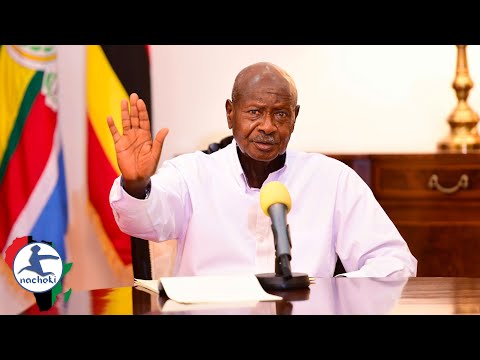
Uganda President Scathing Speech Calling All Africans a Disgrace for Depending on the West https://youtu.be/keoWnZaFvRE #Africaspeech #candidafrica #speech
Watch the full event here World Health Summit Regional Meeting 2021 - Award & Closing Ceremony https://youtu.be/0wGkAujB2rA over at the @Makerere University channel.
Thank you for watching 2nacheki pronounced (tunacheki) it means 'We Are Watching ' in Swahili slang. Our goal is to educate & inform you about everything in Africa while showing the World that Africa is Watching.
~~-~~-~-
Our #Africanvideos covers; #AfricaContent #AfricaLists #AfricaNews #AfricaMusic #AfricaDance #AfricaSpeeches #AfricaEntertainment #AfricaHistory #AfricaInterviews #AfricaDocumentaries #Panafricanism #Africapop-culture #AfricanCulture #AfricanPolitics and more
~~-~~-~-
We now have Merchandise https://teespring.com/stores/2nacheki
~~-~~-~-
Membership: https://www.youtube.com/channe....l/UCG7uFJVZsxQRwDsso
Patreon: https://www.patreon.com/2nacheki
Website: http://2nacheki.tv/
-~-~~-~
Thanks for watching 2nacheki the biggest African channel on Youtube. All our videos are aimed at Educating, Informing, Reporting, Reviewing, Criticizing & Ranking everything African in order to build a better Africa.
-~-~~-~
Email us 2nacheki@gmail.com for News Tips, Content submission, Ads, Submissions, Takedowns, Collabos and Inquiries

SIGN UP TO RECEIVE UPDATES FOR NEW VIDEOS, ARTICLES, PLANT BASED RECIPES, BOOK RECOMMENDATIONS, AND FREE GIVEAWAYS FROM KONCIOUST.COM
https://ineverknewtv.com/sign-up/
Powerful reasoning from the elder Prof-I about the early days of Rastafari and living in the hills..
TUNE IN 'I NEVER KNEW RADIO'
EVERY SUNDAY @9am - 11am EST
https://www.wloy.org
INSTAGRAM: https://www.instagram.com/ineverknewtv
FACEBOOK:https://www.facebook.com/INEVERKNEWTV

Listen powerful reasoning from Mutabaruka explaining how technology has negatively impacted human relationships, brain capability, and job opportunities. Mutabaruka also speaks about the possibility of AI (Artificial Intelligence) ruling humans.
Please subscribe to Mutabarukas' new internet radio station Rasss Internet:
https://rasssinternet.today
Get Your Cultural Apparel Today:
https://koncioust.com
Tune into 'I NEVER KNEW 📻'
🇲🇱Roots, Rock, Reggae Music🇲🇱
Hosted By : Jr of 'I Never Knew Tv'
https://www.WLOY.org
Sunday 9 -11 AM EST
Wednesday 8- 10 AM EST
Thursday 10- Noon AM EST
#mutabaruka #ineverknewtv