- General Videos
- Music
- Economics
- Health
- Travel & Events
- History
- Psychology
- Spirituality
- Movies
- News & Politics
- Kmtyw Combat Sciences
- Ɔbenfo Ọbádélé Kambon Videos
- Ɔbenfoɔ Kamau Kambon: Black Liberation Philosophy
- Science, Tech, Engineering and Math
- Permaculture
- Self-Sustainability
- Living Off Grid
- Yoruba Language Learning
- Education
- Mmɔfra Adesua
- Nana Kamau Kambon Playlist
- Livestream
- Komplementarity Kouples and Revolutionary Singles
- Abibitumi Film Series
- Decade of Our Repatriation
- Kwento xpr
- Live
Permaculture


One of my favorite plants to use in Permaculture. Keep in mind there are comfrey plants that spread and can be very invasive. Be sure you are using a variety that does not spread so you can manage. Here is a podcast that debunks the idea that comfrey is not edible: http://www.thesurvivalpodcast.....com/episode-1371-all
I'm very passionate about getting people into plants and permaculture! Share this passion with others and lets get back to the nurturing the earth and each other!

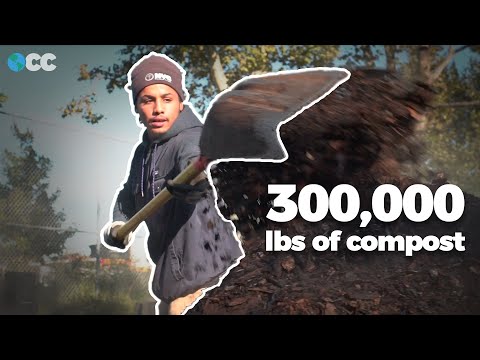
In this video brought to you by the Local Motives YouTube channel, we explore how a small community urban farm in Red Hook, Brooklyn produces over 150 tons of compost every year with just hand tools. Through the help of over 2000 volunteers, the Red Hook Community Urban Farm diverts over 300,000 lbs (pounds) of food scraps, food waste, and yard waste from the landfill. This NYC urban farm uses large piles of food waste to create compost. The NYC urban farm not only educates volunteers on how to compost and grow their own food in an urban agriculture environment, but they also put them to work turning compost piles to create the perfect soil for growing organic vegetables and produce. This is an excellent example of how small farms, collective work, and a good idea can make a big impact on climate change.
Subscribe to Local Motives: https://www.youtube.com/channe....l/UCLTofw9H3F8-MRsIj
Local Motives Instagram: http://instagram.com/localmotives.series
Local Motives Website: https://www.localmotives.us
Local Motives Series original score composed and produced by William Lindsay.
Volunteer at Red Hook Community Farm’s Compost Operation: https://rhicenter.org/red-hook-farms/the-farms/
Help me make more videos like this via Patreon: http://bit.ly/2iz4lIV
Email List: https://www.subscribepage.com/ourchangingclimate
Twitter: https://twitter.com/OurClimateNow
Facebook: https://www.facebook.com/occvideos/
Instagram: https://www.instagram.com/occ.climate/
I use Epidemic Sound for some of my music: http://epidemicsound.com/creator
For the rest of my music, I use Artlist.io. You can get 2 months free of Artlist.io with this link: https://artlist.io/Charlie-278823
_______________________
#Compost #UrbanFarm #FoodWaste


Judith Bakirya had quit her NGO job nineteen years ago to give back to her community. She returned to farming, rejecting conventional practices to run her farm the traditional Ugandan way.
Her 1000-acre farmland of fruit trees, herbs, and livestock run on a concept called permaculture where nothing is wasted.
Judith has been educating more people in her community about the benefits of running this type of farming.
Gist Nigeria is a 30-minute current affairs programme, co-produced by Channels Television and the BBC. The program offers in-depth reporting, focusing on stories behind the news and their impact on its audience.
Gist Nigeria airs at 9pm on Wednesdays on
Channels TV and Channels 24 (UK) on Sky 518.
Show time slots:
WEDNESDAY 9.00pm On CHANNELS TV & CHANNELS 24{UK} On SKY 518 [New Edition] REPEAT: * THURSDAY 3.30pm On DSTV * FRIDAY 6.30pm On Terrestrial * SUNDAY 11.30 am On Terrestrial * SATURDAY 12.30pm CHANNELS 24{UK} ON SKY 518.
Don't forget to subscribe: https://bit.ly/2Hb8hjx
Watch more interesting videos: https://bit.ly/2H9WGBh
Follow Channels Television On:
Facebook: https://www.facebook.com/channelsforum/
Twitter: https://twitter.com/channelstv