- General Videos
- Music
- Economics
- Health
- Travel & Events
- History
- Psychology
- Spirituality
- Movies
- News & Politics
- Kmtyw Combat Sciences
- Ɔbenfo Ọbádélé Kambon Videos
- Ɔbenfoɔ Kamau Kambon: Black Liberation Philosophy
- Science, Tech, Engineering and Math
- Permaculture
- Self-Sustainability
- Living Off Grid
- Yoruba Language Learning
- Education
- Mmɔfra Adesua
- Nana Kamau Kambon Playlist
- Livestream
- Komplementarity Kouples and Revolutionary Singles
- Abibitumi Film Series
- Decade of Our Repatriation
- Kwento xpr
- Live
Latest videos
![Black on Black [1968]](https://i.ytimg.com/vi/6eJ6AlzC4X4/hqdefault.jpg)
![How China Got Rich | ENDEVR Documentary [2019]](https://i.ytimg.com/vi/IAYRd8IqAxg/hqdefault.jpg)

How China Got Rich | Business Documentary from 2019
Over 40 years China has been transformed out of all recognition, the scale of its growth and the sheer speed of change has been astonishing. The country has seen the largest lifting of people out of poverty that has ever taken place in human history, and today China is a global force, predicted to become the world’s biggest economy in a couple of decades.
So how did an impoverished and backward communist country become an engine of global capitalism? What actually happened 40 years ago to set China on the road to prosperity?
Michael Wood talks to the people who were there; the men and women who had been sent to be ‘re-educated ‘on farms and in factories; the farmers who defied the government and broke with communism; the woman has given the very first private business certificate; and the US technical advisor sent to China by the UN to kickstart the change. He travels across the country to meet China’s highest-ranking female diplomat and the people who worked with Premier Deng Xiaoping. The film mixes these testimonies with a fascinating archive of the Chinese leader meeting President Carter in Washington and on fact-finding missions in Japan and Singapore. Interviews too with Deng’s biographer, Professor Ezra Vogel from Harvard University and Ambassador James Stapleton-Roy who lifts the lid on the intensive work behind the scenes which led to the US recognizing the People’s Republic of China in 1979.
The second part of the film looks at the results of those initiatives in today’s China, visiting high-tech global giants Tencent and Alibaba and China’s top universities Tsinghua and SUStech. We visit a high-speed rail workshop and the world’s fastest-growing container port; we interview the American lawyer who set up the first Chinese deals for multinationals including Exon Mobile and Roche Pharmaceuticals. Finally, we ask Robert Daly the Director of the Kissinger Institute on China and Ambassador Roy where they think China is heading, and if political reform will be on the agenda any time soon.
China’s decision to open up to the world 40 years ago has been called ‘the most important event of modern world history’, and it is one in which America played a crucial role. Today China is a major player, flexing its muscles on the global stage. In this film, Michael Wood tracks the beginning of their meteoric rise, looks at the extraordinary scale of present-day developments and asks both Chinese and US experts for clues to the future.
With extraordinary access to key witnesses, this timely and important film tells the story of How China Got Rich.
▬▬▬▬▬▬▬▬▬
Subscribe ENDEVR for free: https://bit.ly/3e9YRRG
Join the club and become a Patron: https://www.patreon.com/freedocumentary
Facebook: https://bit.ly/2QfRxbG
Twitter: https://bit.ly/2QlwRiI
▬▬▬▬▬▬▬▬▬
#FreeDocumentary #ENDEVR #China
▬▬▬▬▬▬▬▬▬
ENDEVR explains the world we live in through high-class documentaries, special investigations, explainers videos and animations. We cover topics related to business, economics, geopolitics, social issues and everything in between that we think it’s interesting.
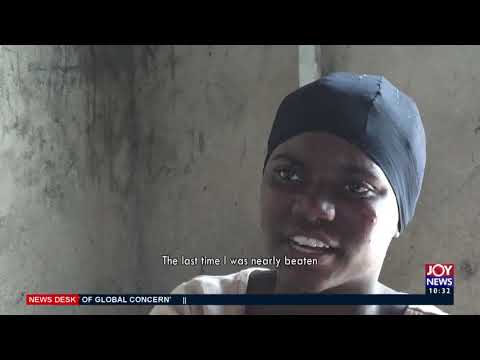
Poverty drives young girls to urban areas in search of work - Lamnatu - News Desk on JoyNews (11-5-21)
#NewsDesk
#MyJoyOnline
https://www.myjoyonline.com/ghana-news/
Subscribe for more videos just like this:
https://www.youtube.com/channe....l/UChd1DEecCRlxaa0-h
Click to this for more news:
https://www.myjoyonline.com/

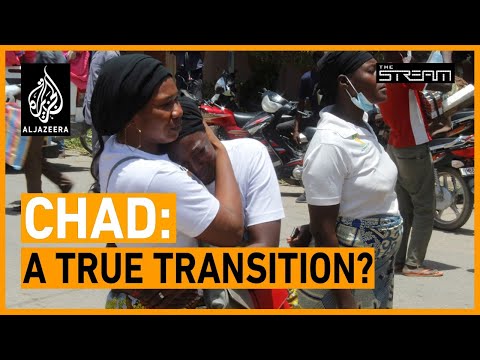
More than thirty years of increasingly repressive rule by one man in Chad has in recent weeks given way to sudden political uncertainty, as first an unappointed military council and now a transitional government reckon with the country’s future in the wake of President Idriss Deby’s unexpected death.
Chad’s interim president Mahamat Deby – son of Idriss – on May 2 named a 40-member transitional government after days of widespread popular discontent over power being concentrated within a 15-member Transitional Military Council (CMT), led by Deby.
While some opposition leaders have joined the new transitional government, the majority of ministerial posts were reserved for members of Deby’s Patriotic Salvation Movement (MPS). And there is simmering public discontent that parliament was dissolved and the constitution suspended before the CMT was formed. While parliament reconvened this week, one opposition leader says Chad is still being denied a full transition to civilian rule.
In this episode of The Stream, we’ll look at what lies ahead for people in Chad as it adjusts to life without Idriss Deby.
Join the conversation:
TWITTER: https://twitter.com/AJStream
FACEBOOK: http://www.facebook.com/AJStream
Subscribe to our channel http://bit.ly/AJSubscribe
#aljazeeraenglish
#ajstream
#chad

"Our goal is to show Africa as it really is: The good, the bad, the ugly, the potential," says John Allan Namu, an investigative journalist in Nairobi, Kenya.
He co-founded Africa Uncensored, an investigative journalism collective that works to hold the government accountable and cover stories often unreported by the media.
They are working on a massive story: The government is believed to have misappropriated millions of dollars after Kenya's health minister signed a multi-million dollar deal in 2015 for what he said was much-needed hospital equipment. The government also promised to invest in the improvement of Kenya's medical services, which were seen to be especially failing the poor.
Namu had received a tip-off from a source, leading him onto the case.
"The data set that we received showed us that there are corrupt networks in many, many places. But the place we chose to focus our attention on was on the ministry of health because this is one of the president's key pillars for delivery to the public," he says.
"And it seems as if it's either has been hijacked or it was formulated to steal from this country."
They carry out their investigation, using hidden cameras to confront an official, despite fears of reprisal.
Meanwhile they feel the urgency to publish as they speak to those most affected by failures in the health system, including a mother who could not afford her cancer treatment.
Still, the team maintains their faith in the power of journalism.
"I think that they key role of journalism is that we publish the things that some people don't want published, even if that means that we are scared. Because at the moment that citizens have the information that they require to live their lives, that's when positive change happens," Namu says.
- Subscribe to our channel: http://aje.io/AJSubscribe
- Follow us on Twitter: https://twitter.com/AJEnglish
- Find us on Facebook: https://www.facebook.com/aljazeera
- Check our website: https://www.aljazeera.com/

Film by Sorious Samura and Clive Patterson
How political corruption is turning the country's spiralling youth unemployment into a threat to society.
You can witness the same scene at dawn every morning in Kenya's capital, Nairobi: thousands of young people in search of work are streaming out from the city's slums towards its industrial areas.
Most of them are neatly if simply dressed, many of them are full of optimism, but the vast majority are destined to be disappointed. Those that can afford it will try and cram onto a bus in an attempt to beat the crowds, the rest will weave their way on foot through the heavy morning commuter traffic. But when they arrive, the situation for all of them will invariably be the same as it was on the previous day and the day before that and on all the other preceding days.
They will spend an hour or so packed in their hundreds along the pavements and parking lots outside a factory, warehouse or office block, certificates of education and references from previous employers ready to hand, waiting patiently for something to happen.
The usual rumours pass from person to person, this company is said to need people with computer skills, that one needs fork lift truck drivers or perhaps some just some day laborers. But then a supervisor will step from the building and shout out that he can offer a day's work for four people with experience of working a lathe or two with secretarial skills.
Many step forward, a lucky few are selected at random and make their way inside, then the doors of the building close and the rest drift off to take up station at the next place or to make their long way back home - hopes dashed yet again.
A national disaster in the making?
George, a Kenyan in his early twenties, has graduated from university in December 2012 with a diploma in electrical engineering but so far he has been unable to find work.
"The chance I'm going to be chosen today is limited," he says. "I'm just gambling. You can stand here for as long as half a day, because you never know the time that you can be picked."
It is a story that is all too common. Joblessness among all people of working age is a serious problem in Kenya, but among young people, it is a catastrophe. The country has one of the largest youth populations in Africa, but roughly 70 percent of its working age youth - almost 10 million people - are unemployed, although a surprising number are very well educated and possess the kinds of skills a healthy economy really should be able to put to use.
In a country where almost 80 percent of the population is under the age of 35 some have labelled it a national disaster in the making, that may have serious social consequences and lead to civil unrest.
For a country that is still recovering from the scars of the widespread community violence that followed the 2007 election and which is still reeling from the aftermath of the al-Shabab Westgate mall terrorist attack in September 2013, it is a hint worth taking seriously.
Dr Alex Ezeh of the African Population and Health Research Centre in Nairobi put the significance of this youth population 'bulge' in context.
"It is a demographic event," he says. "It's something that many countries go through at different stages as they move from very high fertility and mortality to very low mortality, it creates this reservoir of people." But this, as he explained, can have positive and negative consequences.
"Generally, what makes it a good thing is our ability to harness the economic potential of such a large proportion of young people going into the labour market … There is a side of it, the more negative part of it, which is, if there are no jobs and no opportunities to engage, then you have a lot of young people understanding what is going on but they're disenfranchised politically, economically, and in many other ways, and this creates a lot of political instability."
The stark reality for the young people from the huge slums at Kibera and Mathare and elsewhere around Kenya's capital is that life without a job is extremely difficult. With no regular income many of them have to turn to crime to make a living. And even if they do not, they are often suspected of involvement in crime, which in turn leads to deadly entanglements with Kenya's notoriously trigger-happy police.
A generation pushed to the edge
When asked who should be doing what about Kenya's youth unemployment, the answer is clear. Successive governments in Kenya have done little to alleviate the plight of the jobless and should be doing more.
- Subscribe to our channel: http://aje.io/AJSubscribe
- Follow us on Twitter: https://twitter.com/AJEnglish
- Find us on Facebook: https://www.facebook.com/aljazeera
- Check our website: https://www.aljazeera.com/
#AlJazeeraEnglish #KenyaUnemployement

Can Somalia's embattled president unite his country against the armed group al-Shabab?
Subscribe to our channel http://bit.ly/AJSubscribeFollow us on Twitter https://twitter.com/AJEnglish Find us on Facebook https://www.facebook.com/aljazeera Check out our website:http://www.aljazeera.com/

Film by Nidhi Dutt and Daniel Boaden
People & Power investigates the environmental consequences of palm oil plantations in equatorial Africa.
There are few products so ubiquitous as palm oil. You can find its derivatives in chocolate, shampoo, toothpaste, detergent, ice cream, floor polish and a host of other products filling supermarket shelves.
Extracted from the fruit of the tropically-grown oil palm tree (Elaeis guineensis), it has become so versatile and sought after that the growing economies of Indonesia and Malaysia, the world's two largest producers, make some $40bn a year from its production and export.
Given that by 2020 global demand for palm oil is expected to double and then triple by 2050, it is no wonder that other developing countries, especially in sub-Saharan West Africa where the tree originates, have been looking enviously at Southeast Asia and hoping to emulate that success.
But palm oil cultivation does not come cost-free. If not done sustainably, say conservationists, it can have disastrous consequences for people and the environment. In Indonesia, for example, it has played a major role in deforestation which has seen the loss of more than 6 million hectares of primary forest over the last 15 years.
As rainforests are home to least half of this planet's species of plants, animals and insects, the negative impact on global biodiversity can only be imagined. In addition, indigenous communities are also destroyed as people who have lived happily off the forest's resources for generations, often do not own the land (at least not in a form recognised by governments, corporations and their lawyers) and are frequently displaced to make way for new plantations.
Boosting Cameroon's economy
It is against this background that the Central and West African state of Cameroon has been trying to get a palm oil industry off - or rather into - the ground. Its President Paul Biya, who has held office since 1982, has been looking for ways to give Cameroon's economy a boost.
His country is not as poverty-stricken as some on the continent. It has some modest oil resources and favourable conditions for agriculture and is comparatively stable politically, but it is not immune from many of the problems associated with developing nations, from chronically high unemployment and an inequitable distribution of income to corruption and inadequate public infrastructure.
Cameroon is also over-reliant on imports, which makes it susceptible to rising prices and food insecurity. According to the UN, more than 40 percent of the population are living under the poverty line, while over one-third of its children are suffering from chronic malnutrition.
Palm oil then, would seem to offer good prospects for additional growth. The tree is native to the region and the climate is perfect for its cultivation. And of course, there are plenty of international agribusiness conglomerates looking for suitable places in West Africa in which to replicate the stellar profits enjoyed by the industry in Asia.
More on our website: http://aljazeera.com
Follow us on Twitter: http://twitter.com/AJEngligh
Subscribe to our channel: http://bit.ly/AJSubscribe
Find us on Facebook: http://facebook.com/aljazeera
#AlJazeeraEnglish #PeopleandPower #Cameroon