- General Videos
- Music
- Economics
- Health
- Travel & Events
- History
- Psychology
- Spirituality
- Movies
- News & Politics
- Kmtyw Combat Sciences
- Ɔbenfo Ọbádélé Kambon Videos
- Ɔbenfoɔ Kamau Kambon: Black Liberation Philosophy
- Science, Tech, Engineering and Math
- Permaculture
- Self-Sustainability
- Living Off Grid
- Yoruba Language Learning
- Education
- Mmɔfra Adesua
- Nana Kamau Kambon Playlist
- Livestream
- Komplementarity Kouples and Revolutionary Singles
- Abibitumi Film Series
- Decade of Our Repatriation
- Kwento xpr
- Live
Latest videos


End of the Road: How Money Became Worthless | Gold | Financial Crisis | ENDEVR Documentary from 2012.
In 2008 the world experienced one of the greatest financial turmoils in modern history. Markets around the world started crashing, stock prices plummeted, and major financial institutions, once thought to be invincible, started showing signs of collapse. Governments responded quickly, issuing massive bailouts and stimulus packages in an effort to keep the world economy afloat.Although we’ve been told that these drastic measures prevented a total collapse of our system, a growing sense of unease fills the population. In the world of finance, indeed in all facets of modern life, cracks have started to appear. What lies ahead as a result of these bold money printing measures? Was the financial crisis solved, or were the problems merely kicked down the road?▬▬▬▬▬▬▬▬▬Subscribe ENDEVR for free: https://bit.ly/3e9YRRGJoin the club and become a Patron: https://www.patreon.com/freedocumentaryFacebook: https://bit.ly/2QfRxbGInstagram: https://www.instagram.com/ende....vrdocs/▬▬▬▬▬▬▬▬▬#Fre #ENDEVR #EndOfTheRoad▬▬▬▬▬▬▬▬▬ENDEVR explains the world we live in through high-class documentaries, special investigations, explainer videos and animations. We cover topics related to business, economics, geopolitics, social issues and everything in between that we think are interesting.


![Blood Diamonds Forever (UK) Angola [2003]](https://i.ytimg.com/vi/5oSmwyWBwQs/hqdefault.jpg)


![Deadly Diamonds: Zimbabwe [2009]](https://i.ytimg.com/vi/k9Bk5VIhjiY/hqdefault.jpg)
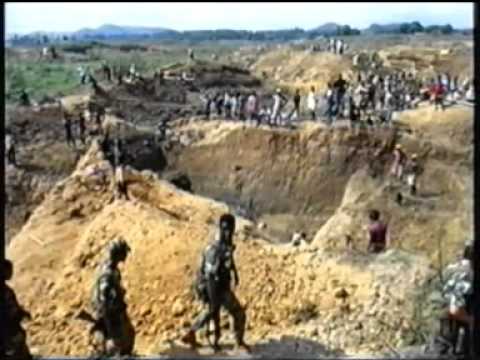
![Diamonds from Guinea [2019]](https://i.ytimg.com/vi/5GCcJ6sLF10/hqdefault.jpg)
![The Diamond Empire [1994]](https://i.ytimg.com/vi/Pr760mRwek4/hqdefault.jpg)


Vicki Dillard reports on 3 race soldiers that were secretly recorded threatening the lives of Black citizens.
Join Our Website For Uncensored News Reports
https://africandiasporanews.org
--------------------------------------------
Download Our New African Diaspora News Channel App
Android https://play.google.com/store/....apps/details?id=com.
iOS https://apps.apple.com/us/app/....african-diaspora-new
----------------------------------------------------
Support Us On Patreon For A Minimum Of $2 Per Month.
https://patreon.com/AfricanDiasporaNews
---------------------------------------------
Send Money Orders To
2323 Clear Lake City Blvd.
Suite 180 Box 133
Houston,Tx 77062
--------------------------
One Time Donations To Our Network
Paypal https://paypal.me/AdviseMediaNetwork
Cash App https://cash.app/$AfricanDiasporaNews
----------------------------------------------
Order My Book Passive Aggressive Racism In The System of White Supremacy
https://www.amazon.com/dp/1732887314
------------------------------------------------------------------------
Listen To The Phillip Scott Audio Experience Podcast
https://anchor.fm/advise-media-network
------------------------------------------------------
Subscribe To All Of Our YouTube Channels
https://www.youtube.com/UCKZGcrxRAhdUi58Mdr565mw (African Diaspora News Channel)
https://www.youtube.com/c/Afri....canDiasporaNewsInsid (African Diaspora News Insider)
https://www.youtube.com/thephillipscottshow (The Phillip Scott Show)
https://youtube.com/intercontinentalfoodreview (Intercontinental Food Review)
https://www.youtube.com/channe....l/UC90CRiDvbos7k0B6k (Phillip Scott Audio Experience)
------------------------------------------------------------------------------------------
Social Media Pages
Follow us on Instagram https://www.instagram.com/africandiasporanews
Follow us on Twitter https://twitter.com/AfrDiasporaNews
Follow us on Facebook https://www.facebook.com/AfricanDiasporaNews
Follow us on Tik Tok https://tiktok.com/@africandiasporanews
---------------------------------------------------------------------
Purchase merchandise from our store
https://teespring.com/stores/a....frican-diaspora-news