- General Videos
- Music
- Economics
- Health
- Travel & Events
- History
- Psychology
- Spirituality
- Movies
- News & Politics
- Kmtyw Combat Sciences
- Ɔbenfo Ọbádélé Kambon Videos
- Ɔbenfoɔ Kamau Kambon: Black Liberation Philosophy
- Science, Tech, Engineering and Math
- Permaculture
- Self-Sustainability
- Living Off Grid
- Yoruba Language Learning
- Education
- Mmɔfra Adesua
- Nana Kamau Kambon Playlist
- Livestream
- Komplementarity Kouples and Revolutionary Singles
- Abibitumi Film Series
- Decade of Our Repatriation
- Kwento xpr
- Live
Latest videos


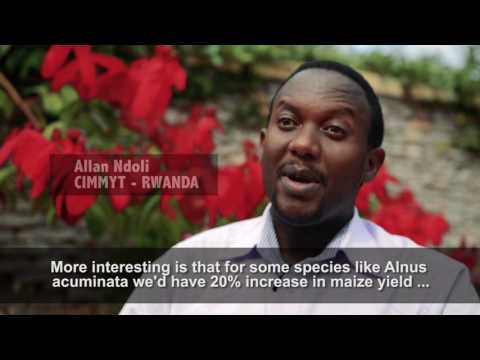

Trees for Food Security Project goal is to enhance food security for resource-poor people in rural Eastern Africa through research that supports national programmes to scale up the use of trees within farming systems in Ethiopia and Rwanda and then scale out successes to relevant ago-ecological zones in Uganda and Burundi.
Through the project, 5 Rural Resource Centers (2 in Rwanda, 2 Ethiopia and 1 in Uganda) and nurseries to enhance training and supply of improved tree germplasm have been established. The RRCs have provided business opportunities for farmer groups and unemployed youth particularly through grafted fruit trees.
Read more about the project here: http://bit.ly/2awF9S3
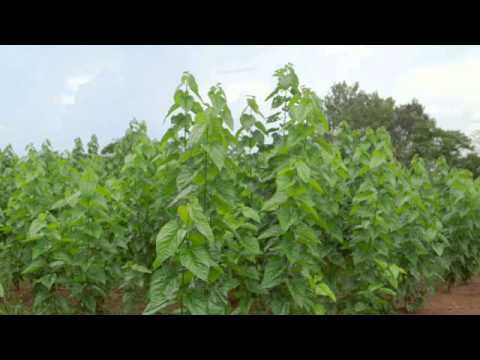
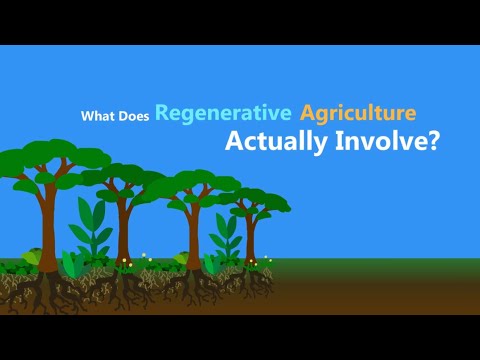
Regenerative agriculture is an effective way to restore biodiversity and stabilize the climate, but what exactly is it? This video explores three different regenerative practices that have great potential both in food production and in healing the land.
Sources:
Organic Agriculture does more harm than goodSearchinger et al., Assessing the efficiency of changes in land use for mitigating climate change, 2018.https://www.nature.com/articles/s41586-018-0757-z
Bacteria Converts Ammonium into Nitrite and Nitrate:Jeff Lowenfels & Wayne Lewis, Teaming with Microbes, 2006, 48.Myceilium brings water to plants:Ibid, 57.Worms increase water absorption and allow plant roots to penetrate deeper:Ibid, 89.Fertilizer leeches into water:Ministry of Agriculture, Food and Rural Affairs, 2005.http://www.omafra.gov.on.ca/en....glish/engineer/facts
Regenerative grazing can sequester carbon:Sanderman et al., Impacts of Rotational Grazing on Soil Carbon in Native Grass-Based Pastures in Southern Australia, 2015.https://journals.plos.org/plos....one/article%3Fid%3D1
Regenerative grazing can build soil and reverse desertification:Allan Savory, Holistic Management, 1999, 244.The growth of grass:Global Rangelands, Basics of Grass Growthhttps://globalrangelands.org/t....opics/rangeland-ecol
Julius Ruechel, The Daily Pasture Rotation, 2009.https://www.grass-fed-solution....s.com/pasture-rotati
Overgrazing leads to erosion, drought, and desertification:Ibanez et al., Desertification due to overgrazing in a dynamic commercial livestock–grass–soil system, 2007.https://www.sciencedirect.com/....science/article/pii/ forests consist of 7 layers:Toby Hemenway, Gaia's Garden, 2001, 172.
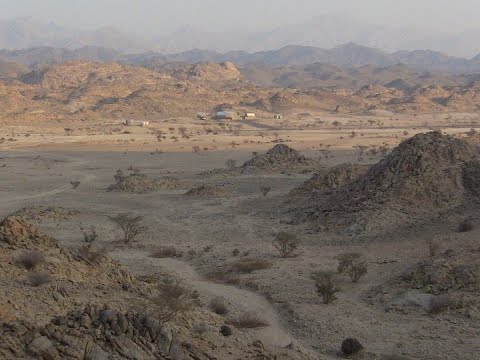
The final update from Al Baydha Project Co-founder Neal Spackman, 9 years in. How desertification resulted from the loss of an indigenous land management system, and how the land has changed since all inputs to the project were ceased in 2016. Neal moved on from Al Baydha in 2018 and can now be contacted at https://regenerativeresources.co
The species that worked the best for us were Ziziphus Spinachristi, Moringa Peregrina, commiphora gileadensis, prosopis spp (though this one we likely won't continue planting in the future), and the local acacias.
Music by Faisal Alawi, and by Olafur Arnalds (performed by Voces 8).
معلومات عن نتائج مشروع البيضاء و الزراعة المستدامة التي اسست في جبال ٥٠ كيلومتر جنوب مكه المكرمة
موسيقة: فيصل علوي و الفور ارنالدز

A majestic journey through Japan, Korea, and the United States that turns our perceptions of food (and life) upside down in a simple and poetic way. Solutions for our most pressing social and ecological issues come from unexpected places in a bite-sized film that New York Times bestselling author Alicia Bay Laurel calls “beautiful … both art and documentary.”Inspired by the work and philosophy of Masanobu Fukuoka, artist Patrick M. Lydon (USA) and editor Suhee Kang (South Korea) spend four years meeting and studying with multiple generations of modern day natural farmers. The result is a film that weaves breathtaking landscapes and an eclectic original soundtrack together with stories and insights from an inspiring cast of natural farmers, chefs, and teachers. The film gives modern-day relevance to age-old ideas about more sustainable, regenerative, and harmonious ways of living with the earth.Current-day leaders in the natural farming movement featured in the film include Yoshikazu Kawaguchi (Japan), Seonghyun Choi (Korea), Larry Korn (United States), and a dozen others. Their stories illuminate a brilliant-yet-maddeningly-simple path to sustainability and well being, one popularized by the late Masanobu Fukuoka, author of the seminal environmental text “One Straw Revolution.”Far-reaching in its application, “Food, Earth, Happiness” offers philosophical seeds to grow solutions for social and environmental justice.–Note: Officially released on January 1, 2019, this film is an abbreviated version of the acclaimed environmental documentary Final Straw: Food, Earth, Happiness (74 min / 2015). It has been edited by the directors for public and classroom use.–CREDITS– directed, filmed, and produced by – Patrick M. Lydon and Suhee Kang– produced by – SocieCity Films City as Nature– associate producer – Kaori Tsuji– production assistant & animation – Heeyoung Park– characters – Yoshikazu KawaguchiLarry KornKristyn LeachSeong Hyun ChoiEtsko KagamiyamaRyosok HongMaki SobajimaKenji MurakamiYoshiki YamamotoOsamu KitaKazuaki OkitsuDennis Lee– musicians – BomnoonbyulWindSync: Anni Hochhalter, horn; Garrett Hudson, flute; Tracy Jacobson, bassoon; Jack Marquardt, clarinet; Erin Tsai, oboeIpppen: Youji Kohno and Ben NakamuraJoyful Island– interview coordination and interpretation – Eri and Kazu DomaeIkumasa HayashiEri MizushimaIsao SuizuNaho TakeuchiHyunwoo Kim– translation – Masumi AbeSonny KimMalga KimNatsuki Yamada-KitadeKyoko KodaHyunwoo KimDaisuke MatsumotoAkiko MisasaEri Mizushima-PetersonUni ParkShumeiKaori Tsuji– explore more – http://www.finalstraw.org“Food, Earth, Happiness” was filmed entirely on location in Japan, South Korea, and the United States between 2011 – 2015 by directors Patrick M. Lydon and Suhee Kang.


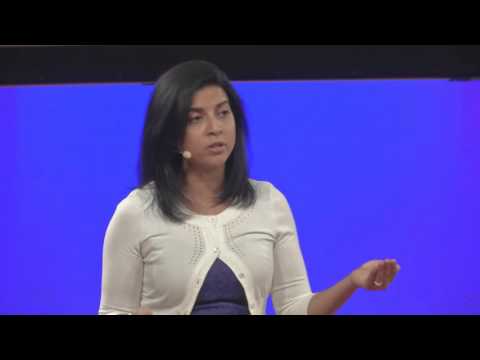
There are 1.5 billion small family farmers, men and women, who live and work on around 475 million family farms, that are no more than 2 hectares in size. Monika reminds us up to 80% of all food consumed in the world are grown by these farmers, and these people are at the forefront of our fight for food security in the face of climate change.
Monika Barthwal-Datta is a Senior Lecturer in International Security in the School of Social Sciences, Faculty of Arts and Social Sciences, UNSW. Growing up, Monika lived and studied in a number of countries, including India (where she comes from), Japan, New Zealand, Uganda and ultimately the UK where she completed her postgraduate studies. While studying for her MScEcon in Security Studies (Aberystwyth University) and then her PhD in International Security (Royal Holloway College, University of London), Monika worked as a freelance broadcast journalist for the BBC World Service Radio. She moved to Sydney in late 2010 to take up a two-year research fellowship on Food Security in Asia at the Centre for International Security Studies, University of Sydney, and moved to UNSW Australia in mid-2012. Monika’s research focuses on international security from ‘non-traditional’ perspectives that prioritise the needs and concerns of those who are least powerful and marginalised.
This talk was given at a TEDx event using the TED conference format but independently organized by a local community. Learn more at http://ted.com/tedx