
- General Videos
- Nnwom
- Sikas?m
- Akwahosan
- Travel & Events
- Abak?s?m
- Adwene mu Nhwehw?mu
- Honhom fam nne?ma
- Fim
- News & Politics
- Kmtyw Combat Sciences
- Ɔbenfo Ọbádélé Kambon Video ahorow
- ?benfo? Kamau Kambon: Black Liberation Philosophy
- Science, Tech, Engineering and Math
- Permaculture
- Self-Sustainability
- Living Off Grid
- Yoruba Language Learning
- Nhomasua
- Mmɔfra Adesua
- Nana Kamau Kambon Playlist
- Livestream
- Komplementarity Kouples and Revolutionary Singles
- Abibitumi Film Series
- Decade of Our Repatriation
- Live
OPEN D.O.O.R. • PROGRAMME PROMOTION
Come Home. Stay Home. Build Home.
Watch the President’s Special Envoy to the Caribbean’s promotional video.
Friday, 30 October 2026 · Cedi Conference Centre, University of Ghana, Legon
8 AM Presidential/Royal Panel · 12 noon Debate · 1:30 PM Plenaries (GMT)
News & Politics


To much of the world, Somalia has a fearsome reputation. It is seen as one of the most dangerous places on the planet - a failed state that is widely believed to be home to warlords, pirates and terrorists.
But in the north of the country, at least, the reality is different.
Somaliland is an autonomous enclave with its own flourishing capital city, Hargeisa. Though a long way off from receiving international recognition as an independent state, it is a haven of peace and stability when compared with the rest of Somalia.
But Somaliland has its dark side. Within living memory its citizens fell victim to the most savage of state-sponsored atrocities. General Siad Barre - the ruthless dictator who ruled Somalia from 1969 to 1991 - went to war with the clans who inhabited the area. Believing them to be supporting a rebellion against his regime, he took revenge by sending in his army with a mandate to "kill all but the crows".
The city of Hargeisa was virtually destroyed during intense and pitiless bombardment. Many thousands of people were killed or driven into exile. Barre's soldiers, meanwhile, tortured and murdered as many as 50,000 others - most of them civilians - and buried their bodies in mass graves. Now, as those who still live in this region try to secure their future, some feel those past agonies should be re-examined and those responsible held to account.
In this exclusive two-part investigation, People and Power meets a community coming to terms with the horrors of the past and joins forces with a group of forensic investigators and human rights activists attempting to bring an alleged war criminal, Yusuf Abdi Ali, also known as Colonel Tukeh, to account.
- Subscribe to our channel: http://aje.io/AJSubscribe
- Follow us on Twitter: https://twitter.com/AJEnglish
- Find us on Facebook: https://www.facebook.com/aljazeera
- Check our website: https://www.aljazeera.com/
#AlJazeeraEnglish #Somali #Hergeisa

To much of the world, Somalia has a fearsome reputation. It is seen as one of the most dangerous places on the planet - a failed state that is widely believed to be home to warlords, pirates and terrorists.
But in the north of the country, at least, the reality is different.
Somaliland is an autonomous enclave with its own flourishing capital city, Hargeisa. Though a long way off from receiving international recognition as an independent state, it is a haven of peace and stability when compared with the rest of Somalia.
But Somaliland has its dark side. Within living memory its citizens fell victim to the most savage of state-sponsored atrocities. General Siad Barre - the ruthless dictator who ruled Somalia from 1969 to 1991 - went to war with the clans who inhabited the area. Believing them to be supporting a rebellion against his regime, he took revenge by sending in his army with a mandate to "kill all but the crows".
The city of Hargeisa was virtually destroyed during intense and pitiless bombardment. Many thousands of people were killed or driven into exile. Barre's soldiers, meanwhile, tortured and murdered as many as 50,000 others - most of them civilians - and buried their bodies in mass graves. Now, as those who still live in this region try to secure their future, some feel those past agonies should be re-examined and those responsible held to account.
In this exclusive two-part investigation, People and Power meets a community coming to terms with the horrors of the past and joins forces with a group of forensic investigators and human rights activists attempting to bring an alleged war criminal, Yusuf Abdi Ali, also known as Colonel Tukeh, to account.
Subscribe to our channel http://bit.ly/AJSubscribe
Follow us on Twitter https://twitter.com/AJEnglish
Find us on Facebook https://www.facebook.com/aljazeera
Check our website: http://www.aljazeera.com/

A film by Callum Macrae & Elizabeth Jones
It's one of Africa's most bitter, if often forgotten, conflicts.
In 2011, South Sudan gained independence from Sudan following a 2005 peace deal that ended Africa's longest-running civil war.
After a referendum, in which an overwhelming majority of South Sudanese voted to secede, Africa's newest country came into being, the first since Eritrea split from Ethiopia in 1993.
But two Sudanese provinces, South Kordofan and Blue Nile, the people of which predominantly wanted to become citizens of the new nation, were excluded from the deal.
The SPLM-N, the northern affiliate of Sudan's People's Liberation Movement (SPLM) in South Sudan, consequently took up arms against the Sudanese government of President Omar al-Bashir, and fighting has continued on and off ever since.
Five years ago, as the war got under way, People and Power sent reporter Callum Macrae to investigate allegations of war crimes committed by the Bashir regime in the region. Last month he went back.
- Subscribe to our channel: http://aje.io/AJSubscribe
- Follow us on Twitter: https://twitter.com/AJEnglish
- Find us on Facebook: https://www.facebook.com/aljazeera
- Check our website: http://www.aljazeera.com/
The event followed a now familiar pattern: a small convoy of dusty 4x4 vehicles drove on to the edge of the airstrip at Galkayo in Puntland, north-central Somalia; armed security guards took up watchful positions nearby and a number of bemused-looking men stepped gingerly from the cars and lined up to have their photographs taken by the media.
On this occasion there were 11 of them; all had been hostages until that morning. They were sailors from a Malaysian cargo vessel that had been hijacked by Somali pirates a few years ago and held until a ransom was paid for their release.
One of them gave a brief account of what had happened. "On November 26, 2010 our ship was hijacked in the Indian Ocean. Their demand was 20 million. After that, they threatened the owner. You now increase money or we will shoot the crew. The owner didn't increase the money and then one Indian is shot with just three bullets. Then they hit us and tortured us. Tell your family to bring us money, otherwise we will kill you!"
The crew had been held for three and a half years but they were the fortunate ones. Five of their crew mates had died in that time. Now the survivors were going home and a UN plane with two envoys on board was flying in to see them to safety.
Such scenes have become relatively commonplace in Galkayo in recent times. Eighty percent of global trade is carried by sea and Somalia sits on a key maritime route linking Europe and Asia. More than 18,000 ships pass its shores every year. Over the past decade, Somali pirates, often former fishermen whose traditional livelihoods have been destroyed by foreign trawlers and toxic waste dumping, have attacked more than 300 vessels and kidnapped 700 people.
Faced with such a threat, the international community responded aggressively. In 2008, European states, the US and others began sending naval forces to these seas. They are still there today - warships, planes and helicopters patrolling thousands of square miles and doing a fair job of keeping the hijackers at bay. The UN and others have also played an increasing role in facilitating negotiations for the release of hostages - such as those set free at places such as Galkayo - for whose liberty large ransoms have been paid.
But if the problem is now slowly coming under control in Somalia, the same cannot be said for other parts of the world where piracy is on the increase. Lawlessness, desperation, poverty, greed and even political radicalism have brought the phenomenon to the waters of South America, Asia and, perhaps most aggressively, to West Africa.
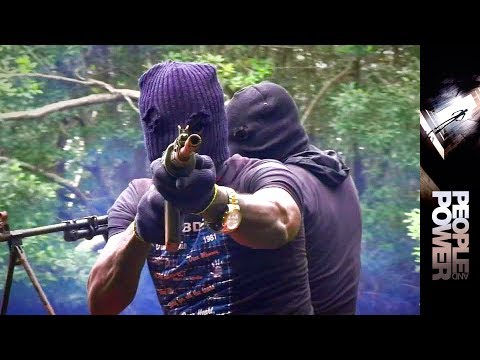
In an effort to understand the reasons why, Bertrand Monnet, a French academic and filmmaker, has been travelling to piracy hot spots around the coast of Africa. In an extraordinary and very tense series of encounters, he came to face to face with heavily armed pirate gangs operating in and around the Niger Delta, where Nigeria's huge offshore oil industry, which employs thousands of expatriates, offers rich ransom pickings. It gradually became clear that piracy in West Africa has many of the same root causes as piracy in Somalia and elsewhere, not least of which is that those who don't share in the benefits and profits of global trade have ever fewer reasons these days to respect the security of those who do.
Source: Al Jazeera
- Subscribe to our channel: http://aje.io/AJSubscribe
- Follow us on Twitter: https://twitter.com/AJEnglish
- Find us on Facebook: https://www.facebook.com/aljazeera
- Check our website: http://www.aljazeera.com/

In 2011 Cote d'Ivoire - or Ivory Coast as it is known in the english speaking world - was torn apart by inter-community violence that broke out between supporters of newly elected President Ouattara and his predecessor Laurent Gbagbo. It was the latest round in a bitter ethnic struggle that had wrought havoc in this former French colony for a decade. Three thousand people were killed; more than a million, from both side, were displaced.
The fighting was only brought to an end with the help of French and UN troops who intervened on Ouattara's side. Today the government says its aim is to lay these tensions to rest and return to the peace and stability that once made Cote D'Ivoire one of the most prosperous nations in West Africa.
But although violence has indeed diminished abd the country is enjoying a degree of economic success, dangerous ethnic and political rivalries still simmer. Last years saw protests over constitutional reforms aimed at preventing the exclusion of presidential candidates based on their ethnicity, and in January a pay dispute involving the army broke out into a short lived mutiny.
The country's former president Laurent Gbagbo, who still commands support in parts of the country, is currently on trial at the International Criminal Court for crimes allegedly committed before and during the election conflict six years ago. But while Gbagbo faces justice at the Hague and some of his followers have been already been jailed back home, it seems that no Ouattara followers have yet been prosecuted.
People & Power sent filmmaker Victoria Baux to the west of the country where pro-Gbagbo communities were savagely targeted by pro-Ouattara forces during the violence of 2011.
We wanted to find out why the government's promises to provide impartial justice to the victims hadn't yet been kept. We also wanted to investigate disturbing claims about ethnic attacks that took place well after President Ouattara came to power - events that, it's been alleged, were witnessed by UN peacekeeping troops who failed to intervene.
- Subscribe to our channel: http://aje.io/AJSubscribe
- Follow us on Twitter: https://twitter.com/AJEnglish
- Find us on Facebook: https://www.facebook.com/aljazeera
- Check our website: http://www.aljazeera.com/

Living in a poor country with one of the worst doctor-patient ratios in the world - about one for every 24,000 people - it's perhaps no surprise that many Ugandans are tempted by alternative remedies, even though there's often little evidence to support the claims made about their efficacy in treating or preventing disease. But the phenomenon does beg many questions, not least of which are who is really benefiting from the sale of these products and how exactly are they marketed?
We'd heard reports about one particularly controversial business, a complex multi-level marketing scheme run in Uganda under the aegis of a Chinese company called Tiens, which produces food supplements.
Its products, we'd been told, were being inappropriately sold as medications - in some cases for very serious diseases. We had also heard disturbing claims that its sales representatives, or "distributors" as they are known, were being invited to invest large sums of money in Tiens products, when in reality there was little chance of most of them ever making the kind of dazzling returns that the company promised.
So we sent a filmmaking team and Ugandan reporter Halima Athumani to investigate further.
- Subscribe to our channel: http://aje.io/AJSubscribe
- Follow us on Twitter: https://twitter.com/AJEnglish
- Find us on Facebook: https://www.facebook.com/aljazeera
- Check our website: http://www.aljazeera.com/

Caribbean to Caliphate - People & Power
The Caribbean state of Trinidad and Tobago is traditionally most famous for its spectacular annual carnival, its cricketing prowess and of being the birthplace of calypso music. But more recently it's been getting a more disturbing reputation - as the nation with the highest recruitment rates of ISIL fighters in the Western Hemisphere.
So why have so many young Trinidadians been driven to travel thousands of kilometres to participate in the conflicts in Iraq and Syria?
According to Imam Yasin Abu Bakr, the leader of the Jamaat al-Muslimeen group, one of the lead causes why young, black men are joining ISIL is their marginalisation.
"The Africans are going to a pool of unemployment, they just sit in the ghetto and do nothing. And then drugs come in and it's a haven for the drugs. And now the guns are in and so the murder rate is just spiralling out of control," says Abu Bakr.
People & Power sent correspondent Juliana Ruhfus and director Dom Rotheroe to investigate how the Caribbean island nation has become a recruitment hub for ISIL.
Connect with People & Power:
YouTube - http://aje.io/peopleandpowerYT
Facebook - https://facebook.com/AJPeopleAndPower
Twitter - https://twitter.com/AJpeoplepower
Website - http://www.aljazeera.com/peopleandpower/

Last month South African President Jacob Zuma was forced from office by his own party, the African National Congress, when almost a decade's worth of corruption, bribery and racketeering allegations finally became too great to ignore. It is possible that within weeks he could appear in court to face charges relating to at least one of the many financial intrigues from his years in power.
As anyone following this story will know, his most infamous former associates, the billionaire Gupta brothers, are now fugitives from justice amid claims that during the Zuma years they systemically looted state assets on a truly astonishing scale - principally by using their friendship with the then-president to influence political appointments and win lucrative government contracts. They are believed to have fled the country and taken refuge in Dubai, where they own property.
But the former president and his state-capturing confrères aren't the only ones under scrutiny in South Africa these days. We've been to examine the role allegedly played by major international companies in scandals so toxic and far reaching, they look set to haunt the country for years to come.
- Subscribe to our channel: http://aje.io/AJSubscribe
- Follow us on Twitter: https://twitter.com/AJEnglish
- Find us on Facebook: https://www.facebook.com/aljazeera
- Check our website: https://www.aljazeera.com/