
- General Videos
- Music
- Economics
- Health
- Travel & Events
- History
- Psychology
- Spirituality
- Movies
- News & Politics
- Kmtyw Combat Sciences
- Ɔbenfo Ọbádélé Kambon Videos
- Ɔbenfoɔ Kamau Kambon: Black Liberation Philosophy
- Science, Tech, Engineering and Math
- Permaculture
- Self-Sustainability
- Living Off Grid
- Yoruba Language Learning
- Education
- Mmɔfra Adesua
- Nana Kamau Kambon Playlist
- Livestream
- Komplementarity Kouples and Revolutionary Singles
- Abibitumi Film Series
- Decade of Our Repatriation
- Kwento xpr
- Live
OPEN D.O.O.R. • PROGRAMME PROMOTION
Come Home. Stay Home. Build Home.
Watch the President’s Special Envoy to the Caribbean’s promotional video.
Friday, 30 October 2026 · Cedi Conference Centre, University of Ghana, Legon
8 AM Presidential/Royal Panel · 12 noon Debate · 1:30 PM Plenaries (GMT)
News & Politics

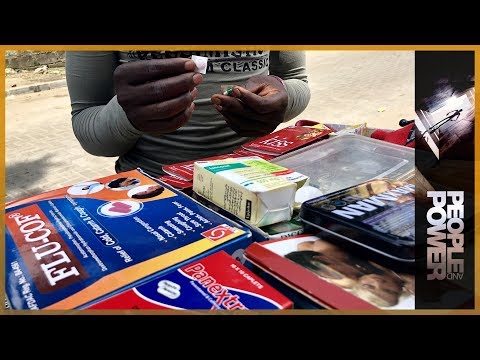

West Africa - and particularly its most populous nation, Nigeria - is battling an opioid abuse crisis. Medicines such as tramadol, legally and legitimately prescribed by doctors for pain relief, are also being taken in life-threatening doses by millions in search of a fix or a release from poverty, unemployment and lack of opportunity.
People & Power sent filmmakers Naashon Zalk and Antony Loewenstein to Nigeria to investigate how the drug is smuggled, traded and abused, as well as the widespread corruption that follows this illicit trafficking, and the appalling health consequences for those in its grip.
Read more: https://aje.io/9vjnr
-
- Subscribe to our channel: http://aje.io/AJSubscribe
- Follow us on Twitter: https://twitter.com/AJEnglish
- Find us on Facebook: https://www.facebook.com/aljazeera
- Check our website: https://www.aljazeera.com/

Chocolate: A Taste of Independence in Togo Filmmaker: Fanny BouteillerAfrica is rich with natural resources, yet all too often the benefits of that abundance end up with overseas consumers, foreign investors and the international markets.This is often seen as the consequence of a post-colonial globalised economy, in which the rich somehow keep getting richer and the poorest, denied the full fruits of their labours, are kept in penury.It is also a state of affairs with which many on the continent are understandably deeply unhappy. They want more than the scraps the developed world leaves on the table.In Togo, West Africa, one such struggle now comes covered in chocolate.Over 60 percent of the population of Togo lives in poverty, with its cacao growers - producers of one of the country's main cash crops - helpless in the face of prices set by international buyers.But one man is advocating a new future for his country, through indigenous chocolate production."When we launched the plan of manufacturing chocolate, lots of people did not believe us. Most made fun of us. People said we were mad."Trained in Italy, Komi Agbokou is a chocolatier, activist and, increasingly, an anti-globalisation evangelist.He has recently returned to Togo with one mission: to incite his fellow citizens to turn their cacao into chocolate themselves rather than being forever exploited by the international market.Komi explains that current cacao prices are decided by "those who transform cocoa", forcing local farmers to sell their produce for prices over which they have no control.On a 600km (373-mile) trip from North to South Togo, Komi set out to change attitudes, teaching his countrymen to maximise their produce's worth for their own benefit.--- Subscribe to our channel: http://aje.io/AJSubscribe - Follow us on Twitter: https://twitter.com/AJEnglish - Find us on Facebook: https://www.facebook.com/aljazeera - Check our website: https://www.aljazeera.com/
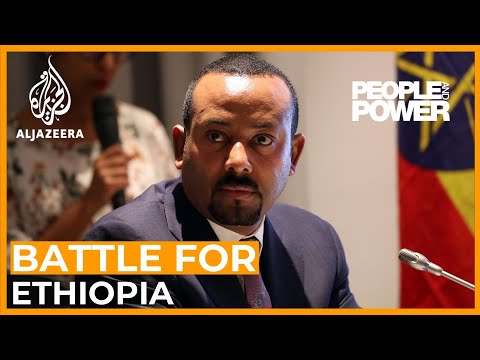
When Ethiopia’s prime minister, Abiy Ahmed, came to power in 2018, he promised a new era of democratic reforms and an end to years of autocracy.
Political prisoners were freed, opposition parties were allowed to operate, and the new prime minister even won a Nobel Prize for securing peace with neighbouring Eritrea after decades of an uneasy armistice.
But since then, long-standing ethnic divisions have made the future of this complex country more uncertain.
Earlier this year, we went to find out why.
- Subscribe to our channel: http://aje.io/AJSubscribe
- Follow us on Twitter: https://twitter.com/AJEnglish
- Find us on Facebook: https://www.facebook.com/aljazeera
- Check our website: https://www.aljazeera.com/

When a deadly new virus appeared in Wuhan, China, in late 2019, few would have imagined its wide-ranging effects. Within weeks COVID-19 was spreading around the world; within a year it had killed one a half million people and hospitalised tens of millions more, forcing nation after nation into lockdown and bringing many economies to a juddering halt.
As international travel stalled in the face of movement restrictions, the consequences were sometimes calamitous - even in places more normally adrift from events elsewhere.
One such place was Samburu, deep in the heart of Kenya, where people reliant on wildlife safari tourism were left struggling to survive.
This thought-provoking episode of People & Power, from filmmaker Andreas Knausenberger, is a salutary reminder of the coronavirus pandemic's unexpected effects on remote communities far from the glare of the global spotlight.
- Subscribe to our channel: http://aje.io/AJSubscribe
- Follow us on Twitter: https://twitter.com/AJEnglish
- Find us on Facebook: https://www.facebook.com/aljazeera
- Check our website: https://www.aljazeera.com/

A grass-roots campaign has started in Uganda against the increasing numbers of sexual assaults on women. According to one rights group, 90 percent of Ugandan women have experienced sexual harassment of some sort. Women are now fighting back by using social media and the courts.
Al Jazeera's Anna Cavell reports from Kampala.
- Subscribe to our channel: http://aje.io/AJSubscribe
- Follow us on Twitter: https://twitter.com/AJEnglish
- Find us on Facebook: https://www.facebook.com/aljazeera
- Check our website: http://www.aljazeera.com/
#AljazeeraEnglish #Uganda #Kampala

Al Jazeera’s Investigative Unit secretly films officials in Namibia demanding cash in exchange for political favours. It’s a story of how foreign companies plunder Africa’s natural resources. Using confidential documents provided to Al Jazeera by Wikileaks, . “Anatomy of a Bribe” exposes the government ministers and public officials willing to sell off Namibia’s assets in return for millions of dollars in bribes. Al Jazeera journalists spent three months undercover posing as foreign investors looking to exploit the lucrative Namibian fishing Industry. The country’s Minister of Fisheries is shown willing to use a front company to accept a $200,000 ‘donation’. Exclusive testimony from a whistleblower who worked for Iceland’s largest fishing company reveals that his employers instructed him to bribe ministers and even the president in return for fishing rights worth hundreds of millions of dollars.
Subscribe to our channel http://bit.ly/AJSubscribe
Follow us on Twitter https://twitter.com/AJEnglish
Find us on Facebook https://www.facebook.com/aljazeera
Check our website: http://www.aljazeera.com/
#Aljazeeraenglish
#News

A BBC News Arabic investigation has uncovered systemic child abuse inside Islamic schools in Sudan, with boys as young as five years old routinely chained, shackled and beaten by the “sheikhs”, or religious men in charge of the schools. The investigation also found evidence of sexual abuse. For 18 months, reporter, Fateh Al-Rahman Al-Hamdani, filmed inside 23 schools across Sudan. He found boys shackled and chained and witnessed brutal routine beatings.
***
UPDATE: This #BBCAfricaEye and #BBCArabic investigation won the #Amnesty Media Award 2021 for Best Investigation.
****
Subscribe: http://bit.ly/subscribetoafrica
Website: https://www.bbc.com/africa
Facebook: https://www.facebook.com/bbcnewsafrica/
Twitter: https://www.twitter.com/bbcafrica/
Instagram: https://www.instagram.com/bbcafrica/

Alongside the vast gold fields of Ghana are thousands of illegal mines or galamsey, where unskilled miners dream of hitting the big time. These mines rely mainly on children who abandon an education in an attempt to support their families.
Galamsey is a dangerous game – can anyone get rich quick? BBC Africa Eye investigates.
Subscribe: http://bit.ly/subscribetoafrica
Website: https://www.bbc.com/africa
Facebook: https://www.facebook.com/bbcnewsafrica/
Twitter: https://www.twitter.com/bbcafrica/
Instagram: https://www.instagram.com/bbcafrica/

BBC Africa Eye goes undercover to expose an ineffective and corrupt pension system in Nigeria, which leaves some elderly people sick and penniless, yet grants some politicians inflated retirement packages.
Reporter Yemisi Adegoke travels to Cross River State to meet ‘Ghost Pensioners’ – elderly people whom the state declared dead and deprived of their pensions. Some of whom are forced to rely on financial support from their relatives and are subjected to dehumanising treatment from the state officials for petitioning for their pensions to be reinstated.
***
UPDATE: A few days after this investigation went out, pensioner Efika Cletus Lafin sadly died, according to residents in his village.
His pension payments had not been resumed. Read more: bbc.in/3nV4KHV
***
Africa Eye brings you original, investigative journalism revealing secrets and rooting out injustice in the world’s most complex and exciting continent. Nothing stays hidden forever.
If you liked this investigation, you may also like "The Bullet and the Virus: Police brutality in Kenya's battle against coronavirus":
https://www.youtube.com/watch?v=Eb3rV5mhpmQ&list=PLajyiGz4JeyO2qgCvioQO-BzP1XCajJqt&index=18
You can check out all #BBCAfricaEye investigations here: https://youtube.com/playlist?l....ist=PLajyiGz4JeyO2qg
***
Credit list:
Reporter - Yemisi Adegoke
Filmed, Produced and Directed By – Katie Mark
Executive Producer – Shabnam Grewal
Assistant Producer – Obaji Akpet
Film Editor – Amanda Gunn
Researchers – Senami Kojah, Archibong Bassey
Investigative Consultant – Adejuwon Soyinka
Additional Camera –Karim Shah, Joshua Ajayi, Ayo Bello
Dubbing Mixer – Jez Spencer
Colourist – Boyd Nagle
Online Editor – Chris Stott
Digital Producer – Suzanne Vanhooymissen
News and Impact Producer - Alice Muthengi
Social Media Producer – Anusha Kumar
Reversioning Producer – Anna Payton
Digital Technician – Nazir Corriette
Production Co-Ordinator – Maxwell Murrain
Production Managers - Emma Hill, Simon Frost
Africa Eye Editor – Marc Perkins
Archive Provided By - TVC