- General Videos
- Music
- Economics
- Health
- Travel & Events
- History
- Psychology
- Spirituality
- Movies
- News & Politics
- Kmtyw Combat Sciences
- Ɔbenfo Ọbádélé Kambon Videos
- Ɔbenfoɔ Kamau Kambon: Black Liberation Philosophy
- Science, Tech, Engineering and Math
- Permaculture
- Self-Sustainability
- Living Off Grid
- Yoruba Language Learning
- Education
- Mmɔfra Adesua
- Nana Kamau Kambon Playlist
- Livestream
- Komplementarity Kouples and Revolutionary Singles
- Abibitumi Film Series
- Decade of Our Repatriation
- Kwento xpr
- Live
History
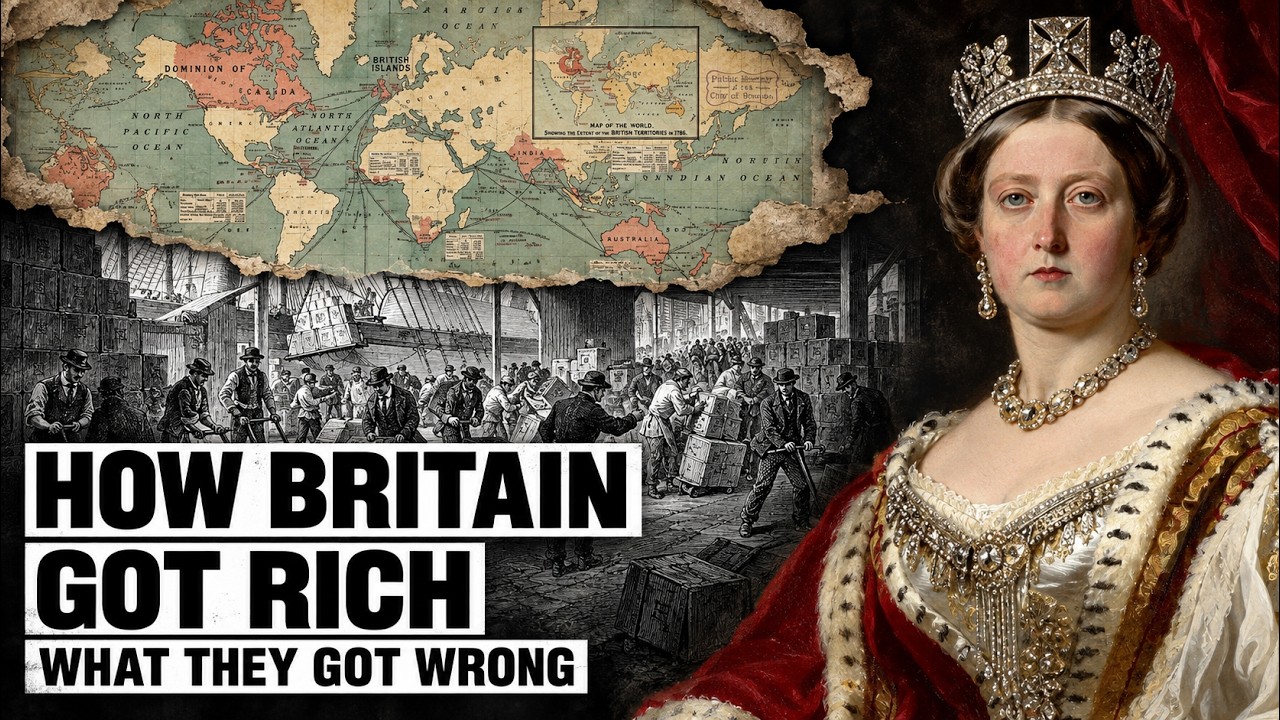

The story of how the British Empire got rich is one of the most misunderstood chapters in modern history. For generations, textbooks have told us that Britain became the wealthiest nation on Earth through industrial genius, scientific innovation, and sheer hard work. The steam engine. The spinning jenny. The factory system. But when you follow the actual money trail through tax ledgers, shipping manifests, and the private letters of the men who built the empire, a very different picture emerges.
In this deep dive investigation, we uncover the real origins of British imperial wealth, from the 1600 royal charter that created the East India Company to the hidden offshore financial empire that still operates out of the City of London today. We trace the Battle of Plassey in 1757, where a thirty-two-year-old clerk named Robert Clive used bribes, forged treaties, and a conspiracy with Mir Jafar to seize the richest province in India for a private corporation. We examine the catastrophic Bengal famine of 1770, which killed between seven and ten million people while East India Company revenues actually increased. We explore the Caribbean sugar economy, the transatlantic slave trade, and the long suppressed thesis of Eric Williams, whose 1944 book Capitalism and Slavery was not published in a mainstream British edition until 2022.
We also break down the single most shocking fiscal fact in British history. In 1833, Parliament passed the Slavery Abolition Act and paid twenty million pounds, roughly forty percent of the national budget, to compensate slave owners for the loss of their human property. The enslaved people themselves received nothing. The loan taken out to finance that payment was not fully paid off until 2015.
The investigation continues into the opium trade with China, Utsa Patnaik's calculation that Britain drained the equivalent of forty-five trillion dollars from India between 1765 and 1938, and the serious scholarly counter arguments from Tirthankar Roy and Kristian Niemietz.
Finally, we expose how the empire never truly ended. It mutated. The City of London invented the modern offshore financial system in the late 1950s through the eurodollar market. The surviving British dependencies, including the Cayman Islands, British Virgin Islands, Bermuda, Jersey, and the Isle of Man, became the architecture of global tax avoidance. The institutions that financed the slave trade and the opium wars live on today under names like HSBC, Barclays, and Lloyd's of London.
This video is for anyone who has ever wondered why some nations are rich, why others remain poor, and how the global financial system we live inside actually came to be. Serious economic history told with narrative tension and factual rigor.
If this changed the way you think about British history, the Industrial Revolution, or the modern global economy, hit the like button and subscribe for more deep dives into the real history of money, power, and empire.
Sources and further reading
- William Dalrymple, The Anarchy, Bloomsbury 2019
- Utsa Patnaik, drain estimate published through Columbia University Press 2018
- Eric Williams, Capitalism and Slavery, 1944, Penguin UK edition 2022
- Tirthankar Roy, The Economic History of India, Oxford University Press
- Kristian Niemietz, Imperial Measurement, Institute of Economic Affairs
- University College London, Legacies of British Slavery database
- Nuala Zahedieh, Economic History Review research on Caribbean capitalism
- Nicholas Shaxson, Treasure Islands
- Jason Hickel, writings on the Indian drain, Al Jazeera 2018
- Britannica entries on the Opium Trade and the First Opium War
- Victorian Web archives on nineteenth century opium exports to Canton
- UK Treasury and Full Fact reporting on the 1833 Slave Compensation Loan
- Robert Tombs, History Reclaimed project
- Tax Justice Network reports on the City of London
#britishempire #history #economichistory #colonialism #eastindiacompany #industrialrevolution #slavetrade #opiumwars #bengal #imperialism #cityoflondon #finance #taxhavens #reparations #worldhistory #hiddenhistory #globaleconomy #wealth #power #capitalism #geopolitics #ukhistory #indiahistory #caribbeanhistory #documentaryhistory

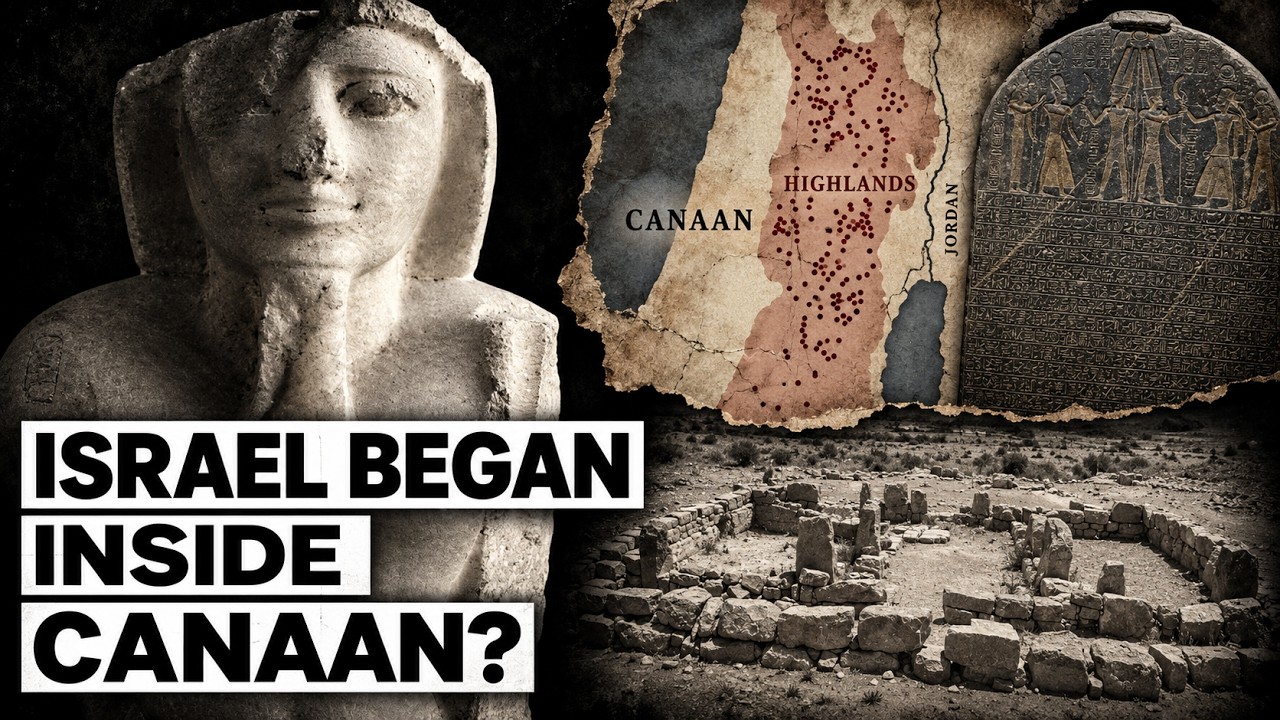
The True Origin of the Ancient Israelites: What Historians Get Wrong
For thousands of years, we've been told the same story — an enslaved people, a miraculous escape from Egypt, a violent conquest of a promised land. But what does the actual evidence say? When archaeologists dig into the soil of the ancient Levant, when geneticists decode DNA from Bronze Age bones, and when historians examine inscriptions carved over three thousand years ago, a very different picture emerges. One that is far more complex, far more fascinating, and far more human than the version most of us were taught.
In this video, we trace the real origins of the ancient Israelites using archaeological discoveries, ancient DNA studies, Egyptian inscriptions like the Merneptah Stele, and decades of scholarly debate. We explore the Late Bronze Age Collapse, the mysterious Sea Peoples, the highland settlements of early Iron Age Canaan, and the competing theories that have divided historians for over a century. From the Conquest Model to the Emergence Theory, from the Amarna Letters to the latest genetic research — this is the full story of how a people was born.
If you enjoy deep dives into history, power, and identity, subscribe and turn on notifications so you never miss a video.
Sources:
• Israel Finkelstein and Neil Asher Silberman, The Bible Unearthed: Archaeology's New Vision of Ancient Israel and the Origin of Its Sacred Texts (2001)
• William G. Dever, Who Were the Early Israelites and Where Did They Come From? (2003)
• William G. Dever, Beyond the Texts: An Archaeological Portrait of Ancient Israel and Judah (2017)
• Agranat-Tamir et al., "The Genomic History of the Bronze Age Southern Levant," Cell (2020)
• Haber et al., "Continuity and Admixture in the Last Five Millennia of Levantine History from Ancient Canaanite and Present-Day Lebanese Genome Sequences," American Journal of Human Genetics (2017)
• Kenton Sparks, "Religion, Identity and the Origins of Ancient Israel," Religion Compass (2007)
• Eric H. Cline, 1177 B.C.: The Year Civilization Collapsed (2014)
• Avraham Faust, The Archaeology of Israelite Society in Iron Age II (2012)
• Gary Rendsburg, "Israelite Origins," Rutgers University Department of Jewish Studies
• Flinders Petrie, Six Temples at Thebes (1897) — original publication of the Merneptah Stele
• Manfred Goerg, Peter van der Veen, and Christoffer Theis, "Israel in Canaan (Long) Before Pharaoh Merneptah?" Journal of Ancient Egyptian Interconnections (2012)
• Tel Aviv University, "Study Finds Ancient Canaanites Genetically Linked to Modern Populations" (2020)
• Haaretz, "In First, Archaeologists Extract DNA of Ancient Israelites" (2023)
• Biblical Archaeology Society, various articles on Israelite origins and the Merneptah Stele
#ancientisraelites #biblicalarchaeology #originofisrael #merneptahstele #bronzeagecollapse #canaanites #ancienthistory #biblicalhistory #archaeology #seapeoples #exodusdebate #ancientdna #levanthistory #ironage #historydocumentary #ancientcivilizations #biblicalorigins #finkelsteinsilberman #thebibleunearthed #whoweretheisraelites
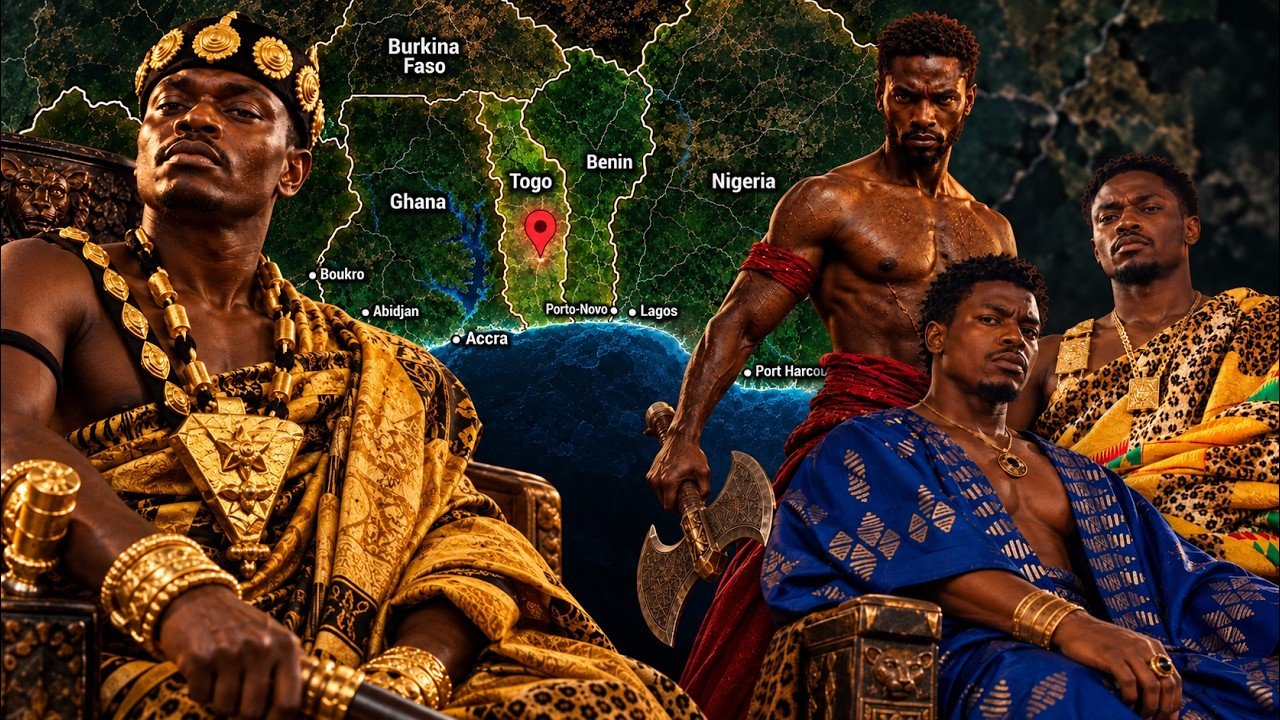
The Battle of Atakpamé was a major 1764 military conflict in modern-day Togo where an alliance of the Oyo Empire, the Kingdom of Dahomey, and Akyem forces inflicted a severe defeat on the Asante Empire
"2AM in Venezuela" (OFFICIAL VIDEO): https://youtu.be/GtvkwgbVKF8
BLACK WINTER (Full Album): https://youtube.com/playlist?list=PLJSMFuicKjJ46p1K9TlqZPRGFSd0M5z9U&si=4WG_YXCGJinM6XEN
Join the Patreon for exclusive videos that you won't find on Youtube: https://www.patreon.com/NTD1814
S U P P O R T
Cash App - $NelsonAmadeus
PayPal- GlobalHitsWorld@gmail.com
EMAIL - KingNeferkare@gmail.com
Twitter @NTDessalines
Instagram @NelsonAmadeus
TURN ON POST NOTIFICATIONS.
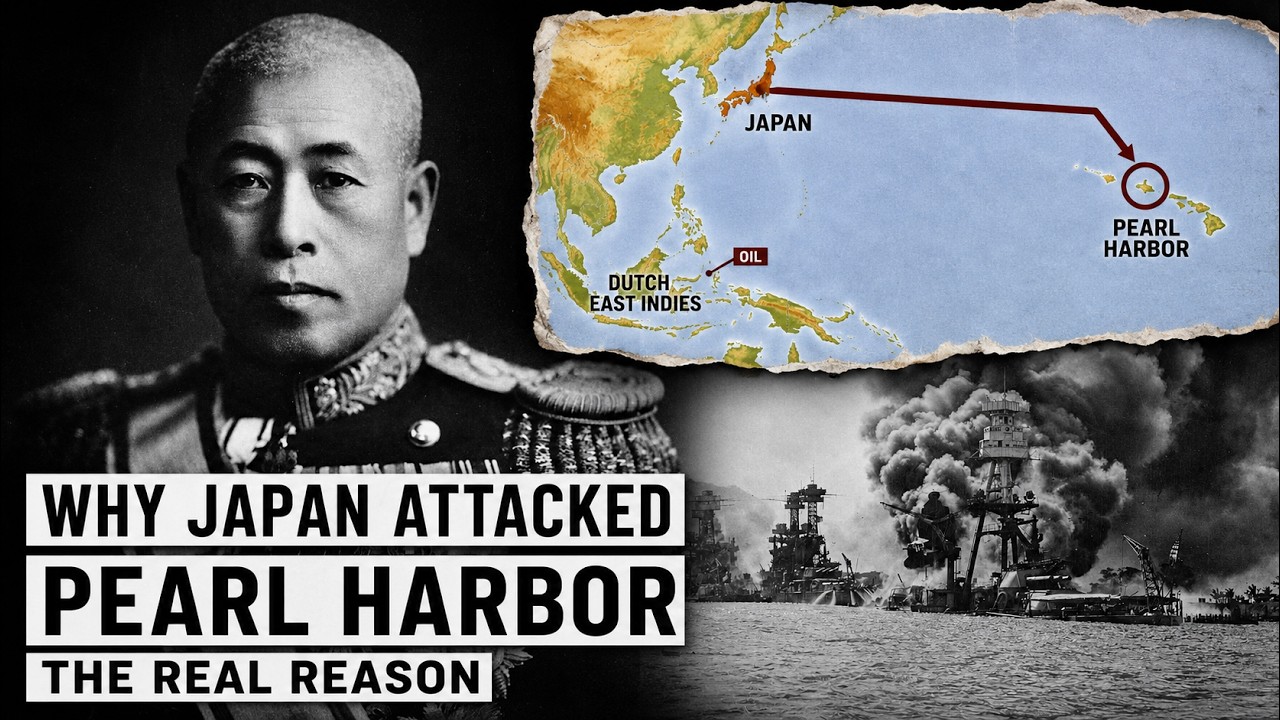
Most people think Japan attacked Pearl Harbor out of pure aggression. The real story is far more complex — and far more disturbing. It's a story about oil, humiliation, economic warfare, and a nation backed into a corner with no way out.
In this video, we trace the full chain of events that led to December 7th, 1941 — from Japan's forced opening by American warships in 1853, through the Meiji Restoration, imperial expansion, the brutal war in China, and the devastating U.S. oil embargo that cut off 94% of Japan's fuel supply almost overnight. We explore the internal power struggles within the Japanese government, Admiral Yamamoto's desperate gamble, the collapse of diplomacy with the Hull Note, and the silent two-week voyage of six aircraft carriers across the North Pacific toward Hawaii.
This isn't the simplified version you learned in school. This is the full picture — the geopolitics, the economics, the psychology, and the tragic irony of sanctions designed to prevent a war that ended up making war inevitable.
Sources and references drawn from the National Archives, Smithsonian, Imperial War Museum, Britannica, the Hoover Institution, and declassified U.S. diplomatic records.
If you enjoyed this deep dive, subscribe and hit the bell so you don't miss the next one.
#pearlharbor #ww2 #worldwarii #japan #history #pearlharborattack #admiralyamamoto #oilembargo #ww2history #militaryhistory #documentary #japaneseempire #pacificwar #historyexplained #ushistory #geopolitics #economicwarfare #meijirestoration #decemberseventh #wardocumentary



De Beers built the most powerful monopoly in modern history — not with guns or governments, but with a story. For over a century, one company controlled 90% of the world's diamond supply, convinced billions of people that a common stone was rare, invented the diamond engagement ring tradition, and made "A Diamond Is Forever" the slogan of the twentieth century. But today, that empire is collapsing. Anglo American has written down De Beers by $6.8 billion in just three years. Lab-grown diamonds now make up over 45% of U.S. engagement ring sales. And the company that manufactured scarcity is being made obsolete by a furnace.
In this video, we trace the full story — from a boy finding a pebble on a South African riverbank in 1866, to Cecil Rhodes' ruthless consolidation of the Kimberley mines, to Ernest Oppenheimer's Central Selling Organisation cartel, to the greatest advertising campaign ever run, to the blood diamonds crisis, and finally to the lab-grown revolution that is dismantling everything De Beers spent a century building.
This is the story of how one company rewired human culture — and what happens when the myth finally breaks.
Sources:
• Anglo American Annual Financial Reports (2023, 2024, 2025)
• JCK Online — "Anglo American Writes Down De Beers' Value to $2.3 Billion" (February 2026)
• JCK Online — "Anglo American Writes Down De Beers' Value by $2.9 Billion" (February 2025)
• JCK Online — "Anglo American Writes Down De Beers' Value by $1.6 Billion" (February 2024)
• Edahn Golan Diamond Research — Lab-Grown Diamond Wholesale Price Data
• NBC News — "Diamond industry 'in trouble' as lab-grown gemstones tank prices further"
• ICIJ — "Conflict Diamonds Are Forever"
• VOA News — "Botswana's Longtime Diamond Deal With De Beers Under Threat"
• Advertising Age — "Slogan of the Century" (1999)
• N.W. Ayer & Son Agency Records — De Beers Campaign Archives
• Encyclopedia.com — "De Beers Consolidated Mines Limited"
• South African History Online — "Sir Ernest Oppenheimer"
• Nasdaq — "Anglo Takes Third De Beers Writedown in Three Years"
• Ecofinagency — "Anglo American Nears De Beers Sale After Two Years of Uncertainty"
#debeers #diamonds #diamondmonopoly #labgrowndiamonds #cecilrhodes #adiamondisforever #diamondindustry #moneyandpower #economichistory #monopoly #angloamerican #botswana #blooddiamonds #finance #wealthandpower #documentary #diamondmyth #manufacturedscarcity #capitalism #history

How did a feudal island nation with swords and wooden ships transform itself into a modern world power capable of destroying European empires — all in a single lifetime?
In this video, we uncover the real story behind Japan's Meiji Restoration — the most radical national transformation in recorded history. From the humiliation of Commodore Perry's Black Ships in 1853 to the stunning destruction of the Russian Baltic Fleet at the Battle of Tsushima in 1905, Japan rewrote the rules of power, industry, and warfare in barely a generation.
We explore how a small group of young samurai overthrew a 260-year-old military dictatorship, sent their top leaders on an 18-month spy mission across the Western world, dismantled feudalism overnight, built factories, railroads, and a modern navy from scratch, and shocked the entire planet by defeating both China and Russia in back-to-back wars.
But this story isn't just about triumph. It's about the brutal costs of transformation — the samurai who lost everything, the farmers crushed by new taxes, and the imperial ambitions that would eventually lead Japan down a much darker path.
This is the story of how capital, industry, and ruthless pragmatism turned a small island into a global superpower — and what it reveals about the true nature of power in the modern world.
If you enjoy deep dives into the hidden forces that shaped our world, make sure to subscribe and turn on notifications so you never miss a video.
#japan #meijirestoration #history #worldpower #japanesehistory #meiji #imperialism #geopolitics #economics #finance #samurai #battleoftsushima #russojapanesewar #commodorperry #blackships #documentary #worldhistory #powerstructures #industrialrevolution #globaleconomy

👉 Want to create viral videos like this: https://voxavid.com
For over a million years, every human on Earth was dark-skinned — and the reason will completely rewire how you think about the human body.
If you shaved a chimpanzee, the skin underneath would be pale pink. So why is human skin bare, exposed, and — for 99% of our species' history — uniformly dark?
The answer isn't really about color at all. It's about fur, sweat, endurance running, and a single evolutionary "design package" that built the body you're using right now.
In this video, we trace how losing our fur forced our ancestors to evolve a biological sunscreen on the African equator — and why dark skin, not pale skin, is the true human default.
Dans cette vidéo :
• Why every great ape has pale skin under its fur — but humans don't
• How losing body hair turned us into the planet's best endurance machine
• The brutal biology of UVB, folate, and why pale skin near the equator was a death sentence
• How melanin became the keystone holding the entire human body together
• Why light skin is a recent "edit" that only appeared after we left Africa
📚 Sources :
— Skin pigmentation and UV radiation correlation (Jablonski & Chaplin, Journal of Human Evolution) :
— Evolution of fur loss and parasite avoidance (Pagel & Bodmer, Proceedings of the Royal Society B) :
— Endurance running and human evolution (Lieberman & Bramble) :
— Persistence hunting among the San (Liebenberg) :
— MC1R gene and the fixation of dark skin in the human lineage :
If stories like this make you see your own body differently, subscribe — we turn deep science into the story of who we really are.
#humanevolution #anthropology #darkskin #evolution #science #melanin #outofafrica
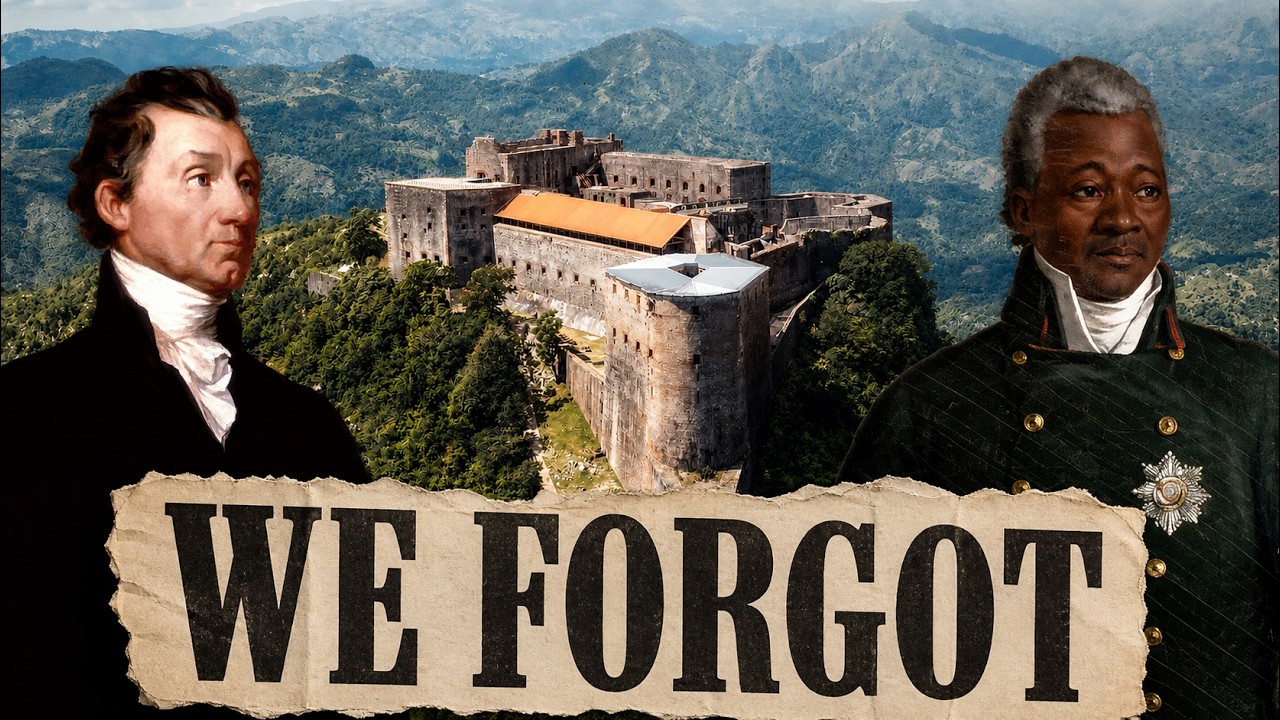
"2AM in Venezuela" (OFFICIAL VIDEO): https://youtu.be/GtvkwgbVKF8
BLACK WINTER (Full Album): https://youtube.com/playlist?list=PLJSMFuicKjJ46p1K9TlqZPRGFSd0M5z9U&si=4WG_YXCGJinM6XEN
Join the Patreon for exclusive videos that you won't find on Youtube: https://www.patreon.com/NTD1814
S U P P O R T
Cash App - $NelsonAmadeus
PayPal- GlobalHitsWorld@gmail.com
EMAIL - KingNeferkare@gmail.com
Twitter @NTDessalines
Instagram @NelsonAmadeus
TURN ON POST NOTIFICATIONS.