- General Videos
- Music
- Economics
- Health
- Travel & Events
- History
- Psychology
- Spirituality
- Movies
- News & Politics
- Kmtyw Combat Sciences
- Ɔbenfo Ọbádélé Kambon Videos
- Ɔbenfoɔ Kamau Kambon: Black Liberation Philosophy
- Science, Tech, Engineering and Math
- Permaculture
- Self-Sustainability
- Living Off Grid
- Yoruba Language Learning
- Education
- Mmɔfra Adesua
- Nana Kamau Kambon Playlist
- Livestream
- Komplementarity Kouples and Revolutionary Singles
- Abibitumi Film Series
- Decade of Our Repatriation
- Kwento xpr
- Live
Top videos


www.Farmers.co.ke is the site for authoritative multimedia agricultural and agribusiness content.
Visit us today for farming news, agribusiness tips, practical expert advice and industry updates.
SMS: 22071

SIGN UP TO RECEIVE UPDATES FOR NEW VIDEOS, ARTICLES, PLANT BASED RECIPES, BOOK RECOMMENDATIONS, AND FREE GIVEAWAYS FROM KONCIOUST.COM
https://ineverknewtv.com/sign-up/
Prof- I explains why we should eat a plant based diet and avoid drinking alcohol. He also explains why he does not smoke marijuana.
Please remember to share your though
ts in the comment section👊🏿
Give thanks !!
Tune into 'I NEVER KNEW 📻'
https://www.WLOY.org
EVERY SUNDAY @9am - 11am EST
🇬🇳Roots, Rock, Reggae Music🇬🇳
#marijuana #rastafari #plantbased

PEACE AND LOVE TO ALL! Be inspired and share in your networks - also private and public screenings are highly welcome. Guidance and itection to all
Like us on Facebook: https://www.facebook.com/rasta....farisustainablelifes
Description:
“Through its inside, personal and genuine view on the movement the documentary aims to inspire people worldwide on a more sustainable lifestyle embedded in the context of Rastafari.”
The documentary film “Rastafari as a sustainable Lifestyle: Messages from Jamaica” aims to show an in-depth inside view on how the philosophy of Rastafari offers a sustainable lifestyle. The need for a sustainable lifestyle is as global as the movement’s principles of “equal rights and justice for all”. Due to the movement’s global spread (particularly through Reggae) and influence (particularly on Africa and marginalized people), there is a lot of potential in convincing more and more people to live more sustainable and to educate them about sustainability.
The film tries in every aspect to be of anthropological nature: At no time, ‘outside’ voices on Rastafari about Rastafari can be heard. Instead, only the inside perspectives from people of the movement are expressed. Also, the film is inspired by Rastafari, and therefore it is supposed to not only entertain, but educate! It therefore merges into a piece of ‘EDUtainment’. The educational part about the need for a sustainable lifestyle gets highlighted through the only non-Rastafari character in the film, Dr. Kevon Rhiney (Geography Department, UWI), who is educating the audience about climate change, it’s drivers, possible projections and behaviors of a more sustainable lifestyle. This lays the foundation for anyone not aware of the seriousness of climate change and the urgent need for people to live more sustainable.
The choice of the rest of the characters in the movie tries to reflect the diversity of the Rastafari movement regarding social background, age and occupation: Amongst others the Social Entrepreneur specialist Dr. Kadamawe Knife (39), Kemetic Yoga teacher Iyabinghi Ashanti Tafari (50), music producer Jamal Layne (23), and Singer Kiddus I (68) all have an urgent concern about mother earth and the future of humanity. Throughout the movie the Rastafari characters ‘reason’ on nature, community, ‘Livity’ - approach to work and life - and the current wrongs of Babylon. At the same time they stand as specific examples of people who live in harmony with nature and who develop sustainable businesses ideas and concepts. By teaching ‘peace, love, and unity’, Rastafari promotes the unification of all people to work together for a balanced world.
*we don't agree with burning techniques to clear land or fertilize it for agricultural purpose. please stay away from burning your land as this causes far more damage then good. rather stick to e.g. composting and mulching to fertilize your land, and also check out PERMACULTURE for a holistic design system*
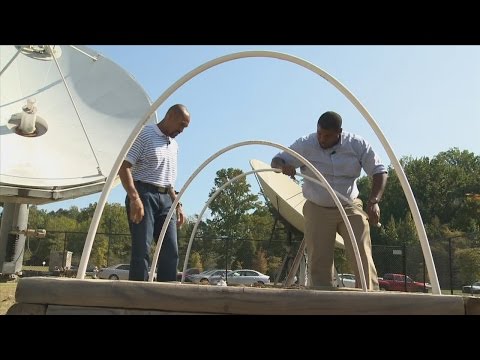
Chris and Master Gardener Stephan Leonard build a hoop house greenhouse on a raised bed garden. All you need to do this are a few PVC pipes, a big sheet of plastic and some simple hardware. We go step by step on how to build it. Hoop houses - like greenhouses - use the sun to warm the soil and air inside. This lets you plant your plants earlier and keep them growing later in the season when outside temperatures would kill them.
Get a parts list and construction photos: https://www.familyplotgarden.c....om/building-a-hoop-h
Watch other great how-to gardening videos :
How to install a drip irrigation system: https://www.youtube.com/watch?v=WWsQCu9vLpM
How to renovate a strawberry bed: https://www.youtube.com/watch?v=18ZPIBl_Zf0
How to plant vegetables in pots for later transplant: https://www.youtube.com/watch?v=ijhrSn0yTC8
Subscribe to The Family Plot for more home gardening tutorials!


How to Start a Regenerative Farm from Scratch
⭐️ Have you ever wanted to start a regenerative farm from scratch? ⭐️
In this video, the Heifer USA team travelled to North Carolina to visit Grass Grazed Farm, a regenerative farm where founders Derrick and Paige Jackson have established and grown a successful business in just two years. In the community of Rougemont, just outside Durham, Grass Grazed Farm raises pastured poultry, forested pork, grass fed beef, grass fed dairy, and laying hens following regenerative agriculture practices.
We interviewed the Jacksons about the process of starting their farm - and now, we're sharing their advice with you! Keep watching to learn every step the Jacksons took to build Grass Grazed Farm.
Learn more about our collaborators!
🌱 Grass Grazed Farm: https://www.grassgrazed.com/
🌱 Subscribe to Grass Grazed Farm on YouTube: https://www.youtube.com/channe....l/UCwK0-Mdk2q8cBYk1A
🍴 Farm to Fork Meat Riot: https://www.farmtoforkmeatriot.org/
🍴 Niti the Farmacist: https://www.youtube.com/channe....l/UCM1lBghFZ1OEn8Ykw
⭐️ WHAT'S IN THIS VIDEO? ⭐️
00:00 - Who is Grass Grazed Farm?
0:2:05 - The Journey to Regenerative Farming
04:52 - How to Start a Regenerative Farm
04:53 - Starting a Farm Business
05:07 - Farmers Market Research
05:53 - Why Regenerative Agriculture?
08:12 - Farm Marketing
08:46 - How to Lease Land
10:21 - Learn How to Farm
11:14 - What to Raise on a Regenerative Farm
11:57 - Establish a Farm Chore Routine
14:14 - Where to Sell Regenerative Meat
14:24 - Food Church - Community Supported Agriculture
16:10 - Biggest Challenges in Farming
16:21 - Creating Community in Farming
18:19 - Most Important Advice for Farmers
Subscribe to Heifer USA: https://bit.ly/3sGaTZC
Follow us on social media: https://linktr.ee/heiferusa
Heifer USA trains farmers, gardeners, and homesteaders in regenerative agriculture, combining sustainable horticulture and market gardening with ethical, regenerative livestock management, implementing proven methods to improve soil health. We offer virtual training through livestreams, workshops, and long-form video tutorials. Subscribe to be notified every time we publish a new video with information to improve your farm, ranch, or organic garden!
DISCLAIMER: As an Amazon Associate I earn from qualifying purchases. I get commissions for purchases made through links in this post.