- General Videos
- Music
- Economics
- Health
- Travel & Events
- History
- Psychology
- Spirituality
- Movies
- News & Politics
- Kmtyw Combat Sciences
- Ɔbenfo Ọbádélé Kambon Videos
- Ɔbenfoɔ Kamau Kambon: Black Liberation Philosophy
- Science, Tech, Engineering and Math
- Permaculture
- Self-Sustainability
- Living Off Grid
- Yoruba Language Learning
- Education
- Mmɔfra Adesua
- Nana Kamau Kambon Playlist
- Livestream
- Komplementarity Kouples and Revolutionary Singles
- Abibitumi Film Series
- Decade of Our Repatriation
- Kwento xpr
- Live
Top videos

tts donations here/ https://streamlabs.com/ishowspeed
FOLLOW ME 👀 http://link.me/ishowspeed
MERCH 👕 - https://speed.store/
MEMBERSHIPS ✅ - https://www.youtube.com/c/IShowSpeed/join
for donations tts/ Media Request here
https://streamlabs.com/ishowspeed/tip
IG: https://www.instagram.com/isho....wspeed?igsh=MXNveXVu
X: https://x.com/ishowspeedsui?s=21
Snap : https://snapchat.com/t/IeuoJ50Y
Discord: https://discord.gg/ishowspeed
JOIN MY OTHER CHANNELS
YT Live speedy: https://youtube.com/@LiveSpeed....y?si=Sd4QiWsrk-iGX7f
YT Speedy Boykins: https://youtube.com/@speedyboy....kins7869?si=0jMDTQQs
YT Speeduniverse : https://youtube.com/@SpeedUniv....erse?si=XUMYeIWoUY4T

https://aiyawodemaya.com/Donate & Support Me On Go Fund Me:https://www.gofundme.com/africa-to-the-worldDonate & Support the Channel on Patreon:https://www.patreon.com/wode_mayaDonate and Support me on Paypal:https://www.paypal.me/wodemaiya


On my first trip to the city of Angels (Los Angeles) for the world famous Hollywood Carnival, within the great vibes and energy, V'ghn and his team decided to capture some of the beautiful ambiance which led to filming a couple new music videos. first up "Trouble in the Morning" Official Video features International Soca Star 'LYRIKAL" as one of the main actors alongside local caribbean Beauty Stacy. Most scenes were filmed on and around the world famous Hollywood Blvd. V'ghn's Daily mission is to represent Grenada and the entire Caribbean to the fullest. Hope you Enjoy.
Camera shots: Trincity Pickney & Revcaribbean
Edited by: Trincity Pickney
Directed by: Trincity Pickney & International Stephen (DSM)
Song Produced by: DJ Captain John
Executive Producer: International Stephen
Written by: Jevaugh "V'ghn" John
#vghnofficial #troubleinthemorning #soca #hollywood

"2AM in Venezuela" (OFFICIAL VIDEO): https://youtu.be/GtvkwgbVKF8
BLACK WINTER (Full Album): https://youtube.com/playlist?list=PLJSMFuicKjJ46p1K9TlqZPRGFSd0M5z9U&si=4WG_YXCGJinM6XEN
Join the Patreon for exclusive videos that you won't find on Youtube: https://www.patreon.com/NTD1814
S U P P O R T
Cash App - $NelsonAmadeus
PayPal- GlobalHitsWorld@gmail.com
EMAIL - KingNeferkare@gmail.com
Twitter @NTDessalines
Instagram @NelsonAmadeus
TURN ON POST NOTIFICATIONS.
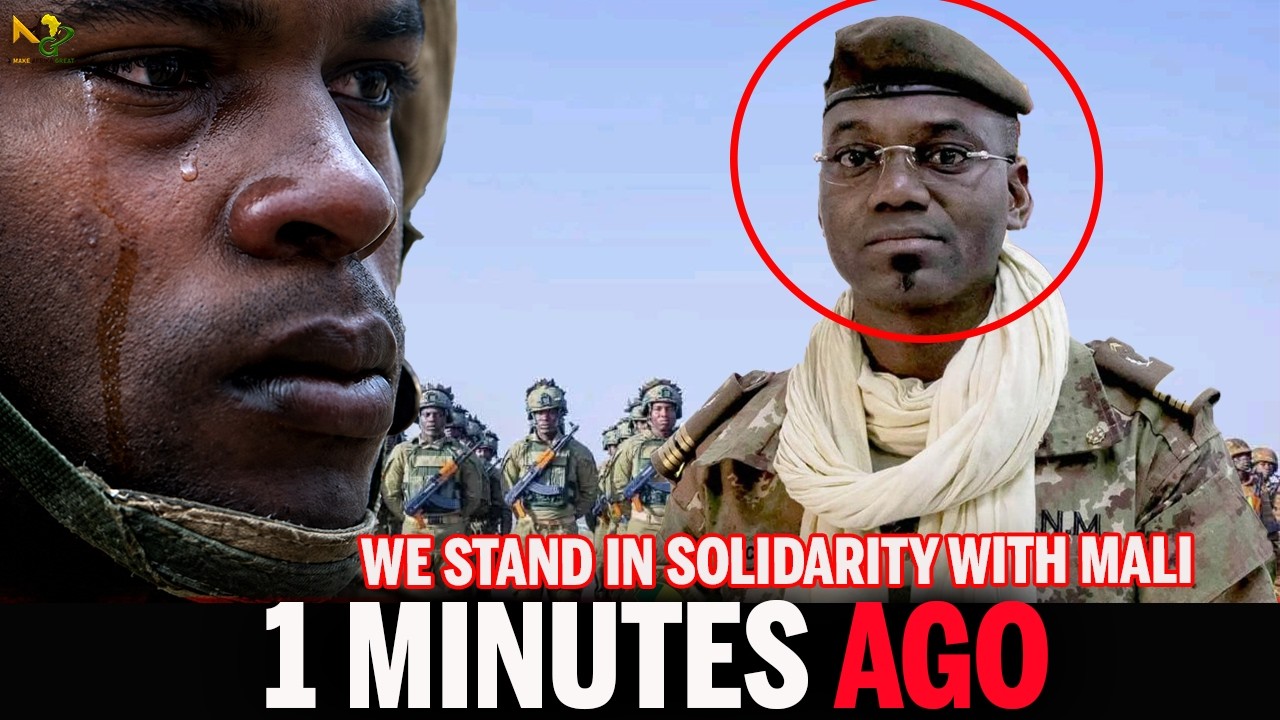

Reports emerging on Sunday indicate that Sadio Camara, Mali’s🇲🇱🇲🇱 Defence Minister, has been killed following a wave of coordinated attacks on military targets across the country.
According to multiple sources, the attacks began on April 25 and hit key locations including the capital, Bamako, and the nearby garrison town of Kati. Armed groups carried out near-simultaneous assaults on army bases, the airport, and other strategic sites, marking one of the largest offensives in recent years.
Camara’s residence in Kati was among the locations targeted. He was later reported killed in the violence, although details about the exact circumstances remain limited and are still being confirmed.
The attacks are believed to have been carried out by a combination of jihadist fighters linked to al-Qaeda and Tuareg separatist groups, who appear to have coordinated their operations across multiple regions.
Mali’s military says it has been fighting back and claims to have repelled many of the attacks, but the situation remains volatile, with ongoing clashes and heightened security measures in several areas.
#Love
#Peace
#africansolutions


"2AM in Venezuela" (OFFICIAL VIDEO): https://youtu.be/GtvkwgbVKF8
BLACK WINTER (Full Album): https://youtube.com/playlist?list=PLJSMFuicKjJ46p1K9TlqZPRGFSd0M5z9U&si=4WG_YXCGJinM6XEN
Join the Patreon for exclusive videos that you won't find on Youtube: https://www.patreon.com/NTD1814
S U P P O R T
Cash App - $NelsonAmadeus
PayPal- GlobalHitsWorld@gmail.com
EMAIL - KingNeferkare@gmail.com
Twitter @NTDessalines
Instagram @NelsonAmadeus
TURN ON POST NOTIFICATIONS.

"2AM in Venezuela" (OFFICIAL VIDEO): https://youtu.be/GtvkwgbVKF8
BLACK WINTER (Full Album): https://youtube.com/playlist?list=PLJSMFuicKjJ46p1K9TlqZPRGFSd0M5z9U&si=4WG_YXCGJinM6XEN
Join the Patreon for exclusive videos that you won't find on Youtube: https://www.patreon.com/NTD1814
S U P P O R T
Cash App - $NelsonAmadeus
PayPal- GlobalHitsWorld@gmail.com
EMAIL - KingNeferkare@gmail.com
Twitter @NTDessalines
Instagram @NelsonAmadeus
TURN ON POST NOTIFICATIONS.