- General Videos
- Music
- Economics
- Health
- Travel & Events
- History
- Psychology
- Spirituality
- Movies
- News & Politics
- Kmtyw Combat Sciences
- Ɔbenfo Ọbádélé Kambon Videos
- Ɔbenfoɔ Kamau Kambon: Black Liberation Philosophy
- Science, Tech, Engineering and Math
- Permaculture
- Self-Sustainability
- Living Off Grid
- Yoruba Language Learning
- Education
- Mmɔfra Adesua
- Nana Kamau Kambon Playlist
- Livestream
- Komplementarity Kouples and Revolutionary Singles
- Abibitumi Film Series
- Decade of Our Repatriation
- Kwento xpr
- Live
Top videos
![Mali in Crisis: The Fight Between the Dogon and Fulani | Talk to Al Jazeera In The Field [2019]](https://i.ytimg.com/vi/1YCFf_Erdvc/hqdefault.jpg)

Deep in central Mali, what was supposed to be harvest season for villagers has become a season of starvation, death and destruction.Mali's health ministry says so far hundreds of people have died from what it describes as a man-made famine, as farmers and herders fight over land.It is an ancestral conflict that takes place at the height of the dry season between the Dogon, who are traditional farmers and hunters, and the Fulani, the semi-nomadic herders of the Sahel.
The Dogon accuse the Fulani of overstepping on their farmland to feed their animals, while the Fulani accuse the Dogon of killing and stealing their cattle. And now they are killing each other.In one of the worst attacks, 160 Fulani villagers were killed in Ogossagou in March. Mamadou Togo, the chief representative of Mali's Dogon people, tells Al Jazeera the attack was not perpetrated by Dogon hunters. He says the Dogon have not attacked any Fulani villages, despite there being tensions between the two communities.However, he admits that "when other people come and attack the Dogon, they retaliate"."We cannot sit and watch people come and kill us and go back without anything. We said no, this is intolerable," he says. "When you come to kill me and I'm not dead, for instance, if I can I will kill you."
The two sides both accuse the other of being the aggressor.Mahmoud Dicko, a Fulani and a powerful leader of the High Islamic Council, blames the mutual mistrust on outside interference."I am convinced that there are other invisible, obscure forces that are planning to destabilise the entire subregion. And to succeed in this destabilisation, it is necessary to create a war between the different ethnic groups," he says.The violence is not limited to Mali, either. In neighbouring Sahelian countries, Fulanis have been in conflict with other tribes as well. Fuelling this conflict are armed groups - including al-Qaeda and Islamic State affiliates - who are stepping in and taking sides.
Some have been fighting in the war in Libya."This crisis in the centre of Mali started from the occupation of northern Mali by terrorist groups [in 2012]," says Tiebile Drame, the Malian minister of foreign affairs. "The Malian crisis is directly linked to the situation in Libya, to the collapse of Libya in 2011."Since 2013, the United Nations peacekeeping mission MINUSMA has been operating in Mali. There are currently 14,000 UN troops - among them British, Canadian and German soldiers - as well as 4,000 French combat troops and regional G5 Sahel forces in the country.Despite this, the violence is spreading, and spiralling out of control.Insurgent and rebel groups also directly target security forces, launching suicide attacks and car bombings.
MINUSMA is now the deadliest UN peacekeeping mission, with more UN troops dying in Mali than anywhere else, or at any time before. This also adds to the feeling shared by many Malians that the security forces are not a source of protection but a source of danger.Nevertheless, the $1bn a year MINUSMA mission has been renewed for another year, while Mali's government is calling for the creation of a coalition force like the ones seen in Iraq and Afghanistan to intervene in Mali.But the Dogon and Fulani leaders we spoke to are both sceptical about outside actors.
Dogon leader Togo believes France profits from the instability in the country, saying Mali's former colonial master "wants to recolonise again this country because of the wealth underground".Meanwhile, Fulani leader Dicko says the UN mission and international community are failing Mali, spending billions of dollars "for their own comfort"."I say to leave us alone, to leave the Sahelians between us," he says. "We are brothers, we have lived together for millennia. We have a mechanism to settle things between us. If we are left alone, we ourselves will find a solution to this problem."To examine who profits from Mali's state of instability, and how the violence can be brought to an end, Talk to Al Jazeera In The Field meets Dogon and Fulani leaders to try to understand this complex conflict.
Subscribe to our channel: http://aje.io/AJ
Check our website: https://www.aljazeera.com/


To much of the world, Somalia has a fearsome reputation. It is seen as one of the most dangerous places on the planet - a failed state that is widely believed to be home to warlords, pirates and terrorists.
But in the north of the country, at least, the reality is different.
Somaliland is an autonomous enclave with its own flourishing capital city, Hargeisa. Though a long way off from receiving international recognition as an independent state, it is a haven of peace and stability when compared with the rest of Somalia.
But Somaliland has its dark side. Within living memory its citizens fell victim to the most savage of state-sponsored atrocities. General Siad Barre - the ruthless dictator who ruled Somalia from 1969 to 1991 - went to war with the clans who inhabited the area. Believing them to be supporting a rebellion against his regime, he took revenge by sending in his army with a mandate to "kill all but the crows".
The city of Hargeisa was virtually destroyed during intense and pitiless bombardment. Many thousands of people were killed or driven into exile. Barre's soldiers, meanwhile, tortured and murdered as many as 50,000 others - most of them civilians - and buried their bodies in mass graves. Now, as those who still live in this region try to secure their future, some feel those past agonies should be re-examined and those responsible held to account.
In this exclusive two-part investigation, People and Power meets a community coming to terms with the horrors of the past and joins forces with a group of forensic investigators and human rights activists attempting to bring an alleged war criminal, Yusuf Abdi Ali, also known as Colonel Tukeh, to account.
- Subscribe to our channel: http://aje.io/AJSubscribe
- Follow us on Twitter: https://twitter.com/AJEnglish
- Find us on Facebook: https://www.facebook.com/aljazeera
- Check our website: https://www.aljazeera.com/
#AlJazeeraEnglish #Somali #Hergeisa
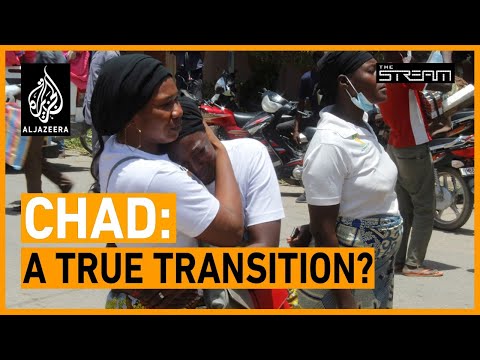
More than thirty years of increasingly repressive rule by one man in Chad has in recent weeks given way to sudden political uncertainty, as first an unappointed military council and now a transitional government reckon with the country’s future in the wake of President Idriss Deby’s unexpected death.
Chad’s interim president Mahamat Deby – son of Idriss – on May 2 named a 40-member transitional government after days of widespread popular discontent over power being concentrated within a 15-member Transitional Military Council (CMT), led by Deby.
While some opposition leaders have joined the new transitional government, the majority of ministerial posts were reserved for members of Deby’s Patriotic Salvation Movement (MPS). And there is simmering public discontent that parliament was dissolved and the constitution suspended before the CMT was formed. While parliament reconvened this week, one opposition leader says Chad is still being denied a full transition to civilian rule.
In this episode of The Stream, we’ll look at what lies ahead for people in Chad as it adjusts to life without Idriss Deby.
Join the conversation:
TWITTER: https://twitter.com/AJStream
FACEBOOK: http://www.facebook.com/AJStream
Subscribe to our channel http://bit.ly/AJSubscribe
#aljazeeraenglish
#ajstream
#chad

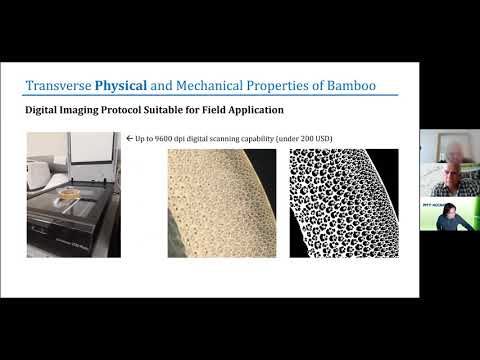
The way we learn and share experiences is changing. INBAR’s themed online webinar series brings bamboo and rattan experts from all over the world together to educate, inspire and discuss, without the need for travel.
This is session 2 of the series 'Bamboo: A Very Sustainable Construction Material'. These webinar sessions aim to build greater awareness about bamboo’s potential to alleviate the world’s acute housing crisis, as a low-cost form of construction and as part of the development of zero-emission, ‘green’ cities.
Speaker: Kent Harries, Professor of the University of Pittsburgh
Topic: Full-culm bamboo as a full-fledged engineering material
Speaker: Andry Widyowijatnoko, Architect and Lecturer at Institut Teknologi Bandung, Indonesia
Topic: From traditional to engineered to substitutive bamboo construction
Speaker: Sebastian Kaminski, Senior Structural Engineer of Arup
Topic: Designing durable bamboo structures: how to protect against rot and insect attack
The International Bamboo and Rattan Organisation, or INBAR, is an intergovernmental organisation dedicated to promoting the use of bamboo and rattan for inclusive, green development. We research and strengthen the global knowledge base for bamboo and rattan and raise awareness of their use for:
♣Climate Change Adaptation and Mitigation
♣Land Restoration
♣Poverty Alleviation
♣South-South Cooperation
♣Sustainable, Affordable Construction
♣Accessible, Green Energy.
INBAR Official:
www.inbar.int
www.twitter.com/INBARofficial/
www.twitter.com/INBARlac/
www.twitter.com/INBARWaro/
www.facebook.com/INBARofficial/
www.facebook.com/INBARlac/
www.facebook.com/INBARWARO/
Follow our Youtube channel for practical tips for growing, processing and marketing bamboo and rattan products as well as interviews, speeches and more from our work around the world.


Don't forget to subscribe: https://bit.ly/2Hb8hjx
Watch more interesting videos: https://bit.ly/34ogCaw
Follow Channels Television On:
Facebook: https://www.facebook.com/channelsforum/
Twitter: https://twitter.com/channelstv
Instagram: https://www.instagram.com/chan....nelstelevision/?hl=e
Get more news on our website: https://www.channelstv.com/
#ChannelsTv

Marcia Bartusiak joins Kip Thorne, Laura Danly and Rainer Weiss to demonstrate how two observatories on opposite sides of the country, called LIGO (Laser Interferometer Gravitational-wave Observatory), may open a new window on observing the cosmos—one based not in light but in gravity. Scientists have embarked on this joint experiment, seeking whispers of far-away violence—like the collision between distant black holes—rippling through the cosmos. It’s taken nearly a century, but technology has finally caught up to Einstein’s brilliance. His 1916 General Theory of Relativity predicted the existence of gravitational waves—undulations in the very fabric of space and time—and LIGO researchers are now poised to detect them.
The World Science Festival gathers great minds in science and the arts to produce live and digital content that allows a broad general audience to engage with scientific discoveries. Our mission is to cultivate a general public informed by science, inspired by its wonder, convinced of its value, and prepared to engage with its implications for the future.
Subscribe to our YouTube Channel for all the latest from WSF.
Visit our Website: http://www.worldsciencefestival.com/
Like us on Facebook: https://www.facebook.com/worldsciencefestival
Follow us on twitter: https://twitter.com/WorldSciFest
Original Program Date: June 4, 2010
MODERATOR: Marcia Bartusiak
PARTICIPANTS: Andrea Lommen, Kip S. Thorne, Laura Danly, Rai Weiss
The Sound of the future 00:00
Marcia Bartusiak's Introduction 00:40
The history of gravity. 05:55
Participant Introductions. 08:02
How did we get here from the past? 12:11
The universal rate of acceleration. 18:43
What drew Einstein to rethink Newton's ideas. 24:30
What Einstein predicted. 29:28
What happens when two black holes collide? 35:35
Stumbling on to a binary pulsar 40:30
Why do you study something that doesn't exist? 46:10
Measuring the strain of the universe. 53:35
LIGOS the gravitational tape measure. 59:35
When do you hear the gravity wave? 01:09:30
What are the new surprises to look forward to? 01:16:00
What would you expect space time to look like when black holes collide? 01:22:25

Come venture deep inside the world’s biggest physics machine, the Large Hadron Collider. This extraordinary feat of human engineering took 16 years and $10 billion to build, and just weeks ago began colliding particles at energies unseen since a fraction of a second after the big bang. We’ll explore this amazing apparatus that could soon reveal clues about nature’s fundamental laws and even the origin of the universe itself. John Hockenberry moderates a discussion among physicists including Marcela Carena, Monica Dunford, Jennifer Klay and Nobel laureate Frank Wilczek.
This program is part of The Big Idea Series, made possible with support from the John Templeton Foundation.
The World Science Festival gathers great minds in science and the arts to produce live and digital content that allows a broad general audience to engage with scientific discoveries. Our mission is to cultivate a general public informed by science, inspired by its wonder, convinced of its value, and prepared to engage with its implications for the future.
Subscribe to our YouTube Channel for all the latest from WSF.
Visit our Website: http://www.worldsciencefestival.com/
Like us on Facebook: https://www.facebook.com/worldsciencefestival
Follow us on twitter: https://twitter.com/WorldSciFest
Original Program Date: June 5, 2010
MODERATOR: John Hockenberry
PARTICIPANTS: Marcela Carena, Monica Dunford, Jennifer Klay, Frank Wilczek
John Hockenberry Introduction 00:14
What is the LHC? 04:57
Participant Introductions. 08:30
Where are we now with the LHC? 11:58
By smashing particles this creates a mini big bang? 16:58
What can the LHC do beyond Fermilab 21:30
How do you calculate the probability's that these particles are going to occur? 25:52
If you can create this mini big bang the energy changes are observable? 32:00
The search for the Higgs. 38:30
The standard model, Cosmological molasses, and Higgs. 44:25
How will you detect and confirm all of the predictions. 52:51
Departing form experimental evidence with super symmetry. 01:00:08
Are there places in space that have these particles? 01:07:07
Is there a limit to the number of particles you can expect? 01:13:50
Is there a possibility that the cosmological molasses is just a crutch? 01:22:16
The life of a LHC physicist. 01:26:49