- General Videos
- Music
- Economics
- Health
- Travel & Events
- History
- Psychology
- Spirituality
- Movies
- News & Politics
- Kmtyw Combat Sciences
- Ɔbenfo Ọbádélé Kambon Videos
- Ɔbenfoɔ Kamau Kambon: Black Liberation Philosophy
- Science, Tech, Engineering and Math
- Permaculture
- Self-Sustainability
- Living Off Grid
- Yoruba Language Learning
- Education
- Mmɔfra Adesua
- Nana Kamau Kambon Playlist
- Livestream
- Komplementarity Kouples and Revolutionary Singles
- Abibitumi Film Series
- Decade of Our Repatriation
- Kwento xpr
- Live
Live

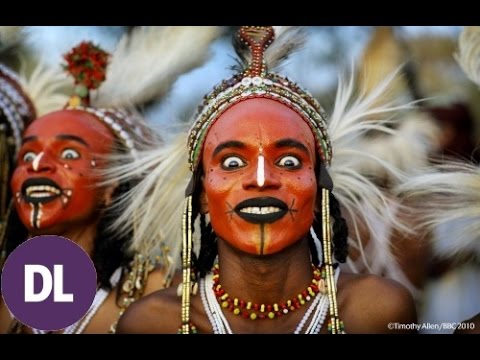

![Touareg [Tuareg - 1948]](https://i.ytimg.com/vi/JTbYYk56uQo/hqdefault.jpg)

Traditional scenes of Tuareg life, including a young man's transition to manhood, wedding festivities and a camel salt caravan through the Sahara.
To purchase a clean DVD of this film for personal home use or educational use contact us at questions@archivefarms.com. To license footage from this film for commercial use visit: www.travelfilmarchive.com

After ten years of fighting, peace between the Tuareg guerrillas and government troops was recently signed. The war and the crisis of modernity have endangered the secular caravan carrying salt on camels from the Aïr to Agadez. This year, two Tuareg children can accompany their families in this trailer for the first time in a climate of peace, and this chapter of the series will see the generational change of the Tuareg tradition thanks to the friendship of these two children whose families were on opposite sides during the past conflict.
Don't forget to SUBSCRIBE here for more amazing docs!: http://goo.gl/vNINO4
SUSCRÍBETE al canal y descubre los mundos y las culturas más fascinantes: http://goo.gl/vNINO4
Follow us on:
Síguenos también en:
Facebook: https://www.facebook.com/NewAtlantisDocumentales
Twitter: https://twitter.com/NewAtlantisDocu
![Adalil - A Tuareg Nomad Woman in the Sahara [1990]](https://i.ytimg.com/vi/tMi6UsLSmj4/hqdefault.jpg)
To Europeans, the veiled men looking down proudly from the backs of their camels have always embodied the noble knights of the desert. Up until now we have heard little about the mothers, the wives, and sisters of the Tuareg nomads in the forgotten edges of the Sahara. The film documents the independence and vitality of these sisters of the dunes.
Original titel: Adalil - The mistress of tents
A film by Sylvie Banuls and Peter Heller
© 1990, Filmkraft Peter Heller
Subscribe to the Channel: https://goo.gl/5Sp36B
Follow us on Facebook: https://www.facebook.com/wocomo
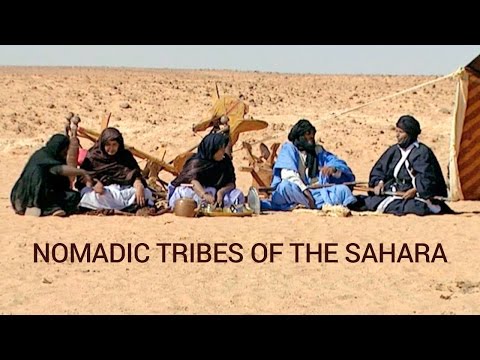
In this documentary, we will travel to the heart of Western Sahara, the last remaining unexplored region of the great African desert.
We will meet the nomads that inhabit this land, learn about their fascinating customs, their atavistic rites; the birthplace of an ancient empire. They are the ULAD EL MIZNA, the Children of the Cloud.
The immense desert which comprises the Western Sahara, almost 250,000 km in size, is one of the least-known, and most hostile regions in the world.
In 1976, exile began for the Sahrawi nation, which since then has been crowded into refugee camps in the barren hammada of TINDUF, in extreme living conditions and depending for their survival on international aid.
The unequal war between the FRENTE POLISARIO and Morocco in order to achieve freedom for their country has led to poverty, desolation and an unbearable cost in human lives.
In exile, the Sahrawi nation has, with the few available resources, managed to create a rudimentary but efficient system of administration. The population, some 170,000 people, has organised itself into WILAYAS and DARÍAS, assemblies of neighbours at which they discuss the problems of the community.
Mauritania is a country entirely of desert and with a fascinating history.
The terrifying canyons of the AMOJIAR ravine, its vertical walls, and the frequent landslides formed part of the dangers of the road which the ancient caravans had to negotiate in order to reach the mythical cities of the Gold Route. The lost cities of Mauritania. The mosque is the most important building in Chinguetti and perhaps in all of Mauritania. Every year, below its minaret, of dry-stone masonry and reconstructed several times, thousands of the Turab al Bidan faithful gathered to set out on the pilgrimage to Mecca.
For this reason, Chinguetti was considered the seventh holy city of Islam.
▶ SUBSCRIBE! http://bit.ly/PlanetDoc Full Documentaries every Tuesday, Thursday and Saturday!
▶FULL DOCUMENTARIES |
http://planetdoc.tv/playlist-full-documentaries
▶ TRIBES | http://planetdoc.tv/playlist-tribes-documentaries
▶FACEBOOK | http://bit.ly/FBPDoc
▶TWITTER | http://bit.ly/TwPDoc
▶TUMBLR | http://bit.ly/TbPlDoc
![Nelson Mandela: Speaks at Southern University A & M College Baton Rouge [2000]](https://i.ytimg.com/vi/6YTYdnkCKJ0/hqdefault.jpg)
![Sudan: The Nubian Caravans - The Secrets of Nature [2014]](https://i.ytimg.com/vi/dBZNMsmNNZc/hqdefault.jpg)

Nearly all of Ethiopia’s old-growth forest has disappeared. This film tells the story of Ethiopia’s church forests–pockets of lush biodiversity that surround hundreds of churches—and the efforts to protect them. Directed by Jeremy Seifert. This film premiered in the seventh issue of Emergence Magazine on "Trees" with an accompanying essay by Fred Bahnson.
Read or listen to the essay here: http://www.emergencemagazine.o....rg/story/the-church-
Follow Emergence Magazine:Twitter: https://twitter.com/emergence_zineFacebook: https://www.facebook.com/SpiritualEcology/
Instagram: https://www.instagram.com/emergencemagazine
Vimeo: https://vimeo.com/emergencemagazine
Emergence Magazine is a quarterly online publication featuring innovative stories that explore the threads connecting ecology, culture, and spirituality.Subscribe to our newsletter to receive the latest stories from Emergence directly to your inbox: https://emergencemagazine.org/newsletter/