- General Videos
- Music
- Economics
- Health
- Travel & Events
- History
- Psychology
- Spirituality
- Movies
- News & Politics
- Kmtyw Combat Sciences
- Ɔbenfo Ọbádélé Kambon Videos
- Ɔbenfoɔ Kamau Kambon: Black Liberation Philosophy
- Science, Tech, Engineering and Math
- Permaculture
- Self-Sustainability
- Living Off Grid
- Yoruba Language Learning
- Education
- Mmɔfra Adesua
- Nana Kamau Kambon Playlist
- Livestream
- Komplementarity Kouples and Revolutionary Singles
- Abibitumi Film Series
- Decade of Our Repatriation
- Kwento xpr
- Live
Top videos


"2AM in Venezuela" (OFFICIAL VIDEO): https://youtu.be/GtvkwgbVKF8
BLACK WINTER (Full Album): https://youtube.com/playlist?list=PLJSMFuicKjJ46p1K9TlqZPRGFSd0M5z9U&si=4WG_YXCGJinM6XEN
Join the Patreon for exclusive videos that you won't find on Youtube: https://www.patreon.com/NTD1814
S U P P O R T
Cash App - $NelsonAmadeus
PayPal- GlobalHitsWorld@gmail.com
EMAIL - KingNeferkare@gmail.com
Twitter @NTDessalines
Instagram @NelsonAmadeus
TURN ON POST NOTIFICATIONS.
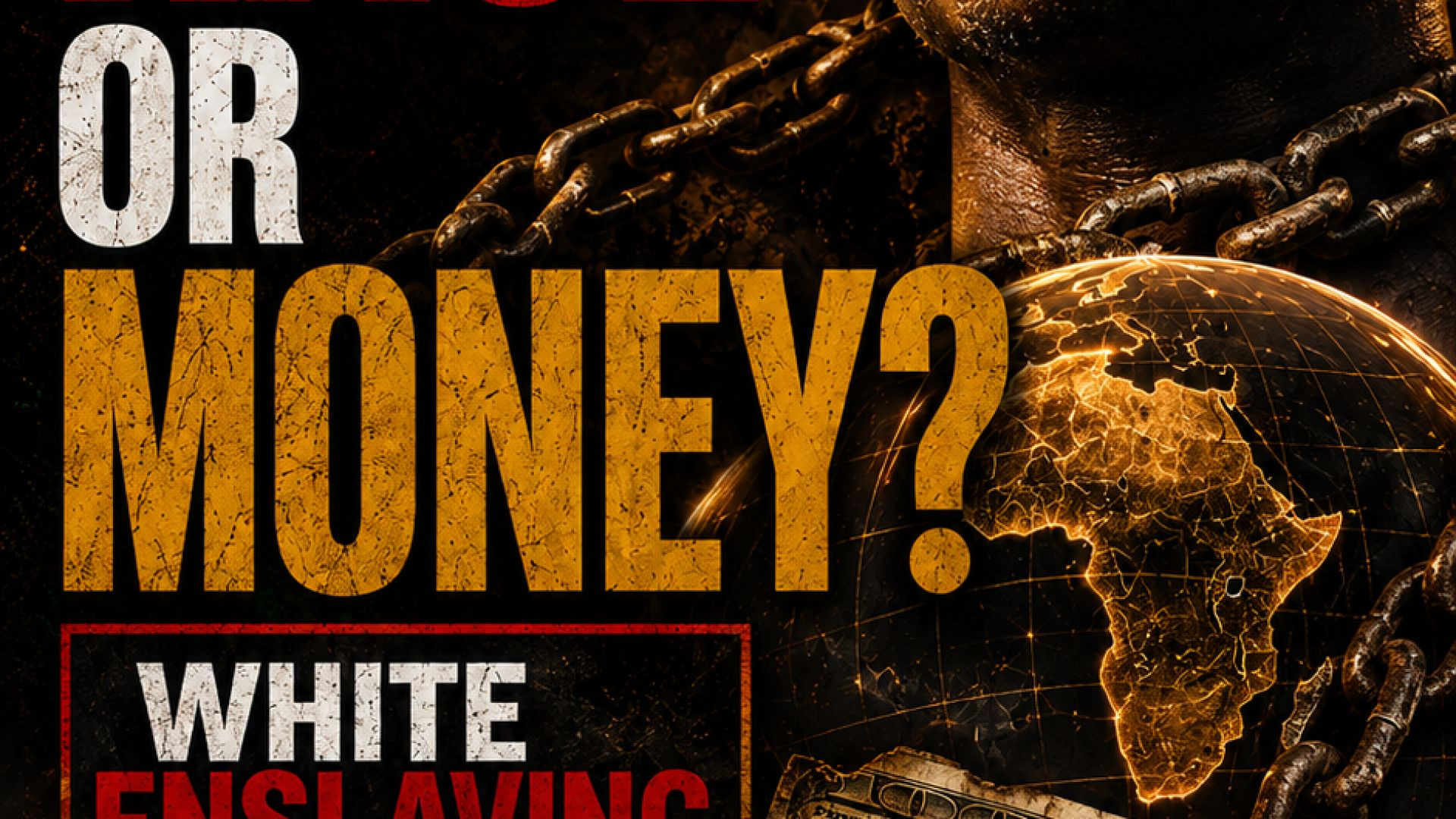

🎙 From Shoot the Breeze Episode 251 on the Bitter Medicine Podcast.
Was slavery only about economics, or did race define who was targeted, dehumanized, and enslaved? Brother Bakari gives the clearest rebuttal to the “money, not race” argument.
Watch the full episode here: https://youtube.com/live/EX7nX2Tqbbw
Drop your thoughts below 👇🏾
Subscribe for Pan-African talk, Black empowerment, and nation-building. 🔔
#blackhistory #americanslavery #racedebate #panafricanism #bittermedicinepodcast

The history of slavery did not begin in the cotton fields. By the 17th century, the Atlantic had become the center of a brutal new economy - one built on sugar, conquest, finance, and the mass deportation of millions of Africans.
Episode 3: From Sugar to Rebellion explores how European powers turned the Caribbean into a battlefield for sugar. France, England, Spain and the Netherlands fought for control of the islands, where sugar plantations became one of the most profitable - and violent - systems of exploitation in history.
To feed this economy, new slave routes were opened between Africa and the Americas. Banks, insurers, merchants and royal powers helped industrialize the trade, pushing deportations to unprecedented levels. Nearly 7 million Africans were caught in a vast Atlantic system of forced labor, racial violence, and colonial profit.
From the ports of Nantes, Liverpool and Amsterdam to the forts of the Gold Coast, from Caribbean plantations to the rise of slave rebellions and abolitionist voices, this third episode of Slavery Routes reveals how sugar transformed the Atlantic world - and how enslaved people resisted the system built to destroy them.
-------
Chapters
▷ 00:00 - Introduction: Sugar, Slavery, and the Rise of an Atlantic Empire
▷ 01:44 - The Caribbean at the Center of the Slave Routes
▷ 03:35 - The Sugar War: Europe’s Race for Colonial Profit
▷ 05:49 - Caribbean Plantations and the Conquest of Fertile Land
▷ 08:15 - Life and Death on the Sugar Plantations
▷ 10:08 - Banks, Insurance, and the Industrialization of the Slave Trade
▷ 14:20 - Europe’s Slave Ports: Nantes, Liverpool, Amsterdam and Beyond
▷ 16:00 - Louis XIV, Royal Power, and the Expansion of the Slave Trade
▷ 21:25 - The Gold Coast: A Major Source of Captives
▷ 23:40 - Antera Duke and the African Brokers of the Slave Trade
▷ 27:15 - The Middle Passage: Terror, Violence, and Survival at Sea
▷ 29:50 - Race, Dehumanization, and the Atlantic Slave System
▷ 33:05 - Plantation Violence and the Machinery of Exploitation
▷ 35:29 - The Black Codes: Slavery Written Into Law
▷ 37:29 - Slave Resistance, Maroons, and Caribbean Rebellions
▷ 41:44 - Olaudah Equiano and the Rise of Abolitionism in Europe
▷ 50:00 - Epilogue: Slavery, Wealth, and the Atlantic World
▷ 52:03 - Credits
#slaveryroutes #historydocumentary #atlanticslavetrade #caribbeanhistory #sugarplantations #slaveryhistory #africanhistory #blackhistory #worldhistory #WocomoHISTORY
-------
Subscribe to the channel: https://goo.gl/4bVtZk
Follow us on Facebook: https://www.facebook.com/wocomo/
-------
Original title: Slavery Routes: 1620-1789: From sugar to rebellion
Directed by: Daniel Cattier, Juan Gélas, Fanny Glissant
Produced by: Compagnie des Phares et Balises, ARTE France
In co-production with: Kwassa Films, RTBF Télévision Belge, Lx Filmes, RTP, INRAP
© 2018, licensed by Incognita Distribution
-------
Documentaries about politics, society and science produced by leading studios around the world. Our goal is to be a reliable source of high-quality information and investigative journalism for a better understanding of relationships, backgrounds and future developments.
Check out our other channels to watch high quality documentaries:
▷ wocomoHUMANITY: https://www.youtube.com/wocomoHUMANITY
▷ wocomoWILDLIFE: https://www.youtube.com/wocomoWILDLIFE
▷ wocomoHISTORY: https://www.youtube.com/wocomoHISTORY
▷ wocomoTRAVEL: https://www.youtube.com/wocomoTRAVEL
▷ wocomoCOOK: https://www.youtube.com/wocomoCOOK
Wocomo DOCS is part of the Wocomo channel network by NIKITA VENTURES. Wocomo - wonderful content in motion.


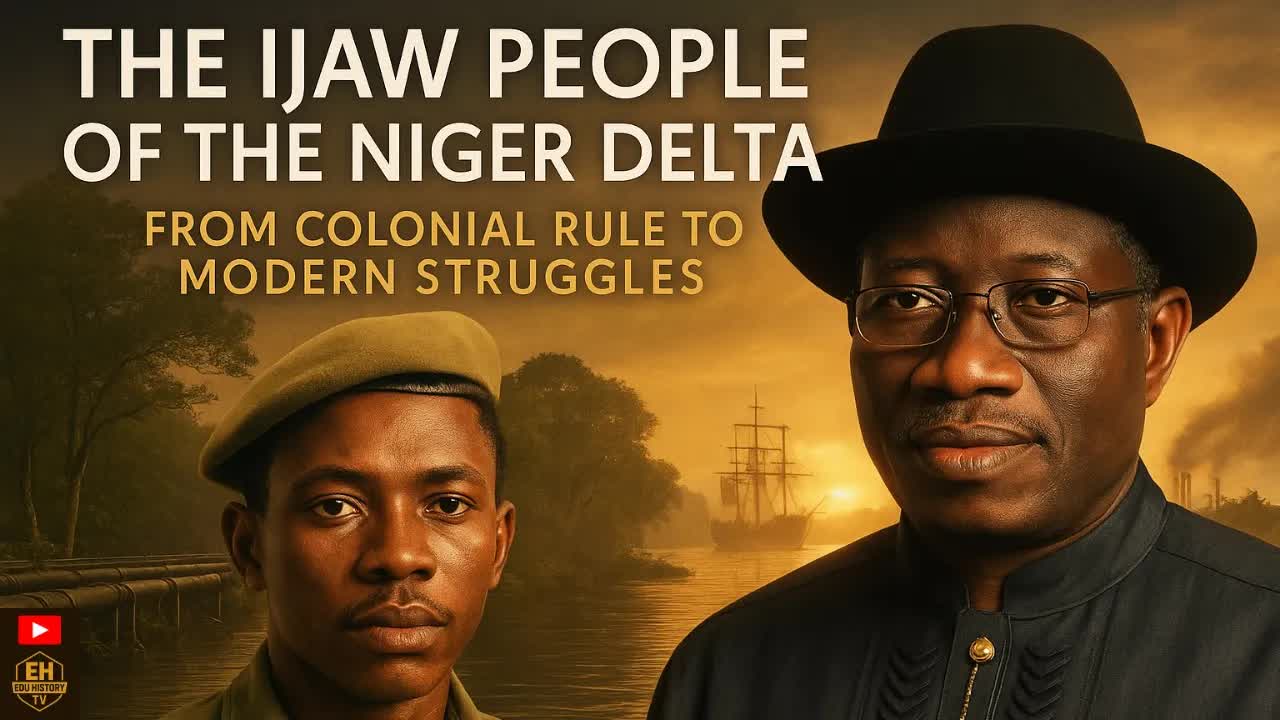

This episode covers the colonial years, the loss of local power, and how oil changed life in the delta. We look at Isaac Boro’s 1966 uprising, the Kaiama Declaration in 1998, the Odi attack in 1999, the rise of armed groups in the 2000s, and the 2009 amnesty. We also touch on politics and the push for fairness today.If you are Izon or from the Niger Delta, please watch to the end. Tell us what we got right. Tell us what we missed. Share names, dates, and family stories we should add.New history videos every Saturday.Watch Part 1: https://youtu.be/kpdawQzxYAc?s....i=LYA-HBFJF-6Gj16_So and further reading belowhttps://en.wikipedia.org/wiki/....Ijaw_peoplehttps://e like, comment, share, and subscribe if this helped you learn something.#ijawhistory #nigerdelta #nigeriahistory
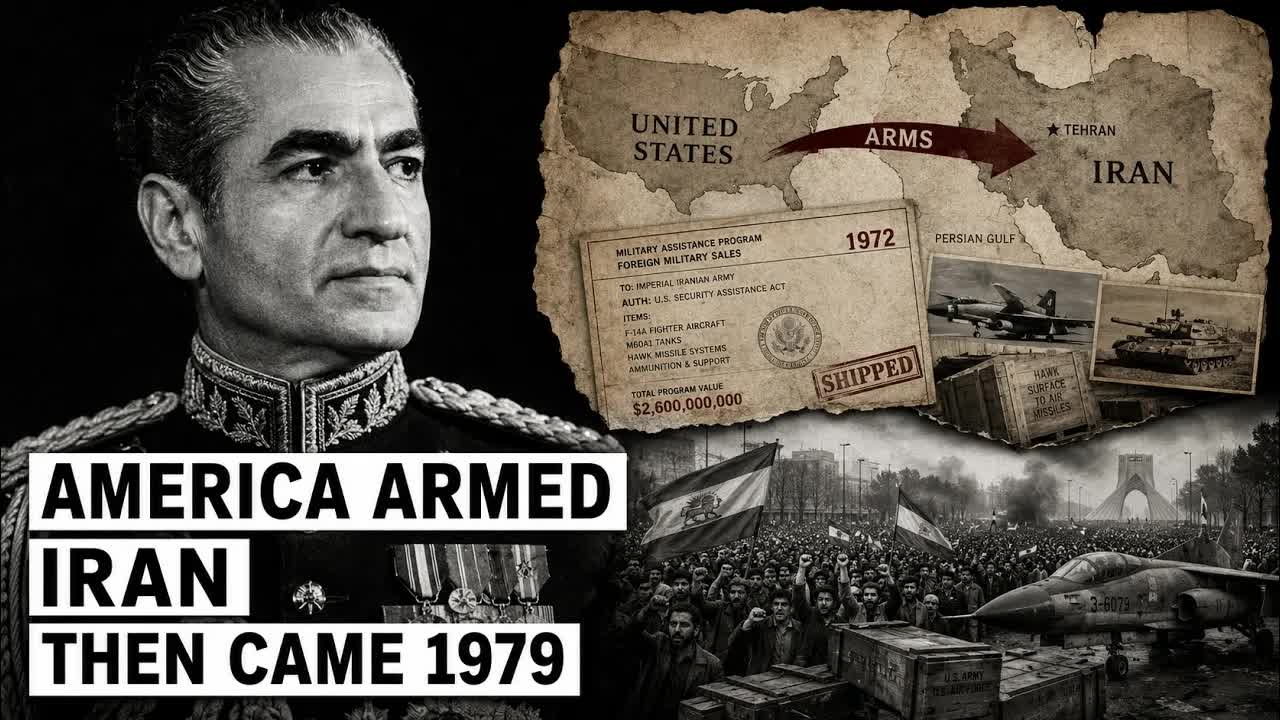
Before Iran was America's enemy, it was America's biggest weapons customer. The US sold the Shah billions in advanced fighter jets, destroyers, missiles, and surveillance aircraft — including the F-14 Tomcat, the most powerful interceptor ever built, a jet so exclusive that only the US Navy was allowed to fly it. American technicians flooded into Iranian cities by the thousands. CIA officers trained Iran's secret police. And Nixon personally signed a blank check allowing the Shah to buy any weapon he wanted, no questions asked.
Then, in 1979, a revolution swept the Shah from power — and every last piece of that American military hardware fell into the hands of a government that considered the United States to be the Great Satan.
This is the story of how America armed Iran, how those weapons were turned against American interests, and how the consequences of that decision are still shaping the Middle East today. From the 1953 CIA coup that started it all, to the hostage crisis that ended the alliance, to the nuclear program that America itself helped create — this is a chapter of history that explains more about the current US-Iran standoff than anything you'll hear on the news.
Sources and references used in this video include declassified State Department documents, Brookings Institution research, the National Security Archive at George Washington University, Stockholm International Peace Research Institute (SIPRI) arms transfer data, and reporting from NPR, the National Interest, and the Office of the Historian.
#iran #usa #coldwar #geopolitics #middleeast #f14tomcat #shah #iranrevolution #cia #nixondoctrine #armsrace #hostagecrisis #militaryhistory #foreignpolicy #irannuclear #savak #henrykissinger #persiangulf #documentary #history


Links discussed during the show are as follows:
Abibitumi: https://www.abibitumi.com/
Repatriate to Ghana: https://repatriatetoghana.com/
https://www.abibitumi.com/kwento-xpr/
Documentary on Kamau Kambon:
https://abibitumitv.com/watch/....quiet-warrior-the-bl
About our guest:
“Ɔbenfo” Ọbádélé Bakari Kambon, Nana Kwame Pɛbi Datɛ I, helps Black people repatriate and get Ghanaian citizenship at RepatriateToGhana.com. He is a world-renowned master linguist, multi-award-winning scholar and the architect of Abibitumi the oldest and largest Black social education network on the planet.
He completed his PhD in Linguistics at the University of Ghana in 2012, winning the prestigious Vice-Chancellor’s award for the Best PhD Thesis in the Humanities. He also won the 2016 and 2024 Provost’s Publications Awards for best published work in the UG College of Humanities. In 2019 he was the recipient of the [Nana] Marcus Mosiah Garvey Foundation award for excellence in Afrikan Studies and Education.
Ɔbenfo Ọbádélé Kambon was awarded the 2020/2021 University of Lagos (UNILAG) Lagos Area Cluster Centre (LACC) Fellowship where he contributed significantly to the work of “reconfiguring” Afrikan Studies. In 2025, he was awarded the Kwame Nkrumah Award for Pan-African Leadership by the Pan-African Leadership Institute (PALI).
He is an Associate Professor and served as Head of the Language, Literature and Drama Section of the Institute of African Studies at the University of Ghana and also served as Editor-in-Chief of the Ghana Journal of Linguistics (2016-2023). He served as Secretary of the African Studies Association of Africa from 2015-2020.
He also played an instrumental role in 34 Abibifo ‘Black People’ of the Diaspora receiving Ghanaian citizenship in 2016 and many more receiving citizenship in 2019, 2022, and 2024. Having contributed to the Government of Ghana’s official Diaspora Engagement Policy, he now assists others interested in repatriation via RepatriateToGhana.com‘s Decade of Our Repatriation (DOOR Initiative), which has been endorsed by the Government of Ghana (Diaspora Affairs, Office of the President and Ghana Tourism Development Company).