- General Videos
- Music
- Economics
- Health
- Travel & Events
- History
- Psychology
- Spirituality
- Movies
- News & Politics
- Kmtyw Combat Sciences
- Ɔbenfo Ọbádélé Kambon Videos
- Ɔbenfoɔ Kamau Kambon: Black Liberation Philosophy
- Science, Tech, Engineering and Math
- Permaculture
- Self-Sustainability
- Living Off Grid
- Yoruba Language Learning
- Education
- Mmɔfra Adesua
- Nana Kamau Kambon Playlist
- Livestream
- Komplementarity Kouples and Revolutionary Singles
- Abibitumi Film Series
- Decade of Our Repatriation
- Kwento xpr
- Live
Top videos


Somalia's modern history is a tale of independence, prosperity and democracy in the 1960s, military dictatorship in the 1970s and 1980s - followed by a desperate decline into civil war and chaos almost ever since.
The effect of the war has been to scatter the Somali people in their millions to refugee camps and neighbouring countries - and in their hundreds of thousands to the UK, Canada and the United States.
Somalia gained independence from Britain and Italy in 1960. It held free and fair elections and was ruled democratically from 1960 to 1969.
Once labelled the "Switzerland of Africa", Somalia enjoyed almost a decade of democracy. The first elected president of Somalia, uniting the former British and Italian territories, was Adam Abdullah Osman who reigned for seven years. He was succeeded, freely and peacefully, by Abdirashid Ali Sharmarke.
Sharmarke, however, was assassinated by one of his own bodyguards in 1969.
Speaker of the Somali Parliament Mukhtar Mohamed Hussein took over, but his brief, six-day tenure was cut short by a military coup led by General Siad Barre, ending Somalia's period of democratic government.
Whatever its faults - and there were many - Barre's 22-year rule effectively created modern Somalia, building one of Africa's strongest armies and massively improving the literacy of the population.
Yet Barre, who gained the support of the US and the Soviet Union, the superpowers of the day, also dissolved parliament, suspended the constitution, banned political parties, arrested politicians and curbed press freedom.
"From then, there was a downward trend. In everything. A disintegration. And every time things were going down, the military regime was becoming more brutal and more dictatorial," says Jama Mohamed Ghalib, a former Somali government minister.
But when Barre launched the Ogaden war in 1977 to take the Somali majority region from Ethiopia, it provoked serious international opposition, including that of the Soviet Union which had once supported Barre but now sided with Ethiopia. The Somali army was forced to withdraw.
But the other long-lasting outcome was civil war, with myriad competing factions and frequent intervention by foreign powers and neighbouring countries.
In 2006, the Islamic Courts Union split into several factions, one of which was Al Shabab. The radical group still controls large parts of the south of the country today.
- Subscribe to our channel: http://aje.io/AJSubscribe
- Follow us on Twitter: https://twitter.com/AJEnglish
- Find us on Facebook: https://www.facebook.com/aljazeera
- Check our website: http://www.aljazeera.com/
#AlJazeera #SomalianHistory #AlJazeeraWorld


● Please SUPPORT my work on Patreon: https://bit.ly/2LT6opZ
● Visit my 2ND CHANNEL: https://bit.ly/2ILbyX8
►Facebook: https://bit.ly/2INA7yt
►Twitter: https://bit.ly/2Lz57nY
►Google+: https://bit.ly/2IPz7dl
✚ Watch my "Cold War-Era" PLAYLIST: https://bit.ly/2J4N5LM
This documentary presents an account of Central Intelligence Agency (CIA) activities that had previously been covert, including activities in Iran, Guatemala, Cuba, Congo, Vietnam and Laos. The film includes interviews with CIA director Allen Dulles and Dick Bissel.
About the CIA:
The Central Intelligence Agency (CIA) is an independent civilian intelligence agency of the United States government. It is an executive agency and reports directly to the Director of National Intelligence, with responsibility for providing national security intelligence assessment to senior United States policymakers. The CIA also oversees and sometimes engages in tactical and covert activities at the request of the President of the United States.
The CIA succeeded the Office of Strategic Services (OSS), formed in 1942 to coordinate espionage activities against the Axis Powers for the branches of the United States Armed Forces. The National Security Act of 1947 established the CIA, affording it "no police or law enforcement functions, either at home or abroad".
The primary function of the CIA is to collect information about foreign governments, corporations, and individuals, and to advise public policymakers, but it does conduct tactical operations and carries out covert operations, and exerts foreign political influence through its tactical divisions, such as the Special Activities Division. Often, when field operations are organized, the U.S. military carry these operations out on behalf of the agency while the CIA oversees them. Intelligence-gathering is performed by non-military commissioned civilian intelligence agents, many of whom are trained to avoid tactical situations.
Sometimes, the CIA is referred to euphemistically in government and military parlance as Other Government Agency, particularly when its operations in a particular area are an open secret. Other terms include The Company, Langley, and The Agency.
The CIA from 1953 till 1965:
Allen Dulles, who had been a key OSS operations officer in Switzerland, became director of the CIA in 1953, at a time where U.S. policy was dominated by intense anticommunism. Dulles enjoyed a high degree of flexibility, as his brother, John Foster Dulles, was simultaneously Secretary of State.
During this period, there were numerous covert actions against left-wing movements perceived as communist. The CIA overthrew a foreign government for the first time during the 1953 Iranian coup d'état, at the request of Winston Churchill. Some of the largest operations were aimed at Cuba after the overthrow of the Batista regime, including the failed Bay of Pigs Invasion (1961) and attempts to remove Fidel Castro from power. In 1962, there have been suggestions that the Soviet attempt to put missiles into Cuba came, indirectly, when they realized how badly they had been compromised by a U.S.-UK defector in place, Oleg Penkovsky. One of the biggest operations ever undertaken by the CIA took place in Congo in support of Mobutu Sese Seko to become president in 1965.
Science of Spying - Secrets of the CIA | Documentary | 1965

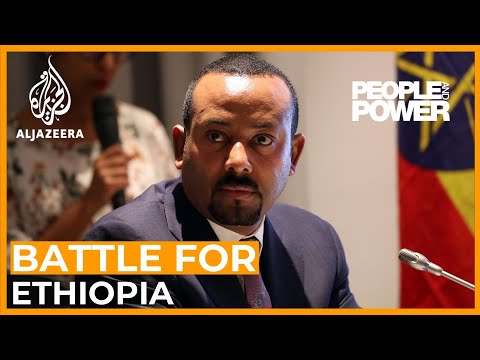
When Ethiopia’s prime minister, Abiy Ahmed, came to power in 2018, he promised a new era of democratic reforms and an end to years of autocracy.
Political prisoners were freed, opposition parties were allowed to operate, and the new prime minister even won a Nobel Prize for securing peace with neighbouring Eritrea after decades of an uneasy armistice.
But since then, long-standing ethnic divisions have made the future of this complex country more uncertain.
Earlier this year, we went to find out why.
- Subscribe to our channel: http://aje.io/AJSubscribe
- Follow us on Twitter: https://twitter.com/AJEnglish
- Find us on Facebook: https://www.facebook.com/aljazeera
- Check our website: https://www.aljazeera.com/

Don't forget to subscribe: https://bit.ly/2Hb8hjx
Watch more interesting videos: https://bit.ly/34ogCaw
Follow Channels Television On:
Facebook: https://www.facebook.com/channelsforum/
Twitter: https://twitter.com/channelstv
Instagram: https://www.instagram.com/chan....nelstelevision/?hl=e
Get more news on our website: https://www.channelstv.com/
#ChannelsTv


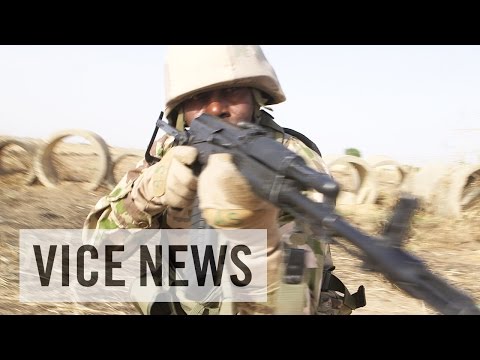
Since 2009, the militant Islamist group known as Boko Haram has wreaked havoc in northern Nigeria. Instilling terror through bombings, abductions, and beheadings, Boko Haram is fighting to create an Islamic state in the most populous country in Africa.
VICE News traveled to Nigeria to embed with the country's army as it ramped up its fight against Boko Haram, whose rise has caused a state of emergency. As the only journalists on the front line in northern Nigeria, we witnessed the beginning of the largest military insurgency to date.
Kay Larsen discusses Boko Haram on The Young Turks: https://www.youtube.com/watch?v=iQt1zdzxVAY
More from TYT on YouTube: https://www.youtube.com/user/TheYoungTurks
Watch "The Human Cost of War in the Central African Republic” - http://bit.ly/15xC4L2
Watch "Blood Diamonds and Religious War: Diamonds and Division” - http://bit.ly/1zYdmRq
Read "UN Adopts Resolution Calling for International Coordination Against Boko Haram” - http://bit.ly/1EMamtR
Read "Can a 72-Year-Old Former Military Dictator Bring Nigerians the Change They Have Voted For?” - http://bit.ly/1Hnr3ta
Read "Nigeria Reacts to a Historic Change as President-Elect Buhari Prepares for Power” - http://bit.ly/1FmJT3x
Subscribe to VICE News here: http://bit.ly/Subscribe-to-VICE-News
Check out VICE News for more: http://vicenews.com
Follow VICE News here:
Facebook: https://www.facebook.com/vicenews
Twitter: https://twitter.com/vicenews
Tumblr: http://vicenews.tumblr.com/
Instagram: http://instagram.com/vicenews
More videos from the VICE network: https://www.fb.com/vicevideos