- General Videos
- Music
- Economics
- Health
- Travel & Events
- History
- Psychology
- Spirituality
- Movies
- News & Politics
- Kmtyw Combat Sciences
- Ɔbenfo Ọbádélé Kambon Videos
- Ɔbenfoɔ Kamau Kambon: Black Liberation Philosophy
- Science, Tech, Engineering and Math
- Permaculture
- Self-Sustainability
- Living Off Grid
- Yoruba Language Learning
- Education
- Mmɔfra Adesua
- Nana Kamau Kambon Playlist
- Livestream
- Komplementarity Kouples and Revolutionary Singles
- Abibitumi Film Series
- Decade of Our Repatriation
- Kwento xpr
- Live
Top videos


Stream the "Decoded Riddim’' on all platforms:
https://onerpm.link/decodedriddim
DO NOT RE-UPLOAD. Your channel WILL be struck.
DJ Download Link (Promotional Use ONLY):
https://mega.nz/folder/8aYgCAw....K#nPKkQAyFzmBxYXGirX
Patrice Roberts, Skinny Fabulous & Suh Raw performing “All I Want”
Written by: Rasheid “Rawsheid” Sutherland, Rajiv “Suh Raw” Sutherland & Gamal “Skinny Fabulous” Doyle
Recorded at: Boss Raw Records
Produced by: Rajiv "Suh Raw" Sutherland
Mixed & Mastered by Rajiv “Suh Raw” Sutherland
Boss Raw Records ©℗ 2026
Video by: PreciseLee Films (Junior Lee)
https://www.instagram.com/preciseleefilms/
Follow Suh Raw:
Instagram: https://www.instagram.com/suh_raw
Facebook: https://www.facebook.com/suh_raw
X: https://www.x.com/suh_raw
Follow Boss Raw Records:
https://www.Instagram.com/bossrawrecords
Follow Patrice Roberts:
https://www.instagram.com/patriceroberts1/
https://www.facebook.com/PatriceRMusic
https://x.com/patricermusic
Follow Skinny Fabulous:
Instagram: https://www.instagram.com/skinnyfabulous/
Facebook: https://www.facebook.com/profi....le.php?id=1000441431
Follow on Soundcloud:
https://soundcloud.com/suhrawh
Follow on Audiomack:
https://audiomack.com/suhrawh
SUH RAW:
Management: Rasheid Sutherland
Email: BossRawRecords@gmail.com
Instagram:
@bossrawrecords @skinnyfabulous @patriceroberts1 @suh_raw @rawsheid
#alliwant #patriceroberts #skinnyfabulous #suhraw #decodedriddim #bossrawrecords
distributed by: MarvMent
https://marvment.com


What is really happening in the Sahel?
In this powerful address, Niger's President, General Abdourahamane Tchiani, shares his vision for Niger, the Sahel, and the future of Africa. His speech touches on sovereignty, security, African unity, economic independence, and the growing role of African nations in shaping their own destiny.
As the Sahel continues to transform, this message has sparked discussions across Africa and beyond.
📢 Watch until the end and share your thoughts:
Do you agree with President Tiani's vision?
What does this mean for Africa's future?
Can the Sahel inspire a new era of African sovereignty?
👇 Join the conversation in the comments.
If you believe in a stronger, united, and self-reliant Africa, don't forget to:
✅ LIKE
✅ SHARE
✅ SUBSCRIBE
✅ Turn on notifications
#africa #niger #sahel #panafricanism #aes #tiani #africanunity
#love
#peace
#africansolutions
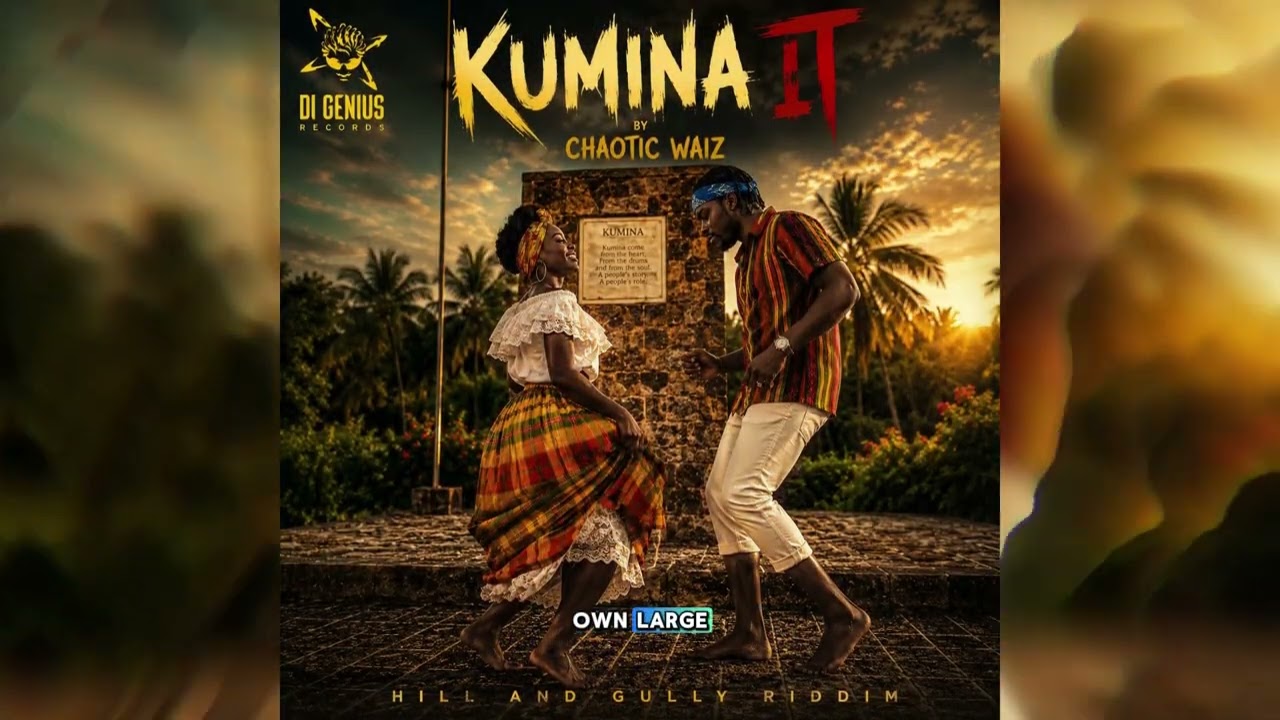
🔥 CHAOTIC WAIZ – KUMINA IT (Hill & Gully Riddim Freestyle) 🇯🇲🔥
Step into the roots and feel the energy! "Kumina It" is a powerful freestyle from Chaotic Waiz, inspired by the rich African heritage and spiritual traditions that continue to shape Jamaican culture. Blending authentic vibes with the infectious bounce of the Hill & Gully Riddim, this track celebrates strength, rhythm, unity, and cultural pride.
From the drums to the dance, "Kumina It" is a reminder that our roots run deep and our culture remains alive through every beat and every movement.
🎶 Track: Kumina It
🎤 Artist: Chaotic Waiz
🔥 Riddim: Hill & Gully Riddim
🇯🇲 Genre: Dancehall / Cultural Reggae
If you're feeling the vibes, make sure to:
👍 Like
💬 Comment your favorite line
🔔 Subscribe for more music and freestyles
📤 Share with a friend who loves authentic Jamaican culture
#chaoticwaiz #kuminait #hillandgullyriddim #dancehall #jamaica #culturalvibes #kumina #reggaedancehall #yardmusic #jamaicanculture #freestyle #newmusic #islandvibes #dancehall2026 #yardstrong 🇯🇲🔥🎶

#reggae #dancehall #patra #organic
#organic #yeza #patra
Stream/download: https://go.znc.bz/rory048
Written by Yeza and Patra
Produced by RoryStoneLove for Black Dub Music
Distributed by Zincbeats LLC
Videography by Vartex Music
----------
LYRICS
Yow
unu done know say this is Patra,
you-a hear me Organic Queen
You done know
Make we tell them this
Watch this, see it yah!
Organic Body Dynamic
Never cut a thing pon me nice clean body,
me still got it still a block traffic
Natural body Queen roll in you a knock it
Me Organic body volcanic
Nuff a dem a pre cause them know say we have it Naturally them can’t manage
Confidence a peak never pay down pon it
Me no want no man
weh feel him can put hickey pon me
Natural body look good
and them ever want it
Some say them want me
from them saw me
But me mommy say me nuffi chat to man weh crawny
See me body and you want come
work it hard Bout you name Bernard
come burn it
Natural body gyal yes ina the morning
yes ina the night And you know
we just a sing so
Body just a bounce a
lightning and thunder
Natural body Queen them
have the real bumper
See them man a pre
a we them a come fa
Cause them know say that
we body have the real comfort
Nuff a them no have
them own priorities straight
Money a come in
but it a go the wrong place
Me nuh understand
you miss the school fee date
but you spend a couple
million pon a doctor fi your shape
Organic body dynamic
Never cut a thing pon me nice clean body
Me still got it still a block traffic
Natural body Queen roll in you a knock it
Me organic
body volcanic
Nuff a them a pre cause them know say we have it naturally
Them can’t manage
Confidence a peak
never pay down pon it
Natural body up, natural body up, put your hand girl up, put your body up. Natural body up, natural body up, natural body up girls put your hands up.
Every natural body gyal
this a your anthem
Mother Nature a your doctor still a mad them Steady pressure pon them neck
a so you have them
Body naturally design
and yunu stop trend
Big up me mother and me father
so me born
Shape never buy shape no put on
Watch the natural body gyal ina the dance
Jiggle jiggle so we know say it no false
Watch the thickass ina the little cute dress
Watch the slimmas ina the dance yeah she blessed Watch the fluffy how she cotch it pon the left never know a so she gifted now them a stress
Me organic body dynamic never cut a thing pon me nice clean body me still got it, still a block traffic natural body queen roll in you a knock it. Me organic body volcanic Nuff a them a pre cause them know say we have it naturally Them can’t manage Confidence a peak never pay down pon it

Haiti fought the most extraordinary revolution in human history. Enslaved people defeated Napoleon's armies, founded the first Black republic, and changed the map of the world forever. And then France sent warships to the harbor and handed them a bill — not for goods or services, but for the "crime" of no longer being property. The formerly enslaved were forced to pay their former enslavers one-hundred-and-fifty-million gold francs, a sum so massive it took one-hundred-and-twenty-two years to pay off. The final payment wasn't made until 1947. This is the story of how one nation won its freedom and was financially destroyed for it — how French banks, American Marines, and Wall Street institutions turned a liberation struggle into a debt trap that persists to this day. From the Bois Caïman ceremony to the gunboat ultimatum, from the U.S. occupation to the overthrow of Haiti's first democratically elected president after he demanded reparations, this is the hidden financial history that explains why the richest colony on Earth became the poorest country in the Western Hemisphere.
Sources and further reading:
The New York Times — "The Ransom" investigative series (2022)
United Nations Forum on the 200th Anniversary of Haiti's Independence Debt (2025)
University of Kentucky — "The Haitian Revolution: A Different Route to Emancipation"
Harvard Human Rights Clinic — "What the World Owes Haiti Now"
Britannica — Haitian Revolution, Saint-Domingue
Equal Justice Initiative — Haiti's Forced Payments analysis
#haiti #haitianrevolution #colonialdebt #frenchcolonialism #reparations #toussaintlouverture #standardoil #financialhistory #slavery #economics #hiddenhistory #debttrap #napoleon #louisianapurchase #wallstreet #citibank #ushistory #caribbeanhistory #globalfinance #documentary #economichistory #powerandmoney #colonialism #blackhistory #independence
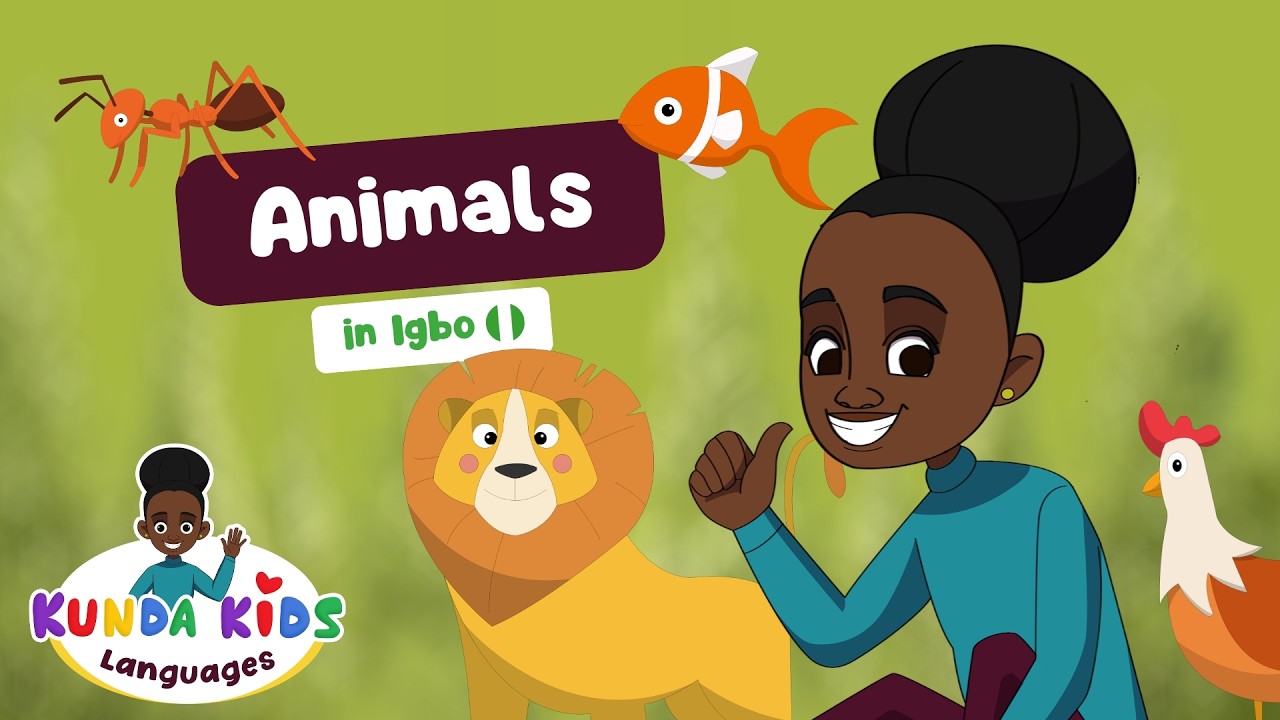
Let's go on a safari! 🦒 In this lesson, Kunda Kids teaches your little ones the names of animals in Igbo. From the king of the jungle to the birds in the sky, we make learning Igbo vocabulary fun and easy with native pronunciation.
🐘 THE CHALLENGE: Do you know how to say "Elephant" in Igbo? Watch until the end to see if you got it right!
What’s in this lesson:
Common animal names in Igbo and English
Clear native pronunciation for beginners
Engaging visuals to help kids memorize words faster
📝 Igbo Animals Sneak Peek:
Lion — Agu
Elephant — Enyi 🐘
Dog — Nkịta
Cat — Pusu / Nwampusu
Subscribe to Kunda Kids for more Igbo lessons, African stories, and cultural fun!
ABOUT KUNDA KIDS 🌟
Kunda Kids is an award-winning children's publishing, ed-tech and media company based in London, UK. Founded in 2020 by Oladele and Louisa Olafuyi, Kunda Kids aims to showcase African edutainment, with various elements of African culture in creative, fun, and simple formats for children.
Discover more at www.kundaandfriends.com
Social Media @kundaandfriends
.
.
.
.
RELATED VIDEOS:
NAMES OF ANIMALS - IGBO - SOKIDZTV
https://youtu.be/gP5Hn7OJeAE?si=5dcFAXftMeMBqTGl
EGWU NSUPE (for 58 Minutes) | Learn Igbo Words With Fun Songs
https://youtu.be/_HOK6-UD84o?si=Ma1RqvgeucG3rmwd
Igbo for Kids | Reading Simple Sentences in Igbo Language | Learn Igbo
https://youtu.be/Z188cJZu2Zg?si=N-8IJOKiYTx2748q
IGBO - Happy and you know it -Sokidztv
https://youtu.be/xlFiFWoseM0?si=2Z8BH-0xy5AVyHPm
SokidzTV - 5 Little monkeys - IGBO
https://youtu.be/0pPi-jUdY40?si=8mU9UQBdV3u4biIu
#learnafricanlanguages, #africanlanguages, #speakafrican, #africanculture, #languagelearning, #learnyoruba, #learnswahili, #learnigbo, #learntwi, #learnzulu, #learnhausa, #learnamharic, #learnwolof, #learnshona, #africandiaspora, #africanheritage, #africanroots, #africaneducation, #africanstorytelling, #africanidentity, #multilingualafrica, #africanlearning, #africanlanguagelessons, #africanpride, #culturaleducation, #learnwithme, #africanwords, #africangreetings, #languagechallenge, #africanlanguagesmadeeasy
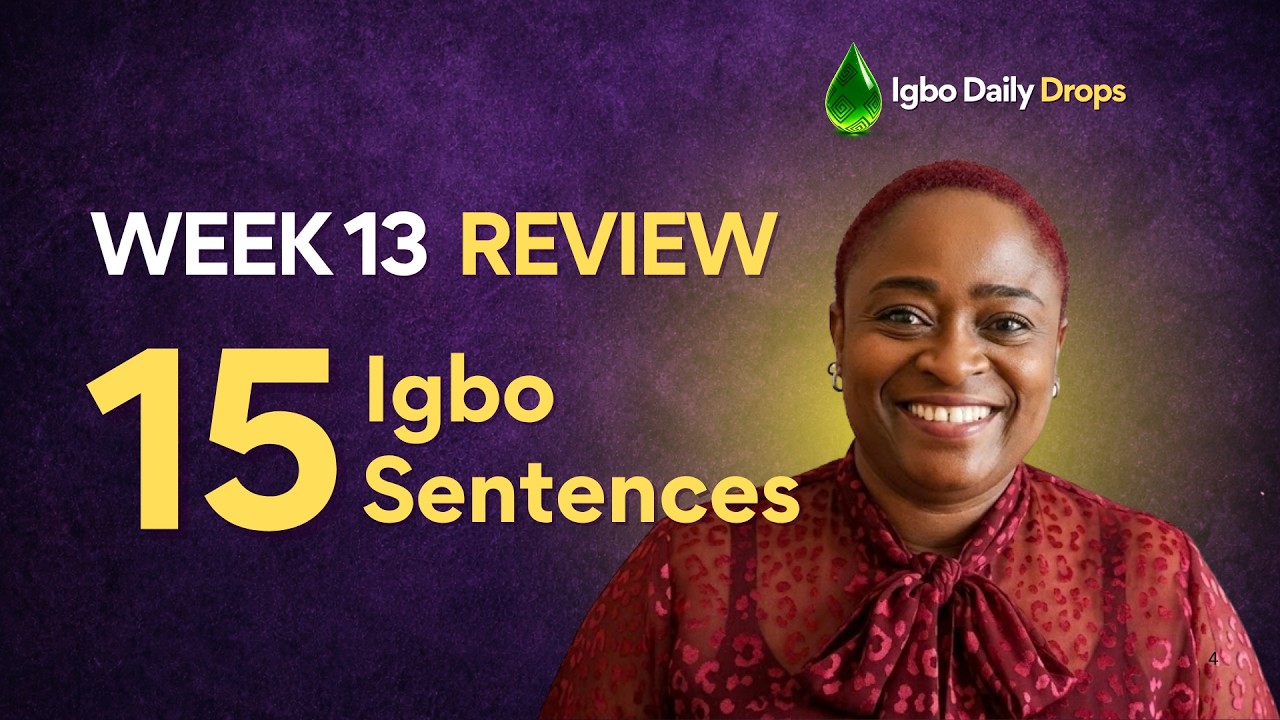
📥 FREE DOWNLOAD: Igbo Daily Drops Practice Workbook — https://learnigbonow.com
Practice 15 essential Igbo sentences from Week 13 of Igbo Daily Drops — all on screen (Youtube version) with correct diacritics, at the pace you need to actually learn. Pause. Repeat. Master each one before moving on.
The Igbo language holds ways of moving through the world — asking for help, offering patience, giving direction — that no translation fully captures. Every sentence in this video is part of an active effort to ensure that language reaches the generation that needs it most. Learning to speak these sentences is not just fluency practice. It is the language coming home.
📥 FREE DOWNLOAD: Igbo Daily Drops Week 13 Practice Workbook — all 15 sentences with English translations https://learnigbonow.com
The sentences learnt this week are:
A bụ m onye Igbo — I am an Igbo person
Nna m sị Enugu — My father is from Enugu
A bụ m onye diaspora — I am a person of the diaspora
Agụụ na-agụ m — I am hungry.
Ike gwurụ m — I am tired.
A chọrọ m įmụta Igbo — I want to learn Igbo.
E nwere m akpụụkwụ — I have shoes.
Mmiri a dị? — Is there water?
Anyị nwere ụlọ — We have a house.
Biko, nyere m aka — Please, help me
Biko, gosi m ụzọ — Please, show me the way
Daalụ nụ — Thank you all
A lọtara m. A nọ m ebe a — I have returned. I am here.
Agụụ na-agụ m, biko nye m nri — I am hungry, please give me food.
Ike gwuru m, a chọrọ m izu ike — I am tired, I want to rest.
#learnigbo, #igbolanguage, #igbospeakingpractice, #igbosentences, #igboforbeginners, #speakigbo, #igbodailypractice, #repeataftermeigbo, #igbophrases, #nigerianlanguage, #igbofluency, #heritagelanguage, #diasporalanguagelearning, #africanlanguage
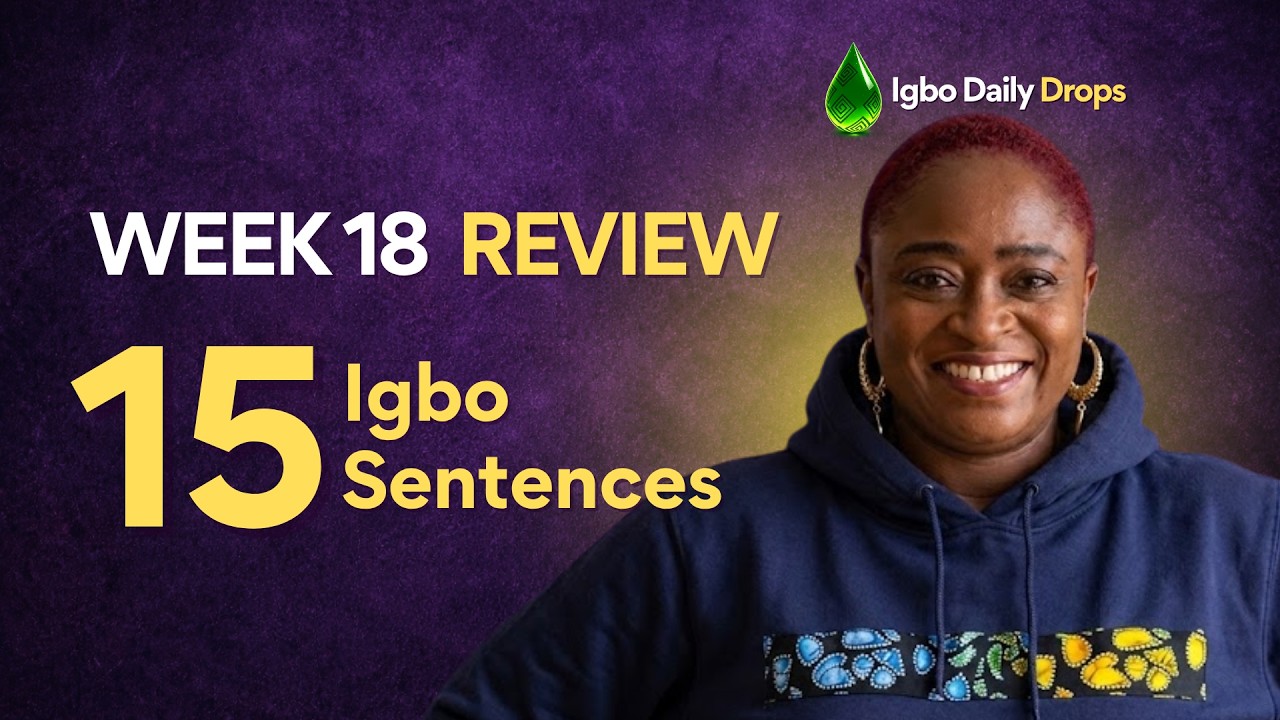
📥 Free practice speaking workbook for week 18 at www.learnigbonow.com
This is your Week 18 Igbo language practice session from Igbo Daily Drops — 15 sentences learnt over the past week in Igbo daily drops, built for real-life use. Commands, requests, questions, and the kind of warm, human phrases that make the difference between knowing a language and living in it.
Work through each sentence at your own pace. You will hear it once, then again — then it is your turn. The sentences this week move from asking questions, saying what and who you have , to saying what you see.
The Igbo sentences we learnt this week are :
A chọrọ m igwa gi ihe — I want to tell you something
A chọbụrụ m iju Oby etu ọ mere — I had wanted to ask Oby how she was
A chọrọ m isiiri ya nri masiri ya — I want to cook the meal she likes
E nwere m nne na nna — I had a mother and a father.
E nwere m ozi — I had a message.
Anyi nwere nri — We had food.
A bụ m onye London — I am a Londoner.
Abụghị m nwata — I am not a child.
Ọ bụ eziokwu — It's true.
A huru m ahia. — I saw the market.
A hụrụ m mmeghari. — I saw movement.
Kedu ihe ị hụrụ? — What did you see?
Ị nwere ego mgbe i malitere? — Did you have money when you started?
Unu ahuru uru n'izụ ahịa? — Did you see good benefits in doing business?
Anyị hụrụ ihe oma. — We saw a good thing.
This is the language your family carried. Now it is yours to carry too.
This has been Igbo Daily Drops with Yvonne Mbanefo.
FREE RESOURCES: - Igbo Heritage Family Kit: https://learnigbonow.com -
Main Channel: @learnigbo on YouTube
Kids' Channel: @learnigboforkids on YouTube
Our Mission: Raise 10,000 more next-generation Igbo speakers by next year.
Be one of them. Every sentence you learn is a drop.
And every drop feeds Oké Osimiri Mmụta Igbo — the Ocean of Igbo Knowledge.
#learnigbo, #igbolanguage, #igbospeakingpractice, #igbosentences, #igboforbeginners, #speakigbo, #igbodailypractice, #repeataftermeigbo, #igbophrases, #nigerianlanguage, #igbofluency, #igbodailydrops