






- General Videos
- Music
- Economics
- Health
- Travel & Events
- History
- Psychology
- Spirituality
- Movies
- News & Politics
- Kmtyw Combat Sciences
- Ɔbenfo Ọbádélé Kambon Videos
- Ɔbenfoɔ Kamau Kambon: Black Liberation Philosophy
- Science, Tech, Engineering and Math
- Permaculture
- Self-Sustainability
- Living Off Grid
- Yoruba Language Learning
- Education
- Mmɔfra Adesua
- Nana Kamau Kambon Playlist
- Livestream
- Komplementarity Kouples and Revolutionary Singles
- Abibitumi Film Series
- Decade of Our Repatriation
- Kwento xpr
- Live
Top videos


In the Early Modern Period (around 1500-1800), West Central Africa (modern day Angola, the Congos, and Gabon) was home to a variety of different types of cloth and clothing. In this video, we discuss some of the textiles, jewelry, and other adornment that people in this region wore to cover up or show off status, primarily focusing on the kingdoms of Kongo, Ndongo, and to a lesser extent Loango. Join us as we explore some Central African Fashion History! This video is part of Untold Black History III, a collaboration for Black History Month discussing interesting and positive Black history from around the world. No Generative AI was used in the creation of this video.
Check out the Untold Black History III playlist here: https://www.youtube.com/playlist?list=PLivC9TMdGnL8Nnt6Ra8JPQUzHCPI9tcUE&jct=5s3lCP4eK5V4eiLuTPeFSg
Thank you to the following people for lending their voices to some of the primary source quotes in this video:
@ravinelux
@CivilWarWeekByWeek
Citations:
1. Vansina, 266; Heywood, 12-13
2. Heywood; Fromont
3. Vansina; Gibson and McGurk
4. Vansina, 272; Heywood; Fromont
5. Thornton, 12-13
6. Vansina, 276
7. Vansina, 265
8. Vansina, 267-268
9. Vansina, 263
10. Thornton, 19
11. Fromont, 845
12. Heywood, 22
13. Fromont, 846
14. Heywood, 196
15. Vansina, 272-273
Sources:
Fromont, Cécile. “Common Threads: Cloth, Colour, and the Slave Trade in Early Modern Kongo and Angola.” Art History, Volume 41, Issue 5 (November 2018): 838–867, https://doi.org/10.1111/1467-8365.12400
Gordon D. Gibson and Cecilia R. McGurk, “High-Status Caps of the Kongo and Mbundu Peoples." Textile Museum Journal, Volume 16 (1977) https://archive.org/details/gi....bson-mc-gurk-high-st
Heywood, Linda M. Njinga of Angola: Africa’s Warrior Queen. Cambridge, MA. Harvard University Press, 2017.
Thornton, John. “Precolonial African Industry and the Atlantic Trade, 1500-1800.” African Economic History, no. 19 (1990): 1–19. https://doi.org/10.2307/3601886.
Vansina, Jan. “Raffia Cloth in West Central Africa, 1500-1800.” Essay. In Textiles: Production, Trade, and Demand, 263–82. Ashgate Publishing Limited, 1998.
Clips used:
https://www.youtube.com/watch?v=uhznFtHhkBo
https://www.youtube.com/watch?v=VCpT-4vctNY
https://www.youtube.com/watch?v=oStCNLZBjUM
https://www.youtube.com/watch?v=Y2ADpO6bau8
https://www.youtube.com/watch?v=ijVfGarTEfc
Other Resources:
https://mavcor.yale.edu/mavcor....-journal/nature-cult
https://mavcor.yale.edu/mavcor....-journal/depicting-k
Patreon: https://www.patreon.com/somasacademy
Twitter: https://twitter.com/somas_academy
BlueSky: https://bsky.app/profile/somasacademy.bsky.social
ArtStation: https://www.artstation.com/kalahsoma
00:00 Intro
00:45 Types of Adornment
01:37 Textiles in West Central Africa
03:44 Making Raffia Fabric
06:38 Class and Clothing
11:59 Decline of West Central African Fashion
12:35 Conclusion


1. Cash App: $obenfoobadele
2. Zelle: akyeame.kwame@gmail.com
3. Bitcoin (bc1qtkma7kc8say5rnqtgkrafs65kthqlsan28axf5)
4. MTN Mobile Money (+233247146063)
5. Credit card/paypal using https://www.abibitumi.com/crowdfund
6. Paypal: me@obadelekambon.com


![Message To The People by Marcus Garvey - Lesson 1 [Audiobook]](https://i.ytimg.com/vi/XTxh4IppHMs/sddefault.jpg)
Audiobook of Message to the People: The Course of African Philosophy.
Lessons from the BLACK masters.
black game maker,black developer, blackdev,black dev, games by black people, african games,african american games, african american game developers, black people in video games, black video game developers,black devlog, urban games,problack,problack games,unreal games by black people,black artist,black history,new black media,black media,newblackmedia,cutthecheck,b1,ados
#b1 #newblackmedia #marcusgarvey


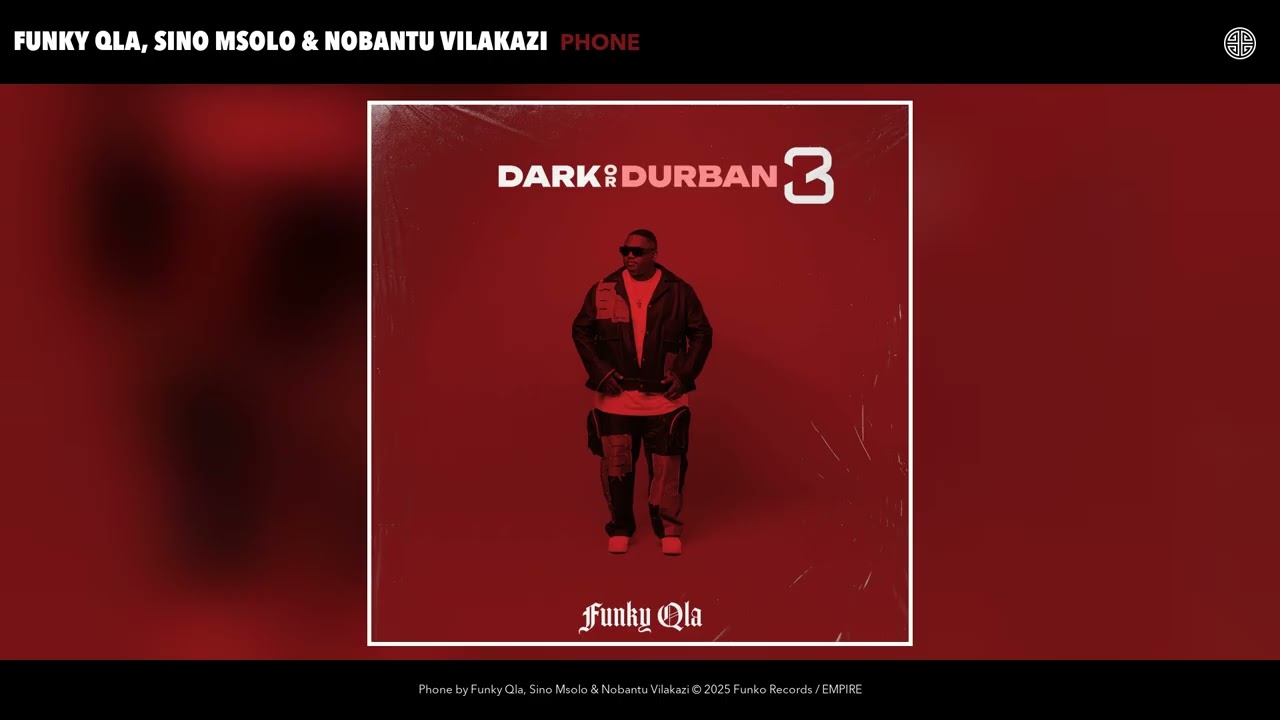
Listen to the EP “Dark or Durban 3”. Out Now!
Stream: https://music.empi.re/darkordurban3
#funkyqla #waltzmusicgroup #darkordurban #amapiano #afrotech #gqom
thank you for watching, please subscribe to support the channel.
Connect on other platforms:
Instagram: https://www.instagram.com/funky_qla/?hl=en
TikTok: https://www.tiktok.com/@funkyqla?lang=en
Facebook: https://www.facebook.com/djfunkyqla/
Twitter: https://twitter.com/FunkyQla
Spotify: https://open.spotify.com/artis....t/1raznef8uIDK0SAlPa
Apple Music: https://music.apple.com/za/art....ist/funky-qla/127924
Bookings: bookings@funkyqla.co.za
Official Audio by Funky Qla from Dark or Durban 3 © 2024 Funky Qla / EMPIRE

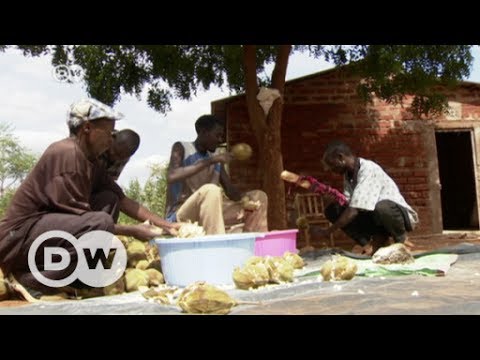

The fruit of the baobab tree has been eaten for centuries in Africa, but has only recently gained the coveted status of superfood due to its high content of vitamins and nutrients. In Kenya, it has become an economic force to be reckoned with.
For a related story, go to: http://p.dw.com/p/2azDo


Are We Ready for the AI Takeover?STEAM PROGRAM FOR BLACK CHILDREN https://consciousingenuity.com/MANHOOD TRAINING CAMP FOR BLACK BOYShttp://asafocamp.com/THE MELTREK PROGRAM https://edanimeproductions.com/shopBEST ONLINE SCHOOL FOR BLACK CHILDREN https://www.uhuruacademy.com/ EMAIL ME:dr.maat.msu@gmail.com#drmaat #AI #artificialintelligence #steam #science #technology #engineering #art #agriculture #mathematics #blackengineers #blackscienctists #nsbe #swe #blackchildren #blackkids #africanhistory #africancivilization #africanpeople #africanempires #blackhistory #blackpeople #blackexcellence #blackconsciousness #africanhistory


Dr. Kambon will discuss the idea that
being unfocused is a form of death. He asserts that for a black female or black male to fail to be on Their Assignment, can only result in self-destruction. He states succinctly: Black people are addicted to sweets; and White people have made Death sweet.
This clip is taken from The C.O.W.S. Radio Show on 10/9/2011
Episode 484
http://www.blubrry.com/the_cow....s/1176085/the-cows-w
For more episodes:
http://www.talkshoe.com/talksh....oe/web/tscmd/tc/9725
http://archive.org/details/TheCowsRadioShow
http://archive.org/details/TheCowsRadioShow2
Dr. Kamau Kambon's website:
http://www.kamaukambon.org/
Double Consciousness Mix-tape
by GACMusikRoom. Free Download
http://gacmusikroom.bandcamp.c....om/album/double-cons
Victim of White Supremacy Diary
http://racism-notes.blogspot.com/
Victim of White Supremacy Diary. Blogging to Replace White Supremacy With Justice (RWSWJ).
All mixed audio material is for educational non-profit purposes.....


Meet The Presenters - Abibitumi Conference 2024 - Get an introduction to the presenters, their works, and a preview of their topic for the conference.
Register here - https://conference.abibitumi.com/participants

Michael Levine's Triangle of Death, now available in eBook format!
Amazon Kindle: http://goo.gl/EM7XVg
iTunes Bookstore (for Apple products): https://goo.gl/Lw39vu
Barnes & Noble NOOK: https://goo.gl/SWbM8r
Kobo (Adobe DRM EPUB): https://goo.gl/0gSyvD
-------------------------------------------------------------------------
Michael Levine joins Montel Williams with Gary Webb to discuss the CIA's active sabotage against the American people, and their unwillingness to cooperate with open investigations.
-------------------------------------------------------------------------
Deep Cover is now available on Kindle here:http://goo.gl/DrfPM
-------------------------------------------------------------------------
THE BIG WHITE LIE is also available in eBook format at the links below:
Amazon Kindle: http://goo.gl/OKpxl
B&N NOOK: http://goo.gl/OEOYy
iBooks (for iPad, iPhone and iPod Touch): http://goo.gl/fVM5i
Kobo (and other Adobe DRM eReaders): http://goo.gl/5T0ft
http://www.michaellevinebooks.com


Join us for an engaging discussion on Miss Lou's enduring impact on the Jamaican Language with Dr. Joseph T. Farquharson, Coordinator of the Jamaican Language Unit and Senior Lecturer in Linguistics at UWI, Mona.
Discover the historical journey, current progress, and future potential of making the Jamaican language co-official with English. Tune in to learn more about language rights, community development, and the vibrant cultural heritage of Jamaica.
00:00 Introduction to Culture Corner and Miss Lou's Legacy
01:47 Guest Introduction: Dr. Joseph T. Parkinson
02:25 Miss Lou's Mastery of the Jamaican Language
07:47 Miss Lou's Role in Preserving and Promoting Jamaican Language
11:28 Impact of Miss Lou's Performances on Language Perception
18:50 Evolution of Jamaican Language in Media and Music
26:18 Advocacy for the Jamaican Language
44:12 The Future of the Bible in Jamaican
44:58 Educational Reforms and Bilingualism
46:12 Government Support and Political Will
47:32 Cultural Impact and Social Media
49:02 Understanding and Connecting Through Language
51:19 Opportunities in Language Education
53:14 Economic Potential of the Jamaican Language
54:36 Challenges and Steps Towards Officialization
01:01:17 Community Involvement and Business Roles
01:04:01 Standardization and Its Importance
01:10:29 Youth Engagement and Future Prospects
01:15:50 Final Thoughts and Call to Action
Whether you're passionate about language, culture, or community development, this forum offers valuable insights and thought-provoking perspectives.
#misslouslegacy #jamaicanlanguage #culturalheritage #jcdc #jamaica #srccommunity