








- General Videos
- Music
- Economics
- Health
- Travel & Events
- History
- Psychology
- Spirituality
- Movies
- News & Politics
- Kmtyw Combat Sciences
- Ɔbenfo Ọbádélé Kambon Videos
- Ɔbenfoɔ Kamau Kambon: Black Liberation Philosophy
- Science, Tech, Engineering and Math
- Permaculture
- Self-Sustainability
- Living Off Grid
- Yoruba Language Learning
- Education
- Mmɔfra Adesua
- Nana Kamau Kambon Playlist
- Livestream
- Komplementarity Kouples and Revolutionary Singles
- Abibitumi Film Series
- Decade of Our Repatriation
- Kwento xpr
- Live
Top videos


#ỌbádéléKambon #Abibitumi #interview
Today we are speaking with Dr. Ọbádélé Kambon: Founder, Admin and Language Instructor of Abibitumi.com . Join Us to learn more.
https://www.abibitumi.com/crowdfund
#supportersoverfans
https://www.abibitumi.com
This episode continues our drive to understanding the need for a new African-centered curriculum for Black children and family units. Ask Us how can you help.
** DONATE 2 THE SHOW: $bittermedz**
Follow Us on:
Twitter: https://www.twitter.com/bittermedz
Facebook: https://www.facebook.com/BitterMedici...
Instagram: https://www.instagram.com/bittermedicine
Tumblr: https://www.tumblr.com/blog/bittermedz
Website:https://linktr.ee/bmpodcast
Follow KWAZ RADIO:
Facebook: https://www.facebook.com/KWAZRADIO/
Instagram: https://www.instagram.com/kwazradio
Twitter: http://www.twitter.com/kwazradio
YouTube: https://goo.gl/a6eXJZ
Website: https://www.kwazradio.com


After controversial, racist comments are leaked, popular TV host, Carnaval dancer Ana Paula Minerato is fired from two jobs, while her Instagram page with 1 million followers is no longer on line. Singer, Ananda, who the comments were made about, and numerous other black Brazilians expressed their outrage with the disrespectful words.
Please Visit our Website to get more information: https://blackbraziltoday.com/🔔Explore the true narrative of Brazil – Subscribe to Black Brazil Today for insightful discussions on race, culture, and media.🔍 =============================✅ About Black Brazil Today. Welcome to Black Brazil Today, a channel that explores black Brazilians' vibrant and diverse experiences✊. Get into our in-depth race, culture, and media discussions, highlighting Brazilian society's significant strides and challenges. Join us as we dissect racial dynamics, celebrate black Brazilian culture, and amplify voices often unheard. From music and movies to social movements, we bring you the real stories shaping black Brazil's narrative. Subscribe to be part of a community committed to truth, representation, and change. 🎥🌍💬 🔔 Let's Explore the untold stories – Subscribe to Black Brazil Today for the latest on black Brazilians in news, music, and entertainment. 🎵📰 https://www.youtube.com/@black....braziltoday3316/tuto =================================#racisminbrazil #blackinbrazil #afrobrazilians #blackbrazilians #raceinbrazil #skincolor #hairtexture #kinkycurlyhair #cabelocrespo #anapaulaminerato #melaninacarioca #racistcomments #mixedrace #lightskinnedblackwomen #naturalblackhair ⚠DISCLAIMER: We do not accept any liability for any loss or damage incurred from you acting or not acting as a result of watching any of our publications. You acknowledge that you use the information we provide at your own risk. Do your research. Copyright Notice: This video and our YouTube channel contain dialogue, music, and images that are the property of Black Brazil Today. You are authorized to share the video link and channel and embed this video in your website or others as long as a link back to our YouTube channel is provided. © Black Brazil TodayMerch coming soon 🔥

![Martin Luther King, Jr., "What Is Your Life's Blueprint?" [26 Oct 1967]](https://i.ytimg.com/vi/ZmtOGXreTOU/hqdefault.jpg)

Rarely seen footage of Martin Luther King, Jr., speaking to students at Barratt Junior High School in Philadelphia on October 26, 1967, where he delivered his speech "What Is Your Life's Blueprint?"
Video used by permission of The School District of Philadelphia. All rights reserved.
Speech reprinted in A Time to Break Silence: The Essential Works of Martin Luther King, Jr., for Students, part of the King Legacy Series, published by Beacon Press. This is the first time the speech has been published in its entirety.
About A Time to Break Silence: http://www.thekinglegacy.org/b....ooks/time-break-sile
Learn more about the King Legacy Series: http://www.thekinglegacy.org
Become a fan of the King Legacy Series: http://www.facebook.com/thekinglegacy
Buy A Time to Break Silence:
Beacon Press: http://www.beacon.org/A-Time-t....o-Break-Silence-P100
Indie Bookstore: http://www.indiebound.org/book/9780807033050
Amazon: http://www.amazon.com/dp/0807033057/
Barnes & Noble: http://www.barnesandnoble.com/s/9780807033050
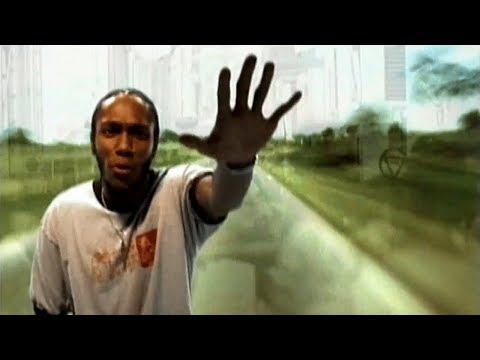

People's Party with Talib Kweli arriving soon!
A weekly interview show with big-name guests exploring hip-hop, culture, and politics.
1st episode on Sunday, June 9th at youtube.com/UPPROXXvideo
From 1999 Album: "Black On Both Sides"
Born Dante Terrell Smith on December 11, 1973, in Brooklyn, NY, Mos Def began rapping at age nine and began professionally acting at age 14, when he appeared in a TV movie. After high school, he began acting in a variety of television roles, most notably appearing in 1994 on a short-lived Bill Cosby series, The Cosby Mysteries. In 1994 Mos Def formed the rap group Urban Thermo Dynamics with his younger brother and sister, and signed a recording deal with Payday Records that didn't amount to much. In 1996 his solo career was launched with a pair of high-profile guest features on De La Soul's "Big Brother Beat" and Da Bush Babees' "S.O.S." A year later, in 1997, Mos Def released his debut single, "Universal Magnetic," on Royalty Records, and it became an underground rap hit. This led to a recording contract with Rawkus Records, which was just getting off the ground at the time, and he began working on a full-length album with like-minded rapper Talib Kweli and producer Hi-Tek. The resulting album, Black Star (1998), became one of the most celebrated rap albums of its time. A year later came Mos Def's solo album, Black on Both Sides, and it inspired further attention and praise. Yet, aside from appearances on the Rawkus compilation series Lyricist Lounge and Soundbombing, no follow-up recordings were forthcoming, as the up-and-coming rapper turned his attention elsewhere, away from music.
During the early 2000s, Mos Def acted in several films (Monster's Ball, Bamboozled, Brown Sugar, The Woodsman) and even spent some time on Broadway (the Pulitzer Prize-winning Topdog/Underdog). He simultaneously worked on the Black Jack Johnson project with several iconic black musicians: keyboardist Bernie Worrell (Parliament/Funkadelic), guitarist Dr. Know (Bad Brains), drummer Will Calhoun (Living Colour), and bassist Doug Wimbish (the Sugarhill Gang, Grandmaster Flash, Living Colour). This project aimed to reclaim rock music, especially the rap-rock hybrid, from such artists as Limp Bizkit frontman Fred Durst, who Mos Def openly despised. What made Black Jack Johnson so anticipated though was not so much the supergroup roster of musicians or even Mos Def himself, but rather the lack of black rock bands. Following the demise of Living Colour, there were few, if any, that had attained substantial success. Mos Def hoped to infuse the rock world with his all-black band, and during the early 2000s, he performed several small shows with his band around the New York area. In October 2004, he finally delivered a second solo album, The New Danger, which involved Black Jack Johnson on a few tracks.
Two years later, after a few more acting roles — including the Golden Globe-winning Lackawanna Blues and the Emmy-winning Something the Lord Made, both of which were made-for-television movies — Mos Def released his third solo album, True Magic (2006). A contract-fulfilling release for Geffen, which had absorbed Rawkus years prior, the album trickled out in a small run during the last week of 2006. Bizarrely, the disc came with no artwork and was sold in a clear plastic case — though its single, "Undeniable," did manage to grab a Grammy nomination for Best Rap Solo Performance. The Ecstatic, released on the Universal-distributed Downtown label, followed in June 2009; at that point, Mos Def had significant acting roles in Michel Gondry's Be Kind Rewind (in which he co-starred with Jack Black) and Cadillac Records (he played Chuck Berry).
Extended & Updated Info:
http://en.wikipedia.org/wiki/Mos_def



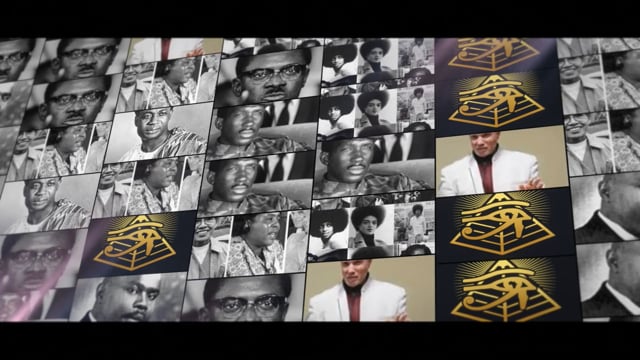
Marcus Mosiah Garvey, the greatest organizer of the 20th century, the brilliant visionary and strategist who took Pan-Africanism from theory to practice. A real-life hero, who has inspired and influenced great Black leaders for over 100 years. The magnitude of his cultural contribution is finally reaching the masses. This short documentary: Whirlwind, The Marcus Garvey Story, offers a glimpse into the man, his mission and his legacy.
"This is the best thing ever done on my father." - Dr. Julius Garvey
Support Dr. Julius Garvey's effort of exonerating his baba, Nana Garvey. www.officialgarveybooks.com

DR Congo: M23 Rebels March Towards South Kivu's Bukavu, Burundi Warns Rwanda | Firstpost Africa | N18G
As the Rwanda-backed M23 rebels continue their advance in the eastern DRC, the hearing of a historic case has begun at the African Court on Human and Peoples' Rights. For the very first time, the court is hearing an inter-state dispute brought by the DRC against Rwanda over alleged human rights violations. M23 rebels have seized significant territory, including Goma, the largest city in the east. They are now advancing towards South Kivu's capital Bukavu and have seized two towns on the road to the city, Ihusi and Kalehe. Meanwhile, tensions are also escalating with other African nations. Burundi, which borders both DRC and Rwanda has warned of retaliation if its troops are attacked by the M23 rebels in DRC. Watch this video for more.
---
DR Congo | M23 Rebels | South Kivu | Bukavu | Burundi | Rwanda | Firstpost Africa | Alyson Le Grange | Africa | Global South | Geopolitics | Military Coup | Environment | Climate Change | Firstpost | News Live | World News | Latest News | Global News | International News | News | Trending News
#drcongo #m23rebels #m23 #southkivu #bukavu #burundi #rwanda #firstpostafrica #africa #alysonlegrange #globalsouth #militarycoup #firstpost #newslive #worldnews #latestnews #globalnews #news #internationalnews #trendingnews
firstpost is an Indian news and media website. Get all the incisive opinions, in-depth analyses and other visual stories that matter to you and the world right here on this channel.
Subscribe to Firstpost channel and press the bell icon to get notified when we go live.
https://www.youtube.com/@Firstpost
Follow Firstpost on Instagram:
https://www.instagram.com/firstpost/
Follow Firstpost on Facebook:
https://www.facebook.com/firstpostin/
Follow Firstpost on Twitter:
https://twitter.com/firstpost
Follow Firstpost on WhatsApp:
https://www.whatsapp.com/chann....el/0029Va6zOIrEQIams




Just had to drop the info on this one so its answered once & for all.... Shout out to da crew who get all vex bout dis one 😂...
THE PAN-AFRIKAN QUESTION provides concise answers to popularly asked questions about Pan-Afrikanism. If you have a question that you think needs to be answered, drop in the it comments section & we'll do our best to drop some knowledge.
#PanAfrikanism #BlackNationalism #AfrikanLiberation #TPAQ
If you Would Like: https://www.paypal.me/abengapparel
► ABIBITUMI: https://www.abibitumi.com/members/shakara/
► ABIBITUMITV: https://abibitumitv.com/@ShakaRa
► Subscribe: https://www.youtube.com/shakar....aspeaks/?sub_confirm
► Twitter https://twitter.com/ShakaRaSpeaks
► Facebook: https://www.facebook.com/ShakaRaSpeaks/
► Instagram: https://www.instagram.com/shakaraspeaks/



In Somalia, poverty is forcing women into sexual exploitation as men from the country who've emigrated to the west return to take advantage of them.
(Click to subscribe for more Channel 4 News videos.
https://www.youtube.com/channe....l4news?sub_confirmat
Many of the women are refugees who are lured by the offer of a better life abroad. They often go through a fake wedding ceremony. The women are later abandoned as the men return to their families in the West. It's a practice known as vacation marriage. Jamal Osman has been to Nairobi, where he put together this exclusive report. He was assisted by Nick and Deka Hassan.



The story of Italian soldier turned treasure hunter Guiseppe Ferlini the infamous man known for destroying and robbing the great pyramids of Meroe in Sudan. In his quest to find gold that was said to be buried inside the Moertic pyramids, Ferlini dynamited multiple pyramids among them, the Pyramid of Queen Amanishakheto never finding gold.
See more: https://talkafricana.com/giuse....ppe-ferlini-the-trea