- General Videos
- Music
- Economics
- Health
- Travel & Events
- History
- Psychology
- Spirituality
- Movies
- News & Politics
- Kmtyw Combat Sciences
- Ɔbenfo Ọbádélé Kambon Videos
- Ɔbenfoɔ Kamau Kambon: Black Liberation Philosophy
- Science, Tech, Engineering and Math
- Permaculture
- Self-Sustainability
- Living Off Grid
- Yoruba Language Learning
- Education
- Mmɔfra Adesua
- Nana Kamau Kambon Playlist
- Livestream
- Komplementarity Kouples and Revolutionary Singles
- Abibitumi Film Series
- Decade of Our Repatriation
- Kwento xpr
- Live
Top videos


Don't forget to subscribe: https://bit.ly/2Hb8hjx
Watch more interesting videos: https://bit.ly/34ogCaw
Follow Channels Television On:
Facebook: https://www.facebook.com/channelsforum/
Twitter: https://twitter.com/channelstv
Instagram: https://www.instagram.com/chan....nelstelevision/?hl=e
Get more news on our website: https://www.channelstv.com/
#ChannelsTv

This statement is false. Think about it, and it makes your head hurt. If it’s true, it’s false. If it’s false, it’s true. In 1931, Austrian logician Kurt Gödel shocked the worlds of mathematics and philosophy by establishing that such statements are far more than a quirky turn of language: he showed that there are mathematical truths which simply can’t be proven. In the decades since, thinkers have taken the brilliant Gödel’s result in a variety of directions–linking it to limits of human comprehension and the quest to recreate human thinking on a computer. This program explores Gödel’s discovery and examines the wider implications of his revolutionary finding. Participants include mathematician Gregory Chaitin, author Rebecca Goldstein, astrophysicist Mario Livio and artificial intelligence expert Marvin Minsky.
This program is part of The Big Idea Series, made possible with support from the John Templeton Foundation.
The World Science Festival gathers great minds in science and the arts to produce live and digital content that allows a broad general audience to engage with scientific discoveries. Our mission is to cultivate a general public informed by science, inspired by its wonder, convinced of its value, and prepared to engage with its implications for the future.
Subscribe to our YouTube Channel for all the latest from WSF.
Visit our Website: http://www.worldsciencefestival.com/
Like us on Facebook: https://www.facebook.com/worldsciencefestival
Follow us on twitter: https://twitter.com/WorldSciFest
Original Program Date: June 4, 2010
MODERATOR: Paul Nurse
PARTICIPANTS: Gregory Chaitin, Mario Livio, Marvin Minsky, Rebecca Newberger Goldstein
Paul Nurse's Introduction. 00:00
Who is Kurt Godel? 03:36
Participant Introductions. 07:22
What was the intellectual environment Godel was living in? 10:57
Godel's beliefs in Platonism. 19:45
Gregory Chaitin on the incompleteness theorem. 22:30
Platonism vs. Formalism. 27:18
The unreasonable effectiveness of mathematics in the world. 40:53
The world is built out of mathematics... what else would you make it out of? 47:44
Mathematics and consciousness. 53:29
What are the problems of building a machine that has consciousness? 01:01:09
If math isn't a formal system then what is it? 01:07:40
Explaining math with simple computer programs. 01:18:33
Its hard to find good math. 01:25:40

Your eyes and ears don’t tell you the truth. That’s not what they’re for. The senses evolved to enable us to survive and succeed in the world, not to represent it accurately. Now, for the first time, science is revealing exactly how the sense organs receive information, process it, and pass it to the brain, providing deep insight into why we experience the world the way we do—and what it might be like for future technology to transform such experiences, perhaps allowing us to see infrared light or feel magnetic north. Join an eminent group of neuroscientists and philosophers for an ear, tongue, nose and eye-opening adventure that challenges everything we experience in search of the true nature of reality.
PARTICIPANTS: Christine Constantinople, Donald Hoffman, Stavros Lomvardas, Beau Lotto, Anil Seth
MODERATOR: Elizabeth Vargas
MORE INFO ABOUT THE PROGRAM AND
PARTICIPANTS: https://www.worldsciencefestiv....al.com/programs/the-
This program is part of the BIG IDEAS SERIES, made possible with support from the JOHN TEMPLETON FOUNDATION.
TOPICS
0:00 - Program introduction
0:40 - Beau Lotto perceptual biases demonstrations
9:01 - Panelist introductions
11:10 - What is accurate perception?
15:45 - Neural basis of decision biases
17:49 - The illusion of smell
19:07 - “The dress” photo illusion
26:02 - Has our survival relied on one sense more than another?
28:21 - Contextual nature of the brain demonstration
33:00 - Does an independent reality exist?
35:09 - The umwelt
39:50 - How we perceive change
42:40 - Expectations vs. evidence in the sensory world
43:46 - Do some senses work faster than others?
49:50 - How does high emotion affect our senses?
50:43 - Synesthesia
57:00 - Neural networks studying perception
59:34 - The rubber hand illusion
1:04:20 - Do we really only have 5 senses?
1:06:52 - Parting thoughts on reality vs. perception
PROGRAM CREDITS
- Produced by Andy Meyer
- Associate Produced by Matt Carlstrom
- Music provided by APM
- Additional images and footage provided by: Venturebeat, Upload VR, Your Discovery Science
- Recorded at Gerald W. Lynch Theatre at John Jay College
- SUBSCRIBE to our YouTube Channel and "ring the bell" for all the latest videos from WSF
- VISIT our Website: http://www.worldsciencefestival.com
- LIKE us on Facebook: https://www.facebook.com/worldsciencefestival
- FOLLOW us on Twitter: https://twitter.com/WorldSciFest

Music students download the technique of their favorite pianist or singer directly into their brains. Medical students download the skills of a seasoned surgeon or diagnostician. And each one of us routinely uploads our thoughts and memories to the digital cloud. While these scenarios still lie in the future, rudimentary versions of the necessary brain-to-brain technology exist today. But the ability to directly influence another person’s brain raises serious questions about human rights and individual freedoms. This program will present the latest technology and explore how the ethical implications of enhanced thinking go to the heart of consciousness itself.
This program is part of the Big Ideas Series, made possible with support from the John Templeton Foundation.
Our media partner for this program is Popular Science.
Footage of the brain-to-brain interface experiment provided by the University of Washington. For more information on the research:http://www.washington.edu/news..../2014/11/05/uw-study
Subscribe to our YouTube Channel for all the latest from WSF.
Visit our Website: http://www.worldsciencefestival.com/
Like us on Facebook: https://www.facebook.com/worldsciencefestival
Follow us on twitter: https://twitter.com/WorldSciFest
MODERATOR: John Donvan
PARTICIPANTS: Joseph Fins, Miguel Nicolelis, Chantel Prat, Andrea Stocco, Seung-Schik Yoo
Original Program Date: June 4, 2016
The Dawn of Brain-to-Brain Communication 00:00
John Donvan's Introduction to Brain to Brain communication. 2:22
Participant Introductions. 4:10
What to keep in mind when thinking about brain to brain communication. 6:22
How does one get into the mind business? 8:15
Aurora the monkey plays a game with just her brain.11:05
Transitioning to human brain to brain research. 18:41
Connecting the brains of two rats. 22:27
The tangled ball of neurons in our head is "us" 29:40
The puppet master describes linking two humans through their brains. 32:33
Using focused ultrasound to connect two human brains. 42:19
What are the contemplative factors in brain to brain communication? 49:50
If you can get two animals to communicate can you link 100? 54:09
The worry of people controlling your brain. 59:48
The risk of sharing thoughts from one brain to another. 1:02:54
How long until we can just download knowledge to our brains? 1:07:40
Giving credit to Arthur Clarke. 1:09:28
Is there any fear of brain damage from this technology? 1:10:20
Is it crazy to think we will all have chips in our brains? 1:13:01
What are the goals of brain to brain communication in the next 5 years? 1:17:33

The multiverse hypothesis, suggesting that our universe is but one of perhaps infinitely many, speaks to the very nature of reality. Join physicist Brian Greene, cosmologists Alan Guth and Andrei Linde, and philosopher Nick Bostrom as they discuss and debate this controversial implication of forefront research and explore its potential for redefining the cosmic order. Moderated by Robert Krulwich and featuring an original musical interlude, inspired by parallel worlds, by DJ Spooky.
This program is part of the Big Ideas Series, made possible with support from the John Templeton Foundation.
The World Science Festival gathers great minds in science and the arts to produce live and digital content that allows a broad general audience to engage with scientific discoveries. Our mission is to cultivate a general public informed by science, inspired by its wonder, convinced of its value, and prepared to engage with its implications for the future.
Subscribe to our YouTube Channel for all the latest from WSF.
Visit our Website: http://www.worldsciencefestival.com/
Like us on Facebook: https://www.facebook.com/worldsciencefestival
Follow us on twitter: https://twitter.com/WorldSciFest
Original Program Date: June 13, 2009
MODERATOR: Robert Krulwich
PARTICIPANTS: Alan Guth, Brian Greene, Andrei Linde, Paul D. Miller, Nick Bostrom
Introduction with Brian Greene 00:00
Musical interlude 25:15
Participant Introductions 33:49
How do we know there was a Big Bang 35:50
How do we get from a single universe to a multiverse. 47:14
Is the universe expanding and how fast? 01:00:25
What does six dimensional space look like? 01:08:00
How do we know there is a multiverse? 01:13:48
Bryce DeWitt on the multiverse concept 01:24:40
What if we assume the universe is the simulation hypothesis? 01:37:14
This program is part of The Big Idea Series, made possible with support from the John Templeton Foundation.
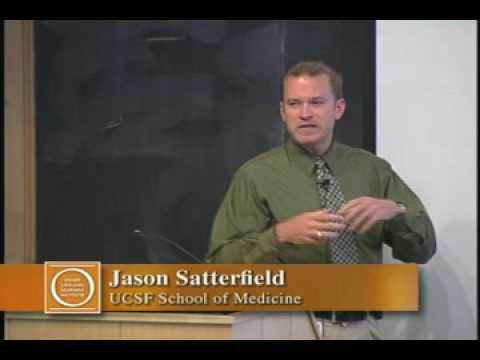
Take a look into our current understanding of the function of the human brain and some of the important diseases that cause nervous system dysfunction. On this edition, Jason Satterfiled, director of behavioral medicine at UCSF, explores the emotions and health and the promise of mind-body medicine. Recorded on 05/24/2007. [10/2007] [Show ID: 13033]
Explore More Health & Medicine on UCTV
(https://www.uctv.tv/health)
UCTV features the latest in health and medicine from University of California medical schools. Find the information you need on cancer, transplantation, obesity, disease and much more.
UCTV is the broadcast and online media platform of the University of California, featuring programming from its ten campuses, three national labs and affiliated research institutions. UCTV explores a broad spectrum of subjects for a general audience, including science, health and medicine, public affairs, humanities, arts and music, business, education, and agriculture. Launched in January 2000, UCTV embraces the core missions of the University of California -- teaching, research, and public service – by providing quality, in-depth television far beyond the campus borders to inquisitive viewers around the world.
(https://www.uctv.tv)
![The Secrets of Light and Energy [2019]](https://i.ytimg.com/vi/UTxsfUmhG3M/hqdefault.jpg)


Phoenix, Arizona is home to an unusual kind of resident: the Rosy-faced lovebird. The small, brightly colored parrots are popular cage birds, but here in Phoenix they’ve escaped captivity. Over 25 years, they’ve colonized the desert, with a few useful tricks up their sleeves . . . 🌵 ↠Subscribe: https://www.youtube.com/c/Terr....aMaterOfficial?sub_c
Miles away from their natural African habitat, lovebirds have learned to survive with the aid of cacti, water sprinklers, and a couple of helping hands (and beaks). Take a look at the incredible success story of this plucky little escapee.
Want more amazing stories about animals and the environment? Subscribe to our channel and sign up for alerts so you never miss our new weekly content!
#lovebird #RosyFacedLovebird #terramatters
⏯ Want to see more amazing birds?
🕺🏻Get to know why these birds need a wingman to wet the girl:
https://youtu.be/FZoQ_qeL2Hs
🦜Check out how these hyacinth macaws run a unique seed-distribution service that keeps the rainforest flourishing: https://youtu.be/OvU_Vj3UmCQ
🐦And watch our Hooded Merganser video to learn why these brave little ducklings had to jump more than 20m to survive: https://youtu.be/9k0_gFoYOHU