- General Videos
- Music
- Economics
- Health
- Travel & Events
- History
- Psychology
- Spirituality
- Movies
- News & Politics
- Kmtyw Combat Sciences
- Ɔbenfo Ọbádélé Kambon Videos
- Ɔbenfoɔ Kamau Kambon: Black Liberation Philosophy
- Science, Tech, Engineering and Math
- Permaculture
- Self-Sustainability
- Living Off Grid
- Yoruba Language Learning
- Education
- Mmɔfra Adesua
- Nana Kamau Kambon Playlist
- Livestream
- Komplementarity Kouples and Revolutionary Singles
- Abibitumi Film Series
- Decade of Our Repatriation
- Kwento xpr
- Live
Top videos


How did scholars begin to decipher ancient scripts like the hieroglyphs?
Subscribe for regular science videos: http://bit.ly/RiSubscRibe
Buy Andrew's biography of Jean-François Champollion "Cracking the Egyptian Code": https://geni.us/WQwD
Very soon after the birth of the first written language - cuneiform - ancient Egypt developed its own writing: the hieroglyphic script, immortalised in the Rosetta Stone kept in the British Museum, which consists of a single royal edict, dated 196 BC, written in the hieroglyphic, demotic and Greek alphabetic scripts.
Andrew Robinson is the author of more than twenty-five books, issued by leading general and academic publishers. In addition to "Cracking the Egyptian Code", they include "The Last Man Who Knew Everything" (a biography of Thomas Young): https://geni.us/XIBXvR , and "Lost Languages: The Enigma of the World’s Undeciphered Scripts": https://geni.us/iqP0Q. A former literary editor of The Times Higher Education Supplement, he also writes reviews and features for newspapers, magazines and journals, in both the arts and sciences.
This talk was filmed in the Ri on 18 January 2019.
Watch the second talk on ancient codes, all about the cuneiform language by Irving Finkel: https://youtu.be/PfYYraMgiBA
---
A very special thank you to our Patreon supporters who help make these videos happen, especially:
Dave Ostler, David Lindo, David Schick, Erik Shepherd, Greg Nagel, Ivan Korolev, Joe Godenzi, Julia Stone, Lasse T. Stendan, Lester Su, Osian Gwyn Williams, Paul Brown, Radu Tizu, Rebecca Pan, Robert Hillier, and Roger Baker.
---
Subscribe for regular science videos: http://bit.ly/RiSubscRibe
The Ri is on Patreon: https://www.patreon.com/TheRoyalInstitution
and Twitter: http://twitter.com/ri_science
and Facebook: http://www.facebook.com/royalinstitution
and Tumblr: http://ri-science.tumblr.com/
Our editorial policy: http://www.rigb.org/home/editorial-policy
Subscribe for the latest science videos: http://bit.ly/RiNewsletter
Product links on this page may be affiliate links which means it won't cost you any extra but we may earn a small commission if you decide to purchase through the link.


General Toussaint L'ouverture: What You Didn't Know About the Haitian Revolution with King Kevin Dorival http://www.kevindorival com
$Courage2believe - Gift for Professor Jean-Claude Exulien Donations can be mailed: PO Box 150071 Atlanta, GA. 30315#HaitianFlagDay #ToussaintLouverture #haitianrevolution


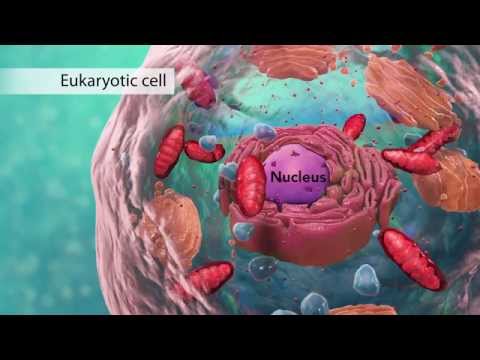
This animation by Nucleus shows you the function of plant and animal cells for middle school and high school biology, including organelles like the nucleus, nucleolus, DNA (chromosomes), ribosomes, mitochondria, etc. Also included are ATP molecules, cytoskeleton, cytoplasm, microtubules, proteins, chloroplasts, chlorophyll, cell walls, cell membrane, cilia, flagellae, etc.
Watch another version of this video, narrated by biology teacher Joanne Jezequel here: https://youtu.be/cbiyKH9uPUw
#cell #nucleus #biology
----
Watch other Nucleus Biology videos:
- Controlled Experiments: https://youtu.be/D3ZB2RTylR4
- Independent vs. Dependent Variables: https://youtu.be/nqj0rJEf3Ew
- Active Transport: https://youtu.be/ufCiGz75DAk
----
Learn more about the company that created this video: http://www.nucleusmedicalmedia.com/
https://www.instagram.com/nucleusmedicalmedia
This animation won a Platinum Best of Show Aurora Award in 2016.

**LINK BELOW FOR IN-CLASS USE INSTRUCTIONS**
Virtual Plant Cell: Into Aquaporins highlights the important role that aquaporin proteins play in shuttling water, carbon dioxide and other molecules vital to good plant health, into and out of plant cells.
See https://plantenergy.edu.au/outreach/resources for materials to support classroom use of VPC: Into Aquaporins. This is a curriculum-aligned resource that addresses topics including diffusion across membranes, transcription and translation. This video can also be used with the lesson plan resource: Planting Science: Classifying Systems in Cells (year 7-10), developed by the ARC Centre of Excellence for Translational Photosynthesis: http://photosynthesis.org.au/years7-10/
Virtual Plant Cell (VPC) is a suite of educational virtual reality experiences created by the ARC Centre of Excellence in Plant Energy Biology. Explore and learn about the sub-microscopic inner world of a plant. www.plantenergy.edu.au/VPC
Subtitled. Full transcript below.
CREDITS:
3D Modelling and Animations: Peter Ryan, Tail Art, www.peterryanart.com.au
Graphic and Logo Design: Chris Brown, Eyecue Design, www.eyecue.com.au
Music: Jim Kennedy, Audiosimian, www.audiosimian.com
Voice Over: Glenn Hall
Science from the ARC Centre of Excellence in Plant Energy Biology with support from the ARC Centre of Excellence for Translational Photosynthesis. Project led by Karina Price and the researchers of the ARC Centre of Excellence in Plant Energy Biology.
Funded by the Australian Research Council.
TRANSCRIPT:
Plants are amazing. They create energy from sunlight and they use this energy to create what we use for our food, fuel and fibre, and this takes us on a journey deep into the inner world of a plant cell.
Plant cells collect sunlight and use it to convert water and carbon dioxide into sugar. This process is called photosynthesis. Photosynthesis happens inside the many green chloroplasts found around a plant cell.
The movement of water, carbon dioxide and other molecules like nitrogen, sugars and salts are vital for good plant health.
But how do water and other solutes get into the cell? Aquaporins are here to help. Aquaporins are tiny protein channels that are created in plant cells. They facilitate diffusion, the movement of important solutes, across cell membranes.
Aquaporins can be found in different membranes of the cell.
Water, carbon dioxide, and more is moved across these membranes, via aquaporin channels, as required.
Let’s see how plant cells create aquaporins when needed.
Proteins like aquaporins are coded for by genes. This is a sequence of information within a cell’s DNA. A message, called RNA, is first created from a gene through a process called transcription.
Messages move out of the nucleus to the ribosome. Here, the RNA message is “read” to create an aquaporin protein. This process of building a protein from an RNA message is called translation.
Aquaporins, like all proteins in a cell, have a unique structure. An aquaporin’s main function is to act as a channel that sits in a membrane. The aquaporin’s structure reflects this role.
Through research we can come to understand how aquaporins work, and how they work best. We can apply this knowledge to produce higher yielding crop plants by maximising their photosynthesis, improving their salt tolerance and enhancing their ability to survive challenging environmental conditions. And more efficient and resilient crops will ensure a secure food future.
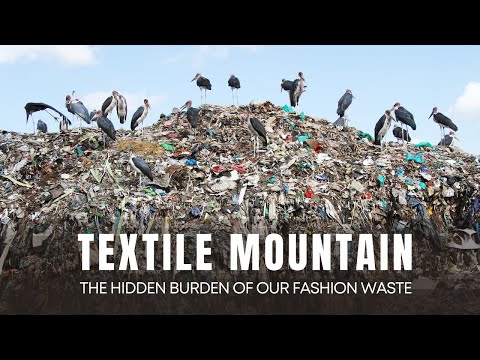
Waste management is a common issue across industries: the way we produce and consume needs to change if we want to save our planet. The consequences of irresponsible waste management can be seen across industries, not only in our food systems. We are proud partners of this campaign to #Slowdownfashion #EatHonest #LuvOrganic
From recycling bins in Europe to landfills and waterways in the Global South,
Textile Mountain exposes the hidden cost of our clothing waste and calls
on us to reimagine how we design, make, and reuse our clothes so that our fashion waste no longer becomes another country’s burden.
Find out more here: http://www.textilemountainfilm.com/
🤗 Support our ORGANIZATION
https://ifo.am/Donate
🤝 Become our PARTNER
https://ifo.am/JoinIFOAM
📩 Sign up to our NEWSLETTER
https://ifo.am/Newsletter
▶️ Subscribe to our YOUTUBE channel:
https://ifo.am/YouTube
👍🏻 Stay connected on FACEBOOK:
https://ifo.am/Facebook
👩🏻💻 Join the conversation on TWITTER:
https://ifo.am/Twitter
👨🏼💻 Follow us on LINKEDIN:
https://www.linkedin.com/company/ifoa...
🤳Join us on Instagram
https://ifo.am/Instagram
Disclaimer: This film was produced with the financial assistance of the European Union. The contents of this film are the sole responsibility of Make Europe Sustainable for All and can under no circumstances be taken to reflect the views of the European Union.

www.Farmers.co.ke is the site for authoritative multimedia agricultural and agribusiness content.
Visit us today for farming news, agribusiness tips, practical expert advice and industry updates.
SMS: 22071