- General Videos
- Music
- Economics
- Health
- Travel & Events
- History
- Psychology
- Spirituality
- Movies
- News & Politics
- Kmtyw Combat Sciences
- Ɔbenfo Ọbádélé Kambon Videos
- Ɔbenfoɔ Kamau Kambon: Black Liberation Philosophy
- Science, Tech, Engineering and Math
- Permaculture
- Self-Sustainability
- Living Off Grid
- Yoruba Language Learning
- Education
- Mmɔfra Adesua
- Nana Kamau Kambon Playlist
- Livestream
- Komplementarity Kouples and Revolutionary Singles
- Abibitumi Film Series
- Decade of Our Repatriation
- Kwento xpr
- Live
Top videos


Watch this video as Firstpost explains how Niger has launched a new verbal attack on former colonial ruler France and the European Union. Thousands of demonstrators flooded the Place de la Concertation in Niamey to rally behind General Abdourahamane Tiani following a failed military mutiny that triggered violent clashes across the capital. The uprising targeted strategic infrastructure, including Air Base 101 and areas around the presidential palace, before loyalist forces put down the assault with critical support from Russia's Africa Corps. Organised by pro-junta civil society groups, the rally saw crowds waving Nigerien and Russian flags while chanting anti-imperialist slogans. Speakers and demonstrators directed widespread anger outwards, publicly accusing France, the European Union, and regional allies within ECOWAS of orchestrating the unrest to overthrow the government. Since taking power in July 2023, Tiani’s government has systematically severed ties with traditional Western partners, aligning with Russia alongside neighbouring Sahel states. The latest unrest underscores Niger's deepening reliance on Moscow amid lingering internal instability and shifting regional alliances. Alyson Le Grange brings you more on this story on Firstpost Africa.
00:00 - Intro: Thousands Rally in Support of General Tiani
00:30 - Failed Mutiny and Allegations Against France and the EU
01:45 - The Convergence for the Sovereignty of Sahel Nations
03:12 - Russia's Africa Corps: Assistance in Securing the Capital
03:35 - Breaking Ties: Niger, Mali, and Burkina Faso's Shift from the West
04:08 - Growing Russian Presence in the Sahel
05:32 - Remembering Martin Luther King Jr.'s Revolutionary Legacy
07:05 - Outro
---
Niger Mutiny | Niger Anti France Protest | Niger Anti EU Protest | Abdourahamane Tiani | Niger Russia Alliance | Russia Africa Corps | Niger Crisis | Niger Military Junta | Sahel Crisis | France Africa Relations | Donald Trump | Africa | Vladimir Putin | China | Xi Jinping | Al-Qaeda | Geopolitics | Alyson Le Grange | Firstpost Africa
#niger #nigercrisis #nigercoup #sahel #africacorps #russiaafrica #franceafrica #europeanunion #abdourahamanetiani #africageopolitics #donaldtrump #trump #africa #russia #putin #china #xijinping #counterterrorism #geopolitics #firstpost #firstpostafrica
firstpost is an Indian news and media website. Get all the incisive opinions, in-depth analyses and other visual stories that matter to you and the world right here on this channel.
Subscribe to Firstpost channel and press the bell icon to get notified when we go live.
https://www.youtube.com/@Firstpost
Follow Firstpost on Website:
https://www.firstpost.com
Follow Firstpost on Instagram:
https://www.instagram.com/firstpost/
Follow Firstpost on Facebook:
https://www.facebook.com/firstpostin/
Follow Firstpost on X:
https://twitter.com/firstpost
Follow Firstpost on WhatsApp:
https://www.whatsapp.com/chann....el/0029Va6zOIrEQIams


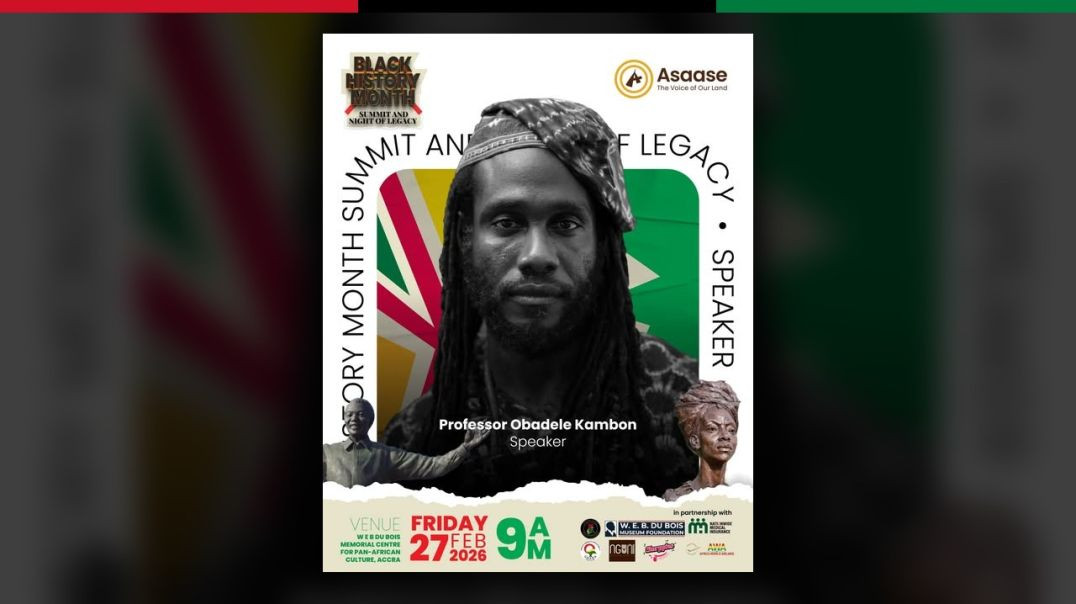

First 10 minutes preview.
Get the complete presentation for $20:
https://www.abibitumi.com/prod....uct/%c9%94benfo-obad
#abibitumi #obadelekambon #blackstudies #door
![Dr. Kambon's JoyTV Interview on Asako (Afrikan Combat Capoeira) [Twi + English]](https://i.ytimg.com/vi/RYna3Es5Lsg/mqdefault.jpg)