- General Videos
- Music
- Economics
- Health
- Travel & Events
- History
- Psychology
- Spirituality
- Movies
- News & Politics
- Kmtyw Combat Sciences
- Ɔbenfo Ọbádélé Kambon Videos
- Ɔbenfoɔ Kamau Kambon: Black Liberation Philosophy
- Science, Tech, Engineering and Math
- Permaculture
- Self-Sustainability
- Living Off Grid
- Yoruba Language Learning
- Education
- Mmɔfra Adesua
- Nana Kamau Kambon Playlist
- Livestream
- Komplementarity Kouples and Revolutionary Singles
- Abibitumi Film Series
- Decade of Our Repatriation
- Kwento xpr
- Live
Top videos


In an attempt to shield itself from the armed group al-Shabab, Kenya has started construction on a 700km-long wall along its porous border with Somalia.
The ambitious project, which consists of brick walls, fences and observation posts, will stretch from the town of Mandera in the north to Kiunga in the south. The goal is to lock out al-Qaeda-aligned fighters who have repeatedly crossed into Kenya to wage attacks.
Kenya, an al-Shabab target due to its military involvement in Somalia, has seen an upsurge in large scale attacks recently.
Earlier this year, 148 people, including 142 students, were killed after gunmen stormed the Garissa University College, some 200km from the Somalia border .
The massacre piled new pressure on Kenyan President Uhuru Kenyatta to deal with the group which has killed more than 400 people in the country over the past two years.
In Kenya's Enemy Within we look at the government's proposed border wall and whether it will help stop attacks on Kenyan soil.
Investigative journalist John Allan Namu speaks to people with direct access to the project, who say the plan is unfeasible and won't enhance the country's security.
We hear how corruption among immigration officials, poor coordination with intelligence agencies and slow responses from the security forces have left Kenya unable to stem the attacks.
With exclusive access to al-Shabab fighters in Kenya, we are told how the wall represents a futile effort to shut out the group and the biggest threat the country is facing is from within.
We also speak to the Muslim community who say that constant harassment and intimidation at the hands of security forces, and scare-mongering by the government, are helping drive al-Shabab's recruitment and creating the perfect breeding ground for the group.
- Subscribe to our channel: http://bit.ly/AJSubscribe
- Follow us on Twitter: https://twitter.com/AJEnglish
- Find us on Facebook: https://www.facebook.com/aljazeera
- Check out our website: http://www.aljazeera.com/



Don't forget to subscribe: https://bit.ly/2Hb8hjx
Watch more interesting videos: https://bit.ly/34ogCaw
Follow Channels Television On:
Facebook: https://www.facebook.com/channelsforum/
Twitter: https://twitter.com/channelstv
Instagram: https://www.instagram.com/chan....nelstelevision/?hl=e
Get more news on our website: https://www.channelstv.com/
#ChannelsTv
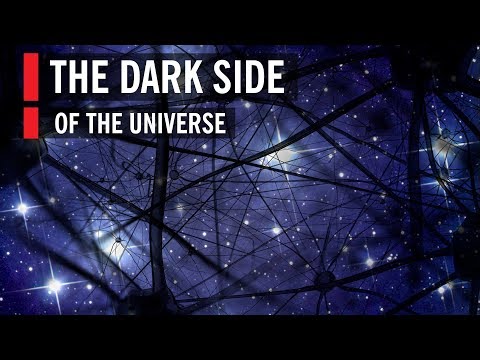
For all we understand about the universe, 96% of what’s out there still has scientists in the dark. Astronomical observations have established that familiar matter—atoms—accounts for only 4% of the weight of the cosmos. The rest—dark matter and dark energy—is invisible to our telescopes. But what really is this dark stuff? How do we know it’s there? And what does it do? From the formation of galaxies to the farthest reaches of space, it appears that darkness rules. Without dark matter and dark energy, the universe today and in the far future would be a completely different place. We were joined by leading researchers who smash together particles, dive into underground mines, and explore the edges of the known universe in search of clues to nature’s dark side.
This program is part of the Big Ideas Series, made possible with support from the John Templeton Foundation.
The World Science Festival gathers great minds in science and the arts to produce live and digital content that allows a broad general audience to engage with scientific discoveries. Our mission is to cultivate a general public informed by science, inspired by its wonder, convinced of its value, and prepared to engage with its implications for the future.
Subscribe to our YouTube Channel for all the latest from WSF.
Visit our Website: http://www.worldsciencefestival.com/
Like us on Facebook: https://www.facebook.com/worldsciencefestival
Follow us on twitter: https://twitter.com/WorldSciFest
Original Program Date: June 2, 2011
MODERATOR: John Hockenberry
PARTICIPANTS: Brian Greene, Glennys Farrar, Katherine Freese, Michael Turner, Saul Perlmutter, Elena Aprile, MOMIX
Brian Greene's introduction on dark matter. 00:22
What we don,t see by MOMIX 07:00
John Hockenberry's Introduction. 16:17
Participant Introductions 21:05
Why do we know that there is dark matter? 25:10
The lensing effect that reveals dark matter. 31:33
A computer simulation of what dark matter was doing as the universe was expanding. 37:11
Capturing Wimps with the XENON100. 41:40
What the XENON100 detector looks like. 48:20
Where do we go to find events that prove dark matter exists? 56:18
If lensing is correct, could that determine an unknown force? 01:00:43
Supersymmetry vs Another Universal Brane. 01:09:20
Using a supernova to detect Dark Matter. 01:15:40
How does a supernova tell you about dark matter? 01:21:20
How did Einstein predict that dark energy existed? 01:26:18
What is the counter explanation of dark energy? 01:30:40
The ratio of dark energy makes a perfect environment for life. 01:35:30

Stuff happens. The weather forecast says it’s sunny, but you just got drenched. You got a flu shot—but you’re sick in bed with the flu. Your best friend from Boston met your other best friend from San Francisco. Coincidentally. What are the odds? Risk, probability, chance, coincidence—they play a significant role in the way we make decisions about health, education, relationships, and money. But where does this data come from and what does it really mean? How does the brain find patterns and where can these patterns take us? When should we ditch the data and go with our gut? Join us in a captivating discussion that will demystify the chancy side of life.
This program is part of the Big Ideas Series, made possible with support from the John Templeton Foundation.
The World Science Festival gathers great minds in science and the arts to produce live and digital content that allows a broad general audience to engage with scientific discoveries. Our mission is to cultivate a general public informed by science, inspired by its wonder, convinced of its value, and prepared to engage with its implications for the future.
Subscribe to our YouTube Channel for all the latest from WSF.
Visit our Website: http://www.worldsciencefestival.com/
Like us on Facebook: https://www.facebook.com/worldsciencefestival
Follow us on twitter: https://twitter.com/WorldSciFest
Original Program Date: June 2, 2011
MODERATOR: Marcus du Sautoy
PARTICIPANTS: Amir Aczel, Gerd Gigerenzer, Leonard Mlodinow, Josh Tenenbaum
Josh Tenenbaum and an experiment in ESP. 00:00
Risk, Probability, and Chance. 02:54
Marcus du Sautoy's Introduction. 06:32
Participant Introductions. 07:27
Are we good or bad at interpreting numbers? 09:45
The Monty Hall problem. 16:00
The fight or flight math means we understand numbers? 21:50
The "numbers are important" experiment. 25:33
VerizonMath: Verizon doesn't know Dollars from Cents. 29:30
If you play a lottery and there is 1 winner in a 1000, what is your percent of winning? 35:30
How well are our brains tuned for evidential data. 39:33
What is the birthday problem? 45:15
The way probability's are phrased are as important as the numbers. 53:31
Do we have a conception of a million? 01:03:28
What is a prior? 01:09:05
Josh Tenenbaum ESP experiment results. 01:15:19
"Numbers are important" experiment results. 01:20:45
How do we get a statistical society? 01:25:25