- General Videos
- Music
- Economics
- Health
- Travel & Events
- History
- Psychology
- Spirituality
- Movies
- News & Politics
- Kmtyw Combat Sciences
- Ɔbenfo Ọbádélé Kambon Videos
- Ɔbenfoɔ Kamau Kambon: Black Liberation Philosophy
- Science, Tech, Engineering and Math
- Permaculture
- Self-Sustainability
- Living Off Grid
- Yoruba Language Learning
- Education
- Mmɔfra Adesua
- Nana Kamau Kambon Playlist
- Livestream
- Komplementarity Kouples and Revolutionary Singles
- Abibitumi Film Series
- Decade of Our Repatriation
- Kwento xpr
- Live
Top videos


A hotel is the latest flashpoint in a long running conflict in Cabo Delgado, in northern Mozambique.
ISIL-linked fighters besieged the town of Palma, forcing nearly 200 people to seek refuge in a resort.
Many are foreign nationals working on a natural gas project.
The latest assault by the ISIL-linked Al Shabab (not related to the Somali group of the same name) highlights increasing instability in the gas-rich province.
Could the unrest intensify?
Presenter: Mohammed Jamjoom
Guests:
Zenaida Machado - Human Rights Watch
Jasmine Opperman - Armed Conflict Location & Event Data Project
Fernando Lima - Journalist and political commentator Catholic University of Rio de Janeiro.
- Subscribe to our channel: http://aje.io/AJSubscribe
- Follow us on Twitter: https://twitter.com/AJEnglish
- Find us on Facebook: https://www.facebook.com/aljazeera
- Check our website: https://www.aljazeera.com/
#Mozambique #InsideStory

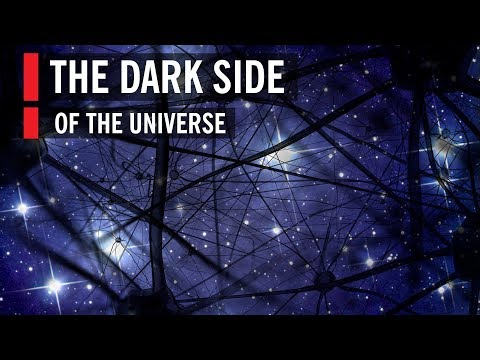
For all we understand about the universe, 96% of what’s out there still has scientists in the dark. Astronomical observations have established that familiar matter—atoms—accounts for only 4% of the weight of the cosmos. The rest—dark matter and dark energy—is invisible to our telescopes. But what really is this dark stuff? How do we know it’s there? And what does it do? From the formation of galaxies to the farthest reaches of space, it appears that darkness rules. Without dark matter and dark energy, the universe today and in the far future would be a completely different place. We were joined by leading researchers who smash together particles, dive into underground mines, and explore the edges of the known universe in search of clues to nature’s dark side.
This program is part of the Big Ideas Series, made possible with support from the John Templeton Foundation.
The World Science Festival gathers great minds in science and the arts to produce live and digital content that allows a broad general audience to engage with scientific discoveries. Our mission is to cultivate a general public informed by science, inspired by its wonder, convinced of its value, and prepared to engage with its implications for the future.
Subscribe to our YouTube Channel for all the latest from WSF.
Visit our Website: http://www.worldsciencefestival.com/
Like us on Facebook: https://www.facebook.com/worldsciencefestival
Follow us on twitter: https://twitter.com/WorldSciFest
Original Program Date: June 2, 2011
MODERATOR: John Hockenberry
PARTICIPANTS: Brian Greene, Glennys Farrar, Katherine Freese, Michael Turner, Saul Perlmutter, Elena Aprile, MOMIX
Brian Greene's introduction on dark matter. 00:22
What we don,t see by MOMIX 07:00
John Hockenberry's Introduction. 16:17
Participant Introductions 21:05
Why do we know that there is dark matter? 25:10
The lensing effect that reveals dark matter. 31:33
A computer simulation of what dark matter was doing as the universe was expanding. 37:11
Capturing Wimps with the XENON100. 41:40
What the XENON100 detector looks like. 48:20
Where do we go to find events that prove dark matter exists? 56:18
If lensing is correct, could that determine an unknown force? 01:00:43
Supersymmetry vs Another Universal Brane. 01:09:20
Using a supernova to detect Dark Matter. 01:15:40
How does a supernova tell you about dark matter? 01:21:20
How did Einstein predict that dark energy existed? 01:26:18
What is the counter explanation of dark energy? 01:30:40
The ratio of dark energy makes a perfect environment for life. 01:35:30

Stuff happens. The weather forecast says it’s sunny, but you just got drenched. You got a flu shot—but you’re sick in bed with the flu. Your best friend from Boston met your other best friend from San Francisco. Coincidentally. What are the odds? Risk, probability, chance, coincidence—they play a significant role in the way we make decisions about health, education, relationships, and money. But where does this data come from and what does it really mean? How does the brain find patterns and where can these patterns take us? When should we ditch the data and go with our gut? Join us in a captivating discussion that will demystify the chancy side of life.
This program is part of the Big Ideas Series, made possible with support from the John Templeton Foundation.
The World Science Festival gathers great minds in science and the arts to produce live and digital content that allows a broad general audience to engage with scientific discoveries. Our mission is to cultivate a general public informed by science, inspired by its wonder, convinced of its value, and prepared to engage with its implications for the future.
Subscribe to our YouTube Channel for all the latest from WSF.
Visit our Website: http://www.worldsciencefestival.com/
Like us on Facebook: https://www.facebook.com/worldsciencefestival
Follow us on twitter: https://twitter.com/WorldSciFest
Original Program Date: June 2, 2011
MODERATOR: Marcus du Sautoy
PARTICIPANTS: Amir Aczel, Gerd Gigerenzer, Leonard Mlodinow, Josh Tenenbaum
Josh Tenenbaum and an experiment in ESP. 00:00
Risk, Probability, and Chance. 02:54
Marcus du Sautoy's Introduction. 06:32
Participant Introductions. 07:27
Are we good or bad at interpreting numbers? 09:45
The Monty Hall problem. 16:00
The fight or flight math means we understand numbers? 21:50
The "numbers are important" experiment. 25:33
VerizonMath: Verizon doesn't know Dollars from Cents. 29:30
If you play a lottery and there is 1 winner in a 1000, what is your percent of winning? 35:30
How well are our brains tuned for evidential data. 39:33
What is the birthday problem? 45:15
The way probability's are phrased are as important as the numbers. 53:31
Do we have a conception of a million? 01:03:28
What is a prior? 01:09:05
Josh Tenenbaum ESP experiment results. 01:15:19
"Numbers are important" experiment results. 01:20:45
How do we get a statistical society? 01:25:25

Mysteriously beautiful fractals are shaking up the world of mathematics and deepening our understanding of nature. You may not know it, but fractals, like the air you breathe, are all around you. Their irregular, repeating shapes are found in cloud formations and tree limbs, in stalks of broccoli and craggy mountain ranges, even in the rhythm of the human heart. For centuries, fractal-like irregular shapes were considered beyond the boundaries of mathematical understanding. Now, mathematicians have finally begun mapping this uncharted territory. Their remarkable findings are deepening our understanding of nature and stimulating a new wave of scientific, medical, and artistic innovation stretching from the ecology of the rain forest to fashion design. The documentary highlights a host of filmmakers, fashion designers, physicians, and researchers who are using fractal geometry to innovate and inspire.
We are not the owners of this video nor do we claim to be. This video is for educational purpose only. This is a copy of original videoclip that can be found here: https://www.youtube.com/watch?v=-ZZVHZmk09Y
Fair Use Notice: This video might contain some copyrighted material whose use may or may not have not been authorized by the copyright owners. We believe that this not-for-profit, educational, and/or criticism or commentary use on the Web constitutes a fair use of the copyrighted material (as provided for in section 107 of the US Copyright Law). If you wish to use this copyrighted material for purposes that go beyond fair use, you must obtain permission from the copyright owner. In case, you own or reperesent someone who owns any of the material in this video, and would like us to remove your content, we will immediately comply with any copyright owner who wants their material removed or modified, wants us to link to their web site, or wants us to add their photo.


The maverick engineer Nikola Tesla made his contribution in the mechanical engineering field too. Look at one of his favorite inventions — a bladeless turbine, or Tesla Turbine. The Tesla turbine had a simple, unique design, yet it was able to beat the efficiency levels of steam turbines at that time. Normal turbines are complex in design, with blades of complicated geometry and stator parts. Nikola Tesla once said the Tesla turbine is his favorite invention and he even claimed an efficiency level of 97% for this turbine. Let’s start a design journey to understand this interesting piece of technology, and towards the end we will also verify Tesla’s efficiency claim.
Be our supporter or contributor: https://www.youtube.com/channe....l/UCqZQJ4600a9wIfMPb
instagram : https://www.instagram.com/sabinzmathew/
Twitter : https://twitter.com/sabinsmathew
Telegram : https://t.me/sabinmathew
FB : https://www.facebook.com/SabinzMathew
Voice over artist : https://www.fiverr.com/voiceonthemove


Realistic Expectations in Relationships and How to Set Proper Relationship Goals. By King Kevin Dorival https://7queens7kings.ecwid.com
Author of "7 Types of Queens, Kings Desire" + ”The Winner In The Mirror - Activating Your Superpowers: Mind, Body, and Spirit” + "The Courage To Believe: Never Give Up” http://kevindorival.com/produc....t-category/king-stor
IG/TW: @Courage2Believe
#7TypesofQueens
#RelationshipGoals
#KingKevinDorival

Sewer systems are essential to modern plumbing. Every time you flush a toilet, use a sink, or take a shower, you create liquid waste of varying chemical makeups that has to be transported and treated. You could just flush it into a septic tank, but these tanks require maintenance and come with a host of other issues when integrated en masse for modern cities. We have to manage our waste because it stinks, it contains deadly bacteria, and it has dangerous chemicals that could affect the environment.
You probably know that wastewater gets treated at a wastewater treatment plant, but let's take a look at how it gets there: sewer systems.
Thanks to Pepperonin for supporting us on Patreon and making this video possible!
Support us here: http://bit.ly/2qBHc
All images and videos courtesy of the creative commons or used in accordance with fair use laws. For questions or concerns, please use the contact section on our channel.
Music:
Brittle Rille - Reunited by Kevin MacLeod is licensed under a Creative Commons Attribution license (https://creativecommons.org/licenses/by/4.0/)
Source: http://incompetech.com/music/r....oyalty-free/index.ht
Artist: http://incompetech.com/