- General Videos
- Music
- Economics
- Health
- Travel & Events
- History
- Psychology
- Spirituality
- Movies
- News & Politics
- Kmtyw Combat Sciences
- Ɔbenfo Ọbádélé Kambon Videos
- Ɔbenfoɔ Kamau Kambon: Black Liberation Philosophy
- Science, Tech, Engineering and Math
- Permaculture
- Self-Sustainability
- Living Off Grid
- Yoruba Language Learning
- Education
- Mmɔfra Adesua
- Nana Kamau Kambon Playlist
- Livestream
- Komplementarity Kouples and Revolutionary Singles
- Abibitumi Film Series
- Decade of Our Repatriation
- Kwento xpr
- Live
Top videos


On the Sea Islands along the coasts of South Carolina and Georgia, a painful chapter of American history is playing out again. These islands are home to the Gullah or Geechee people, the descendants of enslaved Africans who were brought to work at the plantations that once ran down the southern Atlantic coast. After the Civil War, many former slaves on the Sea Islands bought portions of the land where their descendants have lived and farmed for generations. That property, much of it undeveloped waterfront land, is now some of the most expensive real estate in the country.
But the Gullah are now discovering that land ownership on the Sea Islands isn’t quite what it seemed. Local landowners are struggling to hold on to their ancestral land as resort developers with deep pockets exploit obscure legal loopholes to force the property into court-mandated auctions. These tactics have successfully fueled a tourism boom that now attracts more than 2 million visitors a year. Gullah communities have all but disappeared, replaced by upscale resorts and opulent gated developments that new locals — golfers, tourists, and mostly white retirees — fondly call “plantations.”
Faced with an epic case of déjà vu, the Gullah are scrambling for solutions as their livelihood and culture vanish, one waterfront mansion at a time.
Subscribe to VICE News here: http://bit.ly/Subscribe-to-VICE-News
Check out VICE News for more: http://vicenews.com
Follow VICE News here:
Facebook: https://www.facebook.com/vicenews
Twitter: https://twitter.com/vicenews
Tumblr: http://vicenews.tumblr.com/
Instagram: http://instagram.com/vicenews
More videos from the VICE network: https://www.fb.com/vicevideos


You exist. You shouldn’t. Stars and galaxies and planets exist. They shouldn’t. The nascent universe contained equal parts matter and antimatter that should have instantly obliterated each other, turning the Big Bang into the Big Fizzle. And yet, here we are: flesh, blood, stars, moons, sky. Why? Come join us as we dive deep down the rabbit hole of solving the mystery of the missing antimatter.
MODERATOR: Brian Greene
PARTICIPANTS: Marcela Carena, Janet Conrad, Michael Doser, Hitoshi Murayama, Neil Turok
OPENING FILM: Animation by Eoin Duffy of Studio Belly, written by Justin Weinstein and Brian Greene
MORE ABOUT THE PROGRAM AND PARTICIPANTS: https://www.worldsciencefestiv....al.com/programs/matt
This program is part of the Big Ideas Series which is supported in part by the John Templeton Foundation.
SUBSCRIBE to our YouTube Channel for all the latest from WSF
VISIT our Website: http://www.worldsciencefestival.com/
LIKE us on Facebook: https://www.facebook.com/worldsciencefestival
FOLLOW us on Twitter: https://twitter.com/WorldSciFest
TOPICS:
- The Discovery of Antimatter opening film 00:00
- Brian Greene Introduction 04:00
- Participant Introductions 04:54
- What led Paul Dirac to his thinking? 07:25
- Can we create Antimatter? 22:25
- How does the universe create matter and antimatter and yet there is still matter left around us? 29:42
- Using Neutrinos to detect Antimatter 44:55
- The difference in Neutrinos compared to Antimatter 56:30
- Searching for hints of how to prove the Grand Unified theory 01:10:10
- Drowning in theories 01:22:00
- The applications for Antimatter 01:33:01
Filmed live at the 2018 World Science festival.
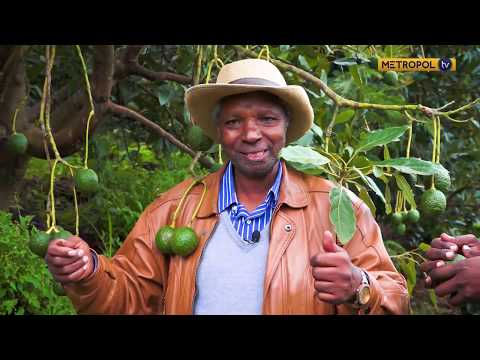

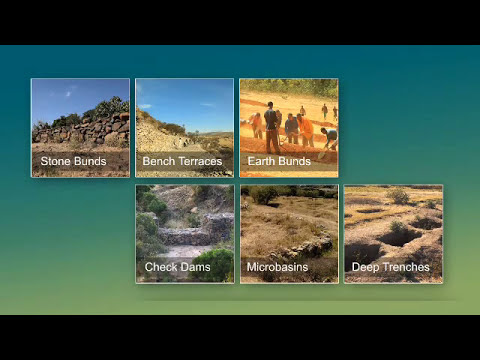


Can you understand the language of soil? Apollo Owuor, production manager for Kenya Horticultural Exporters (KHE) and a network of farms across central Kenya, describes how soil talks to him. He wants other farmers to listen carefully too.
This film, one of eleven, is being used to share good agricultural practice in Africa.
LEAF (http://www.leafuk.org), Waitrose, African fresh produce exporters and Green Shoots Productions (http://www.green-shoots.org) have been working with support of the UK Department for International Development's Food Retail Industry Challenge (FRICH) fund to share good agricultural practice between African farmers.


http://www.fao.org/about/meetings/afns/en/
The video outlines three case studies of farmers utilizing agroecological practices in their farming systems. It focuses on complex adaptive rice systems in the Easter part of the island of Java, Indonesia; on a large-scale farm in the Netherlands applying sustainable soil management practices; and on social aspects of agroecology as a movement in Brazil.
Subscribe! http://www.youtube.com/subscri....ption_center?add_use
Follow #UNFAO on social media!
* Facebook - https://www.facebook.com/UNFAO
* Google+ - https://plus.google.com/+UNFAO
* Instagram - https://instagram.com/unfao/
* LinkedIn - https://www.linkedin.com/company/fao
* Twitter - http://www.twitter.com/faoknowledge
© FAO: http://www.fao.org