- General Videos
- Music
- Economics
- Health
- Travel & Events
- History
- Psychology
- Spirituality
- Movies
- News & Politics
- Kmtyw Combat Sciences
- Ɔbenfo Ọbádélé Kambon Videos
- Ɔbenfoɔ Kamau Kambon: Black Liberation Philosophy
- Science, Tech, Engineering and Math
- Permaculture
- Self-Sustainability
- Living Off Grid
- Yoruba Language Learning
- Education
- Mmɔfra Adesua
- Nana Kamau Kambon Playlist
- Livestream
- Komplementarity Kouples and Revolutionary Singles
- Abibitumi Film Series
- Decade of Our Repatriation
- Kwento xpr
- Live
Top videos
![Kwame Toure & Marcus Garvey Jr: The Legacy Of Pan Africanism [1996]](https://i.ytimg.com/vi/BU90eurNpOs/hqdefault.jpg)




In #AntiGravity Part 3, I have uploaded THE “controversial” 1974 Lecture on the overlooked properties of Gyroscopes by Eric Laithwaite that not only defy everything we know about gravity but defy everything we pretend to know about our very reality itself! This was the 4th of 6 lectures he presented in 1974 as part of UK’s flagship and nationally televised “Christmas Lectures”. His lecture series was titled “The Engineer Through the Looking Glass” following the theme of the famous book “Alice in Wonderland”. The 4th lecture was titled “The Jabberwock”, whom was a monster with many heads that Eric considered a good resemblance of the way the sciences are broken down, the dogmatic “scientific” establishment, and the very man-made “Laws” of Physics themselves. Indeed Eric Laithwaite is very accurate in depicting the state of the “scientific community” then and now as a sort of monster; and the subsequent disgraceful treatment he received for outright shattering many long held beliefs regarding objects in rotation proves just that.
In this lecture, Eric Laithwaite performs a series of mind-boggling experiments that prove gyroscopes, or spinning objects in general, move (or “precess”) with no angular momentum, no centripetal force, and infinite acceleration! Essentially, objects in rotation have mass, velocity, but behave as if their mass is displaced “somewhere” thus resulting in no angular momentum. While this may appear as “gravity defying”, I see if more along the lines that our “understanding” of “gravity” needs a serious re-evaluation. Literally what is this sorcery?? From lifting 20+ pound spinning wheels with a finger or two, heavy gyro wheels balancing UPSIDE DOWN, balanced wheels RISING after spinning, and little children appearing to have super human strength, Eric proves behind a shadow of doubt that there is much more to reality than we would have even deemed possible. But even above the wonders of reality, a simple toy gyroscope exposes the massive multi-year (possibly even multi-centuries or even longer) “scientific” establishment coverup. If the mechanics of a gyroscope have been for so long, and seemingly so easily, covered up, what OTHER sciences and/or technologies are being kept from us?? #FreeEnergy #Telepathy #SpaceTravel
The original upload can be viewed at the Royal Institution’s official website: http://www.rigb.org/christmas-....lectures/watch/1974/
The link between electricity, magnetism, and gravity may very well be staring in our face. And one aspect of the gyroscope that Eric mentioned briefly that deserves close attention is obtaining electricity or “radiation” from a gyroscope. This is touching upon Bruce DePalma’s N-Machine territory, which involves a large magnetic gyroscope. Time to get yourselves some spinning wheels and investigate our hidden (and actively covered) reality for yourself!
Stay Tuned for #AntiGravity Part 4…
View the Full Ongoing Video Series: https://peakd.com/antigravity/@mes/series
Related Videos:
#AntiGravity Video Series: https://peakd.com/antigravity/@mes/series
#MESScience Video Series: https://peakd.com/science/@mes/tutorials
#MESExperiments Video Series: https://peakd.com/mesexperiments/@mes/list
#FreeEnergy Video Series: https://mes.fm/freeenergy-playlist .
------------------------------------------------------
SUBSCRIBE via EMAIL: https://mes.fm/subscribe
DONATE! ʕ •ᴥ•ʔ https://mes.fm/donate
Like, Subscribe, Favorite, and Comment Below!
Follow us on:
MES Truth: https://mes.fm/truth
Official Website: https://MES.fm
Hive: https://peakd.com/@mes
MORE Links: https://linktr.ee/matheasy
Email me: contact@mes.fm
Free Calculators: https://mes.fm/calculators
BMI Calculator: https://bmicalculator.mes.fm
Grade Calculator: https://gradecalculator.mes.fm
Mortgage Calculator: https://mortgagecalculator.mes.fm
Percentage Calculator: https://percentagecalculator.mes.fm
Free Online Tools: https://mes.fm/tools
iPhone and Android Apps: https://mes.fm/mobile-apps
![African American Students Underrepresented in STEM Majors [2016]](https://i.ytimg.com/vi/O3i7_t-lYDs/hqdefault.jpg)

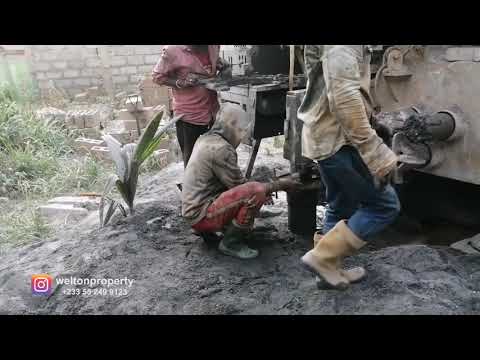





Angelsnupnup7 Is"The Most Powerful VOICE On YouTube !"
****BREAKING NEWS **** The Reality's Temple On Earth Internet Ministry In The Court Of St Clair County, Illinois Has WON A $ 5,000.00 Judgement Against YouTube ( Google Inc. ) The court determined that Google was guilty of spreading both libel & slander against The Reality's Temple making false claims the ministry was teaching HATE SPEECH. Brother Taalik advises all victims of false flagging 2 also file claims against Google. Justice has now arrived 4 Black Channels ! The arguement presented 2 the court may be read @ the following link :
http://wacptv.ning.com/profile....s/blogs/reality-s-te
http://www.dailymotion.com/angelsnupnup7
http://www.facebook.com/Angelsnupnup7
http://www.dailymotion.com/TheRealitysTemple
Join Angelsnupnup7 On Vimeo @ http://www.vimeo.com/taalik
http://www.dailymotion.com/TheBlackDragonX1
http://www.dailymotion.com/SentinelOfTruth7
http://www.facebook.com/AndreDedmond69
http://www.myspace.com/therealitystempleonearth
http://www.myspace.com/angelsnupnup7
The Reality's Temple On Earth Internet Ministry
Eagle Park Acres, Illinois 62060
Talk 2 Taalik in Person @ ( 314 ) 828-7354
saycheribnrad@live.com
WELCOME...2 The HOME Of REAL TRUTH !
The Reality's Temple On Earth on BlogTalk Radio
http://www.blogtalkradio.com/t....he-realitys-temple-o
Your Host: His Divine Masculine Brother AdMinister Taalik Ibn'rad
Next Show: To Be Announced
Dial- In -- Number is ( 917 ) 889- 7202
The CALL for Black Unity Continues......
Reach out & Touch a Brother or Sister's Hand make this a better World if you can
The Reality's Temple On Earth Official Website :
http://taalikibnrad.myeweb.net/cgi-bin/blog
Talk to Brother Taalik in person on SKYPE ( The Reality's Temple On Earth ) or Angelsnupnup7
Tags : Angelsnupnup7,AndreDedm0nd69,REAL TRUTH, Taalik Ibn'rad, Realism, Realist, Reality's Temple On Earth,Africanized Fantasy,Racist Caucasians, Dark Europeans,White Supremacy, Black Revolution,Slavery, Reparations,White People, African-Americans,Black Power,Black Conscious, Psychiatric Abuse, Government Corruption, Animal Abuse, Environmental Exploitation, Matriarchy, Patriarchy, Divine Masculine
The Reality's Temple On Earth Internet Ministry of The United States of Black America
Omni - Crescent Audio & Visual Enterprises (c) 2013
ThΞ Ξvolution øƒ RΞparations ©
♕RĔAL TRUTHropä ǣterna
♕ Angelsnupnup7 ♕n Dailymotion
The Art Of Religion Without Being Religion
Accept Your Reality, Think4Self




tts donations here/ https://streamlabs.com/ishowspeed
FOLLOW ME 👀 http://link.me/ishowspeed
MERCH 👕 - https://speed.store/
MEMBERSHIPS ✅ - https://www.youtube.com/c/IShowSpeed/join
for donations tts/ Media Request here
https://streamlabs.com/ishowspeed/tip
IG: https://www.instagram.com/isho....wspeed?igsh=MXNveXVu
X: https://x.com/ishowspeedsui?s=21
Snap : https://snapchat.com/t/IeuoJ50Y
Discord: https://discord.gg/ishowspeed
JOIN MY OTHER CHANNELS
YT Live speedy: https://youtube.com/@LiveSpeed....y?si=Sd4QiWsrk-iGX7f
YT Speedy Boykins: https://youtube.com/@speedyboy....kins7869?si=0jMDTQQs
YT Speeduniverse : https://youtube.com/@SpeedUniv....erse?si=XUMYeIWoUY4T
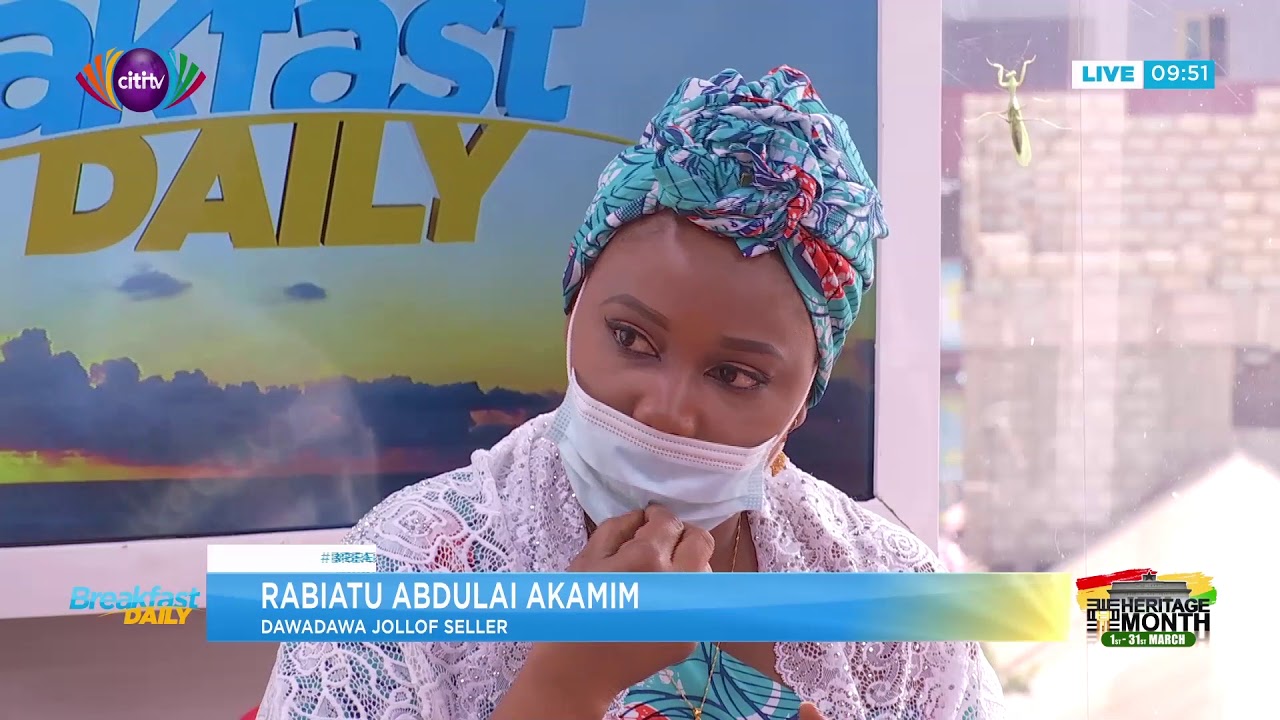
Follow us:
Facebook: https://www.facebook.com/pg/CitiTVGH/
Twitter: https://twitter.com/CitiTVGH
Instagram: https://www.instagram.com/cititvgh/
Website: http://cititvonline.com/

Subscribe to France 24 now:
http://f24.my/youtubeEN
FRANCE 24 live news stream: all the latest news 24/7
http://f24.my/YTliveEN
A medicinal plant called Artemisia annua (or sweet wormwood) has been used in China to treat malaria for 2,000 years and is still grown by farmers in Africa. But it's not approved by the World Health Organization and remains banned in a number of countries, including France. Malaria claims almost half a million lives each year and Africa is worst affected. In recent years, the mosquitoes that spread the disease have become increasingly resistant to insecticide.
Visit our website:
http://www.france24.com
Subscribe to our YouTube channel:
http://f24.my/youtubeEN
Like us on Facebook:
https://www.facebook.com/FRANCE24.English
Follow us on Twitter:
https://twitter.com/France24_en


One summer, two paths. Choose your adventure. ☀📖🌙
This summer, we’re offering two completely different worlds — both designed to spark wonder.
For your little dreamer (ages 3–8), there’s Blends & Breezes: Reading Under The Sun. ☀📚
For your growing girl (ages 11–18), there’s The Moon & My Crystal Womb🌙🤍
Which adventure calls to your family this summer? Comment “READ” for the little one or “MOON” for your girl or tap the link in bio to explore both. ❤🖤💚
🔗https://kotoko.info/


👉🏿 INVEST IN INDEPENDENT BLACK MEDIA→ Uncensored, Ad-Free & Exclusive Content
https://ineverknewtv.com/premium/
📍OUR SPONSOR: Maroon Productions
We help brands grow through strategic video, design, and content that actually attracts attention, builds trust, and converts.
If you’re looking to elevate your brand or content, learn more here:
👉🏿 www.maroonproduction.com
Prof. James Small has been an activist since his teenage years. His in-depth knowledge, thought-provoking, and calm delivery are influential elements to break the programming of mis-education.
Enjoy this powerful Throw Forward clip featuring Prof. James Small speaking on the true purpose of education and the life-changing advice he received from Malcolm X's sister.
Please click link below to learn more about Prof. James Small and his work: https://www.professorjamessmall.com/
➡️ WATCH full reasoning with Prof. James Small:
https://youtu.be/llwFL-TNee4
🎧 Catch 'I NEVER KNEW RADIO
for Roots, Rock, Reggae Music!
Hosted by Jr a.k.a 'The Bald Head' of 'I Never Knew TV'
📅 Sundays: 9 - 11 AM EST
📅 Wednesdays: 8 - 10 AM EST
📅 Thursdays: 10 AM - Noon EST
Listen live: https://wloy.org/listen/
#ineverknewtv #education


🦋 Join Maazi Nnabe on an exciting adventure as we delve into the enchanting world of flying insects! In this educational video, Maazi Nnabe introduces children to the Igbo and English names of some fascinating insects that take to the skies.
🐝 With vibrant animations and engaging narration, children will be captivated as they learn about these winged creatures and their unique characteristics. Maazi Nnabe makes learning fun and accessible for kids of all ages.
📚 Whether you're looking to expand your language skills or simply want to explore the wonders of nature, this video is perfect for you. Get ready to encounter some incredible flying insects like never before!
🌟 Key Learning Points:
- Igbo and English names of flying insects.
- Interesting facts about these insects.
- Interactive and entertaining educational content for children.
🔔 Be sure to subscribe to Maazi Nnabe's channel and turn on the notification bell to stay updated on future lessons. Share this video with your friends and family to inspire a love for learning and nature!
Let's take flight with these amazing flying insects! 🦋🐞🐝
Follow the Mmụta Dị Ụtọ channel on WhatsApp for real time updates on our projects, Igbo lectures and giveaways! https://whatsapp.com/channel/0....029Va5XYuhFsn0nK6YZ5
Add Ikenga Nation TV on Your Roku app
https://my.roku.com/add/ZCZNHQ
Add Ikenga Nation TV on Amazon Fire TV
https://www.amazon.com/Nwudo-L....LC-Ikenga-Nation-TV/
Sign up for updates at https://ikenganation.com
Follow us on social media: https://twitter.com/ikenganation
https://facebook.com/ikenganation
Join the community at https://facebook.com/groups/ikenganation
Listen to the podcast https://akukoifo.com
To contribute to production of this show and other such content, please direct your donations to
Cashapp $ikenganation
Paypal https://paypal.me/ikenganation
Venmo @ikenganation
#maaziagu #igbo #insects