- General Videos
- Music
- Economics
- Health
- Travel & Events
- History
- Psychology
- Spirituality
- Movies
- News & Politics
- Kmtyw Combat Sciences
- Ɔbenfo Ọbádélé Kambon Videos
- Ɔbenfoɔ Kamau Kambon: Black Liberation Philosophy
- Science, Tech, Engineering and Math
- Permaculture
- Self-Sustainability
- Living Off Grid
- Yoruba Language Learning
- Education
- Mmɔfra Adesua
- Nana Kamau Kambon Playlist
- Livestream
- Komplementarity Kouples and Revolutionary Singles
- Abibitumi Film Series
- Decade of Our Repatriation
- Kwento xpr
- Live
Top videos


Haiti fought the most extraordinary revolution in human history. Enslaved people defeated Napoleon's armies, founded the first Black republic, and changed the map of the world forever. And then France sent warships to the harbor and handed them a bill — not for goods or services, but for the "crime" of no longer being property. The formerly enslaved were forced to pay their former enslavers one-hundred-and-fifty-million gold francs, a sum so massive it took one-hundred-and-twenty-two years to pay off. The final payment wasn't made until 1947. This is the story of how one nation won its freedom and was financially destroyed for it — how French banks, American Marines, and Wall Street institutions turned a liberation struggle into a debt trap that persists to this day. From the Bois Caïman ceremony to the gunboat ultimatum, from the U.S. occupation to the overthrow of Haiti's first democratically elected president after he demanded reparations, this is the hidden financial history that explains why the richest colony on Earth became the poorest country in the Western Hemisphere.
Sources and further reading:
The New York Times — "The Ransom" investigative series (2022)
United Nations Forum on the 200th Anniversary of Haiti's Independence Debt (2025)
University of Kentucky — "The Haitian Revolution: A Different Route to Emancipation"
Harvard Human Rights Clinic — "What the World Owes Haiti Now"
Britannica — Haitian Revolution, Saint-Domingue
Equal Justice Initiative — Haiti's Forced Payments analysis
#haiti #haitianrevolution #colonialdebt #frenchcolonialism #reparations #toussaintlouverture #standardoil #financialhistory #slavery #economics #hiddenhistory #debttrap #napoleon #louisianapurchase #wallstreet #citibank #ushistory #caribbeanhistory #globalfinance #documentary #economichistory #powerandmoney #colonialism #blackhistory #independence

First 10 minutes preview.
Get the complete presentation for $20:
https://www.abibitumi.com/prod....uct/aligning-with-ma
#abibitumi #obadelekambon #blackstudies #door
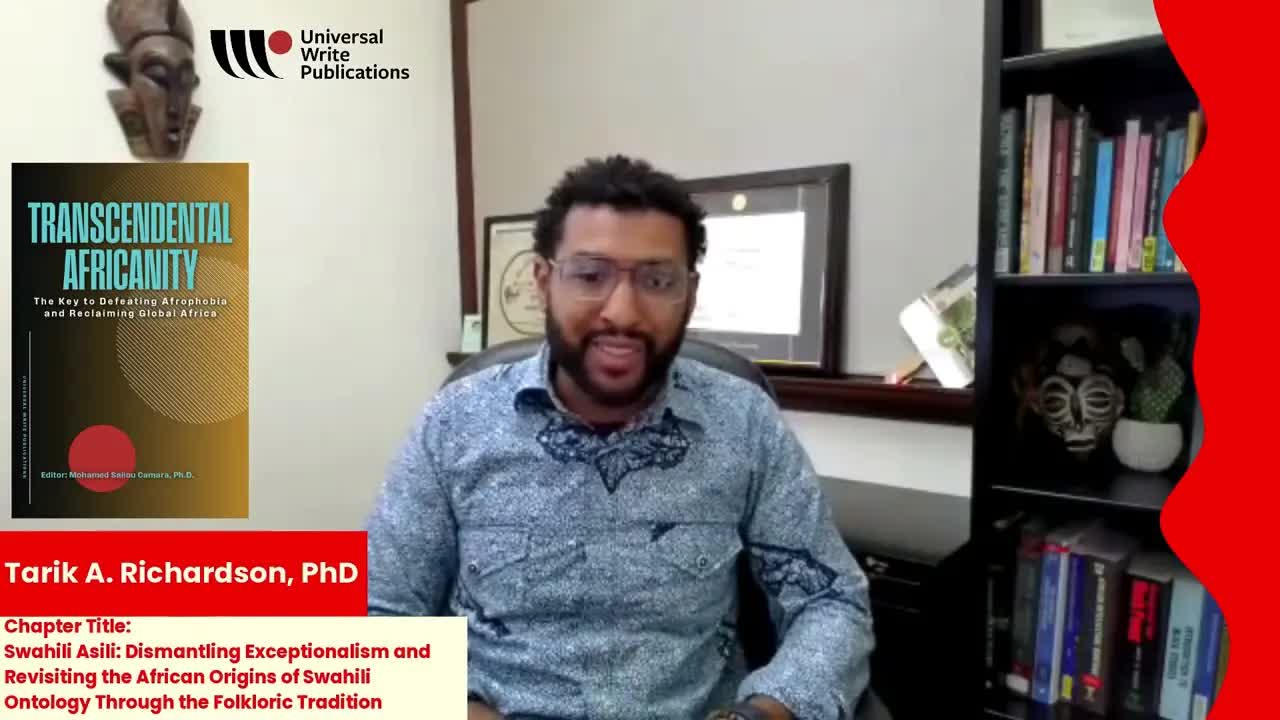

What happens when the history of an African people is interpreted primarily through outside influences rather than through their own cultural memory, language, traditions, and historical experience?
In this UWP Scholar Spotlight, Tarik Richardson, Ph.D., of Xavier University of Louisiana, discusses his chapter, “Swahili Asili: Dismantling Exceptionalism and Revisiting the African Origins of Swahili Ontology through the Folkloric Tradition,” in Transcendental Africanity: The Key to Defeating Afrophobia and Reclaiming Global Africa, edited by Mohamed Saliou Camara, Ph.D.
Dr. Richardson examines debates surrounding the origins of Swahili culture and how those narratives shape understandings of culture, Blackness, identity, and Africanity on the East Coast of Africa. His chapter considers Afrophobia and cultural memory, confronts narratives of cultural exceptionalism, and examines Swahili language, spiritual thought, history, folklore, and cultural traditions through an Afrocentric theoretical framework that centers Swahili people within their own history.
The chapter also places Swahili culture into a wider African conversation. Richardson examines shared histories and cultural relationships with other African peoples while interrogating interpretations that position outside influences as foundational to Swahili identity.
This is precisely what the UWP Scholar Spotlight Series is designed to make visible: not simply who contributed to an edited volume, but what that scholar is asking, challenging, recovering, and contributing to the field.
ABOUT THE CHAPTER
Chapter 7: “Swahili Asili: Dismantling Exceptionalism and Revisiting the African Origins of Swahili Ontology through the Folkloric Tradition”
The chapter begins from the significance of Swahili as a language that has facilitated interethnic and international solidarity among African peoples on the continent and throughout the Diaspora. Richardson notes its historical importance to African-descended communities beyond East Africa while examining the complicated relationship among Swahili identity, Blackness, Africanity, and competing narratives of Swahili origins.
At stake is a larger epistemic question:
Who gets to explain an African people's origins, identity, and cultural meaning?
ABOUT TRANSCENDENTAL AFRICANITY
Transcendental Africanity: The Key to Defeating Afrophobia and Reclaiming Global Africa brings together ten chapters examining Africanity and Global Africa through questions of identity, culture, music, belonging, coloniality, language, ontology, Black nihilism, freedom, resistance, and African self-determination.
The volume offers interdisciplinary relevance for African Studies, Africana Studies, Black Studies, African Diaspora Studies, Africology, History, Linguistics, Cultural Studies, Folklore Studies, Postcolonial Studies, and related fields.
FOR FACULTY, STUDENTS, LIBRARIANS & RESEARCHERS
For faculty, this Spotlight provides an entry point for conversations about Swahili identity, African-centered knowledge production, cultural memory, language, historiography, and the politics of interpreting African civilizations.
For students and researchers, Richardson's chapter demonstrates what becomes possible when received historical narratives are interrogated and African peoples are repositioned as subjects and interpreters of their own histories.
For librarians, the chapter demonstrates the interdisciplinary reach of Transcendental Africanity across African and Africana Studies, language and culture, history, Diaspora Studies, and Black intellectual thought.
📚 BOOK INFORMATION
Transcendental Africanity: The Key to Defeating Afrophobia and Reclaiming Global Africa
Editor: Mohamed Saliou Camara, Ph.D.
Publisher: Universal Write Publications
Publication Date: September 29, 2026
Print ISBN: 978-1-942774-35-8
eBook ISBN: 978-1-942774-34-1
LCCN: 2026902889
DOI: 10.65724/DWCO4934
UWP SCHOLAR SPOTLIGHT SERIES
The UWP Scholar Spotlight Series brings audiences closer to the scholars behind the scholarship.
Through conversations with UWP authors, editors, and edited-volume contributors, the series creates a growing digital archive of the people, ideas, research, and intellectual traditions advancing Black scholarship and interdisciplinary inquiry.
For contributors to edited volumes, Scholar Spotlight provides dedicated visibility for their individual research, connecting their chapter to the larger intellectual conversation of the book while extending the discoverability and scholarly life of their work beyond the printed page.
Explore the UWP Scholar Spotlight Series
Subscribe to UWP Books on YouTube
Read the scholarship. Meet the scholar. Continue the conversation.
#tarikrichardson #swahili #swahilistudies #africanity #transcendentalafricanity #afrophobia #culturalmemory #scholarspotlight #scholarshipinconversation #uwpbooks #wewilltellourownstory

Teacher Don't Teach Me Nonsense LP (1986) Fela Kuti
Songs include - Teacher Don't Teach Me Nonsense (Part 1 & 2) / Look And Laugh (Part 1 & 2) / Just like That
http://fela.net/discography/
This video is part of a series of songs being posted on Fela's official YouTube channel (http://www.youtube.com/fela) each featuring, alongside the music, an informative commentary by Afrobeat Historian, Chris May.
The entire catalogue, released on Kntting Factory Records, is available on the Fela website (http://fela.net/), along with documentaries and recorded concerts, CDs and vinyl, tee shirts, posters and many other items.


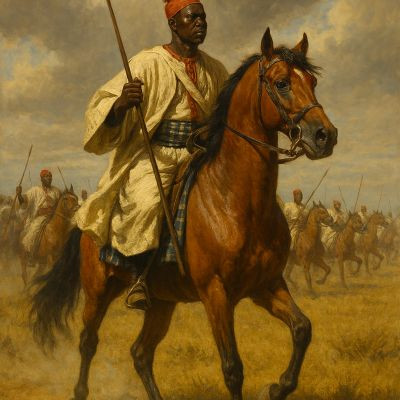


Medical researchers at Tsinghua University in Beijing have created an AI (Artificial Intelligence) hospital town. It can theoretically serve 3,000 patients per day with a small handful of doctors and staff.
In one example of their optimism in AI, doctors for the project claim that their accuracy in respiratory illness is over 93% on MedQA datasets. Respiratory diseases such as COPD and asthma have notoriously low accuracy in diagnosis and treatment, with high degrees of false positive and false negative diagnoses.
By employing Large Language Models across large virtual populations, and soon in real-world patient populations, China can transform medicine across the whole world. China is already the world's dominant manufacturer of most generic drugs, and is the key maker of Active Pharmaceutical Ingredients for the most expensive specialty drugs. Chinese companies are also primary makers of diagnostic equipment and medical devices. With advances in AI, tested across large human populations, personalized medicine may be a reality across most of the world. The US, however, will most certainly employ regulatory and licensing pressure to ensure high prices throughout our healthcare delivery systems.
Resources and links:
Interesting Engineering, China: Robot doctors at world’s 1st AI hospital can treat 3,000 a day
https://interestingengineering.....com/health/china-wo
China's first AI hospital town debuts: Revolutionizing healthcare with Artificial Intelligence
https://www.globaltimes.cn/pag....e/202405/1313235.sht
China Focus: China's medical equipment market reaches 1.27 trillion yuan
https://english.news.cn/202403....29/46cd1e0a62184d719
Politico, U.S. policymakers worry about China ‘weaponizing’ drug exports
https://www.politico.com/news/....2019/12/20/policymak
Diagnostic accuracy of respiratory diseases in primary health units
https://www.scielo.br/j/ramb/a..../CBLNqDNygL85rnyXnWn
Travel Industry News, Hainan debuts as hub for medical tourism
https://news.itb.com/regional-....spotlight/asia/haina
Accuracy of diagnosis of COPD and factors associated with misdiagnosis in primary care setting. E-DIAL (Early Diagnosis of obstructive lung disease) study group
https://www.sciencedirect.com/....science/article/pii/
Comparable US salaries by field:
https://weatherbyhealthcare.co....m/blog/medical-oncol
https://www.auntminnie.com/pra....ctice-management/art


In celebration of the 100th anniversary of Einstein's general theory of relativity, leaders from multiple fields of physics discuss its essential insights, its lingering questions, the latest work it has sparked, and the allied fields of research that have resulted.
Subscribe to our YouTube Channel for all the latest from WSF.
Visit our Website: http://www.worldsciencefestival.com/
Like us on Facebook: https://www.facebook.com/worldsciencefestival
Follow us on twitter: https://twitter.com/WorldSciFest
Original Program Date: 05/30/2015
Host: Brian Greene
PARTICIPANTS: Gabriela González, Samir Mathur, Andrew Strominger, Cumrun Vafa, Steven Weinberg
Introduction with Brian Greene 00:00
Participant Introductions 04:25
What aspect of physics is so important that you would tattoo it on your body? 08:05
Steven Weinberg takes us from Newton to Einstein. 12:05
What was the observational support for Einstein theories? 19:20
Can Newtons ideas be extracted from Einstein's? 23:40
What did Einstein think about the Big Bang? 30:58
What did Hubble's observations discover? 33:39
What is the biggest unsolved problem in cosmology? 38:03
What is the history of Black Holes? 40:31
Einstein's thoughts on singularity. 47:33
What is a gravitational wave? 50:49
What does a gravitational wave sound like? 57:52
Combining General relativity and Quantum mechanics. 01:00:28
Cumrun Vafa on String theory. 01:10:50
Samir Mathur explains information loss at a black hole. 01:17:45
Black Holes to Wormholes. 01:28:45
Is the fabric of space time a physical thing? 01:32:24
What is the one question you would want answered in your lifetime? 01:36:37