








- General Videos
- Music
- Economics
- Health
- Travel & Events
- History
- Psychology
- Spirituality
- Movies
- News & Politics
- Kmtyw Combat Sciences
- Ɔbenfo Ọbádélé Kambon Videos
- Ɔbenfoɔ Kamau Kambon: Black Liberation Philosophy
- Science, Tech, Engineering and Math
- Permaculture
- Self-Sustainability
- Living Off Grid
- Yoruba Language Learning
- Education
- Mmɔfra Adesua
- Nana Kamau Kambon Playlist
- Livestream
- Komplementarity Kouples and Revolutionary Singles
- Abibitumi Film Series
- Decade of Our Repatriation
- Kwento xpr
- Live
Top videos

![The War Against Boko Haram [2015]](https://i.ytimg.com/vi/1kimbo5c0Ak/hqdefault.jpg)

Since 2009, the militant Islamist group known as Boko Haram has wreaked havoc in northern Nigeria. Instilling terror through bombings, abductions, and beheadings, Boko Haram is fighting to create an Islamic state in the most populous country in Africa.
VICE News traveled to Nigeria to embed with the country's army as it ramped up its fight against Boko Haram, whose rise has caused a state of emergency. As the only journalists on the front line in northern Nigeria, we witnessed the beginning of the largest military insurgency to date.
Kay Larsen discusses Boko Haram on The Young Turks: https://www.youtube.com/watch?v=iQt1zdzxVAY
More from TYT on YouTube: https://www.youtube.com/user/TheYoungTurks
Watch "The Human Cost of War in the Central African Republic” - http://bit.ly/15xC4L2
Watch "Blood Diamonds and Religious War: Diamonds and Division” - http://bit.ly/1zYdmRq
Read "UN Adopts Resolution Calling for International Coordination Against Boko Haram” - http://bit.ly/1EMamtR
Read "Can a 72-Year-Old Former Military Dictator Bring Nigerians the Change They Have Voted For?” - http://bit.ly/1Hnr3ta
Read "Nigeria Reacts to a Historic Change as President-Elect Buhari Prepares for Power” - http://bit.ly/1FmJT3x
Subscribe to VICE News here: http://bit.ly/Subscribe-to-VICE-News
Check out VICE News for more: http://vicenews.com
Follow VICE News here:
Facebook: https://www.facebook.com/vicenews
Twitter: https://twitter.com/vicenews
Tumblr: http://vicenews.tumblr.com/
Instagram: http://instagram.com/vicenews
More videos from the VICE network: https://www.fb.com/vicevideos


India once produced the finest cloth on Earth. Dhaka muslin was so delicate it was called "woven air," and Indian textiles dominated global trade for centuries. At its peak, India accounted for nearly 25% of the world's economic output, and its weavers were the highest-paid textile workers on the planet.
So how did Britain, a country that couldn't even produce decent cotton cloth, manage to flip the entire trade on its head — turning India from the world's greatest textile exporter into a captive market for inferior British factory goods?
The answer involves protectionist trade bans, industrial espionage, military conquest, the deliberate destruction of an entire artisan class, and one of the most calculated economic reversals in modern history. From the Calico Acts to the Battle of Plassey, from the spinning jenny to Gandhi's spinning wheel — this is the full story of how Britain stole India's cloth trade and how India eventually fought back.
If you enjoyed this video, please like, subscribe, and leave the word "muslin" in the comments.
Sources:
• Angus Maddison, "The World Economy: A Millennial Perspective" (OECD, 2001)
• Prasannan Parthasarathi, "Why Europe Grew Rich and Asia Did Not" (Cambridge University Press, 2011)
• Sven Beckert, "Empire of Cotton: A Global History" (Vintage, 2015)
• K.N. Chaudhuri, "The Trading World of Asia and the English East India Company" (Cambridge University Press)
• The Cambridge Economic History of India, Volume 2
• Victoria and Albert Museum, "Indian Textiles: A Global Trade"
• John Forbes Watson, comparative assessment of Indian, British, and French muslins (1866)
• Shashi Tharoor, "Inglorious Empire: What the British Did to India" (Hurst Publishers, 2017)
• Science Museum Journal, "The Indian Challenge and the Rise of Manchester"
• UNESCO and GI designation records on Dhaka Muslin revival
#india #britishempire #colonialism #textiles #economichistory #dhakamuslin #eastindiacompany #industrialrevolution #tradewar #gandhi #swadeshi #britishraj #deindustrialization #cottontrade #calicoacts #mughalempire #bengal #manchester #economics #history #documentary

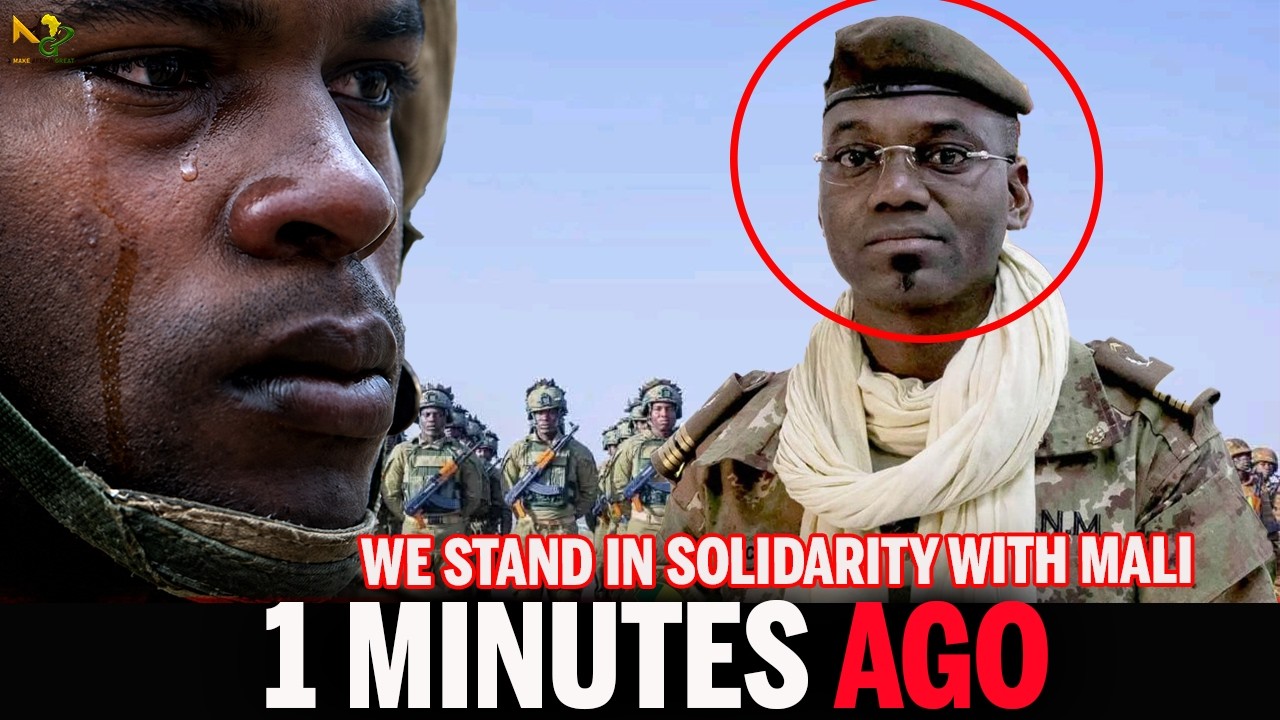

Reports emerging on Sunday indicate that Sadio Camara, Mali’s🇲🇱🇲🇱 Defence Minister, has been killed following a wave of coordinated attacks on military targets across the country.
According to multiple sources, the attacks began on April 25 and hit key locations including the capital, Bamako, and the nearby garrison town of Kati. Armed groups carried out near-simultaneous assaults on army bases, the airport, and other strategic sites, marking one of the largest offensives in recent years.
Camara’s residence in Kati was among the locations targeted. He was later reported killed in the violence, although details about the exact circumstances remain limited and are still being confirmed.
The attacks are believed to have been carried out by a combination of jihadist fighters linked to al-Qaeda and Tuareg separatist groups, who appear to have coordinated their operations across multiple regions.
Mali’s military says it has been fighting back and claims to have repelled many of the attacks, but the situation remains volatile, with ongoing clashes and heightened security measures in several areas.
#Love
#Peace
#africansolutions

“A secret society of murderers with a king for a ringleader”.
In 1885 King Leopold of Belgium; an awkward, ruthless, selfish man, was recognised as the sovereign of the Congo. Long determined to carve out his very own private colonial domain, he had alighted upon the Congo - Africa’s vast and unplundered interior. With the help of the explorer Henry Morton Stanley, who had found a way to circumnavigate the Congo’s formerly insurmountable rapids, he concocted a cunning scheme to legally make it his own, while casting himself as a civilising saviour. Yet, despite his ostensibly philanthropic motivations, Leopold’s goal was always profit. More specifically, ivory, and later rubber, and before long a thriving hub of industry had been established in the Congo, bustling with soldiers, traders and missionaries. Meanwhile and most significantly, tens of thousands of Congolese people were being beaten, coerced and essentially enslaved into harvesting and carrying the riches of their land for their European oppressors. Their treatment was barbaric, the conditions in which they were made to live grotesque, and their suffering unimaginable. It was there, in King Leopold's Congo, that for years some of the worst violations of human life in all of human history were perpetrated. A terrible, secret heart of darkness, Until, at last, a young shipping clerk in Antwerp stumbled across something that would change the course of history forever...
Join Dominic and Tom as they discuss Western history’s most brutal and barbaric colonial conquest: King Leopold’s exploitation of the Congo Free
0:00 Intro
05:54 Leopold's true motivations come to the fore
18:37 The Force Publique
29:30 The Dawn of Rubber
38:51 The practice of cutting off hands
49:28 The first glimmers of criticism
Join this channel to get access to perks:
https://www.youtube.com/channe....l/UCUYK0BJZF3yNb2fw1
Twitter:
@TheRestHistory
@holland_tom
@dcsandbrook
Producer: Theo Young-Smith
Assistant Producer: Tabby Syrett
Executive Producers: Jack Davenport + Tony Pastor
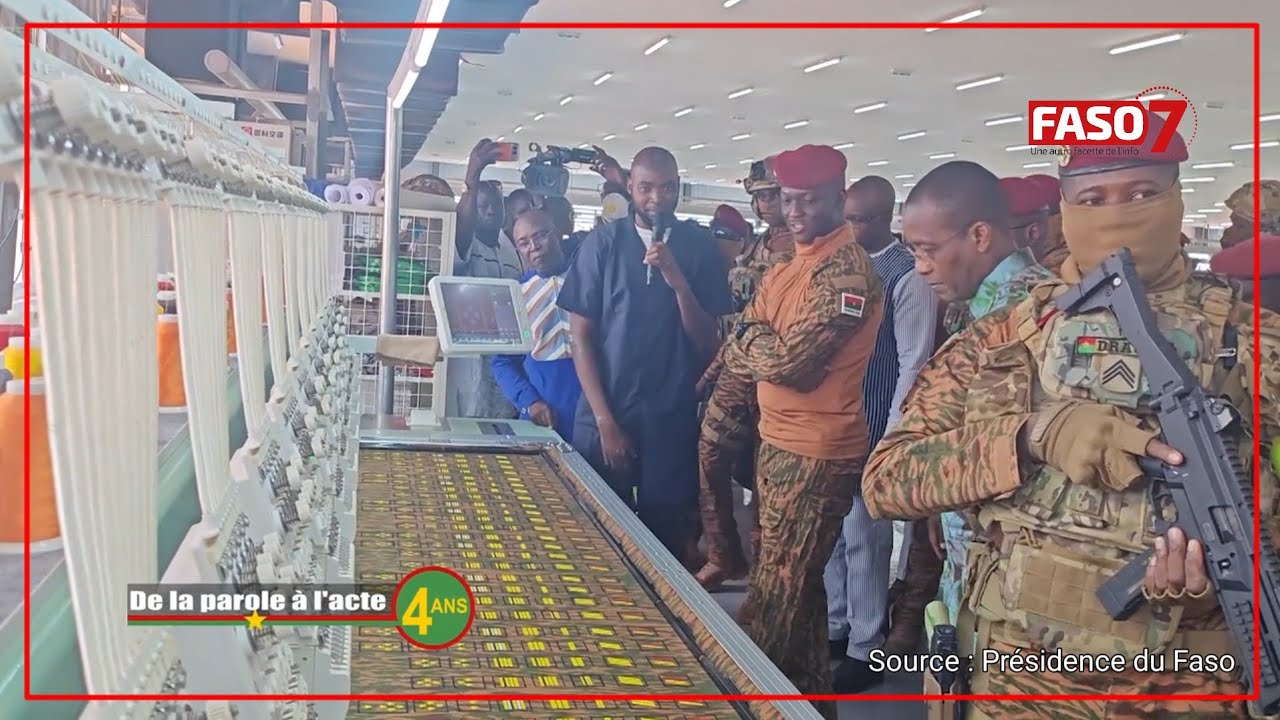

The Jackson Laboratory's (JAX) Education team hosted a special Education-Interest-Group session on Racism in STEM. Over 100 JAX employees attended the event, which aimed to start important discussions.
Kai Mills is a former JAX summer student & current English teacher. Torrian Green is a behavioral research specialist in JAX’s Center for Biometric Analysis. Lawal Raman is a postdoc in the Dumont lab who studies the patterns of genetic mechanisms that give rise to genetic diversity in house mouse populations. Maya Caines is a program coordinator for JAX Genomic Education.
Speakers:
Kai Mills: https://twitter.com/KAlexIsWrite
Lawal Raman: https://twitter.com/lawalakinyanju
Torrian Green
Moderator:
Maya Caines: https://twitter.com/mayacaines
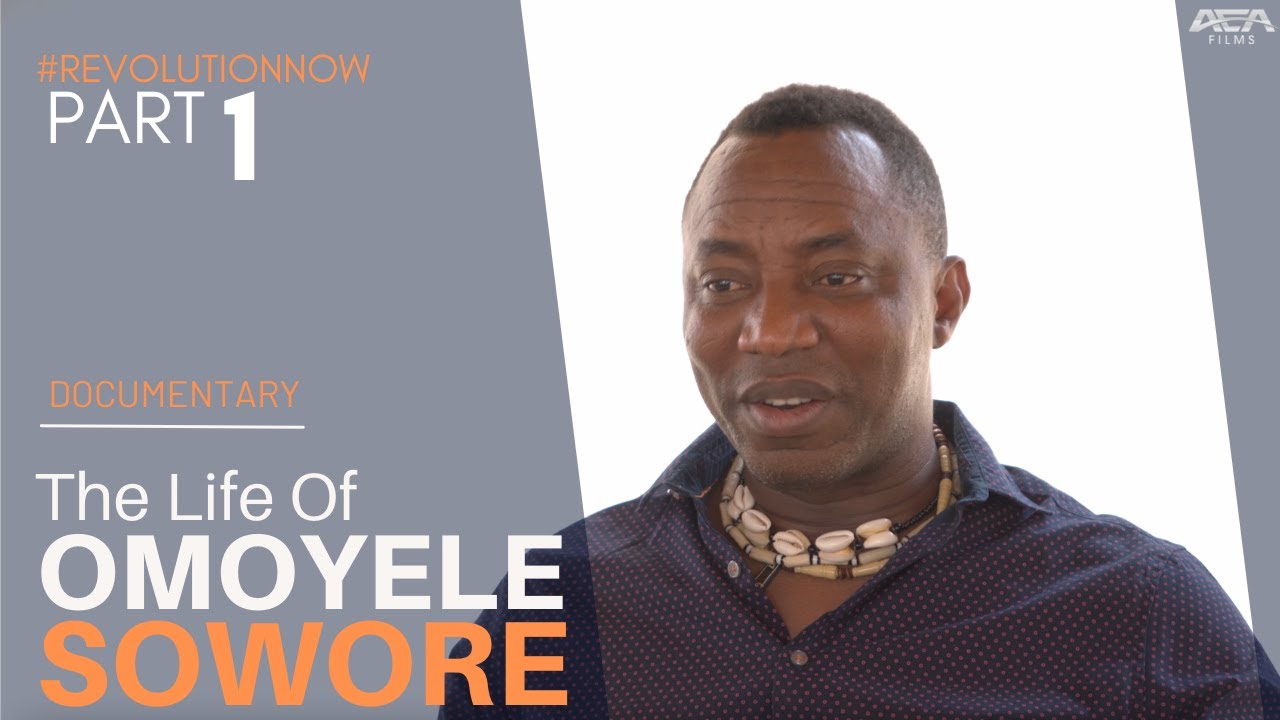


The Image of Africa has been distorted around the globe and we are changing the narratives via Youtube videos One Country At Time.Until the history of Africa is told by Africans, the story of greatness will always glorify the imperialists.!It's Time For Africans To Unite, Embrace their Culture and be Proud of their Roots & Tell Their Own Story!-AFRICA TO THE WORLD..Subscribe to unlocked the Real Africa!
Looking for a Short stay place in Ghana?
Book With
https://www.instagram.com/wood....buryluxuryapartments
One On One Consultation With WODEMAYA
https://aiyawodemaya.com/consultation/
We Need Your Support To Make This Project A Successful One
For Sponsorship Advertisement & Business Enquiries
hello@mayaempiregroup.com
Donate & Support the Channel on Patreon:
https://www.patreon.com/wode_maya
Purchase Our T-Shirt To Support Our Journey!
https://teespring.com/proudly-africa
https://teespring.com/wodemaya-africa-to-the-world
https://teespring.com/maya-africa-to-the-world
https://teespring.com/born-afr....ican-in-america-blac
Let's Interract On:
Twitter
https://twitter.com/wode_maya
Instagram:
https://www.instagram.com/mrghanababy/
Like My Facebook page:
https://www.facebook.com/Wodemaya99/
I LOVE YOU


![Decolonising Universities - Molefi Kete Asante [2011]](https://i.ytimg.com/vi/S8gZT6Vc9pk/hqdefault.jpg)
Excerpt from the presentation of Molefi Kete Asante, Professor of Africology at Temple University in the USA, during Session Nine at the Multiversity International Conference on Decolonising Our Universities held in Penang, Malaysia, 27-29 June 2011. He outlined 'The Philosophical Bases of an African University,' pointing out that in the imposition of the Eurocentric worldview in higher education 'there was a Greek at every corner' but that the Greeks themselves 'were but children to Africa, and to India and to China.'
The complete presentation is available at the TV Multiversity channel on Vimeo:
http://vimeo.com/channels/tvmultiversity
Conference proceedings, as well as other Multiversity related programs, are part of the broadcast lineup for the TV Multiversity channel on TVU Networks:
http://pages.tvunetworks.com/w....atchTV/index.html#c=
Further information about the Penang conference and participants, including a selection of papers, is available at the conference webpage:
http://multiworldindia.org/events/
For related readings, visit the TV Multiversity blog, updated weekly:
http://tvmultiversity.blogspot.com/
If you like this video, please copy and share it!
Knowledge needs people and it needs to be free.

![Prof. Dr. Carlos Moore: Racism in Cuba - [English]](https://i.ytimg.com/vi/PqOrlZCuz8A/hqdefault.jpg)


#TheNewBlackMind
► Subscribe to Transatlantic Productions 💥Smash The LIKE Button👍🏿 Share↗ & hit the Notifications Bell 🔔
► Donate so we can complete the upload https://www.gofundme.com/tapvideo
► Cash App: $Tapvideo $Moneymark0730 $BrotherRonn $LadySapphire5D
► Share on video on all Social Media.
► Website https://tapvideo.blogspot.com
https://www.facebook.com/Tapvi....deocom-7441435789873
► Back up Channels:
https://www.youtube.com/channe....l/UCs9-wRHfFb7v7RQAi
https://www.youtube.com/user/savejamaica

Chocolate: A Taste of Independence in Togo Filmmaker: Fanny BouteillerAfrica is rich with natural resources, yet all too often the benefits of that abundance end up with overseas consumers, foreign investors and the international markets.This is often seen as the consequence of a post-colonial globalised economy, in which the rich somehow keep getting richer and the poorest, denied the full fruits of their labours, are kept in penury.It is also a state of affairs with which many on the continent are understandably deeply unhappy. They want more than the scraps the developed world leaves on the table.In Togo, West Africa, one such struggle now comes covered in chocolate.Over 60 percent of the population of Togo lives in poverty, with its cacao growers - producers of one of the country's main cash crops - helpless in the face of prices set by international buyers.But one man is advocating a new future for his country, through indigenous chocolate production."When we launched the plan of manufacturing chocolate, lots of people did not believe us. Most made fun of us. People said we were mad."Trained in Italy, Komi Agbokou is a chocolatier, activist and, increasingly, an anti-globalisation evangelist.He has recently returned to Togo with one mission: to incite his fellow citizens to turn their cacao into chocolate themselves rather than being forever exploited by the international market.Komi explains that current cacao prices are decided by "those who transform cocoa", forcing local farmers to sell their produce for prices over which they have no control.On a 600km (373-mile) trip from North to South Togo, Komi set out to change attitudes, teaching his countrymen to maximise their produce's worth for their own benefit.--- Subscribe to our channel: http://aje.io/AJSubscribe - Follow us on Twitter: https://twitter.com/AJEnglish - Find us on Facebook: https://www.facebook.com/aljazeera - Check our website: https://www.aljazeera.com/