- General Videos
- Music
- Economics
- Health
- Travel & Events
- History
- Psychology
- Spirituality
- Movies
- News & Politics
- Kmtyw Combat Sciences
- Ɔbenfo Ọbádélé Kambon Videos
- Ɔbenfoɔ Kamau Kambon: Black Liberation Philosophy
- Science, Tech, Engineering and Math
- Permaculture
- Self-Sustainability
- Living Off Grid
- Yoruba Language Learning
- Education
- Mmɔfra Adesua
- Nana Kamau Kambon Playlist
- Livestream
- Komplementarity Kouples and Revolutionary Singles
- Abibitumi Film Series
- Decade of Our Repatriation
- Kwento xpr
- Live
Top videos


💰 to make a one-time donation visit to help cover my costs:
http://www.grief2growth.com/tipjar
📰 stay in touch, get updates and additional resources from Grief 2 Growth
https://pages.grief2growth.com/join-the-list
💵 to become a Patron and get exclusive content, find me on Patreon at:
https://www.patreon.com/grief2growth
📚 for more information see me at:
https://www.grief2growth.com
to book a free half-hour consultation visit:
⏰ https://www.grief2growth.com/schedule
find me on Facebook at:
👍🏾 https://www.facebook.com/grief2growthcommunity
In this eye-opening and maybe controversial conversation, I sit down with accomplished filmmaker, speaker, and author, Jeremiah Camara to discuss his films: Contradiction: A Question of Faith and Holy Hierarchy: The Religious Roots of Racism in America. My good friend, Dr. Terri Daniel, a chaplain, grief counselor, and theology scholar, joins us.
Jeremiah Camara is the director and producer of the documentary film Contradiction: A Question of Faith, which examines the saturation of churches in African American communities coexisting with poverty and powerlessness. Contradiction can be viewed on Amazon Prime Video. Camara is the author of the books Holy Lockdown: Does The Church Limit Black Progress? and The New Doubting Thomas: The Bible, Black Folks & Blind Belief.
Camara is also the creator of the widely watched YouTube video series Slave Sermons… a mini-movie series addressing the harmful effects of religion.
His latest and upcoming documentary project is titled, Holy Hierarchy: The Religious Roots of Racism in America. Holy Hierarchy… explains how the presumptions of a Supreme Being in colonial America led to precepts and beliefs in supreme human beings and how these beliefs morphed their way into the legal system and ultimately turned racism into an institution.
ℹ️ You can find Jeremiah at: https://www.jeremiahcamara.com Dr. Daniel is at https://www.danieldirect.net


In Marsabit County, Northern Kenya, Caritas Switzerland has, together with communities, constructed three rock catchment systems. In this region, there are no permanent rivers and the dry seasons can get severe. Moreover, not all groundwater sources are suitable for human consumption and people often rely on scarce and mostly unprotected water sources. Only about 35% of the population have access to safe water.
The rock catchments collect rainwater from large bare rock surfaces before it gets channelled to storage tanks. The three systems serve 3,500 people and can store a total of 2.34 million litres of water per rainy season. This covers for approximately three months of human water consumption.
More information: https://www.caritas.ch/en/what....-we-do/worldwide/cou
Short version of the video: https://www.youtube.com/watch?v=UcfgZkA5uK0&t=16s

Support our work: https://www.democracynow.org/donate?campaign=sm-desc-yt&utm_campaign=sm-desc-yt&utm_content=description&utm_medium=social&utm_source=youtube
Human Rights Watch has documented ethnic cleansing in the West Darfur region of Sudan by the paramilitary Rapid Support Forces and allied militias against the Masalit people and other non-Arab communities. “These allied militia and the RSF then, from April until June, conducted a rampage of killings, of lootings, of torture, of rape,” says Belkis Wille, associate director with the Crisis, Conflict, and Arms Division at Human Rights Watch. She says international actors must cut off the flow of arms to all warring parties, but adds there is little “political will” to enforce an arms embargo in Sudan.
Transcript: https://www.democracynow.org/2....024/5/16/sudan_ethni
Democracy Now! is an independent global news hour that airs on over 1,500 TV and radio stations Monday through Friday. Watch our livestream at democracynow.org Mondays to Fridays 8-9 a.m. ET.
Subscribe to our Daily Email Digest: https://democracynow.org/subscribe

Dr. Kathlyn (Kara) Cooney is a professor of Egyptian Art and Architecture at UCLA. Specializing in craft production, coffin studies, and economies in the ancient world, Cooney received her PhD in Egyptology from Johns Hopkins University. In 2005, she was co-curator of Tutankhamun and the Golden Age of the Pharaohs at the Los Angeles County Museum of Art. Cooney produced a comparative archaeology television series, entitled Out of Egypt, which aired in 2009 on the Discovery Channel and is available online via Netflix and Amazon.https://en.wikipedia.org/wiki/....Kara_Cooneyhttps://w Consider joining my Patreon to help finding scholars to bring on. Any amount helps me. Thank you existing Patrons.Follow me on Twitter:https://twitter.com/NealSendlak1Osiris may have been an early Egyptian king whose triumphs inspired myth and legends that eventually portrayed him as a god who defied death and represented eternal life. For the ancient Egyptians, the story of Osiris is one of tragedy and hope; it is nothing less than the promise of everlasting life. Osiris, god of the dead, was also the “Triumphant” One and the “Lord of Eternity.” John Ray, a reader in Egyptology at the University of Cambridge, writes that Osiris was “Onnofri,” meaning “the perfect or complete being.” According to Plutarch, writing around AD 120, Osiris will eventually rise again to govern Egypt. The Osiris legend is perhaps the oldest resurrection story of the ancient world. The Birth and Death of Osiris According to scholars of Ancient Egyptian religion, Osiris might have been an early king of a small state on the Nile delta. He was credited with introducing early Egyptians to the cultivation of grain, wheat, and barley and ending the practice of cannibalism. Osiris was the law-giver and taught Egyptians how to worship the gods. Osiris was hated by his brother Set who contrived to murder him upon his return to Egypt; after teaching the Egyptians, Osiris traveled to western Asia, teaching other cultures. Along with 72 other conspirators, Set invited Osiris to a party during which he tricked his brother into climbing into a specially made coffin. Once inside, the lid was flung over the coffin and it was sealed, suffocating Osiris. The coffin was then floated down the Nile. Leaving her son, Horus the Younger, under the protection of the cobra goddess, Isis searched for her husband’s body, finding it in Byblos where the coffin had become part of an immense tree that had been cut down and used to build the palace of the king. Securing the coffin, Isis returned to Egypt. The Resurrection of Osiris While Isis retrieved her son, Set found the coffin and tore the body of Osiris to pieces. Some scholars suggest 14, other cite 16 pieces. Isis again traveled the land of Egypt, collecting the body parts yet burying copies of each part in different cities to confuse her enemies. Traditionally, however, the “tomb” of Osiris was considered to be at Abydos, the site of mass pilgrimages by Egyptians desiring to become Osiris in death. Through her magical abilities and the help of Thoth, Isis revived Osiris but as king of the underworld where he ruled and judged the dead in the Hall of Two Truths. Although the story of Osiris may predate the Old Kingdom, John Ray states that the earliest fragmentary accounts come out of the fifth and sixth dynasties Pyramid Texts yet by the First Intermediate Period all Egyptians followed the funerary practices of the story to make them “Osiris,” identifying with the god. According to social anthropologist Sir James Frazer, “In the resurrection of Osiris the Egyptians saw the pledge of a life everlasting for themselves beyond the grave.” (246) The story of Osiris is certainly far more complicated that this overview and readers are encouraged to consult the sources. This includes the lamentation of the god’s death by Isis as well as the yearly celebratory feast – all, in a sense, reenactments of his death and incarnation, often compared to similar rites associated with Dionysus.Read more at: https://www.shorthistory.org/a....ncient-civilizations #osiris #resurrection --Contents:00:00 - Teaser/Intro01:53 - Osiris and Bodily Resurrection06:38 - Mummies and Saints08:36 - "Eternal Life" Egyptian Mimicry11:17 - Egyptian Social Hierarchy18:35 - Christian/Egyptian Magic10:50 - Isis and Osiris (Masturbating Gods)26:15 - Egyptian Trinities27:53 - Horus, Eros, Plato, and Mary31:19 - Churches on Pagan Holy Places35:45 - Osiris's Erections37:50 - Evolution of Egyptian Doctrine40:52 - Diodorus on the Eucharist43:56 - Attis Hymn, Christian Forgery45:30 - Egyptians Invented Satan47:30 - Satan and Set, Yahweh the Storm God52:45 - Set in the Temple?


In an attempt to shield itself from the armed group al-Shabab, Kenya has started construction on a 700km-long wall along its porous border with Somalia.
The ambitious project, which consists of brick walls, fences and observation posts, will stretch from the town of Mandera in the north to Kiunga in the south. The goal is to lock out al-Qaeda-aligned fighters who have repeatedly crossed into Kenya to wage attacks.
Kenya, an al-Shabab target due to its military involvement in Somalia, has seen an upsurge in large scale attacks recently.
Earlier this year, 148 people, including 142 students, were killed after gunmen stormed the Garissa University College, some 200km from the Somalia border .
The massacre piled new pressure on Kenyan President Uhuru Kenyatta to deal with the group which has killed more than 400 people in the country over the past two years.
In Kenya's Enemy Within we look at the government's proposed border wall and whether it will help stop attacks on Kenyan soil.
Investigative journalist John Allan Namu speaks to people with direct access to the project, who say the plan is unfeasible and won't enhance the country's security.
We hear how corruption among immigration officials, poor coordination with intelligence agencies and slow responses from the security forces have left Kenya unable to stem the attacks.
With exclusive access to al-Shabab fighters in Kenya, we are told how the wall represents a futile effort to shut out the group and the biggest threat the country is facing is from within.
We also speak to the Muslim community who say that constant harassment and intimidation at the hands of security forces, and scare-mongering by the government, are helping drive al-Shabab's recruitment and creating the perfect breeding ground for the group.
- Subscribe to our channel: http://bit.ly/AJSubscribe
- Follow us on Twitter: https://twitter.com/AJEnglish
- Find us on Facebook: https://www.facebook.com/aljazeera
- Check out our website: http://www.aljazeera.com/



Ebony O. McGee, PhD, of Vanderbilt University has spent more than a decade researching racialized experiences and racial stereotypes that adversely affect the education and career trajectories of underrepresented groups of color. In this talk, McGee discusses the impact STEM culture has on innovation while sharing ideas for a more inclusive culture that does more than promote diversity by building an inclusive supportive environment for underrepresented racially minoritized people.
This event was hosted as part of the series Amplified: Race and Reality in STEM. Amplified: Race and Reality in STEM aims to give a national platform to speakers to have candid conversations around race and diversity in the STEM fields. Launched in 2020 as part of Gladstone’s commitment to diversity, equity, and inclusion, this series is hosted in partnership with Georgia Tech, the Molecular Engineering & Sciences Institute at University of Washington, and The University of Texas at Austin. We hope these discussions spark change throughout the sciences.
Learn more and find upcoming talks in this series on our website: https://gladstone.org/events?series=amplified
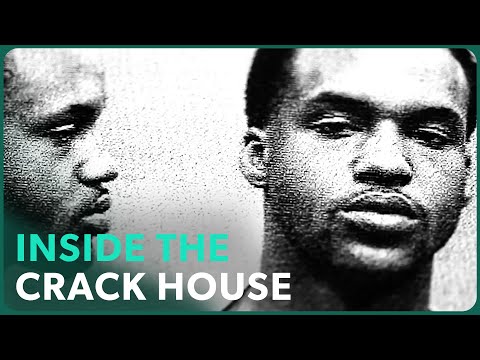
In the summer of 2005, federal agents and police in Rockford, Illinois, captured over a thousand hours of surveillance footage inside a crack house. The gang smokes marijuana, plays with guns, and sells crack and heroin for six weeks, completely unaware that their every move is being recorded.
Customers come and go, unaware that their private lives are being revealed. This is an intimate portrait of a crack house's rise and fall, as well as a drug-addled American urban culture. Interviews with gang members, their friends, and police disclose the unavoidable tragedy - and the occasional dark humour - of a reality that exists underneath the surface of any major community.
From Crack House USA
Twitter: https://twitter.com/realstoriesdocs
Facebook - https://www.facebook.com/RealStoriesChannel
Instagram - @realstoriesdocs
To listen to some of the best new documentary filmmakers talk on The Doc Exchange podcast, click this link: https://podfollow.com/the-doc-....exchange-a-real-stor
Content licensed from Warner Brothers. Any queries, please contact us at: owned-enquiries@littledotstudios.com
If you loved this film, Real Stories has hundreds more full-length documentaries, click the link to enjoy: http://bit.ly/1GOzpIu

AmosWilsonSpeaks
THE AFRIKAN WORLD
Greetings & Welcome to Kimbunga Media - Your Premiere Universal Afrikan Nationalist Media Institution Find Kimbunga Medai on:► Instagram: http://instagram.com/kimbungamedia► https://www.facebook.com/kimbungamedia► Twitter: https://twitter.com/kimbungamedia► SignUp for Newsletter: https://kimbungamedia.com/


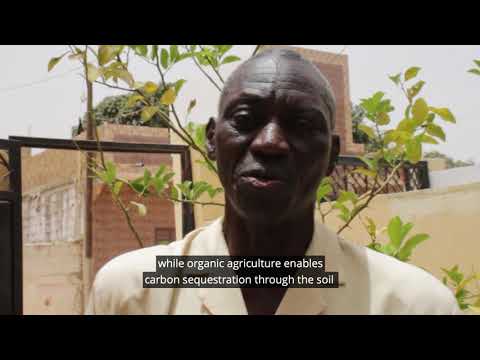
📢 “Conventional agriculture contributes to global warming while organic enables carbon sequestration in soil. It's a powerful way to become more resilient to climate change.” Meet Ibrahima working with over 157,000 people to promote organic agriculture in Senegal 🇸🇳 #IGrowYourFood #LuvOrganic
Find out more about #IGrowYourFood: https://campaigns.ifoam.bio/igrowyourfood
🤗 Support our ORGANISATION:
https://ifo.am/Donate
🤝 Become our PARTNER:
https://ifo.am/JoinIFOAM
📩 Sign up to our NEWSLETTER:
https://ifo.am/Newsletter
▶️ Subscribe to our YOUTUBE channel:
https://ifo.am/YouTube
👍 Stay connected on FACEBOOK:
https://ifo.am/Facebook
👩💻 Join the conversation on TWITTER:
https://ifo.am/Twitter
👨💻 Follow us on LINKEDIN:
https://www.linkedin.com/compa....ny/ifoamorganicsinte