- General Videos
- Music
- Economics
- Health
- Travel & Events
- History
- Psychology
- Spirituality
- Movies
- News & Politics
- Kmtyw Combat Sciences
- Ɔbenfo Ọbádélé Kambon Videos
- Ɔbenfoɔ Kamau Kambon: Black Liberation Philosophy
- Science, Tech, Engineering and Math
- Permaculture
- Self-Sustainability
- Living Off Grid
- Yoruba Language Learning
- Education
- Mmɔfra Adesua
- Nana Kamau Kambon Playlist
- Livestream
- Komplementarity Kouples and Revolutionary Singles
- Abibitumi Film Series
- Decade of Our Repatriation
- Kwento xpr
- Live
Top videos




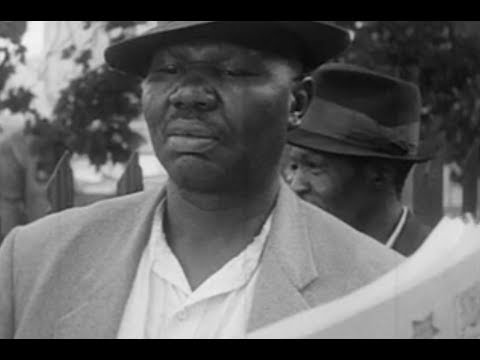


➡️ Sign Up Today To Join The 'I Never Knew Tv' Movement:https://ineverknewtv.com/sign-up/In this reasoning, Angela Stanton-King author, television personality, right wing speaker starts off speaking about her work with pregnant women and why 'abortion clinics' target Black communities.Next, King talks about protecting children, being molested and what she would have done differently as a parent.Later in the reasoning King about negative impact of 1994 Crime Bill, medical apartheid in America and how she became a best-selling author.00:00:17 Fighting the maternal health crisis00:02:20 On having 5 natural births00:04:37 The 'Negroe Project' and why abortion hets so much funding00:14:32 US Government attack on the Black man00:19:03Protecting our children and Alphabet Mafia00:27;23 Negative Impact of 1994 Crime Bill on the black community00:28:35 Loneliness being the greatest threats to Black women00:30:27 Being chained to bed while giving birth in prison00:34:28 Medical Apartheid➡️Please click link below to learn more about Angela King and her work:https://www.auntieangieshouse.com➡️ Tune into 'I NEVER KNEW 📻'🇲🇱Roots, Rock, Reggae Music🇲🇱Hosted By : Jr of 'I Never Knew Tv'https://www.WLOY.orgSunday 9 -11 AM ESTWednesday 8- 10 AM ESTThursday 10- Noon AM EST#angelaking #ineverknewtv

To donate to our course
Buy us a coffee https://www.buymeacoffee.com/africanbuzz
Senegalese youths take to the streets demanding for the withdrawal of French military from their country
#senegal #traoré #traoré #burkinafaso #traoré #senegal #sonko #diomayefaye #diomayepresident #niger #tiani #burkinafaso #mali #niger #g5 #france #ibrahim #tchiani #mali #assimi #goita #burkinafaso #africa #african #kenya #africanclimatesummit #climatechange #climate #carbondioxide #china #africa #african #niger #france #french #france24 #ambassador #africanamerican #nigeria #gabon #ecowas #chad #congo #africaunite
Please SUBSCRIBE, LIKE, COMMENT and Share, Thank for Watching
#Love
#Peace
#theafricawewant



Watch our exclusive interview with Beatrice, who left the Hasidic community: https://youtu.be/HH9ykGOHTBI
You can help children in need: https://tinyurl.com/youtuberruhi
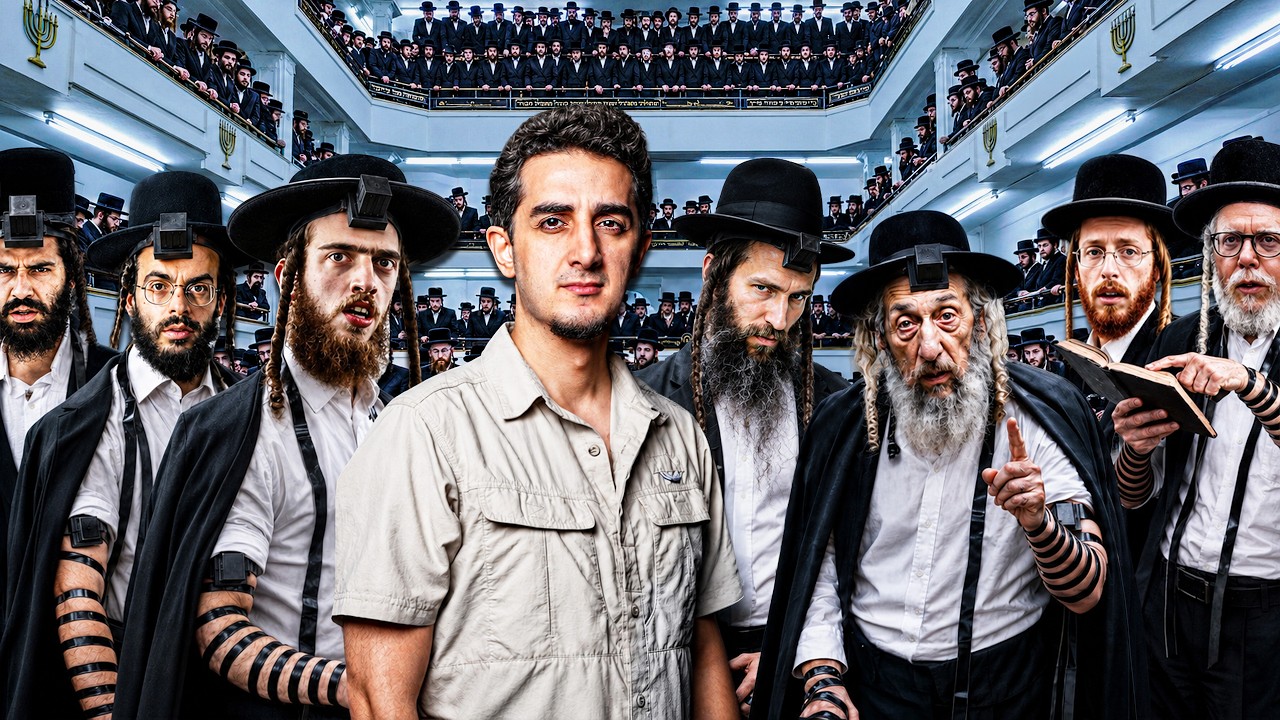
They are one of the most religious and most secretive community in the world: Hasidic Jews. An insular religious community with hundreds of thousands of members. In the heart of New York, surrounded by skyscrapers and modern life, there exists another world, one that lives by its own traditions.
We’re in the middle of New York City, yet we rarely hear English. In this part of Brooklyn, many people speak Yiddish, while Hebrew also plays an important role in religious life.
In this documentary, we step inside this closed-off community to see what everyday life really looks like. We visit their neighborhoods, homes, workplaces, and synagogues, speak with members of the community, and also hear from someone who chose to leave it behind.
Subscribe ► https://goo.gl/MKi8tn
"Rediscovery" Series ► https://www.youtube.com/playli....st?list=PL40Eh9f0PRR
Visiting the Fattest, Most Cigarette-Addicted and Least Visited Country 🇳🇷 ► https://youtu.be/eUJgq9HerDQ
Visiting the World's Hottest Place (70°C, 159°F) LUT DESERT ► https://youtu.be/NhyDkHaUC8U
Visiting the World’s Most Daпgeгous Road: “Karakoram D℮ath Road” (There are casuaIti℮s!) ► https://youtu.be/FryCzL17YRs
Visiting the MOST AIR POLLUTED CITY in the World (Dust Hell) ► https://youtu.be/zC4saZg6sG0
Visiting the COLDEST CITY in the World (-71°C, -96°F) YAKUTSK / YAKUTIA ► https://youtu.be/Fz4ZMLsPzqM
8 Crazy Experiments at -55°C, -67°F (The coldest city in the World: Yakutsk) ► https://youtu.be/ExoOL2lwlWE
World's Poorest Country "Burundi" (I can’t forget the things I saw) ► https://youtu.be/n0gFsHf9cIw
My name is Ruhi Çenet, I'm an independent documentary maker. I go to unique places or meet unique people and investigate or analyze them with a unique approach. My motto is "curiosity is the best guide". Join me, let's learn something different...
Instagram ► https://www.instagram.com/
Twitter ►https://twitter.com/ruhicenet


Discussing some of the fascinating engineering that goes into overhead electric power transmission lines.
In the past, power generating plants were only able to serve their local areas. As power plants grew larger and further away from populated areas, the need for ways to efficiently move electricity over long distances has become more and more important. Stringing power lines across the landscape to connect cities to power plants may seem as simple as connecting an extension cord to an outlet, but the engineering behind these electric superhighways is more complicated and fascinating than you might think.
-Patreon: http://patreon.com/PracticalEngineering
-Website: http://practical.engineering
Writing/Editing/Production: Grady Hillhouse
Tonic and Energy by Elexive is licensed under a Creative Commons Attribution License
Source: https://www.youtube.com/watch?v=U6fBPdu8w9U
This video is sponsored by Hello Fresh.
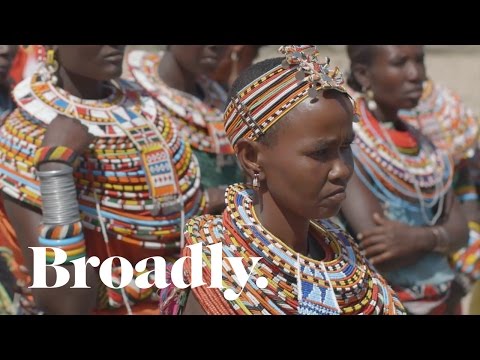
Subscribe Now: http://bit.ly/Subscribe-to-BROADLY
Where the foothills of Mount Kenya merge into the desert, the people of Samburu have maintained a strict patriarchy for over 500 years in northern Kenya. That is, until 25 years ago, when Rebecca Lolosoli founded Umoja village as a safe haven for the region's women. Umoja, which means "unity" in Swahili, is quite literally a no man's land, and the matriarchal refuge is now home to the Samburu women who no longer want to suffer abuses, like genital mutilation and forced marriages, at the hands of men.
Throughout the years, it has also empowered other women in the districts surrounding Samburu to start their own men-excluding villages. Broadly visited Umoja and the villages it inspired to meet with the women who were fed up with living in a violent patriarchy.
WATCH NEXT: Egg Freezing, Career Women, & the Future of Fertility - http://bit.ly/1MNUnha
The Abortion Pill - http://bit.ly/1DwQQSo
Searching for the Last Lesbian Bars in America - http://bit.ly/1J86cde
Kate Nash on Feminism & the Female Wayne's World: http://bit.ly/1JakrjV
Who's Afraid of Vagina Art? http://bit.ly/1NqxK2M
Spain's Sex Supermarket - http://bit.ly/1JcCycc
The Power Suit: http://bit.ly/1Mf8kpw
Rose McGowan on Sexism in Hollywood: http://bit.ly/1DvzkhP
Virginie Despentes on Killing Rapists: http://bit.ly/1DCDOmG
Come find us:
Broadly | https://broadly.vice.com
Facebook | https://www.facebook.com/BroadlyTV
Twitter | https://twitter.com/broadly
Tumblr | http://broadlytv.tumblr.com
Instagram | https://instagram.com/broadly
Pinterest | https://www.pinterest.com/broadlytv
Newsletter | http://bit.ly/1JKF1oA


Slavery: The White Woman's Burden
White Women as Slave Owners
Today we're discussing Stephanie E. Jones-Rogers' work, They Were Her Property: White Women as Slave Owners in the American South. This work delves deep into the realities of white female slave ownerships, demonstrating the ways in which white women leveraged competing systems of oppression, particularly race and gender, to attain power, status, and wealth. ChaptersMistresses of the Market 0:00-12:48I belong to de mistis 12:49-15:39Missus done her own bossing 15:40-16:38She thought she could find a better market 16:39-18:55Wet nurse for hire 18:55-24:21Her slaves have been liberated and lost to her 24:22-25:28A most unprecedented robbery 25:29-26:28Epilogue 26:29-29:00Works CitedGordon, Tiye A. The Fancy Trade and the Commodification of Rape in The ..., scholarcommons.sc.edu/cgi/viewcontent.cgi?article=4647&context=etd. Accessed 5 Mar. 2024.Jones-Rogers, Stephanie E. They Were Her Property. Yale University Press, 2020. Little, Becky. “The Massive, Overlooked Role of Female Slave Owners.” History.Com, A&E Television Networks, www.history.com/news/white-wom....en-slaveowners-they- Accessed 5 Mar. 2024.Lydia Maria Child: Charity Bowery, www.sojust.net/literature/child_charity.html. Accessed 5 Mar. 2024. King, Henrietta. "“Henrietta King”; an excerpt from Weevils in the Wheat (1976)" Encyclopedia Virginia. Virginia Humanities, (07 Dec. 2020). Web. 05 Mar. 2024


Let’s count from 1 to 20! 🔢 In this lesson, Kunda Kids makes learning Igbo numbers easy and interactive for children and beginners. Whether you are in Nigeria or the diaspora, mastering Igbo vocabulary starts with the basics.
🧠 CAN YOU GUESS? Do you know the Igbo word for the number 10? Watch closely and see if you get it right!
In this lesson, we cover:
Counting 1-20 in Igbo (Otu to Iri Abụọ)
Native Igbo pronunciation for kids
English to Igbo translations for every number
📝 Igbo Numbers List: 1 - Otu | 2 - Abụọ | 3 - Atọ | 4 - Anọ | 5 - Ise 6 - Isii | 7 - Asaa | 8 - Asatọ | 9 - Itoolu | 10 - Iri 🔟
Subscribe to Kunda Kids for more African language lessons, cultural stories, and fun for the whole family! 🌍✨
ABOUT KUNDA KIDS 🌟
Kunda Kids is an award-winning children's publishing, ed-tech and media company based in London, UK. Founded in 2020 by Oladele and Louisa Olafuyi, Kunda Kids aims to showcase African edutainment, with various elements of African culture in creative, fun, and simple formats for children.
Discover more at www.kundaandfriends.com
Social Media @kundaandfriends
.
.
.
.
RELATED VIDEOS:
NAMES OF ANIMALS - IGBO - SOKIDZTV
https://youtu.be/gP5Hn7OJeAE?si=5dcFAXftMeMBqTGl
EGWU NSUPE (for 58 Minutes) | Learn Igbo Words With Fun Songs
https://youtu.be/_HOK6-UD84o?si=Ma1RqvgeucG3rmwd
Igbo for Kids | Reading Simple Sentences in Igbo Language | Learn Igbo
https://youtu.be/Z188cJZu2Zg?si=N-8IJOKiYTx2748q
IGBO - Happy and you know it -Sokidztv
https://youtu.be/xlFiFWoseM0?si=2Z8BH-0xy5AVyHPm
SokidzTV - 5 Little monkeys - IGBO
https://youtu.be/0pPi-jUdY40?si=8mU9UQBdV3u4biIu
#learnafricanlanguages, #africanlanguages, #speakafrican, #africanculture, #languagelearning, #learnyoruba, #learnswahili, #learnigbo, #learntwi, #learnzulu, #learnhausa, #learnamharic, #learnwolof, #learnshona, #africandiaspora, #africanheritage, #africanroots, #africaneducation, #africanstorytelling, #africanidentity, #multilingualafrica, #africanlearning, #africanlanguagelessons, #africanpride, #culturaleducation, #learnwithme, #africanwords, #africangreetings, #languagechallenge, #africanlanguagesmadeeasy