- General Videos
- Music
- Economics
- Health
- Travel & Events
- History
- Psychology
- Spirituality
- Movies
- News & Politics
- Kmtyw Combat Sciences
- Ɔbenfo Ọbádélé Kambon Videos
- Ɔbenfoɔ Kamau Kambon: Black Liberation Philosophy
- Science, Tech, Engineering and Math
- Permaculture
- Self-Sustainability
- Living Off Grid
- Yoruba Language Learning
- Education
- Mmɔfra Adesua
- Nana Kamau Kambon Playlist
- Livestream
- Komplementarity Kouples and Revolutionary Singles
- Abibitumi Film Series
- Decade of Our Repatriation
- Kwento xpr
- Live
Top videos


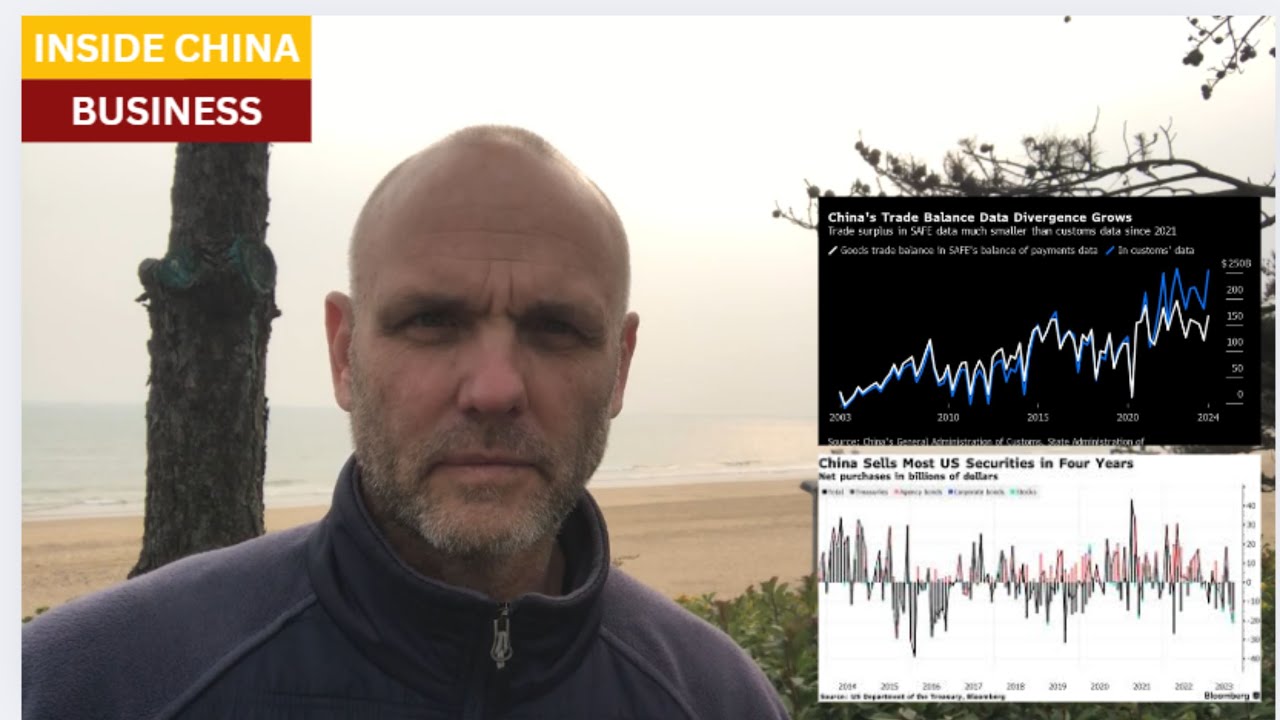

China runs large trade surpluses with the United States. Typically these funds would be returned to the US as capital investments, either through buys of fixed assets, securities, or lending.
China, however, is liquidating stakes in companies in the United States, and is selling off its portfolio of Treasury bonds.
These two trends are resulting in enormous imbalances in Balance of Payments, which much be re-balanced via China's central banking activities. China is clearly recycling giant capital pools from the United States for investment purposes inside China, and among China's top trading partners.
And because the US dollars are never returned to the capital markets, it is also clear that China and the BRICS countries are setting up their own trading and economic bloc, funded largely with US debt instruments.
(Editor note: At about the 2:00 mark, I misspoke. The US ran a trade deficit of approximately $800 billion, not surplus. Apologies.)
Resources and links:
Bloomberg, US Trade Deficit Widens to $78.8 Billion, Largest in Two Years
https://www.bloomberg.com/news..../articles/2024-09-04
Why is China dumping US Treasuries for gold?
https://x.com/SputnikInt/statu....s/178313812393054619
Vanishing Act: The Shrinking Footprint of Chinese Companies in the US
https://rhg.com/research/vanis....hing-act-the-shrinki
China Should Explain ‘Enormous’ Data Gaps, US Ex-Official Says
https://www.bnnbloomberg.ca/in....vesting/2024/09/06/c
Bloomberg, China Plans to Sell Dollar Bonds in Saudi Arabia as Ties Deepen
https://www.bloomberg.com/news..../articles/2024-11-05
The Economist, Chinese firms are growing rapidly in the global south
https://www.economist.com/brie....fing/2024/08/01/chin
Closing scene, Yangzhou Gardens, Jiangsu