- General Videos
- Music
- Economics
- Health
- Travel & Events
- History
- Psychology
- Spirituality
- Movies
- News & Politics
- Kmtyw Combat Sciences
- Ɔbenfo Ọbádélé Kambon Videos
- Ɔbenfoɔ Kamau Kambon: Black Liberation Philosophy
- Science, Tech, Engineering and Math
- Permaculture
- Self-Sustainability
- Living Off Grid
- Yoruba Language Learning
- Education
- Mmɔfra Adesua
- Nana Kamau Kambon Playlist
- Livestream
- Komplementarity Kouples and Revolutionary Singles
- Abibitumi Film Series
- Decade of Our Repatriation
- Kwento xpr
- Live
Top videos


#GreekOrganizations #BlackBourgeoisie #Boule
In this episode we read portions of "The Failure of the Black Greek Letter Organizations" by Ali D. Chambers (Author). Join Us to learn more.
This episode continues our drive to understanding the need for a new African-centered curriculum for Black children and family units. Ask Us how can you help.
JOIN THE DISCORD: https://discord.gg/cPdMNYkCsH
** DONATE 2 THE SHOW (CA$HAPP): $bittermedz**
SUPPORT OUR MERCH!!!: https://tshirtepiphanies.com/kwaz-rad...
Follow Us on:
Twitter: https://www.twitter.com/bittermedz
Facebook: https://www.facebook.com/BitterMedici...
Instagram: https://www.instagram.com/thebmpodcast
Tumblr: https://www.tumblr.com/blog/bittermedz
Website: linktr.ee/bmpodcast
Follow KWAZ RADIO:
Facebook: https://www.facebook.com/KWAZRADIO/
Instagram: https://www.instagram.com/kwazradio
Twitter: http://www.twitter.com/kwazradio
YouTube: https://goo.gl/a6eXJZ
Website: https://www.kwazradio.com


It is sad that we will die for white love. This week we break down our concept called "Jackie Robinson Syndrome" or JRS. We explore the effects of black inferiority in the form of the need for white love/acceptance. Some black people believe that the things white America owns, operates, or sells are better than a black person with the same things as white people. The need for white love is real. Tune in!!
Cashapp: $joeward84
Follow us on Instagram @ontheshoulders1
Visit us at www.ontheshoulders1.com or www.ontheshoulders.org
Like us on Facebook: On the Shoulders of Giants
Follow on Tiktok: @thejoeward
Click the link to get your copies of On the Shoulders of Giants book series http://ontheshoulders1.com/store/

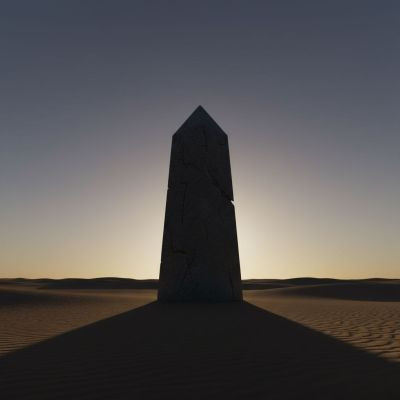


The world is embracing renewable technologies but how much do we know about the metals that are powering this green revolution?
This story exposes the shocking truth about the mining of cobalt, a metal crucial to making the batteries in electric cars, laptops and mobile phones.
The world’s richest deposits of cobalt are in the Democratic Republic of the Congo, one of the poorest countries on earth. It produces around 70% of world output.
This buried treasure has lured hundreds of thousands of Congolese to work in the country’s mines, big and small.
But mining is dangerous, corruption and violence is rife and though child labour has been banned, it’s common.
In recent years, the cobalt trade has been taken over by Chinese companies which operate or finance 15 of the 19 big industrial mines. Locals say that under their management, low safety standards have dropped even further.
“Unfortunately people even are dying for lack of safety,” says an employee of one big company.
Australian reporter Michael Davie travels to this mineral-rich country to investigate the industry – from the major Chinese-owned companies to the conditions of the small-scale workers on the fringes of the big mines.
It’s a dangerous mission and Davie is followed, harassed and arrested by mine and government security officials.
What he uncovers is shocking.
The day he arrives there’s been a mine cave-in, killing at least six miners.
He sees miners tunnel 25 metres underground with no safety equipment.
He meets primary school-age children handling cobalt, a toxic metal which can cause serious health effects.
He meets a mother whose 13-year-old son has just been killed on the fringes of a mine whose embankment collapsed. Companies in the Congo are obliged to make sure they don't harm the communities around them.
He secures a video which shows a man being beaten by a Congolese soldier as mine managers watch on, laughing.
And he interviews a whistleblower who accuses the Chinese mine he works for of covering up the deaths of co-workers. He also says the country isn’t benefitting from the boom.
“There is no investment coming back in terms of environment, infrastructure…We don't have road facilities, we don't have communication. There is nothing.”
But there’s hope amidst the gloom. Davie meets the Good Shepherd Sisters, nuns who’ve set up a school near the mines and educated thousands of children.
“If the children are given education, if schools are spread all over and every child goes to school, then we are redeeming this country,” says one nun.
This is a rare insight into a powerful industry which operates a dangerous business with seeming impunity. All of us use the end products.
About Foreign Correspondent:
Foreign Correspondent is the prime-time international public affairs program on Australia's national broadcaster, ABC-TV. We produce half-hour duration in-depth reports for broadcast across the ABC's television channels and digital platforms. Since 1992, our teams have journeyed to more than 170 countries to report on war, natural calamity and social and political upheaval – through the eyes of the people at the heart of it all.
Contributions may be removed if they violate ABC’s Online Terms of Use http://www.abc.net.au/conditions.htm (Section 3). This is an official Australian Broadcasting Corporation YouTube channel


In this video we look at the deep cultural ties between Kemet and East Africa, demonstrating their common origins in southern East Africa. #history #africanhistory #kemet #ancientkemet #eastafrica #africa #ancienthistory

Racism rooted in slavery has not gone away in Brazil — and it took time until its existence was even acknowledged.
Subscribe to our channel! http://goo.gl/0bsAjO
Brazil imported more African slaves than any other country in the world: over 4 million people. Despite the ancestry forming a big part of the population, the development of a national Black identity was hindered after the country’s abolition of slavery in 1888.
Brazil didn’t have an apartheid system like South Africa’s or Jim Crow laws like the United States, and its mixed population was seen as a symbol of harmony between races. The idea of Brazil being a “racial democracy” affected how Brazilians saw the role of race in their own lives — until the myth was debunked.
“Several people were raised with certain privileges for being a light-skinned person, but still suffering some discrimination and not understanding exactly why is that so,” explains lawyer and diversity studies professor Thiago Amparo. “Only by understanding the history of Brazil, the [social] construction of whiteness and their own Black ancestry, they start to self-identify as Black.”
The rise in the number of Brazilians who self-identify as Black came as a result of the Black movement’s fight to denounce racism in the country and to promote positive references of Blackness. Many achievements have been made over the past decades, such as the implementation of affirmative action practices. However, challenges remain. Seventy-five percent of people killed by police in Brazil in 2019 were Black, and socio-economic characteristics of this population widely differ from those of white people.
Vox.com is a news website that helps you cut through the noise and understand what's really driving the events in the headlines. Check out http://www.vox.com.
Watch our full video catalog: http://goo.gl/IZONyE
Follow Vox on Facebook: http://goo.gl/U2g06o
Or Twitter: http://goo.gl/XFrZ5H


Dr. Ma'at & Dr. Wright: Weaponization of Antisemitic | Harvard President Dr. Claudine Gay ResignsGET DR. WRIGHT'S BOOK HERE:https://www.bookertwashingtonandafrica.com/READ THIS ARTICLE "Liberia: The African-American settler colony that parallels Israel" HERE:https://www.middleeasteye.net/....opinion/israel-liber PROGRAM FOR BLACK CHILDREN https://consciousingenuity.com/MANHOOD TRAINING CAMP FOR BLACK BOYShttp://asafocamp.com/THE MELTREK PROGRAM https://edanimeproductions.com/shopBEST ONLINE SCHOOL FOR BLACK CHILDREN https://www.uhuruacademy.com/CONNECT WITH ME ON INSTAGRAM:https://www.instagram.com/dr.maat_/CONNECT WITH ME ON FACEBOOK: https://facebook.com/droyaadwoamaatCONNECT WITH ME ON TWITTER https://twitter.com/dr_maatCONNECT WITH ME ON TIKTOKhttps://www.tiktok.com/@droyaadwoamaatEMAIL ME:dr.maat.msu@gmail.com
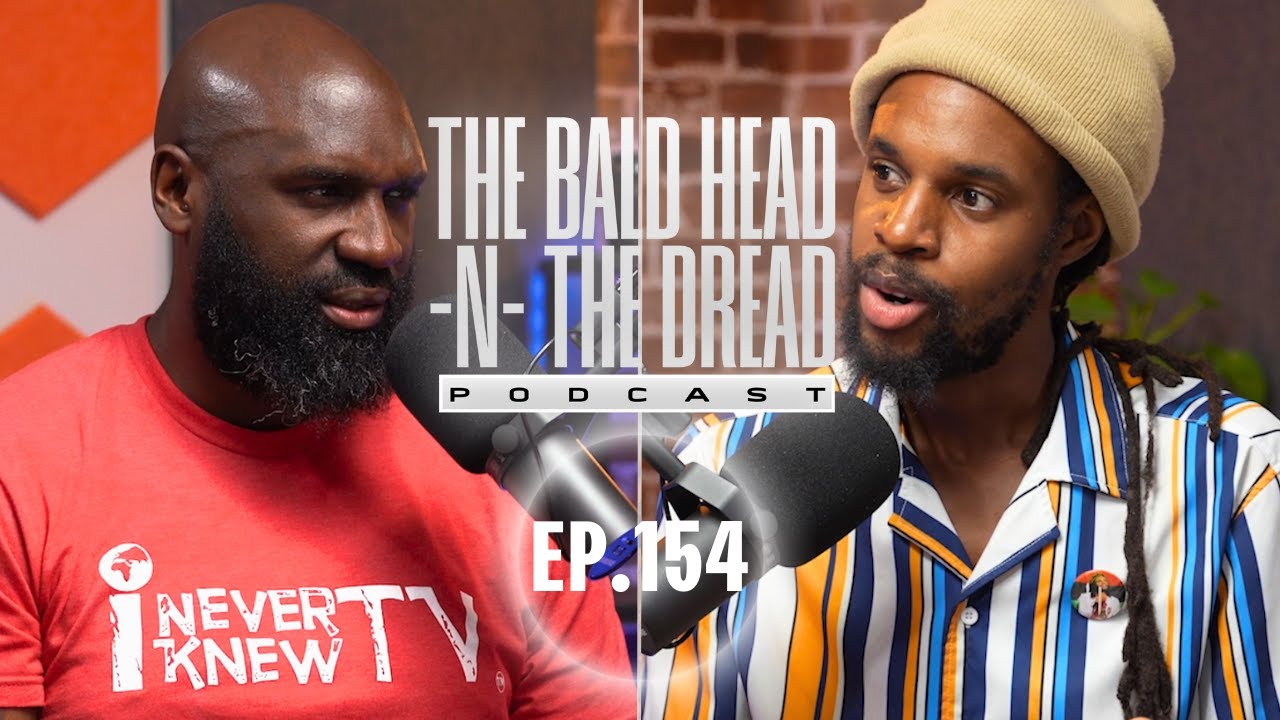
➡️ Listen Full Podcast : https://ineverknewtv.com/talks....-nature-of-man-devol the 154th episode of The Bald Head-N-The Dread Podcast, Jr (The Bald Head) and Autarchii (The Dread) speak on the need for us to stop trying to categorize 'man' as good or bad. They also speak about devolution and our unsustainable way of life.➡️ Listen To The 'Generation Gap Riddim': https://ingrv.es/generation-gap-riddi-3qn-i ➡️ Tune into 'I NEVER KNEW RADIO'Roots, Rock, Reggae MusicHosted By : Jr of 'I Never Knew Tv'https://www.WLOY.orgSunday 9 -11 AM ESTWednesday 8- 10 AM ESTThursday 10- Noon AM EST#mankind #thebaldheadnthedreadpodcast