- General Videos
- Music
- Economics
- Health
- Travel & Events
- History
- Psychology
- Spirituality
- Movies
- News & Politics
- Kmtyw Combat Sciences
- Ɔbenfo Ọbádélé Kambon Videos
- Ɔbenfoɔ Kamau Kambon: Black Liberation Philosophy
- Science, Tech, Engineering and Math
- Permaculture
- Self-Sustainability
- Living Off Grid
- Yoruba Language Learning
- Education
- Mmɔfra Adesua
- Nana Kamau Kambon Playlist
- Livestream
- Komplementarity Kouples and Revolutionary Singles
- Abibitumi Film Series
- Decade of Our Repatriation
- Kwento xpr
- Live
Top videos
![Deadly Diamonds: Zimbabwe [2009]](https://i.ytimg.com/vi/k9Bk5VIhjiY/hqdefault.jpg)

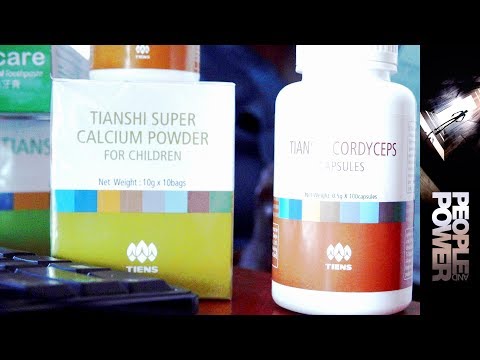

Living in a poor country with one of the worst doctor-patient ratios in the world - about one for every 24,000 people - it's perhaps no surprise that many Ugandans are tempted by alternative remedies, even though there's often little evidence to support the claims made about their efficacy in treating or preventing disease. But the phenomenon does beg many questions, not least of which are who is really benefiting from the sale of these products and how exactly are they marketed?
We'd heard reports about one particularly controversial business, a complex multi-level marketing scheme run in Uganda under the aegis of a Chinese company called Tiens, which produces food supplements.
Its products, we'd been told, were being inappropriately sold as medications - in some cases for very serious diseases. We had also heard disturbing claims that its sales representatives, or "distributors" as they are known, were being invited to invest large sums of money in Tiens products, when in reality there was little chance of most of them ever making the kind of dazzling returns that the company promised.
So we sent a filmmaking team and Ugandan reporter Halima Athumani to investigate further.
- Subscribe to our channel: http://aje.io/AJSubscribe
- Follow us on Twitter: https://twitter.com/AJEnglish
- Find us on Facebook: https://www.facebook.com/aljazeera
- Check our website: http://www.aljazeera.com/


Bamboo: an undeveloped resource and Africa's green gold.
Experts from Ethiopia on why the country needs to do more to develop this valuable giant grass. Fast-growing, sustainable and versatile, this incredible plant has a lot to offer the country.
This video was produced by Asehnafi Lakew Manila and INBAR's East Africa Regional Office.
The International Bamboo and Rattan Organisation, or INBAR, is an intergovernmental organisation dedicated to promoting the use of bamboo and rattan for inclusive, green development. We research and strengthen the global knowledge base for bamboo and rattan and raise awareness of their use for:
♣Climate Change Adaptation and Mitigation
♣Land Restoration
♣Poverty Alleviation
♣South-South Cooperation
♣Sustainable, Affordable Construction
♣Accessible, Green Energy.
INBAR Official:
www.inbar.int
www.twitter.com/INBARofficial/
www.twitter.com/INBARlac/
www.twitter.com/INBARwaro/
www.facebook.com/INBARofficial/
www.facebook.com/INBARlac/
www.facebook.com/INBARwaro/
Follow our Youtube channel for practical tips for growing, processing and marketing bamboo and rattan products as well as interviews, speeches and more from our work around the world.

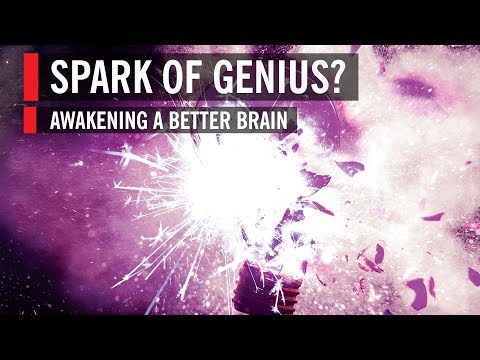
How far would you go to improve your focus, memory, or even learning ability? Would you be willing to strap on headgear that delivers electrical shocks to targeted areas of your brain? You may soon have that option. It’s called trans-cranial direct current stimulation, and it’s currently being tested on soldiers and used by gamers, students, and others looking for a cognitive edge. But questions linger: does it work? What are potential long-term effects? And how should it be regulated?
This program is part of the Big Ideas Series, made possible with support from the John Templeton Foundation.
The working memory test sequence is taken from the BBC Earth production, Extraordinary Animals
https://www.youtube.com/watch?v=zsXP8qeFF6A
Subscribe to our YouTube Channel for all the latest from WSF.
Visit our Website: http://www.worldsciencefestival.com/
Like us on Facebook: https://www.facebook.com/worldsciencefestival
Follow us on twitter: https://twitter.com/WorldSciFest
Original Program Date: May 27, 2015
Host: Richard Besser
PARTICIPANTS: Nita A. Farahany, Richard Haier, Michael Weisend
"ROBOT' by Blanca Li 00:00
Richard Besser's Introduction. 03:43
Participant Introductions. 08:39
How can you use electricity to enhance the brain? 10:13
Can you make people smarter because of brain plasticity? 16:00
Is short term memory the same as IQ? 19:20
What is the difference between TCDS and TMS? 25:26
The magnetic stimulation has been FDA approved. 28:47
TCDS used to increase the vigilance of drone operators. 31:55
What are the ethical implications of electric brain stimulation? 38:55
Is it cheating to use performance enhancing techniques on tests? 44:00
Demonstration of TMS machine. 49:30
Hacking your brain with Wi-Fi. 53:38
Different spots on the head do different things? 58:14
The scars of experimenting the electrodes. 01:03:03
Should you trust the learning via electrical stimulation? 01:09:37
What will the future look like with these devices? 01:12:32