Are you 18 years old or above?
Melanin and the Science of Blackness Dive into the fascinating world of melanin and the profound science of blackness in this enlightening video. Discover the intricate role of melanin, often referred to as the divine pigment, in determining skin color and its profound impact on human health and biology. Explore the ancient Kemetic teachings that revered melanin as a symbol of divine connection, embodying the essence of the Neter noun, the divine principle of creation. Unravel the spiritual significance of melanin within the context of Amun Ra, the sun god, whose radiance is said to awaken and activate the melanin within us, connecting us to our ancestral roots and cosmic energies. Join us on a journey of understanding, appreciation, and empowerment as we uncover the mysteries of melanin and the profound science of blackness. ––Music Credits––––––––––––––––––––––––––––––––––––– AFRO GROOVE | Afrobeat Library | Music For Content Creators | Afrobeat | No Copyright Youtube: • AFRO GROOVE | Afrobeat Library | Musi... Creative Commons — Attribution - CC BY-NC-ND 4.0 Affiliated YouTube channel | / kaseembada –––––––––––––––––––––––––––––––––––––––––––––––––
Join Abibifahodie Capoeira group on Abibitumi app
Hello, To all my lover of Cultures and Languages this video is for you. Hope this helps you explore some part of West and Central Africa as well as just have a good time .
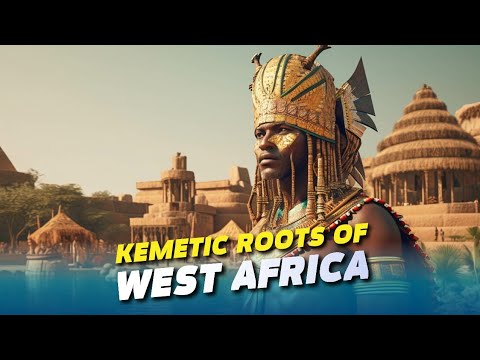
The Kemetic Roots of West Afrika This video provides a breakdown of the Kemetic ancestral roots of contemporary West Afrikan populations using a multidisciplinary evidence based approach. Some of the fields of analysis include: Historical Linguistics Historical Archeology Genetics Structural Systems etc. The ancestry of the Igbo, Yoruba, Wolof and Akan is discussed refuting the notion that the Afrikology subfields of Kemetology and Nubiology are the Hamitic hypothesis painted black. In reality scholars within these disciplines spearheaded the effort to defeat Hamiticism, especially at the Cairo Symposium of 1974. 0:00 Intro Identity Crisis 1:17 Afrikan map making 2:40 Hamitic Hypothesis 4:06 Hamitic Linguistics 5:00 Western Centered Historical Perspectives 5:30 West Afrikan Oral History 5:40 Archeological Industries from Eastern Afrika 6:00 West Afrikan Occupation Record 6:50 West Afrikan Oral History was not altered by eurasians 7:25 Afrikan Centered Philosophy and Logical Inferences 9:10 Pluridisciplinary Analysis 9:38 The Mulongi Model of Dr. Dika Akwa 10:17 Ancient DNA analysis at Shum Laka 10:44 Sahelian migratory ancestry of Kmt/Kush 11:07 Afrikan Historical Comparative Linguistics 12:30 Sahelian Waterways 12:44 Sengambian Historigraphy 14:04 Akan Historigraphy 15:10 Commonalities in Afrikan Material Cultures 15:40 Igbo Historiography 17:24 Yoruba Historiography Music: Smith The Mister; Riviera, 1993, Clocks.
Colonialism was an exercise in imperial conquest, implemented at the tip of the bayonet. The Africans resisted but the forces raged against them bore superior arms and strategies. In this extensive interview, famous Kenyan historian Prof. Macharia Munene, gives a deep lesson on how colonialism took place in Kenya and Africa and the role of missionaries, soldiers, administrators, anthropologists, and even a former American President who once visited Kenya at the dawn of colonialism. He explains the rationale behind the Berlin Conference of 1885 - bringing order and discipline among European powers for the smooth exploitation of the African continent. He also traces the rise of grievances and political dissent among the Africans as a result of the alienation of their land, the imposition of punitive taxation, the denial of political representation, the conscription of African young men to fight European wars, and wanton discrimination, all culminating in armed resistance such as Mau Mau in the case of Kenya. He sweeps through the history of slavery, African-American history, and the rise of comprehensive Pan-Africanism and shows how Pan-African thinking inspired the resistance in Kenya and African and vice-versa.
Many farmers grapple with water shortage during dry weather periods, despite lots of runoff water when it rains, leaving the farmers with no source of water for their livestock and crops. The Smart Water for Agriculture project under the Netherlands development organization, in an effort to show case water storage, here is a how to guide on making a water pan.
Winter solstice sunrise in the temple of Karnak, Luxor, Egypt. Soundtrack is regional Sufi music.
Small scale irrigation in Uganda is growing among farmers; this has helped many continue with farming even when Uganda is becoming hotter each passing year.
Ayiti Bluez and AfroN8V recorded this song in 2010. AfroN8V is representing the Afrikans in Colombia paying homage to Ayiti for trying to free our Afrikan people from slavery which Bolivar continued upon independence. Ayiti Bluez sings about that role Ayiti played in South 'America'. Collectively, Ayiti and Afrocolombia we are proud children of Afrika who continue to be in this 21st century, and we're wishing History, Consciousness and Triumph to the Black people of the world.
Subscribe to watch more African Folktales