







- General Videos
- Music
- Economics
- Health
- Travel & Events
- History
- Psychology
- Spirituality
- Movies
- News & Politics
- Kmtyw Combat Sciences
- Ɔbenfo Ọbádélé Kambon Videos
- Ɔbenfoɔ Kamau Kambon: Black Liberation Philosophy
- Science, Tech, Engineering and Math
- Permaculture
- Self-Sustainability
- Living Off Grid
- Yoruba Language Learning
- Education
- Mmɔfra Adesua
- Nana Kamau Kambon Playlist
- Livestream
- Komplementarity Kouples and Revolutionary Singles
- Abibitumi Film Series
- Decade of Our Repatriation
- Kwento xpr
- Live
Top videos


We want to thank Wode Maya our inspiration for starting us on our way and continuing to support us. Big up all of the Vloggers and Bloggers changing the narrative of Africa.
If you would like to support us you can by making a donation to via Paypal using Bopcollective@Yahoo.Com email address. https://www.paypal.com/gm/home
Or via Patreon using Bla Xit. https://www.patreon.com/Blaxit
We are very grateful for your generosity and kindness. It helps us to continue to create content.
Big Love Bla Xit Family.


In this video we go over the first part of the UNESCO Symposium report on the peopling of Ancient Egypt that took place in Cairo, in 1974. The participants’ statements are read in full, so as to not misrepresent their arguments. References-The Symposium report: https://unesdoc.unesco.org/ark....:/48223/pf0000042573 Shemai article:https://www.livescience.com/58....424-mummy-ancient-eg on Fossil preservation of Melanin: - Study 1: https://pubmed.ncbi.nlm.nih.gov/26290071/- Study 2: https://pubmed.ncbi.nlm.nih.gov/22569368/- Study 3: https://pubmed.ncbi.nlm.nih.gov/29360744/- Study 4: https://pubmed.ncbi.nlm.nih.gov/22615359/-Study on Melanin quantity: https://pubmed.ncbi.nlm.nih.gov/12950732/-Some video worth watching: - Greek Testimonies: https://www.youtube.com/watch?v=slmlhrSvsa4&t=1242s - My video on Jóob: https://www.youtube.com/watch?v=NmXAX0xy2S8&t=122sSome physical anthropologic studies:- Egyptian body plan: https://pubmed.ncbi.nlm.nih.gov/12772210/- Egypt indeginous to Africa: https://pubmed.ncbi.nlm.nih.gov/8893087/- Egypt pre and post dynastic are the same:https://pubmed.ncbi.nlm.nih.gov/16331657/- The Naqada people cluster with Nubians: https://pubmed.ncbi.nlm.nih.gov/8893087/Contact me here: dimbdmc14@gmail.comThe song used in the video was “Deep Space – Ambient lofi” by Prod. Riddiman


https://www.instagram.com/poks247/
This track will help children and adults learn the alphabet of the Ghanaian language, Asante Twi. It incorporates a drum rhythm in the background with Madame Pokuaa, originally from Kumasi, Ghana, providing the vocals.
Please download a copy of the album on itunes at https://itunes.apple.com/us/al....bum/asante-twi-child or amazon at http://www.amazon.com/Asante-T....wi-Children-Songs/dp .



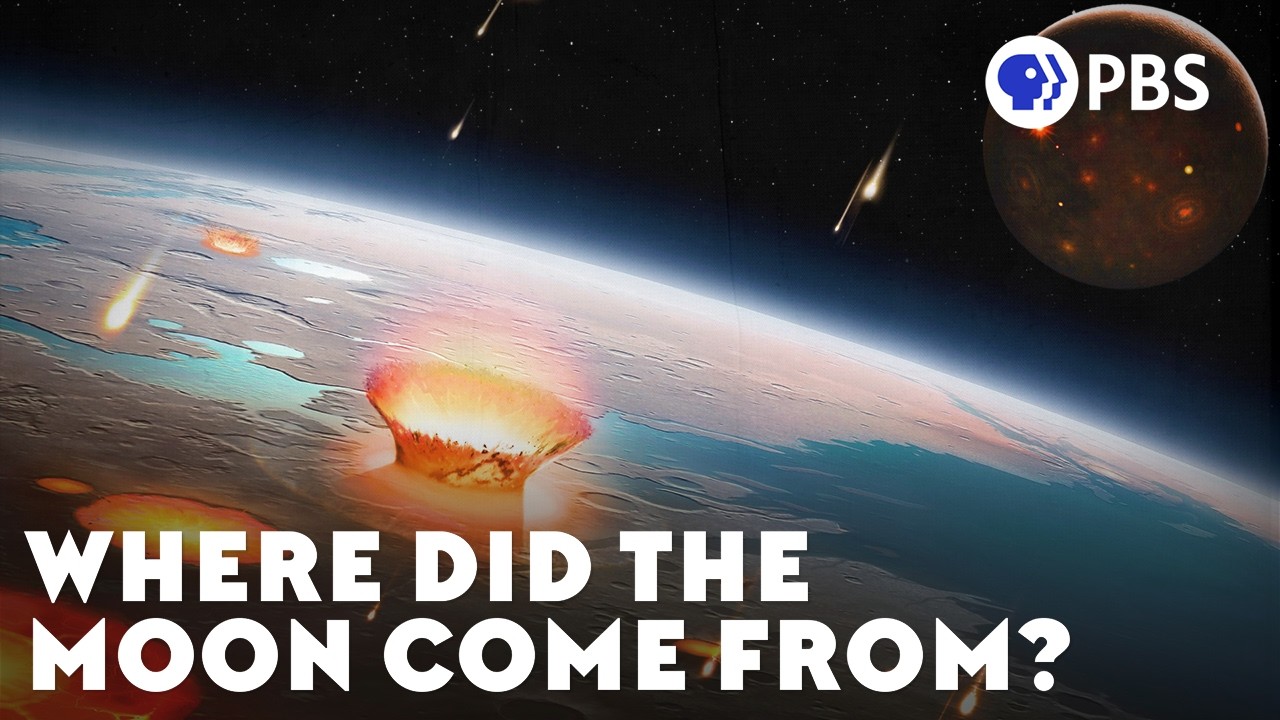

Where did our unique moon come from? It turns out that lunar rocks brought back by Apollo astronauts are a clue, pointing to the origin of our closest cosmic companion, an origin even stranger than you might imagine… Find out more about our Prehistoric Elephants here: https://complexly.info/mammoths*****PBS Member Stations rely on viewers like you. To support your local station, go to http://to.pbs.org/DonateEons*****Eons is a production of Complexly for PBS Digital Studios.Super special thanks to the following Patreon patrons for helping make Eons possible:Randall George, Morgan, Kevin Lacson, Marco Narajos, Collin Dutrow, Pope John XII, Aaditya Mehta, AllPizzasArePersonal, John H. Austin, Jr., Alex Hackman, Stephen Patterson, Odditeas , Karen Farrell, Jason Rostoker, Jonathan Rust, Mary Tevington, Bart & Elke van Iersel - De Jong, Irene Wood, Derek Helling, Mark Talbott-Williams, Nomi Alchin, Duane Westhoff, Hillary Ryde-Collins, Yu Mei, Albert Folsom, Heathe Kyle Yeakley, Dan Caffee, Nick Ryhajlo, Jeff GrahamIf you'd like to support the channel, head over to http://patreon.com/eons and pledge for some cool rewards!Want to follow Eons elsewhere on the internet?Facebook - https://www.facebook.com/eonsshowTwitter - https://twitter.com/eonsshowInstagram - https://www.instagram.com/eons....show/#EonsReferences

"2AM in Venezuela" (OFFICIAL VIDEO): https://youtu.be/GtvkwgbVKF8
BLACK WINTER (Full Album): https://youtube.com/playlist?list=PLJSMFuicKjJ46p1K9TlqZPRGFSd0M5z9U&si=4WG_YXCGJinM6XEN
Join the Patreon for exclusive videos that you won't find on Youtube: https://www.patreon.com/NTD1814
S U P P O R T
Cash App - $NelsonAmadeus
PayPal- GlobalHitsWorld@gmail.com
EMAIL - KingNeferkare@gmail.com
Twitter @NTDessalines
Instagram @NelsonAmadeus
TURN ON POST NOTIFICATIONS.


US Eyes Ivory Coast for Drone Base to Solidify Ties With West Africa | Firstpost Africa | N18G
Amid growing instability in the Sahel region and shifting geopolitical dynamics, the United States is actively pursuing closer security ties with the Ivory Coast, including discussions about establishing a drone base in the West African nation. This development comes as the US seeks to reposition its military presence in the region following its withdrawal from Niger. The strengthening partnership was highlighted during a recent visit by US Marine Corps General Michael Langley, Commander of US Africa Command (AFRICOM), who attended the opening ceremony of Flintlock 2025 in Jacqueville on April 24. During his visit, a key topic of discussion was the potential establishment of a drone base in Ivory Coast. While no final decision has been made regarding constructing a permanent facility, advanced talks are reportedly underway between the US and Ivorian authorities. Watch this video to know more.
---
United States | Donald Trump | Africa | US Drones | Ivory Coast | US Marine Corps | Firstpost Africa | Alyson Le Grange | Africa | Global South | Geopolitics | Military Coup | Environment | Climate Change | Firstpost | News Live | World News | Latest News | Global News | International News | News | Trending News
#unitedstates #donaldtrump #africa #usdrone #firstpostafrica #africa #alysonlegrange #globalsouth #militarycoup #firstpost #newslive #worldnews #latestnews #globalnews #news #internationalnews #trendingnews
firstpost is an Indian news and media website. Get all the incisive opinions, in-depth analyses and other visual stories that matter to you and the world right here on this channel.
Subscribe to Firstpost channel and press the bell icon to get notified when we go live.
https://www.youtube.com/@Firstpost
Follow Firstpost on Instagram:
https://www.instagram.com/firstpost/
Follow Firstpost on Facebook:
https://www.facebook.com/firstpostin/
Follow Firstpost on Twitter:
https://twitter.com/firstpost
Follow Firstpost on WhatsApp:
https://www.whatsapp.com/chann....el/0029Va6zOIrEQIams


Audio improves after 10 minutes. Participants in the debate are Susan Rennie, Amelia Addae, Mesfin Binega, Boniface Offokaja. Playlist of the series: https://www.youtube.com/playli....st?list=PLfZFeqnCUQD


Wisdom isn't found in one person
Anansi shows God how a lie can be more hurtful than a wound. God realizes that wisdom cannot be found in one person. He rewards Anansi by naming all stories Anansi stories.
The storyteller
Kwame Sakyi
More from this storyteller: Interview with Kwame Sakyi (b)
Wisdom isn't found in one person (Twi)
Once upon if time God lived in his cottage. The name of the cottage was: There's no one besides me. Kwaku Anansi also lived in a cottage not so far away from him. The name of his cottage was: Wisdom isn't found in one person. They became good friends. One day kwaku Anansi asked God: 'What is more painful: the incision of Tribal marks or to be falsely accused of something?' God answered that a blade would cut your flesh, but when you are falsely accused of something you could just walk away and deny it. One day Kwaku Anansi went to God's cottage and relieved himselve on the stove. The next morning God's mother-in-law found the mess and was shocked and told everybody in the village. Meanwhile Kwaku Anansi hired the Rat to digg a tunnel to the room where God kept his talking drums. That same day the drums started talking and saying that God had done the deed. God couldn't bare the false accusations and wanted to kill himself. Kwaku Anansi reminded him of their conversation and God realised that false accusations could be as painful as the incisions of tribal marks. God now understood why Kwaku Anansi had named his cottage: Wisdom isn't found in one person. And from then on assigned all stories to his name. That is how all stories became Anansie stories.
Story type: Verhaal
Duration: 7'50
Keywords: wisdom; pain; story; stories; Ananse story; lie; God; Ananse; gossip; Anansi; name; gossip; lie; trick
Copyright video recording: © Foundation Vista Far Reaching Visuals
www.anansimasters.net
Related videos: Why Anansi's name comes before every story (s), Anansi and the wisdom (s), Interview with Kwame Sakyi (b), A lie is more hurtful than a wound (s)
The Anansi Masters project is a digital platform developed by Vista Far Reaching Visuals and partners. At the website http://www.anansimasters.net you can find information about the story character of Anansi or Nanzi and especially many stories. The stories originated in Africa and were exported to other parts of the world through slave trade and migration where they developed independently. In Anansi Masters, the similarities and differences between the stories and storytellers can be found. Anansi Masters initiates different activities all over the world where stories from this oral tradition can be found. Anansi Masters collaborates with writers, theatre makers, filmmakers, researchers, schools and of course with many many storytellers. Discover all the results on the Anansi Masters website!
[B06]