








- General Videos
- Music
- Economics
- Health
- Travel & Events
- History
- Psychology
- Spirituality
- Movies
- News & Politics
- Kmtyw Combat Sciences
- Ɔbenfo Ọbádélé Kambon Videos
- Ɔbenfoɔ Kamau Kambon: Black Liberation Philosophy
- Science, Tech, Engineering and Math
- Permaculture
- Self-Sustainability
- Living Off Grid
- Yoruba Language Learning
- Education
- Mmɔfra Adesua
- Nana Kamau Kambon Playlist
- Livestream
- Komplementarity Kouples and Revolutionary Singles
- Abibitumi Film Series
- Decade of Our Repatriation
- Kwento xpr
- Live
Top videos


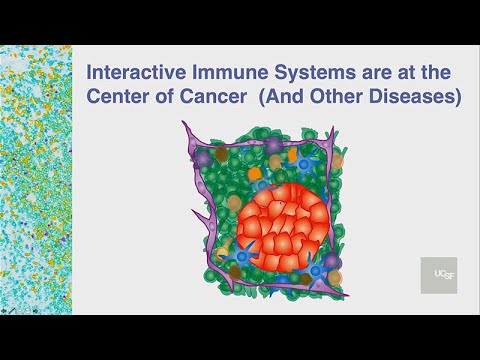

Interactive immune systems are at the center of cancer and other diseases. Dr. Matthew Krummel explores how the immune system can regulate cancer progression. Recorded on 10/31/2019. [12/2019] [Show ID: 35239]
More from: Next: UCSF Scientists Outline What’s To Come
(https://www.uctv.tv/mini-med-next)
UCTV is the broadcast and online media platform of the University of California, featuring programming from its ten campuses, three national labs and affiliated research institutions. UCTV explores a broad spectrum of subjects for a general audience, including science, health and medicine, public affairs, humanities, arts and music, business, education, and agriculture. Launched in January 2000, UCTV embraces the core missions of the University of California -- teaching, research, and public service – by providing quality, in-depth television far beyond the campus borders to inquisitive viewers around the world.
(https://www.uctv.tv)


Without change we die. No moral, mental or martial purity; no discipline, no chance of victory.
Optimism is relative!
Art of Leadership book can be purchased in these apps:
Cashapp: $pjh6867
Zelle: pjh6867@gmail.com
Paypal: https://paypal.me/MkuuMzee?country.x=…
UKMT PRESS: https://universityofkmt.myshopify.com/
Inbox or email me your address before or after payment. $30 + $5 s/h
Htp
Abibifahodie!

Agyei delivers a very important message to members of the Black community who are between 45-60 years old!
👍MORE ABOUT AGYEI TYEHIMBA:
https://linktr.ee/agyeityehimba
👍SUBSCRIBE TO THIS CHANNEL: https://www.youtube.com/channe....l/UCyvAXQmlCOfFcIWWK
👍Watch our most popular video, "The Fascinating Story of Khalid Muhammad! https://www.youtube.com/watch?v=00wRvjdnlaE&list=PLWQGEqGd_nBOoESO3Fr4465BA0jbcjtUc&index=8
______________________________________
👍POLITICAL EDUCATION PLAYLIST:
https://www.youtube.com/watch?v=IwyvhUuUi_U&list=PLWQGEqGd_nBNU4D4iZSdcHZncf7up70mr
👍INTERVIEWS PLAYLIST:
https://www.youtube.com/watch?v=w_swbIy8hEU&list=PLWQGEqGd_nBPfKOXMWdVljXVI78ysYxep
👍COMMENTARY PLAYLIST:
https://www.youtube.com/watch?v=wVftvM6PPWc&list=PLWQGEqGd_nBO4se3qoWUjqpk6diX57lIq
___________________________________________


Thomas Sankara, former leader of Burkina Faso, tried to convince his fellow African leaders not to pay their debts in an effort to force better negotiations with the European companies responsible for most of African nations' debt.
Here is the full speech: https://progressive.internatio....nal/wire/2021-02-26-
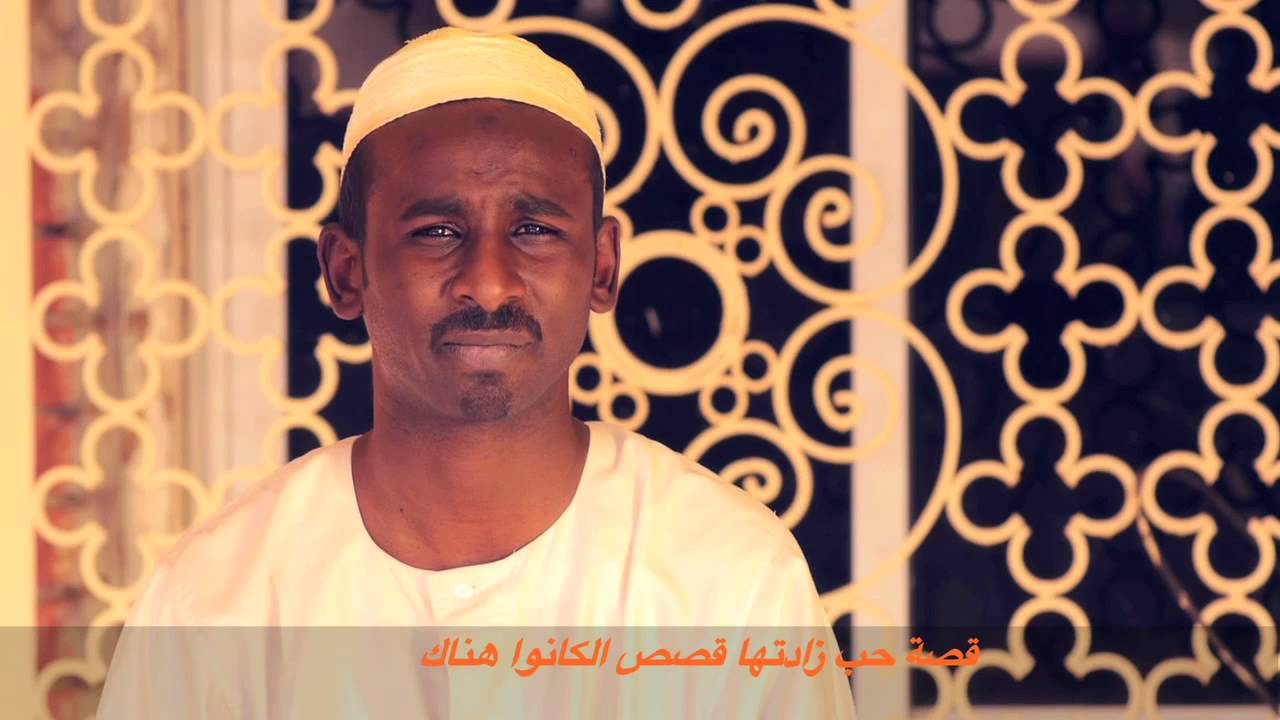

OUR SUDAN is a short film to inspire a new generation. Based on a TEDxKhartoum talk by the same name it has been made to inspire young Sudanese to think differently about themselves and their future - to inspire them to believe that, "the future is not a matter of what will be, but what could be. That it is a choice and it is theirs to make."The film OUR SUDAN tells the story of a generation of young men and women raised in a world of great tumult and change in which the dream of an older generation seems to have been lost. The film presents a new perspective, offering a celebration of Sudan's promise and calling upon young people to, "dream a new dream, the dream of their generation."An Arabic version of the same is under the following link: https://www.youtube.com/watch?v=-28EsAZ_dVo


Save 50% on your system, plus a free indoor security camera and your first month is free when you sign up for Core Monitoring. Visit https://SimpliSafe.com/tcrl to customize yours! Try SimpliSafe risk-free. If you don’t love it, return it for a full refund within 60 days.
Video to submit? https://forms.gle/HmwnDQKvwvYPxe967
Blog: https://thecivilrightslawyer.com/
Donate to the Institute for Justice: https://ij.org/support/give-no....w/thecivilrightslawy
Freedom is Scary STEAK RUB! https://quiggysbbq.square.site/product/freedom-is-scary-eat-steak/25?cs=true&cst=custom (Discount Code: LAWYER10) - 25% donated to the Institute for Justice
For business inquiries: civilrightslawyer@ellify.com
Twitter: https://twitter.com/johnbryanesq
Facebook: https://www.facebook.com/JohnBryanLaw
Instagram: https://www.instagram.com/johnbryanesq/
Youtube: https://www.youtube.com/@thecivilrightslawyer
FAIR USE NOTICE This video may contain copyrighted material; the use of which has not been specifically authorized by the copyright owner. We are making such material available for the purposes of criticism, comment, review and news reporting which constitute the fair use of any such copyrighted material as provided for in section 107 of the US Copyright Law. Notwithstanding the provisions of sections 106 and 106A, the fair use of a copyrighted work for purposes such as criticism, comment, review and news reporting is not an infringement of copyright.
NOTE: We don't condone threats or violence of any kind. If you are upset or outraged by acts of government misconduct featured in this video, we encourage you to utilize lawful means of expression, including becoming involved in the political process, as well as seeking accountability through the judicial system.
NOTE ALSO: The information you obtain here is not, nor is it intended to be, legal advice. You should consult an attorney for advice regarding your individual situation. We invite you to contact us and welcome your letters and electronic mail, or other submissions or messages. However, contacting us does not create an attorney-client relationship. Please do not send any confidential information to us until such time as an attorney-client relationship is established and documented in a written agreement.


👉 Want to create viral videos like this: https://voxavid.com
For over a million years, every human on Earth was dark-skinned — and the reason will completely rewire how you think about the human body.
If you shaved a chimpanzee, the skin underneath would be pale pink. So why is human skin bare, exposed, and — for 99% of our species' history — uniformly dark?
The answer isn't really about color at all. It's about fur, sweat, endurance running, and a single evolutionary "design package" that built the body you're using right now.
In this video, we trace how losing our fur forced our ancestors to evolve a biological sunscreen on the African equator — and why dark skin, not pale skin, is the true human default.
Dans cette vidéo :
• Why every great ape has pale skin under its fur — but humans don't
• How losing body hair turned us into the planet's best endurance machine
• The brutal biology of UVB, folate, and why pale skin near the equator was a death sentence
• How melanin became the keystone holding the entire human body together
• Why light skin is a recent "edit" that only appeared after we left Africa
📚 Sources :
— Skin pigmentation and UV radiation correlation (Jablonski & Chaplin, Journal of Human Evolution) :
— Evolution of fur loss and parasite avoidance (Pagel & Bodmer, Proceedings of the Royal Society B) :
— Endurance running and human evolution (Lieberman & Bramble) :
— Persistence hunting among the San (Liebenberg) :
— MC1R gene and the fixation of dark skin in the human lineage :
If stories like this make you see your own body differently, subscribe — we turn deep science into the story of who we really are.
#humanevolution #anthropology #darkskin #evolution #science #melanin #outofafrica

Music students download the technique of their favorite pianist or singer directly into their brains. Medical students download the skills of a seasoned surgeon or diagnostician. And each one of us routinely uploads our thoughts and memories to the digital cloud. While these scenarios still lie in the future, rudimentary versions of the necessary brain-to-brain technology exist today. But the ability to directly influence another person’s brain raises serious questions about human rights and individual freedoms. This program will present the latest technology and explore how the ethical implications of enhanced thinking go to the heart of consciousness itself.
This program is part of the Big Ideas Series, made possible with support from the John Templeton Foundation.
Our media partner for this program is Popular Science.
Footage of the brain-to-brain interface experiment provided by the University of Washington. For more information on the research:http://www.washington.edu/news..../2014/11/05/uw-study
Subscribe to our YouTube Channel for all the latest from WSF.
Visit our Website: http://www.worldsciencefestival.com/
Like us on Facebook: https://www.facebook.com/worldsciencefestival
Follow us on twitter: https://twitter.com/WorldSciFest
MODERATOR: John Donvan
PARTICIPANTS: Joseph Fins, Miguel Nicolelis, Chantel Prat, Andrea Stocco, Seung-Schik Yoo
Original Program Date: June 4, 2016
The Dawn of Brain-to-Brain Communication 00:00
John Donvan's Introduction to Brain to Brain communication. 2:22
Participant Introductions. 4:10
What to keep in mind when thinking about brain to brain communication. 6:22
How does one get into the mind business? 8:15
Aurora the monkey plays a game with just her brain.11:05
Transitioning to human brain to brain research. 18:41
Connecting the brains of two rats. 22:27
The tangled ball of neurons in our head is "us" 29:40
The puppet master describes linking two humans through their brains. 32:33
Using focused ultrasound to connect two human brains. 42:19
What are the contemplative factors in brain to brain communication? 49:50
If you can get two animals to communicate can you link 100? 54:09
The worry of people controlling your brain. 59:48
The risk of sharing thoughts from one brain to another. 1:02:54
How long until we can just download knowledge to our brains? 1:07:40
Giving credit to Arthur Clarke. 1:09:28
Is there any fear of brain damage from this technology? 1:10:20
Is it crazy to think we will all have chips in our brains? 1:13:01
What are the goals of brain to brain communication in the next 5 years? 1:17:33
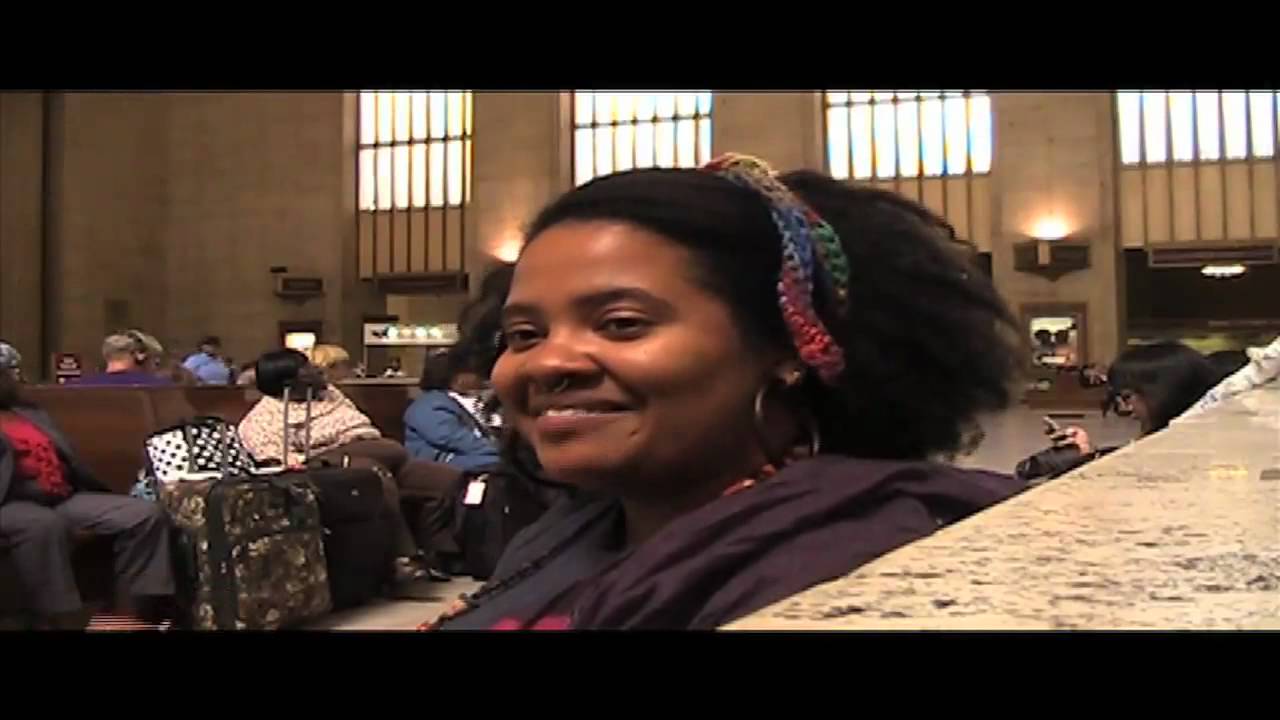
In this installment of 'Negro,' Dash speaks with African-American AfroPuerto Rican ethnographer, Wit Lopez on their painful childhood, having to prove 'Latinidad' to other Latinos and finding identity through the Afrodescended town of Loiza in Puerto Rico. History of Loiza is discussed, as well as cimarrones (maroons)--self-emancipated Africans, African spirituality and African and Indigenous descended identity through time and space.
Brief history of Loiza 5:06-7:59
Like: http://facebook.com/negrodocu
Website: http://negrodoc.com