








- General Videos
- Music
- Economics
- Health
- Travel & Events
- History
- Psychology
- Spirituality
- Movies
- News & Politics
- Kmtyw Combat Sciences
- Ɔbenfo Ọbádélé Kambon Videos
- Ɔbenfoɔ Kamau Kambon: Black Liberation Philosophy
- Science, Tech, Engineering and Math
- Permaculture
- Self-Sustainability
- Living Off Grid
- Yoruba Language Learning
- Education
- Mmɔfra Adesua
- Nana Kamau Kambon Playlist
- Livestream
- Komplementarity Kouples and Revolutionary Singles
- Abibitumi Film Series
- Decade of Our Repatriation
- Kwento xpr
- Live
Top videos


"2AM in Venezuela" (OFFICIAL VIDEO): https://youtu.be/GtvkwgbVKF8
BLACK WINTER (Full Album): https://youtube.com/playlist?list=PLJSMFuicKjJ46p1K9TlqZPRGFSd0M5z9U&si=4WG_YXCGJinM6XEN
Join the Patreon for exclusive videos that you won't find on Youtube: https://www.patreon.com/NTD1814
S U P P O R T
Cash App - $NelsonAmadeus
PayPal- GlobalHitsWorld@gmail.com
EMAIL - KingNeferkare@gmail.com
Twitter @NTDessalines
Instagram @NelsonAmadeus
TURN ON POST NOTIFICATIONS.

This is a previously undiscovered African house, from east Kenya,. It is almost on the edge of extinction, with the tradition being preserved by one remarkable young woman, Ramadan. The tiny home, a beautiful example of organic architecture, is constructed by around twenty women builders over three days, usually just before a marriage. The house is unusually high, with a raised up bed, and this is to protect the occupants from the occasional flooding of the river Tana. All the natural materials are gathered from within a few kilometers of the village. Essentially it is a bentwood frame lashed together into a gridshell. The whole structure is strong as it is a natural parabolic dome. The area is undergoing rapid change as modern materials and electricity are being brought in, so we were very fortunate to be able to record this building before it disappears completely.
COMPETITION: We tried to count how many knots were actually used in making the building. We have a small competition. The person who is closest to our answer, within three months of the video uploading will receive one of the very last copies of my book, free of charge. Leave a comment with your number, and how you estimated it (even if it is just a random guess). As long as we can then contact you to get your address we will send you a book all about nomadic architecture. There are only about 20 left unsold and this will never again be printed.
FUNDRAISER: This high building has evolved out of a very lightweight and mobile architecture that the same tribe use in the semi-desert regions to the north. We need to raise $5,000 to return to make a full record of this building type. We are open to sponsorships, or would even take a guest with us if you will cover the costs, fancy a trip of a lifetime working on a really important research project?
You can support us via Patreon or make a donation direct through Paypal, or contact us directly if you want to discuss another way to support us - (email address is on our channel page).
https://www.patreon.com/Nomad_Architecture
https://paypal.me/NomadicArchitecture
https://nomads.org/Books.html
MUSIC: I write all the music for our more recent videos. If you like it let me know, I know it is not perfect, but I enjoy it!


www.Farmers.co.ke is the site for authoritative multimedia agricultural and agribusiness content.
#FarmKenya
Visit us today for farming news, agribusiness tips, practical expert advice and industry updates.
SMS: 22071
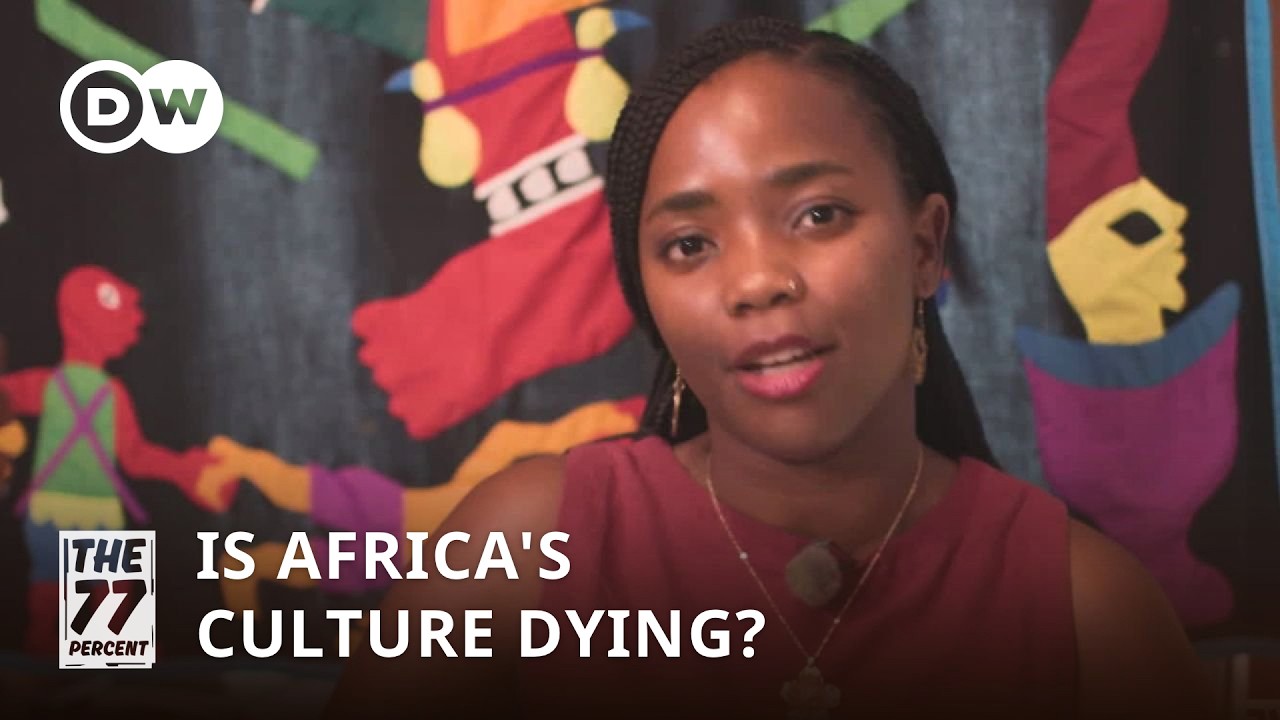

Across five countries and one museum, young Africans are confronting the same question: How much of their cultural heritage is worth preserving in the modern era — and what does it mean to lose it? In this episode of The 77 Percent, host Okeri Ngutjinazo examines African tradition, spiritual belief, and traditional medicine through the eyes of young people navigating the tension between heritage and the modern world.
00:00 — Soul of Africa Museum: What Voodoo really is
02:48 — Using art to keep Ashanti culture alive
04:30 — Manhyia Palace: Young people and the call to embrace tradition
05:56 — Kampala Street Debate: Is African culture at risk of being erased?
09:08 — Can you be modern AND traditional?
12:14 — Herbal mdicine and faith in Kano, Nigeria
15:39 — The dangers of unregulated traditional medicine
17:05 — Africa's pre-colonial religions: Yoruba, Akan, Zulu, and beyond
19:23 — Soweto, South Africa: Zuko and Tumi's Ancestral Healing Journey
21:53 — Dreams, visions and the call to become a healer
24:38 — Should African artifacts stay in European museums?
Enjoyed this video? Check out more on our channel:
Join the conversation of our latest Street Debates : https://www.youtube.com/show/V....LPLKkuogH1i04c1M6taI
Are you crazy about Science? Then you don’t wanna miss THIS! : https://www.youtube.com/watch?v=dek6CFOO0ck&list=PLKkuogH1i04erRJRy9cyE3P8XPQSSZrUH
Find all our latest videos here! : https://www.youtube.com/@DWThe77Percent/featured
-----
#dwafrica #the77percent
-----
77 percent of Africans are younger than 35. Africa's youth holds the key to shaping the continent’s future. On our platforms we share their stories, their dreams and their challenges. Are you part of the 77 percent? Join the debate here on YouTube, and on the following platforms:
facebook.com/dw.africa
instagram.com/dw_the77percent
dw.com/77
dw.com/africa


Shehu Shagari, a gentle, scholarly Fulani teacher who never truly sought the presidency, presided over a republic that squandered an estimated $16 billion in oil wealth, expelled two million West African migrants, rigged its own re-election so blatantly that citizens cheered when soldiers arrived, and ended with a brigadier shot dead in a predawn firefight at the presidential villa.
This is Episode 6 of Power & Plunder — a 16-part series covering every head of state Nigeria has had since independence. Built on declassified British and American archives, court records, and primary sources.
My Sources:
https://docs.google.com/docume....nt/d/1ng-sWHPdSHvLKO
Thank you for making these videos possible through your support.
.
.
Join my community:
YouTube:
https://www.youtube.com/channe....l/UCNDlxHqR3ofCP7SVC
📸Insta - realjudebela
🐦X - @realjudebela
Inquiries // use the linked email
For story tips: use the linked email
....................................................
Copyright © 2026 JudeBela Studios. All rights reserved.


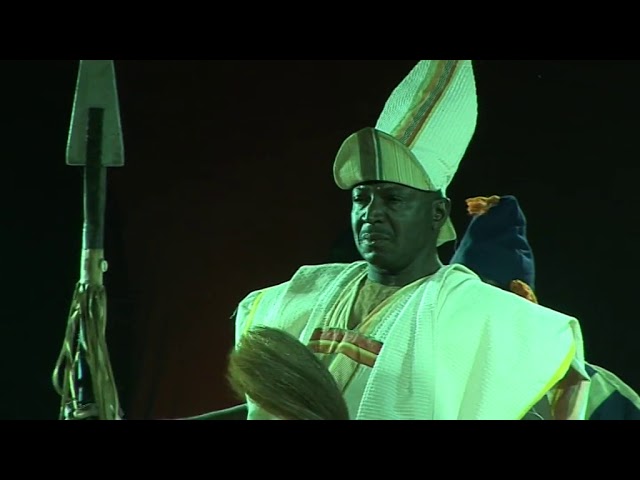
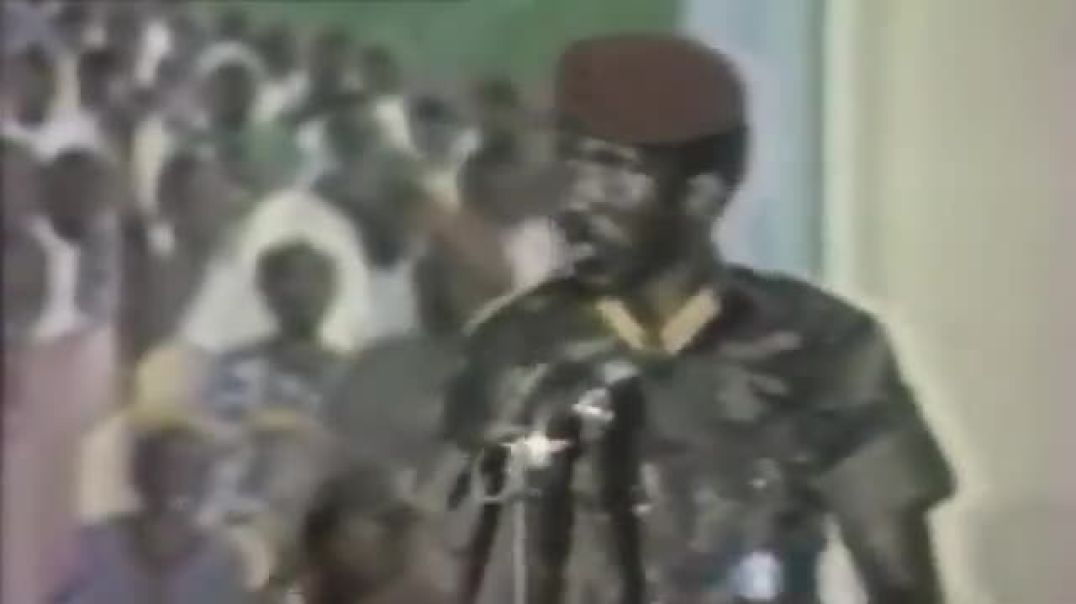


The Asante kingdom's great roads system.
Roads and wheeled transport in African history.
https://fromnothing.info/marketPatreon: https://www.patreon.com/FromNothingFollow me or support my content here: https://linktr.ee/fromnothingSource #72 Song at 6:00Magestic Hills - Kevin MacLeodhttps://filmmusic.io/song/4013-majestic-hills

Hausa Koko is most likely Ghana's most popular street breakfast. It is made of millet and spices, and just loved by many. Making it at home yields results that is no different from one you get from your favorite koko joint...that is if it is done the right way.
Ingredeients:
7 cups millet
75 grams ginger
1 teaspoon cloves (p3pr3)
2 teaspoons black pepper corn (esoro wisa)
20 pieces negro peppers (hwentia)
4 dried chilies
Shoppable Links:
Koko pot https://amzn.to/3jVJDol
Vitamix A3500 Ascent Series Smart Blender https://amzn.to/2IMzTfV
Find more of my kitchen favorites here https://www.amazon.com/shop/kw....ankyewaaskitchen?ref
For product reviews, sponsorship and collaboration, email me at askkwankyewaa@gmail.com
![[Part 1] GRM-SL Visit Njama Kowa Village In Moyamba District, Sierra Leone](https://i.ytimg.com/vi/pKQEbpZq3hY/hqdefault.jpg)

Part 1 of Gullah Redemption Mission Sierra Leone's (GRM-SL) visit to Njama Kowa village in Moyamba to discuss the Tools & Seeds Project.
Sign the petition to help us write OURSTORY and pave the way for us all.
Link to sign: https://www.change.org/GullahCitizenshipSL
Join The Organization: https://gullahleone.org/gnona-....individual-registrat
Grab some merchandise: https://teespring.com/stores/gullah-leone-store
Gullah Geechee have a unique historical, kinship, and cultural connection to Mama Salone (Sierra Leone) and we believe that it is time for us to request and receive our dual citizenship in this beautiful country where thousands of our ancestors were stolen away from and hundreds repatriated to found the modern capital city of Freetown.

GET BABA BARUTI''s BOOKS HEREhttps://akobenhouse.com/produc....t-category/authors-b PROGRAM FOR BLACK CHILDREN https://consciousingenuity.com/MANHOOD TRAINING CAMP FOR BLACK BOYShttp://asafocamp.com/THE MELTREK PROGRAM https://edanimeproductions.com/shopBEST ONLINE SCHOOL FOR BLACK CHILDREN https://www.uhuruacademy.com/ EMAIL ME:dr.maat.msu@gmail.com




"2AM in Venezuela" (OFFICIAL VIDEO): https://youtu.be/GtvkwgbVKF8
BLACK WINTER (Full Album): https://youtube.com/playlist?list=PLJSMFuicKjJ46p1K9TlqZPRGFSd0M5z9U&si=4WG_YXCGJinM6XEN
Join the Patreon for exclusive videos that you won't find on Youtube: https://www.patreon.com/NTD1814
S U P P O R T
Cash App - $NelsonAmadeus
PayPal- GlobalHitsWorld@gmail.com
EMAIL - KingNeferkare@gmail.com
Twitter @NTDessalines
Instagram @NelsonAmadeus
TURN ON POST NOTIFICATIONS.
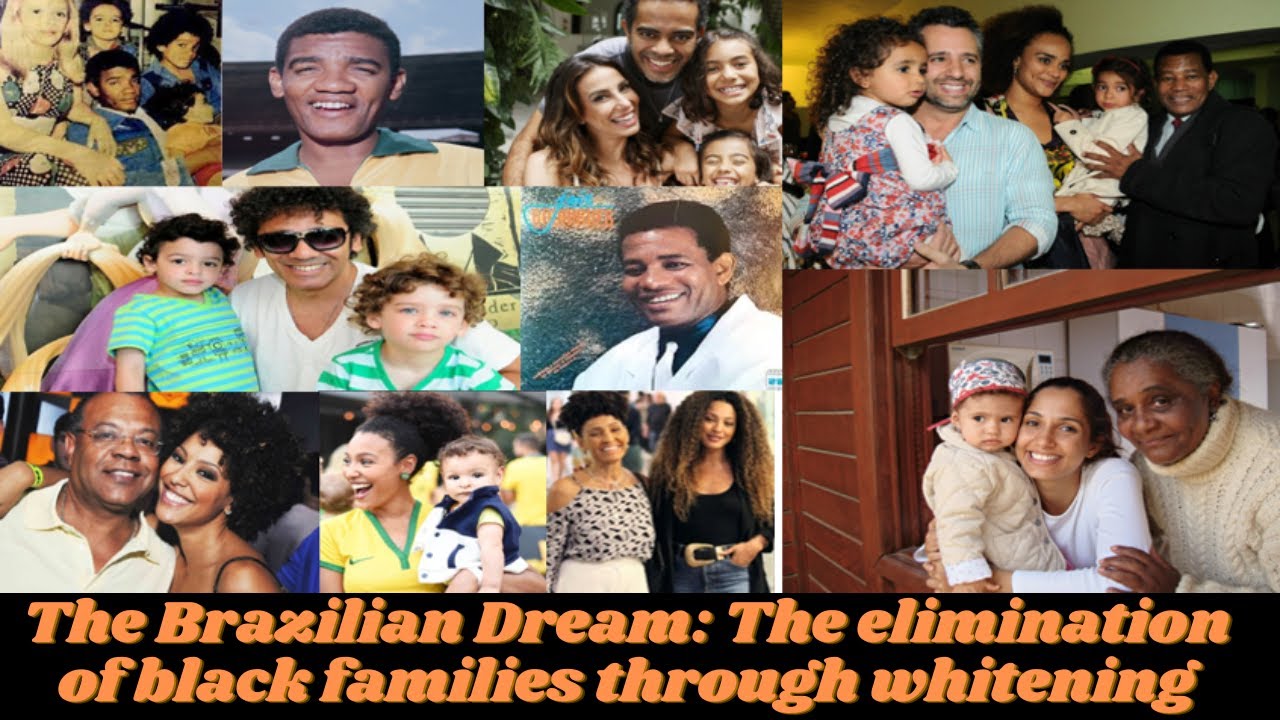
In the the late 19th and early 20th century, the dream of Brazil's elite was the elimnation of black and mixed race people through racial mixture. The country's leadership was concerned with its image around the world as well future success as a nation. This elite class saw the majority population of black and brown people as inferior and responsible for the country's backwardness. The "solution" was opening the country to millions of European immigrants and the elimination of black and mixed race people through the promotion of mixed race unions which they would believed would lead to a Brazil that would eventually be white.
Buy me a coffee and support the channel via CashApp: $MrMarques72
Please Visit our Website to get more information: https://blackbraziltoday.com/
🔔Explore the true narrative of Brazil – Subscribe to Black Brazil Today for insightful discussions on race, culture, and media.🔍
https://www.youtube.com/@black....braziltoday3316/tuto
=============================
✅ Recommended Playlists
👉News and events
https://www.youtube.com/watch?v=PTKDKcWX_vQ&list=PLSk4jWKysUw3ak0abQ3fufWRLQHybwieI&pp=iAQB
👉Black identity in Brazil
https://www.youtube.com/watch?v=N03iDxsJeZg&list=PLSk4jWKysUw0JD8iF0dgUVCJXMBIMMsmG&pp=iAQB
✅ Other Videos You Might Be Interested In Watching:
👉 "I should have 'given it up more' before I got married," says actress Taís Araújo
https://www.youtube.com/watch?v=evaGHrFTlnU
👉"They're not on the brand's level": Clothing brand rep caught dismissing black models in audio leak
https://www.youtube.com/watch?v=yFytSK8xS_U
👉Wearing blackness?: White woman 'turns into' "black woman" for Carnaval
https://www.youtube.com/watch?v=PTKDKcWX_vQ
👉“Brazil never saw black people as beautiful”: The emerging concept of black beauty
https://www.youtube.com/watch?v=O0cSw7RetBw
👉“I never saw myself as a black man”: Reality show contestant discusses how he became black
https://www.youtube.com/watch?v=N03iDxsJeZg
👉Near the end of the slavery era, 60% of enslaved Africans brought to Brazil were children
https://www.youtube.com/watch?v=BEMT0es1P6I
=============================
✅ About Black Brazil Today.
Welcome to Black Brazil Today, a channel that explores black Brazilians' vibrant and diverse experiences✊. Get into our in-depth race, culture, and media discussions, highlighting Brazilian society's significant strides and challenges.
Join us as we dissect racial dynamics, celebrate black Brazilian culture, and amplify voices often unheard. From music and movies to social movements, we bring you the real stories shaping black Brazil's narrative. Subscribe to be part of a community committed to truth, representation, and change. 🎥🌍💬
🔔 Let's Explore the untold stories – Subscribe to Black Brazil Today for the latest on black Brazilians in news, music, and entertainment. 🎵📰
https://www.youtube.com/@black....braziltoday3316/tuto
=================================
ADD HASHTAG HERE
⚠️DISCLAIMER: We do not accept any liability for any loss or damage incurred from you acting or not acting as a result of watching any of our publications. You acknowledge that you use the information we provide at your own risk. Do your research.
Copyright Notice: This video and our YouTube channel contain dialogue, music, and images that are the property of Black Brazil Today. You are authorized to share the video link and channel and embed this video in your website or others as long as a link back to our YouTube channel is provided.
© Black Brazil Today