- General Videos
- Music
- Economics
- Health
- Travel & Events
- History
- Psychology
- Spirituality
- Movies
- News & Politics
- Kmtyw Combat Sciences
- Ɔbenfo Ọbádélé Kambon Videos
- Ɔbenfoɔ Kamau Kambon: Black Liberation Philosophy
- Science, Tech, Engineering and Math
- Permaculture
- Self-Sustainability
- Living Off Grid
- Yoruba Language Learning
- Education
- Mmɔfra Adesua
- Nana Kamau Kambon Playlist
- Livestream
- Komplementarity Kouples and Revolutionary Singles
- Abibitumi Film Series
- Decade of Our Repatriation
- Live
Top videos



Ghanaian real estate company uses shipping containers to create unique commercial and residential spaces. In this video, we tour three different shipping container projects with an architect from Nest Realty, the lovely Klortsoo Okai-Gawuga and discuss the company’s residential offers and projects. We also talk about their upcoming community and address some of the concerns with shipping container homes.
00:00 Intro
00:40 Location 1 Tour
09:16 Location 1 Estimated Cost (External works exclusive)
09:56 Location 2 Tour
18:45 Location 2 Estimated Cost (External works exclusive)
20:19 Location 3 Tour
27:17 Upcoming residential projects
32:14 Residential Offers
32:46 What $12,000 gets you
34:30 What $13,500 gets you
38:43 Safety Concerns
41:11 Lifespan of shipping container homes
42:21 Consultation Process
If you are interested in acquiring one of these units or looking for some more information you can contact Nest Realty directly here:
Website: www.nestrealtygh.com
Phone Number 1: +233 302 224 216
Phone Number 2: +233 249 358 111
Phone Number 3: +233 243 519 501
Email Address: mail@nestrealtygh.com
Instagram: @nestrealtygh
Facebook: @containerarchitecturegh (Nest Realty Ltd.)
If you want to learn more about shipping container homes check out this video:
$6,500 House in Ghana: https://youtu.be/izgwOkwxQ0I
Video filmed by: Cobbie Brent
Video edited by: Amoaa and Cobbie
Images and videos of renders: Nest Realty
Welcome to the channel! These property tours give viewers exclusive access to some of the most beautiful and interesting homes on the market.
Build with Amoaa covers all things real estate related in Ghana, moving to or visiting Ghana, business growth and developing your best self.
If you are interested in any of these topics you should definitely subscribe to this channel so that you don't miss out on any great content.
You can get in touch here:
amoaa@buildwithamoaa.com
You can join my mailing list so that you are the first to know when I post new content, get free real estate tips, business growth tips and practical life hacks!
Sign up here:
https://view.flodesk.com/pages..../60e0509e3595ec6f88e
Let me know in the comments if this video was helpful to you, your favourite part of the tours and conversation, and if you would consider living in a shipping container home.
Don't forget to like and share this video if you found it interesting!
OTHER VIDEOS
Own a house in Ghana for $15,850: https://youtu.be/HUF1CAcbIZo
Own a house in Ghana for $10,000: https://youtu.be/ITM1Hpx6W5I
Most Beautiful Estate in Cantonments: https://youtu.be/AAGeXR8XaD8
Moving to Ghana: https://youtu.be/KJ_aDKlbT5shttps://youtu.be/AAGeXR8XaD8


Obokese University Of Excellence (In detail) | Ghana #1 Destination For African Diaspora
Please Subscribe, Comment & Share This Video
Subscribe to Ekow Simpson - https://tinyurl.com/ycp6lfgy
*Donate & Support the channel on Patreon:
https://www.patreon.com/simpsonekow1
*Donate & Support the channel on PayPal:
https://paypal.me/eegyir
Email: egyirsimpson@gmail.com
I N S T A G R A M: - https://www.instagram.com/capecoast_tour
F A C E B O O K: - https://web.facebook.com/ekowesimpson
T W I T T E R: https://twitter.com/EkowESimpson
![Secrets of an African Jungle [1986]](https://i.ytimg.com/vi/uZcEWTlT0KY/hqdefault.jpg)


![Nigerian Prime Minister Abubakar Tafawa Balewa Answers Questions - UN [1960]](https://i.ytimg.com/vi/x0KZMq-RRd4/hqdefault.jpg)
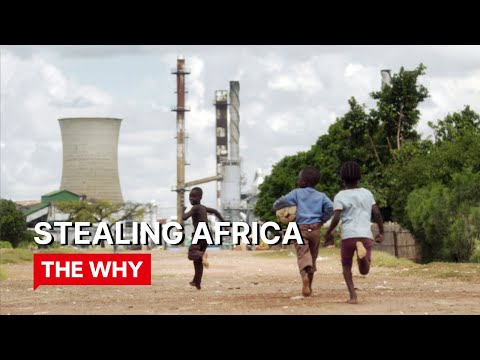

Rüschlikon is a village in Switzerland with a very low tax rate and very wealthy residents. But it receives more tax revenue than it can use. This is largely thanks to one resident - Ivan Glasenberg, CEO of Glencore, whose copper mines in Zambia are not generating a large bounty tax revenue for the Zambians. Zambia has the 3rd largest copper reserves in the world, but 60% of the population live on less than $1 a day and 80% are unemployed. Based on original research into public documents, STEALING AFRICA is an investigative story of global trade and political corruption where money and natural resources only flow one way, and in the meantime poverty becomes harder to escape.
Filmmaker: Christoffer Guldbrandsen
Producer: Henrik Veileborg
Produced by Guldbrandsen Film
Released: 2012
This film was originally released as part of THE WHY series WHY POVERTY?. Learn more about the project: https://www.thewhy.dk/projects/why-poverty
__________________________________
About THE WHY
We believe free access to information is a human right.
To combat unequal access to information THE WHY produces & donates documentaries to underserved countries and distributes them on a sliding fee scale to other broadcasters around the world.
Follow us and learn more about our work:
• https://www.thewhy.dk
• https://www.instagram.com/thewhyfoundation
• https://twitter.com/thewhyfound
• https://facebook.com/TheWhyFound/