- General Videos
- Music
- Economics
- Health
- Travel & Events
- History
- Psychology
- Spirituality
- Movies
- News & Politics
- Kmtyw Combat Sciences
- Ɔbenfo Ọbádélé Kambon Videos
- Ɔbenfoɔ Kamau Kambon: Black Liberation Philosophy
- Science, Tech, Engineering and Math
- Permaculture
- Self-Sustainability
- Living Off Grid
- Yoruba Language Learning
- Education
- Mmɔfra Adesua
- Nana Kamau Kambon Playlist
- Livestream
- Komplementarity Kouples and Revolutionary Singles
- Abibitumi Film Series
- Decade of Our Repatriation
- Kwento xpr
- Live
Top videos


The guest in this edition is an award-winning architect who made a name for himself with his own brand of sustainable architecture incorporating traditional methods: Diébédo Francis Kéré, originally from Burkina Faso, now has his own architectural practice in Berlin with various projects underway in different countries around the globe.
Read more: http://www.dw.de/program/insig....ht-germany/s-30472-9

Session 3: Structural use of bamboo culms (Part 2)
Speaker: Zhuo Xin, Associate Professor of College of Civil Engineering and Architecture at Zhejiang University
Topic: Innovative multi-culm bamboo spatial lattice structures
The innovative multi-culm bamboo spatial lattice structures are composed of bamboo culm triangle installation units which are connected in the way that all simple connectors are the same. The topological relationship of this structural system differs from that of the traditional spatial lattice structures. A free-form surface lattice structures can be assembled in the way of tangent direction parallel connection between adjoining installation units. The bearing capacity of the structures can be strengthened in the way of normal direction parallel connection between adjoining installation units. The feasibility of this structural system has been validated by engineering applications.
Speaker: Luis Felipe Lopez, Head of Technology at Base Bahay Foundation in the Philippines
Topic: Research in the Philippines
Base Bahay Foundation is a non-profit organisation dedicated to providing disaster-resilient, sustainable socialised housing for low-income families and disaster victims using the Cement-Bamboo Frame Technology (CBFT). However, though the CBFT has been tried and tested in our various projects around the country, Base remains dedicated to constant research and innovation for the optimization of the technology.
This can be achieved through the Base Innovation Center where Base conducts research on bamboo construction technology, in collaboration with various international and local universities. Together with our partner institutions, the BIC aims to further bamboo technology and promote this for widespread use.
Speaker: David Trujillo, Chair of INBAR Construction Task Force, Assistant Professor at Coventry University
Topic: Making bamboo a mainstream structural material
Bamboo has been used as a construction material for thousands of years and currently hundreds of millions of people live in bamboo housing across the world, yet it is still perceived as non-conventional material. This is because most of bamboo constructions are vernacular. Over the last 20 years a significant effort has been made to transform it into another engineering material. This presentation identifies the state-of-the-art of bamboo engineering, including the significant progress made in the development of standards (and codes) and also identifies the path yet to cover.
Moderators:
Durai Jayaraman: Global Programme Director of INBAR
Sebastian Kaminski: Senior Structural Engineer of Arup
INBAR Official:
www.inbar.int
www.twitter.com/INBARofficial/
www.twitter.com/INBARlac/
www.twitter.com/INBARWaro/
www.facebook.com/INBARofficial/
www.facebook.com/INBARlac/
www.facebook.com/INBARWARO/
Follow our Youtube channel for practical tips for growing, processing and marketing bamboo and rattan products as well as interviews, speeches and more from our work around the world.


#NewBlackDaddy: In this edition, I explore the challenge of raising a Black Man to not internalise the misogynistic ideals of the world in which we live.
► AFFIRMING BLACK MANHOOD: https://www.shakaraspeaks.com/
► JOIN ME ON TELEGRAM: https://t.me/ShakaRaSpeaks
------------------------------------------------------------
► ABIBITUMI: https://www.abibitumi.com/members/shakara/
► ABIBITUMITV: https://abibitumitv.com/@ShakaRa
► Subscribe: https://www.youtube.com/shakar....aspeaks/?sub_confirm
► https://twitter.com/ShakaRaSpeaks
► Facebook: https://www.facebook.com/ShakaRaSpeaks/
► Instagram: https://www.instagram.com/shakaraspeaks/


Every Google search, OKCupid date, and Netflix recommendation, and even the items and prices you see at the grocery store is uses massive amounts of data. Algorithms of increasing complexity make sense of this ever-expanding mountain of data, and are helping us achieve unprecedented insights into medicine and other fields, create even more powerful computers, and much more. Watch scientists James Fowler, Steven Strogatz, Andrew Lo, and Seth Lloyd crunch the numbers in "Go Figure: Predicting the World With Math," part of the Big Ideas series from the 2014 World Science Festival.
This program is part of the Big Ideas Series, made possible with support from the John Templeton Foundation.
Subscribe to our YouTube Channel for all the latest from WSF.
Visit our Website: http://www.worldsciencefestival.com/
Like us on Facebook: https://www.facebook.com/worldsciencefestival
Follow us on twitter: https://twitter.com/WorldSciFest
Original Program date: June 1, 2014
Host: Ira Flatow
Participants: James Fowler, Steven Strogatz, Andrew W. Lo, Seth Lloyd
Predicting the World with Math introduction. 00:00
Ira Flatow's Introduction. 1:35
Participant Introductions. 2:42
How much data is there in the world? 4:35
What is big data and machine learning? 11:24
Will we need new tools to analyze all of this data? 14:00
Will we be able to track everything you do 24/7? 19:57
Are there ant natural algorithms that can predict our world? 26:36
Can we use FaceBook to make predictions of the world? 34:18
Does god play dice with the universe? 42:32
Asking better questions to get better data. 50:06
Can we predict when society will change it's mind? 59:05
How will quantum computing change the future? 1:05:17
Predicting how a disease will spread. 1:13:05
Why was the SARS epidemic stunted from predictions? 1:17:43
How do you all approach a problem from your different decisions. 1:21:23
Demographics and marketing in a social world. 1:27:26
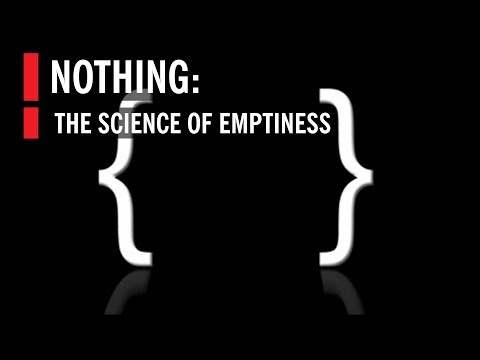
Why is there something rather than nothing? And what does ‘nothing’ really mean? More than a philosophical musing, understanding nothing may be the key to unlocking deep mysteries of the universe, from dark energy to why particles have mass. Journalist John Hockenberry hosts Nobel laureate Frank Wilczek, esteemed cosmologist John Barrow, and leading physicists Paul Davies and George Ellis as they explore physics, philosophy and the nothing they share.
This program is part of the Big Ideas Series, made possible with support from the John Templeton Foundation.
The World Science Festival gathers great minds in science and the arts to produce live and digital content that allows a broad general audience to engage with scientific discoveries. Our mission is to cultivate a general public informed by science, inspired by its wonder, convinced of its value, and prepared to engage with its implications for the future.
Subscribe to our YouTube Channel for all the latest from WSF.
Visit our Website: http://www.worldsciencefestival.com/
Like us on Facebook: https://www.facebook.com/worldsciencefestival
Follow us on twitter: https://twitter.com/WorldSciFest
Original Program Date: June 12, 2009
MODERATOR: John Hockenberry
PARTICIPANTS: George Ellis, Frank Wilczek, John Barrow, Paul Davies
Introduction 00:00
John Barrow lecture on how nothing can be something. 03:52
Participant introductions. 28:57
Can the beginning be ranked a zero? 30:00
Empty space and virtual particles. 37:11
Does science want there to be nothing? 40:02
Zero may not be nothing. 49:16
What do you get when you test nothing? 58:48
How do you jump from there was nothing to now we can measure nothing? 01:05:01
What if there is evidence that time changes rate and direction. 01:08:30
Does consciousness change the testing of the observer? 01:12:10
What does string theory say about nothing? 01:17:40

This is one of several films made at Imperial College London in conjunction with ICI. The entire film, except for a short end sequence, was shot in the laboratory of Professor Eric Laithwaite at Imperial College London. This is one of many examples demonstrating electromagnetic forces and in particular the linear induction motor for which Eric Laithwaite was famous. Many of what he called his 'toys' are seen, these are models that help demonstrate the concepts and forces of electromagnetic induction etc.
This was currently the best transfer from 16mm film that we had of this unique engineer in his 'work place', but for a better quality version please now go here: https://youtu.be/CmKF72CPR0s
http://wwwf.imperial.ac.uk/blo....g/videoarchive/2009/

📢 “Agroecology is more than the production... it’s about our relationship with the environment and community.” For #IGrowYourFood, organic farmer Roberto Carlos tells us why planting banana trees is important for a coffee grower 🇧🇷
Find out more about the global action day: https://campaigns.ifoam.bio/igrowyourfood
🤗 Support our ORGANISATION:
https://ifo.am/Donate
🤝 Become our PARTNER:
https://ifo.am/JoinIFOAM
📩 Sign up to our NEWSLETTER:
https://ifo.am/Newsletter
▶️ Subscribe to our YOUTUBE channel:
https://ifo.am/YouTube
👍 Stay connected on FACEBOOK:
https://ifo.am/Facebook
👩💻 Join the conversation on TWITTER:
https://ifo.am/Twitter
👨💻 Follow us on LINKEDIN:
https://www.linkedin.com/compa....ny/ifoamorganicsinte