- General Videos
- Music
- Economics
- Health
- Travel & Events
- History
- Psychology
- Spirituality
- Movies
- News & Politics
- Kmtyw Combat Sciences
- Ɔbenfo Ọbádélé Kambon Videos
- Ɔbenfoɔ Kamau Kambon: Black Liberation Philosophy
- Science, Tech, Engineering and Math
- Permaculture
- Self-Sustainability
- Living Off Grid
- Yoruba Language Learning
- Education
- Mmɔfra Adesua
- Nana Kamau Kambon Playlist
- Livestream
- Komplementarity Kouples and Revolutionary Singles
- Abibitumi Film Series
- Decade of Our Repatriation
- Kwento xpr
- Live
Top videos

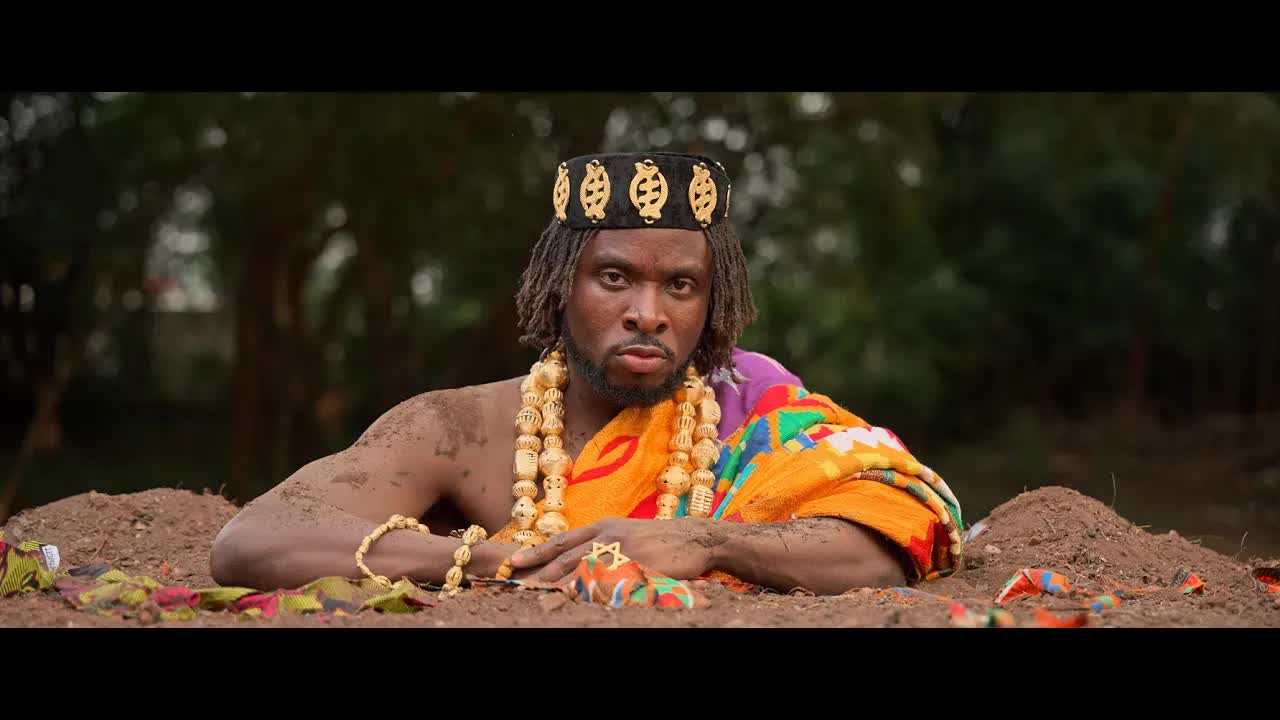

The official music video from Fuse ODG ft BackRoad Gee & Pa Salieu, taken from the new album Spirit of New Africa II.
Stream the album at WWW.FUSEODG.COM
Named after one of the most powerful figures in Ashanti history, “Komfo Anokye” connects the past with the present, celebrating African identity, history and the spirit that continues to shape who we are today.
Stream the album Spirit of New Africa II now.
#fuseodg #komfoanokye #spiritofnewafrica #sona2 #ghana #africanmusic #newafrica #thisisnewafrica




Chinese President Xi Jinping’s Belt and Road Initiative has plowed billions of dollars into infrastructure projects in Africa. That’s given Beijing prime access to the mining resources that will underpin the upcoming technology, energy and transport revolutions.
Now the US has fully awakened to China’s ambitions. President Joe Biden is championing new investment in a railway that will transport copper and other minerals from Zambia and the Democratic Republic of Congo to the Angolan port of Lobito. But is it too late for the US to catch up?
00:00 Introduction
00:51 KoBold Metals and the Central African Copperbelt
02:32 The Benguela Railway through Angola
04:06 China’s stuttering Belt and Road Initiative
05:30 The G-7’s response to Belt and Road
06:28 Trafigura and the US’s rail investment
Camera: Zinyange Auntony
--------
Like this video? Subscribe: http://www.youtube.com/Bloombe....rg?sub_confirmation=
Become a Quicktake Member for exclusive perks: http://www.youtube.com/bloomberg/join
Bloomberg Originals offers bold takes for curious minds on today’s biggest topics. Hosted by experts covering stories you haven’t seen and viewpoints you haven’t heard, you’ll discover cinematic, data-led shows that investigate the intersection of business and culture. Exploring every angle of climate change, technology, finance, sports and beyond, Bloomberg Originals is business as you’ve never seen it.
Subscribe for business news, but not as you've known it: exclusive interviews, fascinating profiles, data-driven analysis, and the latest in tech innovation from around the world.
Visit our partner channel Bloomberg Quicktake for global news and insight in an instant.

2nd Channel:
https://www.youtube.com/@LateNiteGnosis
Follow me on Twitter:
https://twitter.com/NealSendlak1
Discord:
https://discord.com/invite/uWBZkxd4UX
Lucy, the discovery of this 3.2 million-year-old fossil skeleton was such a monumental
breakthrough and what it meant for our understanding of human evolution.
In 1974, a team of researchers led by the renowned paleoanthropologist Dr.
Donald Johanson made a groundbreaking find in the Afar region of Hadar,
Ethiopia. They unearthed an almost complete fossil skeleton belonging to an early
human ancestor of our species, whom they affectionately named Lucy after the
Beatles' song "Lucy in the Sky with Diamonds."
The oldest known religion in Ethiopia is a traditional belief system called "Ethiopian
Traditional Religion" or "Ethiopian indigenous faith." This religious practice
predates the arrival of Christianity and Islam in the region by thousands of years. It encompasses a wide
range of spiritual beliefs and practices that have been passed down through
generations and are deeply rooted in Ethiopian culture and heritage.
Ethiopian Religion is characterized by its strong connection to nature,
ancestral worship, and the belief in supernatural forces and spirits. It incorporates
elements of animism, where various aspects of the natural world, such as rivers,
mountains, and trees, are considered to possess spiritual essence and are revered
accordingly.
The practice of Ethiopian Traditional Religion involves rituals, ceremonies, and
offerings to appease and seek blessings from ancestral spirits and deities. These
rituals often take place in sacred sites, such as forests, mountains, or ancient
stone structures known as "mazgabas."
The Aksumite religion, also known as the Aksumite Polytheism, refers to the
religious practices and beliefs of the Aksumite Empire, an ancient kingdom located
in present-day Ethiopia and Eritrea.
The primary deity of the Aksumite religion was the god Mahrem, also known as
Astar, who was considered the supreme god and the protector of the Aksumite
kingdom. Mahrem was associated with the sky, rain, and fertility. The Aksumite
kings, who held significant religious and political authority, were believed to be
direct descendants of Mahrem, solidifying their divine status and legitimacy.
In addition to Mahrem, the Aksumite pantheon included other gods and
goddesses, such as Astar, Beher, Meder, and Waraqa. Each deity had specific
domains and was worshipped for various purposes, including fertility, protection,
agriculture, and prosperity.
The Aksumites also practiced ancestor worship, believing that deceased ancestors
played a role in the spiritual well-being and guidance of the living. They would
honor and venerate their ancestors through rituals and offerings, seeking their
blessings and assistance.
The Aksumite religion was closely intertwined with the political and cultural
aspects of the empire. Temples and religious structures, such as the famous
Stelae of Aksum, were erected to honor the gods and commemorate the rulers.
Ritual ceremonies, sacrifices, and festivals were held to celebrate important
events, agricultural cycles, and religious observances.
With the spread of Christianity in the 4th century CE, the Aksumite religion began
to decline. Christianity eventually became the dominant religion in the region and
played a significant role in shaping Ethiopian culture and identity.
Today, remnants of the Aksumite religion can still be found in Ethiopian Orthodox
Christianity, which incorporates some elements and practices from the ancient
Aksumite belief system. However, the original Aksumite religion, as a distinct and
separate faith, ceased to exist as Christianity took root in the region. And by the 7th and 8th centuries, Islam would take over as the dominant religion of Africa. Which continues today.
The history of Africa begins with the emergence of hominids, archaic humans and — around 300,000–250,000 years ago — anatomically modern humans (Homo sapiens), in East Africa, and continues unbroken into the present as a patchwork of diverse and politically developing nation states. The earliest known recorded history arose in Ancient Egypt, and later in Nubia, the Sahel, the Maghreb, and the Horn of Africa.
Following the desertification of the Sahara, North African history became entwined with the Middle East and Southern Europe while the Bantu expansion swept from modern day Cameroon (Central West Africa) across much of the sub-Saharan continent in waves between around 1000 BC and 1 AD, creating a linguistic commonality across much of the central and Southern continent.
#gnosticinformant #documentary #africa


Film by Nidhi Dutt and Daniel Boaden
People & Power investigates the environmental consequences of palm oil plantations in equatorial Africa.
There are few products so ubiquitous as palm oil. You can find its derivatives in chocolate, shampoo, toothpaste, detergent, ice cream, floor polish and a host of other products filling supermarket shelves.
Extracted from the fruit of the tropically-grown oil palm tree (Elaeis guineensis), it has become so versatile and sought after that the growing economies of Indonesia and Malaysia, the world's two largest producers, make some $40bn a year from its production and export.
Given that by 2020 global demand for palm oil is expected to double and then triple by 2050, it is no wonder that other developing countries, especially in sub-Saharan West Africa where the tree originates, have been looking enviously at Southeast Asia and hoping to emulate that success.
But palm oil cultivation does not come cost-free. If not done sustainably, say conservationists, it can have disastrous consequences for people and the environment. In Indonesia, for example, it has played a major role in deforestation which has seen the loss of more than 6 million hectares of primary forest over the last 15 years.
As rainforests are home to least half of this planet's species of plants, animals and insects, the negative impact on global biodiversity can only be imagined. In addition, indigenous communities are also destroyed as people who have lived happily off the forest's resources for generations, often do not own the land (at least not in a form recognised by governments, corporations and their lawyers) and are frequently displaced to make way for new plantations.
Boosting Cameroon's economy
It is against this background that the Central and West African state of Cameroon has been trying to get a palm oil industry off - or rather into - the ground. Its President Paul Biya, who has held office since 1982, has been looking for ways to give Cameroon's economy a boost.
His country is not as poverty-stricken as some on the continent. It has some modest oil resources and favourable conditions for agriculture and is comparatively stable politically, but it is not immune from many of the problems associated with developing nations, from chronically high unemployment and an inequitable distribution of income to corruption and inadequate public infrastructure.
Cameroon is also over-reliant on imports, which makes it susceptible to rising prices and food insecurity. According to the UN, more than 40 percent of the population are living under the poverty line, while over one-third of its children are suffering from chronic malnutrition.
Palm oil then, would seem to offer good prospects for additional growth. The tree is native to the region and the climate is perfect for its cultivation. And of course, there are plenty of international agribusiness conglomerates looking for suitable places in West Africa in which to replicate the stellar profits enjoyed by the industry in Asia.
More on our website: http://aljazeera.com
Follow us on Twitter: http://twitter.com/AJEngligh
Subscribe to our channel: http://bit.ly/AJSubscribe
Find us on Facebook: http://facebook.com/aljazeera
#AlJazeeraEnglish #PeopleandPower #Cameroon


Join a physicist, a neuroscientist, and a linguist as they explore the deep enigmas of time. Time feels like it flows, but does it? Time seems to have a built-in direction, from past to future, but is that real or merely a quality imposed by the human brain? Time on earth elapses at a uniform rate, so why does the human experience of time seem so varied? How do various neurological afflictions change the perception of time? And underneath it all, how does human language impact our ability to think about time and fully experience its rich and mysterious contours?
PARTICIPANTS: Lera Boroditsky, Dean Buonomano
MODERATOR: Brian Greene
MORE INFO ABOUT THE PROGRAM AND
PARTICIPANTS: https://www.worldsciencefestiv....al.com/programs/the-
This program is part of the BIG IDEAS SERIES, made possible with support from the JOHN TEMPLETON FOUNDATION.
- SUBSCRIBE to our YouTube Channel and "ring the bell" for all the latest videos from WSF
- VISIT our Website: http://www.worldsciencefestival.com
- LIKE us on Facebook: https://www.facebook.com/worldsciencefestival
- FOLLOW us on Twitter: https://twitter.com/WorldSciFest


The Blank Slate Monument is an interactive statue highlighting African American history with a twist - anyone can contribute by sharing their own message. What would you write on the blank slate?
Subscribe to our channel http://bit.ly/AJSubscribe
Follow us on Twitter https://twitter.com/AJEnglish
Find us on Facebook https://www.facebook.com/aljazeera
Check our website: http://www.aljazeera.com/
#Aljazeeraenglish
#Newsfeed

Learn more about how climate change impacts agriculture.
Watch the Swahili version in the link below:
https://youtu.be/Jg_BACx0n1s
Video credits: USDA, USAID, IITA, World Agroforestry, FAO
If you're new, please subscribe!
Visit us → https://iita.org/
Like us → https://facebook.com/IITA.CGIAR
Follow us → https://twitter.com/iita_cgiar
Follow us → https://instagram.com/iita_cgiar/
Get all our latest news → http://bulletin.iita.org/
#climatechange #Agriculture #TransformingAfricanAgriculture